DbcultAccessing Vault...
Cult Review
Senior Film Conservator
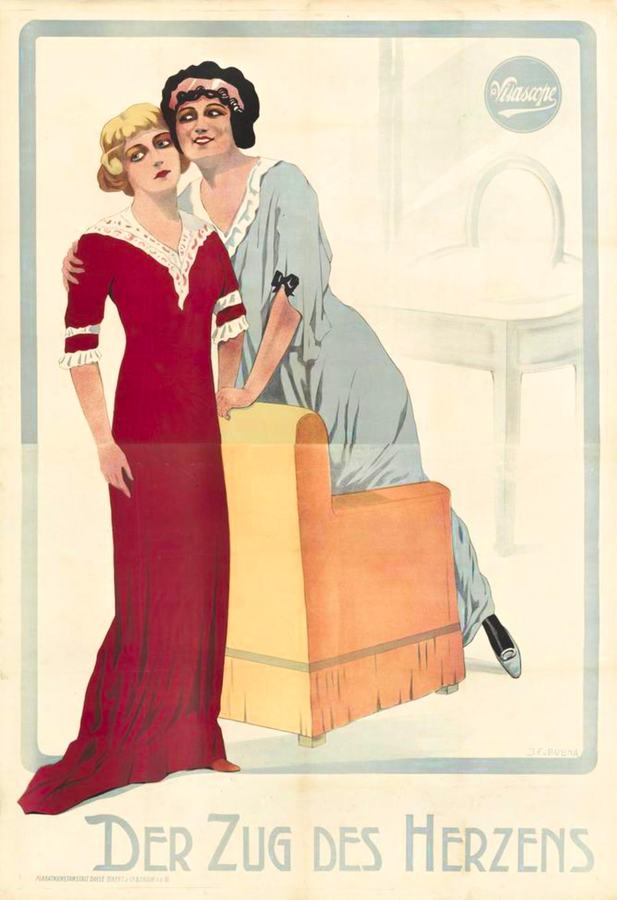
To gaze upon the flickering frames of Der Zug des Herzens is to witness the birth of a specific visual language that would eventually define the Weimar era's cinematic dominance. Directed by the enigmatic Franz Hofer in 1912, this film serves as a quintessential artifact of the 'Autorenfilm' movement, where the director's vision began to supersede the mere recording of theatrical plays. While many of his contemporaries were preoccupied with grand historical reconstructions like 1812 or the biblical gravity of From the Manger to the Cross, Hofer turned his gaze inward, exploring the domestic and the psychological with a precision that remains startling over a century later.
Hofer’s direction in this 1912 gem is nothing short of revolutionary. He avoids the static, wide-angle 'stage' perspective that plagued much of early cinema, such as the more theatrical approach seen in Les amours de la reine Élisabeth. Instead, he employs a sophisticated use of depth. Characters are often glimpsed through doorways, framed by ornate curtains, or reflected in mirrors, creating a sense of voyeurism and entrapment. This visual layering mirrors the thematic complexity of the plot, where the 'heart' is rarely free to pursue its own path without navigating a labyrinth of social decorum.
The lighting in Der Zug des Herzens suggests an early fascination with chiaroscuro. While not yet the full-blown expressionism of the 1920s, the interplay of shadow and light here creates a moody, almost claustrophobic atmosphere that heightens the emotional stakes. It contrasts sharply with the documentary-style clarity of The Corbett-Fitzsimmons Fight or the straightforward narrative of Oliver Twist. Hofer is not merely telling a story; he is painting a psychological portrait on celluloid.
At the center of this emotional whirlwind is Hanni Weisse, an actress whose face was a landscape of subtlety in an era often characterized by histrionic pantomime. In Der Zug des Herzens, Weisse delivers a performance that anchors the film’s more melodramatic flourishes. Her ability to convey longing through a slight inclination of the head or a fleeting glance toward a window is what elevates the film from a simple 'kitsch' romance to a profound work of art. She possesses a screen presence comparable to the stars of Cleopatra, yet her work here feels more intimate, more grounded in a recognizable human reality.
Her character embodies the tension between the individual and the collective. In 1912, the world was on the brink of cataclysmic change, and Weisse’s performance captures that sense of standing on a threshold. Whether she is navigating the halls of a bourgeois estate or the internal corridors of her own desire, she remains the film's magnetic North. Compared to the ensemble-driven narratives of The Independence of Romania, this is a character study that demands—and rewards—the viewer's absolute attention.
The plot of Der Zug des Herzens functions as a delicate clockwork of missed opportunities and societal barriers. While the specific details of the 'train' (the impulse or pull) are central, it is the resistance to that pull that provides the drama. Hofer, who also wrote the screenplay, understands that tragedy is not found in the absence of love, but in the presence of an impossible love. This thematic resonance can be felt in other German works of the period, such as Der Eid des Stephan Huller, yet Hofer’s touch is lighter, more focused on the ephemeral beauty of the moment.
The pacing of the film is deliberate. Hofer allows scenes to breathe, giving the audience time to absorb the textures of the costumes and the weight of the silences. This is a far cry from the kinetic energy of The Flying Circus or the episodic nature of What Happened to Mary. In Der Zug des Herzens, time is a protagonist in itself, slowly eroding the hopes of the lovers until only the 'impulse' remains.
By 1912, the 'cinema of attractions' was giving way to the 'cinema of narrative integration.' Hofer was at the forefront of this transition. He utilized the camera not just to record, but to interpret. The use of close-ups in Der Zug des Herzens serves a narrative purpose, highlighting objects that carry emotional weight—a letter, a flower, a piece of jewelry. This is a level of sophistication that was still developing in films like The Black Chancellor.
Furthermore, the set design in Hofer’s films—often referred to as 'Hofer-Stil'—is a character in its own right. The opulent, cluttered rooms of the German upper class are presented with a density that feels almost tactile. Every vase and every heavy velvet drape serves to reinforce the theme of social suffocation. It is a visual richness that rivals the production values of Les Misérables, though on a much more intimate, domestic scale.
To understand the significance of Der Zug des Herzens, one must look at the cinematic landscape of its birth year. While Glacier National Park was capturing the majesty of the natural world, and The Life and Death of King Richard III was bringing Shakespeare to the masses, Hofer was carving out a niche for the psychological melodrama. His work lacks the religious fervor of Life and Passion of Christ or the allegorical weight of Pilgrim's Progress, choosing instead to find the sacred in the secular struggles of the human heart.
Even when compared to the adventure-filled The Story of the Kelly Gang or the sporting spectacle of Jeffries-Sharkey Contest, Hofer’s film stands out for its quiet intensity. It is a film that demands a specific kind of viewing—one that is attuned to the nuances of performance and the poetry of the image. It shares a certain spiritual kinship with The Springtime of Life, yet it possesses a darker, more fatalistic edge that is uniquely Germanic.
The tragedy of many Hofer films is their ephemeral nature; many have been lost to the ravages of nitrate decay. Der Zug des Herzens, however, remains a vital piece of the puzzle in understanding the evolution of the melodrama. It prefigures the work of Douglas Sirk and even the modern emotional landscapes of Todd Haynes. The 'train' of the heart never truly stops; it merely changes tracks as cinema evolves.
In conclusion, this film is not merely a historical curiosity. It is a vibrant, breathing work of art that captures the eternal struggle between what we owe to society and what we owe to ourselves. Through the lens of Franz Hofer and the luminous performance of Hanni Weisse, Der Zug des Herzens reminds us that the most profound journeys are often the ones that take place within the confines of a single room, or a single heart. It is a testament to the power of the silent image to speak volumes, a cinematic whisper that still echoes with the force of a scream.
IMDb 8.8
1930
Community
Log in to comment.