DbcultAccessing Vault...
Cult Review
Senior Film Conservator
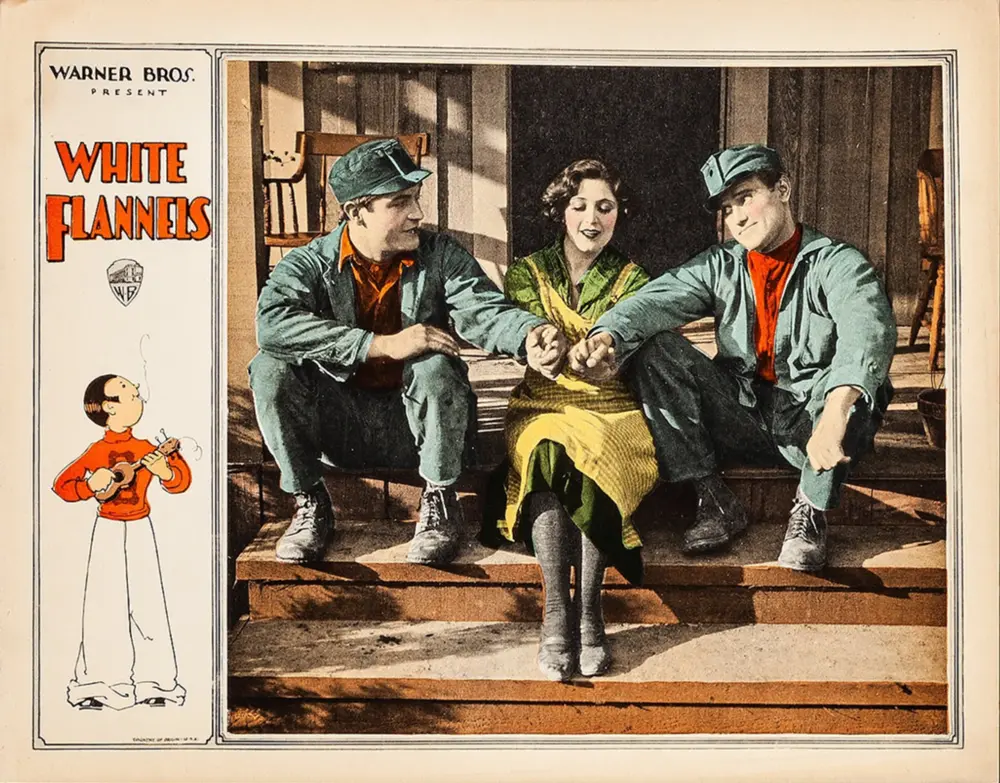
Is White Flannels worth your time nearly a century after its release? Short answer: yes, but only if you have a stomach for heavy-handed maternal melodrama that feels more like a psychological thriller than a traditional romance. This film is for those who enjoy exploring the darker corners of family dynamics and the crushing weight of social mobility; it is absolutely not for anyone looking for the lighthearted escapism typical of the Roaring Twenties.
This film occupies a strange, gritty space in the late silent era. While many films of 1927 were leaning into the glamour of the jazz age, White Flannels stays rooted in the coal dust. It challenges the notion that a mother’s love is always selfless. In fact, it suggests that a mother’s love can be a cage. The conflict isn't just about who Frank marries; it's about whether he has the right to be mediocre in a world that demands he be a trophy for his mother's sacrifices.
Does White Flannels still resonate? Yes, because the 'helicopter parent' is not a modern invention. The film works because it captures the universal anxiety of a child trying to live up to an impossible parental standard. However, it can be a chore for modern audiences due to the glacial pacing of its middle act and the frustrating passivity of its lead male character.
1) This film works because Louise Dresser provides a performance so layered with resentment and misplaced hope that you can almost feel the coal dust in her lungs.
2) This film fails because the character of Frank is written with so little agency that it becomes difficult to root for his eventual happiness.
3) You should watch it if you are interested in how silent cinema used class symbols—like the titular clothing—to tell stories of social warfare.
The title isn't just a fashion choice; it’s a socio-economic boundary. In the 1920s, white flannels were the uniform of the country club set, the college boys, and the men who didn't have to sweat for a living. By forcing Frank into these clothes, Mrs. Politz is literally trying to skin him of his working-class heritage. There is a specific, painful scene where she looks at his hands, checking for the grime of the mines, that perfectly encapsulates her obsession. She doesn't want a son; she wants a gentleman.
Compare this to the gritty realism found in Shame, where social standing is also a source of internal rot. In White Flannels, the 'shame' is not a secret past, but a visible present. The coal mine is a character itself—dark, oppressive, and waiting to swallow those who fail to escape. The contrast between the black soot of the mines and the blinding white of the flannels is the film's strongest visual motif.
Louise Dresser is the reason to watch this film. She avoids the easy trap of playing a mustache-twirling villain. Instead, she plays Mrs. Politz as a woman who is genuinely convinced she is doing the right thing. It is a terrifying brand of righteousness. When she stands between Frank and Anne, she isn't just a mother being difficult; she is a woman fighting for the only thing that gives her life meaning: her son's status.
Her performance is far more grounded than the theatricality often seen in films like The Night Cry. While that film relies on external threats and high-stakes action, White Flannels relies on the twitch of a lip or the coldness of a stare. Dresser understands that the most effective horror happens at the kitchen table, not in the shadows of a haunted house.
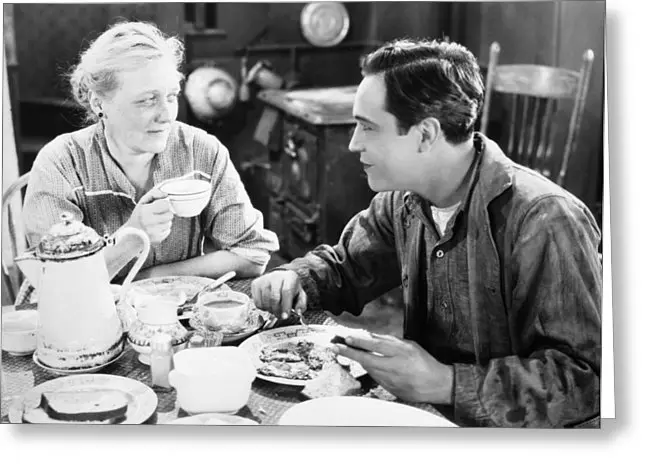
If there is a significant flaw, it is Jason Robards Sr. as Frank. He is a wet rag. His performance is competent, but the character is written to be so subservient to his mother’s whims that the audience loses patience. You want him to stand up, to yell, to do anything other than look mournfully at the floor. In a way, this might be the point—he has been so thoroughly broken by his mother’s expectations that he no longer knows how to have a spine. But as a cinematic experience, it makes for a frustrating lead.
We see similar themes of parental pressure in The Last Chance, but there, the characters seem to have more fire in their bellies. Frank Politz is a man who has been dressed in white flannels but feels like he’s wearing a straightjacket. It works. But it’s flawed.
For the casual viewer? Probably not. The pacing is reflective of its era, and the melodrama can feel suffocating. However, for the student of cinema or the fan of social history, it is an essential piece of work. It captures a specific American anxiety about class that is often glossed over in the 'Great Gatsby' versions of the 1920s. It’s a film that asks: what is the cost of a college degree if it costs you your soul?
The direction by Warner Richmond (who also acts in the film) is functional but rarely inspired. He lets the actors do the heavy lifting. The cinematography in the mine scenes, however, is genuinely impressive. There is a sense of claustrophobia that makes the mother’s desire to escape feel almost rational. You see the walls closing in, and for a moment, you understand why she is so desperate to get her son out.
Pros:
- Exceptional acting from Louise Dresser.
- Gritty, realistic depiction of mining life.
- Strong thematic resonance regarding class and education.
- Avoids many of the 'happily ever after' clichés of its time.
Cons:
- Pacing issues in the second act.
- The male lead is incredibly frustrating to watch.
- Some of the title cards feel redundant and overly explanatory.
Technically, the film is a product of its time, but it shows the growing sophistication of Warner Bros. before they became the 'studio of the people' in the 1930s. The lighting is particularly effective. In the Politz home, the lighting is often harsh and flat, emphasizing the lack of warmth. In contrast, the 'white flannel' world of the college is shot with a softer, almost ethereal glow. This visual storytelling does more than the dialogue ever could.
The script by Lucian Cary and C. Graham Baker is lean. They don't waste time on subplots that don't serve the central mother-son conflict. While some might find the lack of humor or levity a bit much, I found the singular focus to be one of the film's strengths. It is a tragedy in the truest sense—a collision of two people who love each other but are destroying each other in the process.
White Flannels is a haunting, if occasionally tedious, look at the darker side of maternal ambition. It succeeds as a character study even when it falters as a narrative. Louise Dresser’s performance is a masterclass in silent acting, proving that you don't need a voice to scream. It is a film that sits uncomfortably in the stomach, much like the coal dust it depicts. It isn't 'fun,' but it is significant. If you can handle the frustration of watching a man be dismantled by his own mother, this is a rewarding experience. It is a stark reminder that the clothes don't make the man—they often just hide the bruises.
A brutal, honest, and deeply uncomfortable look at the cost of the American Dream.
IMDb 5.8
1917
Community
Log in to comment.