DbcultAccessing Vault...
6.3/10
Senior Film Conservator
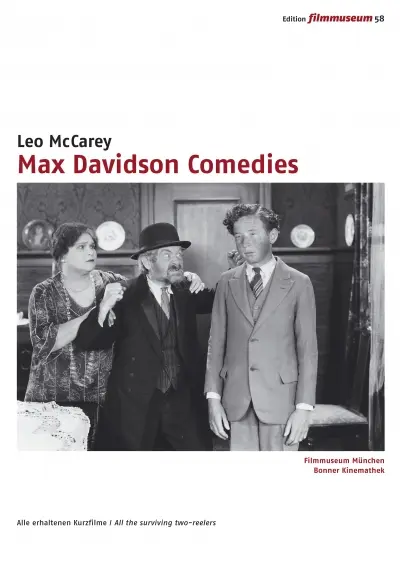
A definitive 6.3/10 rating for a film that redefined the boundaries of cult cinema. Why Girls Say No remains a cornerstone of transgressive art.
Is Why Girls Say No a hidden gem of the silent era? Short answer: Yes, but only if you have the stomach for the aggressive 'persistent suitor' tropes that defined 1920s romantic comedies.
This film is for enthusiasts of the Hal Roach 'factory' style and those who appreciate the specific, neurotic brilliance of Max Davidson; it is not for modern viewers who find the concept of a romantic 'stalker' more disturbing than humorous.
1) This film works because Max Davidson delivers a masterclass in the 'harried patriarch' archetype, using his entire body to convey ethnic anxiety and comic frustration.
2) This film fails because the central romantic pursuit by Creighton Hale’s character is relentlessly aggressive, making the 'hero' feel more like a predator than a lover by today's standards.
3) You should watch it if you want to see the early creative fingerprints of Stan Laurel and the slapstick DNA that would eventually lead to the greatest comedy duos in history.
Max Davidson is the beating heart of Why Girls Say No. While the title suggests a focus on the daughter’s agency (or lack thereof), the film is truly a vehicle for Davidson’s 'Papa Katz.' In the 1920s, ethnic humor was a staple of the American diet, and Davidson carved out a niche as the perpetually overwhelmed Jewish father. His performance here is a whirlwind of shrugging shoulders, tugged beards, and expressive hand gestures. It is physical comedy at its most granular.
Take the scene where Katz first encounters the Irish suitor. Davidson doesn't just look annoyed; he looks like a man whose entire ancestral history is being insulted by a single smile. His timing is impeccable. He knows exactly when to hold a beat and when to explode into a frantic run. It is a performance that rivals the physical dexterity seen in The Nut, though Davidson trades Fairbanks' athleticism for a more grounded, domestic desperation.
The beard is the star. Davidson uses it as a prop, a shield, and a signal of his character's internal state. When things go wrong—which is every five minutes—his hands instinctively fly to his face. It is a caricature, yes, but one played with such conviction that it transcends the potentially offensive tropes of the era. He makes Papa Katz relatable. We’ve all felt that specific brand of domestic chaos.
We have to talk about Creighton Hale. In 1927, his character’s behavior was likely seen as 'plucky' or 'determined.' He follows Molly everywhere. He won't take no for an answer. He literally haunts her footsteps through the urban landscape. In a modern context, it’s harrowing. In a 1927 context, it’s the setup for a gag. The film asks us to root for the man who refuses to respect a woman's boundaries.
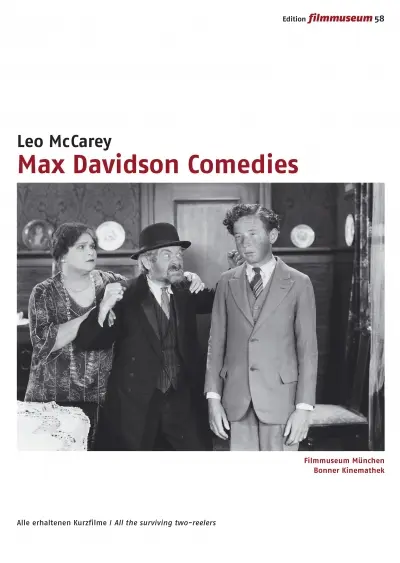
However, if we view this through the lens of pure slapstick, the 'stalking' serves a mechanical purpose. It creates a constant state of motion. The film never breathes. It is a relentless series of chases and near-misses. This frantic pacing is a hallmark of the Roach studio, and while the underlying logic is dated, the execution of the gags remains impressive. The way Hale weaves through traffic and around obstacles shows a level of stunt coordination that remains visually engaging.
It works. But it’s flawed. The tension between the humor and the behavior is constant. You find yourself laughing at a visual gag while simultaneously wishing the lead would just leave the poor girl alone. It’s a fascinating historical artifact of what audiences once considered 'charming.'
The writing credits for Why Girls Say No include H.M. Walker and Stan Laurel. You can feel Laurel’s influence in the escalation of the gags. There is a mathematical precision to the way a small annoyance grows into a city-wide catastrophe. This is the same logic that would later define the best Laurel and Hardy shorts. The film doesn't just have jokes; it has sequences that build upon one another until the logic of the world completely breaks down.
The supporting cast is a 'Who's Who' of Roach regulars. Seeing a young Oliver Hardy in a supporting role is always a treat for cinephiles. He hasn't yet found the 'Ollie' persona that would make him a legend, but his screen presence is already undeniable. He provides a solid anchor to the more flighty performances of Hale and Daw. The chemistry of the ensemble is what keeps the film from feeling like a one-man show for Davidson.
Compared to more high-concept silent comedies like Fig Leaves, Why Girls Say No feels scrappier and more immediate. It isn't interested in social commentary or high-fashion satire. It wants to show you a man losing his mind because his daughter likes the wrong boy. It is street-level comedy, and that gives it a grit that many 'prestige' silent films lack.
The cinematography in Why Girls Say No is functional rather than poetic. The camera stays wide enough to capture the full range of physical movement, but the editing is surprisingly sharp. The cuts during the chase sequences are timed to the micro-second to maximize the impact of a fall or a collision. This is the 'Roach Style'—unobtrusive camera work paired with aggressive, rhythm-based editing.
The use of location is also noteworthy. We get a real sense of the crowded, textured world of the 1920s city. This isn't a sanitized studio backlot; it feels lived-in. The cars, the storefronts, and the pedestrians all play a role in the comedy. When Papa Katz gets into a vehicular mishap, the environment feels like a genuine participant in his suffering. It lacks the surrealism of The Yankee Consul, opting instead for a messy realism.
"The film is a masterclass in the 'slow burn' that explodes into a fast fire. Max Davidson’s face is a map of the early 20th-century immigrant experience, redrawn by the hand of a cartoonist."
Yes, the film remains funny because frustration is universal. While the specific cultural stereotypes and the 'stalking' romance have aged poorly, the core of the comedy—a man trying to maintain control in a world that is spinning out of his hands—is timeless. Max Davidson’s performance is so energetic that it’s hard not to be swept up in the chaos. It offers a raw, unpolished look at the type of comedy that kept Depression-era audiences laughing.
Why Girls Say No is a chaotic, loud, and frequently brilliant example of the Jewish-Irish comedy cycle of the 1920s. It isn't a 'nice' film, and it certainly isn't a subtle one. It is a high-energy collision of bodies and cultures that succeeds almost entirely on the back of Max Davidson's performance. While it lacks the emotional depth of something like Lorraine of the Lions or the experimental flair of Runaway June, it is a essential viewing for anyone who wants to understand the roots of American slapstick.
It’s a relic. It’s problematic. But it’s also undeniably funny. If you can look past the 1927 social norms, you’ll find a comedy that still has more energy than most modern sitcoms. Just don't try any of the suitor's moves in real life.
IMDb —
1928
Community
Log in to comment.