DbcultAccessing Vault...
Cult Review
Senior Film Conservator
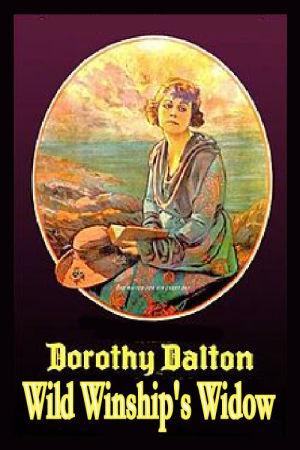
In the annals of early cinematic storytelling, few narratives capture the poignant dance between idealized memory and brutal reality with the nuanced grace of Wild Winship's Widow. This gem, emerging from an era when visual language spoke volumes without uttering a single word, delves deep into the psyche of Catherine Winship, a woman initially defined by her profound, almost sacred, devotion to her deceased husband. Dorothy Dalton, in a performance of remarkable subtlety and emotional range, embodies Catherine with an ethereal quality, a figure draped in the somber elegance of perpetual mourning. Her days are a meticulously choreographed ritual: the daily pilgrimage to the gravesite, the scattering of flowers, the silent communion with a memory held aloft as an unblemished ideal. This is not merely grief; it is an active, conscious construction of identity around an absence, a life lived in the shadow of a love so perfect it transcends mortal fallibility.
The film's initial sequences establish this solemn tableau with striking visual poetry, underscoring Catherine's isolation, her self-imposed exile from the vibrant currents of life. The world outside her grief seems distant, almost irrelevant. Her existence is a testament to fidelity, a public declaration of an unwavering bond that even death could not sever. This portrayal of a widow's unwavering dedication, while perhaps exaggerated for dramatic effect, resonates with the societal expectations placed upon women of the era, where a husband's memory often dictated the course of a widow's remaining years. Such a narrative echoes the thematic explorations found in contemporary works like The Spendthrift, where societal pressures and personal desires frequently clashed within the confines of domestic life, albeit with different catalysts for their protagonists' awakenings.
The serene, if somber, rhythm of Catherine's life is violently disrupted by a discovery that rips through the fabric of her carefully maintained illusion. Tucked away in a secret compartment of her late husband's desk—a symbolic repository of his private world—she unearths a cache of love letters. These are not tributes to her, but impassioned missives to another, revealing a hidden affair, a clandestine life lived beyond the bounds of their marriage. The meticulous detail with which this revelation unfolds is one of the film's masterstrokes. The audience witnesses Catherine's dawning horror, her disbelief giving way to a visceral sense of betrayal, all conveyed through Dalton's expressive eyes and subtle physical reactions. The shattering of her idealism is palpable, a silent scream that reverberates through the theater.
This moment serves as the pivotal turning point, the crucible in which Catherine's character is irrevocably forged anew. The flowers, once symbols of adoration, now mock her naivety. The grave, once a sacred altar, becomes a monument to a lie. The film masterfully uses this dramatic irony to propel Catherine from passive recipient of fate to an active agent of her own destiny. The emotional weight carried by this single discovery is immense, reminiscent of the profound disillusionment faced by characters in films like Betrayed, where trust is irrevocably broken, forcing a re-evaluation of one's entire world view. John Lynch, the writer, demonstrates a profound understanding of human psychology, crafting a scenario that is both devastatingly personal and universally resonant.
With the veil of illusion torn asunder, Catherine undergoes a profound transformation. The widow's weeds, once a symbol of her devotion, become a suffocating reminder of a false ideal. Her decision to shed them is not merely a change of attire; it is a declaration of emancipation, a defiant rejection of a past built on deceit. Dalton's portrayal of this metamorphosis is captivating. The somber grace gives way to a newfound vitality, a spark of life rekindled in eyes that once held only sorrow. This transition is handled with remarkable sensitivity, avoiding histrionics in favor of a genuine, internal awakening.
The film then pivots into a lighter, more romantic comedic vein, as Catherine, now free from the shackles of her past, finds herself the object of numerous male admirers. The shift in tone is expertly managed, preventing the narrative from becoming overly melodramatic. Instead, it embraces the inherent humor and awkwardness of rediscovering romance after a period of profound grief and disillusionment. This journey of self-discovery and re-engagement with life's possibilities is a testament to the enduring human spirit, a theme explored with varying degrees of success in many films of the era, but rarely with such a compelling initial premise. The visual storytelling during this phase relies on clever framing and subtle gestures to convey the burgeoning attention Catherine receives, making her newfound desirability a palpable presence on screen.
Among the throng of eager gentlemen vying for Catherine's affections, two figures emerge as prominent contenders: Archibald Herndon and Morley Morgan. Rowland V. Lee, as Archibald Herndon, delivers a portrayal of the sentimental bore with delightful precision. Herndon is earnest, perhaps even well-meaning, but his persistent, often clumsy, overtures and his almost suffocating sentimentality render him more an object of comedic relief than a serious romantic prospect. His character serves as a foil, highlighting the more genuine and dynamic qualities of his rival. Herndon represents the kind of suitor who, despite his intentions, fails to truly connect with Catherine's awakened spirit, clinging to an antiquated notion of courtship that feels out of step with her newfound independence.
In stark contrast stands Morley Morgan, played by the determined and charismatic Joe King. Morgan is presented as a young man of action and conviction, whose pursuit of Catherine is marked by a blend of genuine affection and an almost competitive zeal. King imbues Morgan with an appealing blend of steadfastness and charm, making him a compelling romantic lead. His determination is not overbearing, but rather an indication of his sincerity and his ability to see Catherine not as a grieving widow, but as a vibrant woman deserving of happiness. The rivalry between Herndon and Morgan, while predictable, is executed with a lightness of touch that keeps the audience engaged, rooting for the more suitable match.
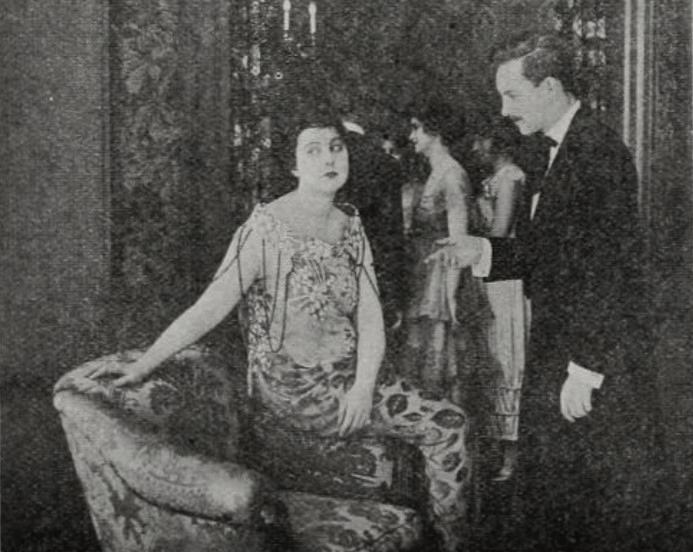
The interplay between these characters, including the subtle reactions of supporting players like Lillian Hayward and Alice Terry, adds layers of social commentary and observational humor. Hayward, in particular, may have provided the societal 'gossip' or a voice of conventional wisdom that Catherine is actively defying. Terry's presence, even in a supporting role, could contribute to the overall tapestry of the social milieu, perhaps as a friend or rival, further emphasizing Catherine's journey into a world of renewed social engagement. The ensemble cast, though operating within the constraints of silent film, manages to create a believable and engaging world around Dalton's central performance.
Catherine's journey to choosing a new spouse is far from straightforward, punctuated by a series of 'misadventures' that inject both humor and genuine peril into the narrative. These episodes, typical of the romantic comedies of the era, serve to test her resolve, reveal the true characters of her suitors, and ultimately guide her towards her heart's true inclination. The film utilizes these scenarios to showcase Catherine's growing independence and her ability to navigate complex social situations, often with a wry smile or a knowing glance that only Dalton could convey so effectively without spoken dialogue. The physical comedy, combined with the emotional stakes, ensures that the audience remains invested in her choices.
The culmination of these romantic trials sees Morley Morgan finally triumphing over the earnest but ultimately uninspiring Archibald Herndon. The narrative doesn't dwell on protracted engagements or grand societal weddings. Instead, it opts for an 'impromptu ceremony at a hunting lodge' – a choice that speaks volumes about Catherine's transformation. This intimate, somewhat unconventional setting for her second marriage signifies a rejection of the societal pomp and circumstance that perhaps defined her first union, a union built on an illusion. It suggests a preference for authenticity, for a connection forged through shared experience and genuine affection, rather than mere propriety. This spontaneous union underscores her newfound freedom and her willingness to embrace life on her own terms, an echo of the independent spirit seen in characters like Prudence in Prudence, the Pirate, who similarly charts her own course regardless of convention.
Dorothy Dalton's performance as Catherine Winship is arguably the beating heart of Wild Winship's Widow. Her ability to convey such a vast spectrum of emotions—from profound grief and shattered illusion to spirited independence and burgeoning joy—without the aid of spoken dialogue is a masterclass in silent film acting. Dalton relies on subtle facial expressions, graceful body language, and the compelling power of her gaze to communicate Catherine's internal world. She transforms Catherine from a static symbol of mourning into a dynamic, relatable woman whose journey of self-discovery is genuinely moving. It's a testament to her artistry that her character's arc feels so complete and satisfying, a journey from a self-imposed prison of memory to the wide-open spaces of a future filled with genuine love.
The film's visual language, characteristic of its era, is both expressive and economical. Intertitles are used judiciously, allowing the performances and cinematography to carry the bulk of the narrative. The director, though uncredited in the plot summary, clearly understood how to frame shots to maximize emotional impact and how to guide the audience's eye through the unfolding drama. The setting of the hunting lodge for the final ceremony, for instance, is not merely a backdrop but an active participant in the storytelling, symbolizing a return to nature, to something more elemental and honest than the societal constructs Catherine initially inhabited.
John Lynch's screenplay, the very foundation upon which this cinematic edifice is built, is a marvel of narrative construction. He crafts a story that is at once deeply personal and universally appealing, exploring themes of grief, betrayal, self-discovery, and the enduring quest for happiness. The pacing of the revelation, the gradual unfolding of Catherine's emotional awakening, and the introduction of her suitors are all handled with a keen understanding of dramatic rhythm. Lynch avoids simplistic characterizations, even for the 'bore' Herndon, giving each figure a distinct presence that contributes to the overall texture of the story. His ability to translate complex emotional shifts into a visual medium, anticipating the needs of silent film, is a testament to his skill as a writer.
The narrative arc of Wild Winship's Widow is a compelling study of resilience. It suggests that even in the face of the most profound disillusionment, the human spirit possesses an innate capacity for renewal and joy. Catherine's journey is not just about finding a new husband; it's about reclaiming her own identity, asserting her right to happiness, and learning to trust her own judgment after a devastating betrayal. This makes the film feel remarkably modern in its sensibilities, despite its age. It’s a story about agency, about a woman taking control of her narrative in an era where female roles were often circumscribed.
In conclusion, Wild Winship's Widow stands as a powerful testament to the artistry of early cinema. It is a film that transcends its silent origins through the sheer force of its emotional storytelling, propelled by a stellar performance from Dorothy Dalton and a meticulously crafted narrative by John Lynch. It offers a poignant exploration of memory versus reality, the societal pressures on women, and the exhilarating, often messy, path to personal liberation and true love. The film’s enduring appeal lies in its universal themes and its masterful execution, proving that a story well-told, regardless of its medium, will always find a way to resonate deeply with its audience.
This is not merely a historical curiosity; it is a vibrant, emotionally rich experience that speaks to the enduring human desire for authenticity and connection. While one might compare its thematic elements of disillusionment and subsequent romantic pursuit to other period pieces, Wild Winship's Widow carves out its own distinct niche through its unique blend of poignant drama and lighthearted romantic comedy. It reminds us that even after the most profound losses, and the most painful deceptions, life offers the promise of renewal, a wild win for the human heart. If you appreciate the subtle power of visual storytelling and compelling character arcs, this film is an essential viewing experience, a vibrant piece of cinematic history that continues to shine brightly.
IMDb 6.1
1932
Community
Log in to comment.