DbcultAccessing Vault...
Cult Review
Senior Film Conservator
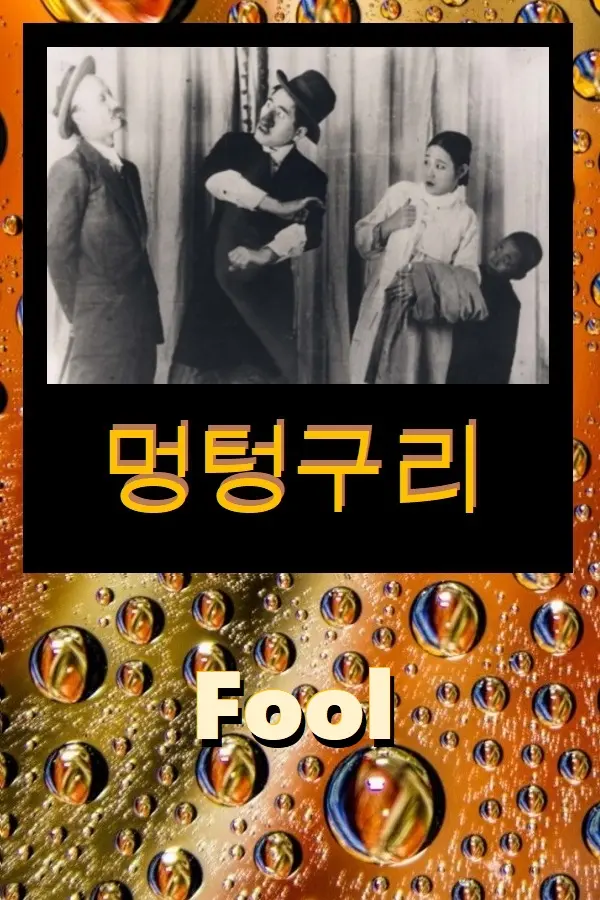
Does the silent-era comedy Fool still possess the bite it had in 1924? Short answer: yes, but only if you are willing to look past the technical limitations of a century-old production to find the sharp social critique hidden in its slapstick.
This film is for dedicated cinephiles and historians who want to witness the literal foundation of Korean comedy; it is absolutely not for those who require polished narratives or high-definition visual effects. It is a raw, jagged, and fascinating relic of a time when the camera was still learning how to tell a joke.
1) This film works because it successfully translates the visual language of Su-Hyeon No’s comic strips into a physical performance that feels both alien and strangely familiar.
2) This film fails because its episodic structure lacks the narrative glue found in more sophisticated contemporaries like The Master Key.
3) You should watch it if you are interested in how early Asian cinema used humor to navigate the trauma of modernization.
Yes, Fool is worth watching for anyone interested in the evolution of satire. It provides a unique window into the psyche of 1920s Seoul. While the gags are primitive, the intent behind them is surprisingly sophisticated. It captures a culture in flux, making it a vital historical document.
The character of Mungtung Choe isn't just a bumbling idiot; he is a vessel for the collective anxieties of a nation. In the 1920s, Korea was grappling with the heavy hand of Japanese occupation and the dizzying influx of Western culture. Mungtung, played with a frantic, rubber-faced energy by Wongyu Lee, represents the man left behind by progress.
One specific scene involving Mungtung attempting to navigate a crowded marketplace highlights this perfectly. He is constantly out of step with the crowd, bumping into 'modern' gentlemen and being rebuked by 'new women.' It’s a physical manifestation of a social disconnect. It works. But it’s flawed in its execution, often lingering too long on a single gag until the rhythm dies.
The chemistry between Mungtung and his friends Ba-ram and Gi-saeng provides the film's few moments of genuine warmth. While The Agent might offer more traditional thrills, Fool offers a chaotic camaraderie that feels surprisingly modern. They are a trio of outcasts making fun of a world that has no place for them.
Pil-woo Lee, who also served as a writer, faced immense technical hurdles. The cinematography is static, often feeling like a filmed stage play. This was common for the era, but compared to the more dynamic camera work seen in Fighting Blood, Fool feels visually stagnant. The camera is a silent observer, rarely moving to emphasize a punchline or a reaction.
However, there is an intentionality to the framing that mimics the panels of a comic strip. Every shot is composed to maximize the physical comedy of the actors. When Mungtung falls, he falls toward the edges of the frame, as if trying to escape the confines of the screen itself. It’s an unconventional observation, but the film feels like it’s constantly fighting against its own medium.
The pacing is the film's greatest enemy. Because it relies on the episodic nature of the Chosun Ilbo strips, there is no building tension. It’s a series of peaks with no valleys. You get a joke, then a title card, then another joke. It lacks the cohesive emotional pull of Bonds of Love, making it difficult to engage with for a full feature-length duration.
What makes Fool stand out isn't the quality of its jokes, but the target of its humor. It mocks everything: the pompous scholar, the greedy merchant, and the naive peasant. By making everyone a 'fool,' the film levels the social playing field. This was a radical act in 1924, providing a subtle form of resistance through laughter.
Consider the character of Gi-saeng. In many films of this period, such characters were either tragic victims or villainous temptresses. Here, she is part of the gang, contributing to the mischief. This subversion of gender roles is far more progressive than what you’d find in Enemies of Women or even The Virgin of Stamboul.
The film’s refusal to take itself seriously is its greatest strength. It doesn't aim for the high drama of The Pitfall. Instead, it embraces the absurd. It is a loud, messy, and unapologetic celebration of the common man’s incompetence.
Pros:
- Fascinating historical context of 1920s Korea.
- Bold, satirical take on social classes.
- Innovative use of comic-strip-style framing.
Cons:
- Technical limitations lead to static, uninteresting cinematography.
- The humor is often repetitive and dated.
- Lacks the emotional depth found in contemporary dramas like Together.
Fool is a difficult film to love, but an impossible one to ignore. It is a loud, clattering piece of machinery that somehow manages to produce a few sparks of genuine brilliance. It doesn't have the grace of Munkens fristelser, nor does it have the narrative weight of Tseka komissar Mirostsenko.
What it does have is a soul. It is the sound of a culture trying to find its voice through laughter. It is a film that mocks the very idea of progress while being a product of it. It’s messy. It’s dated. It’s occasionally boring. But it is also a vital piece of the cinematic puzzle.
If you can tolerate the silence and the flickering grain, you will find a film that is surprisingly honest about the human condition. We are all, in some way, Mungtung Choe—confused, clumsy, and just trying to keep up with a world that is moving far too fast. It’s not a masterpiece. It’s a mirror.
IMDb 6.8
1916
Community
Log in to comment.