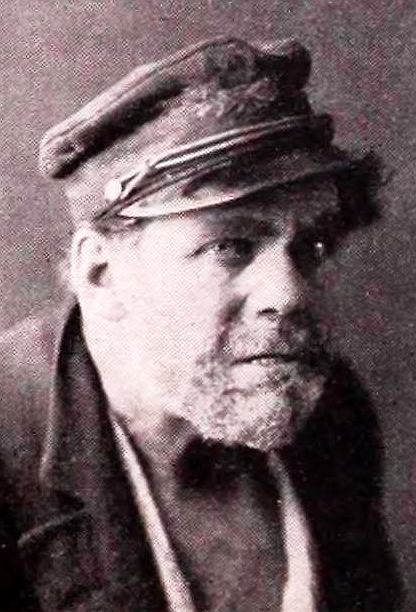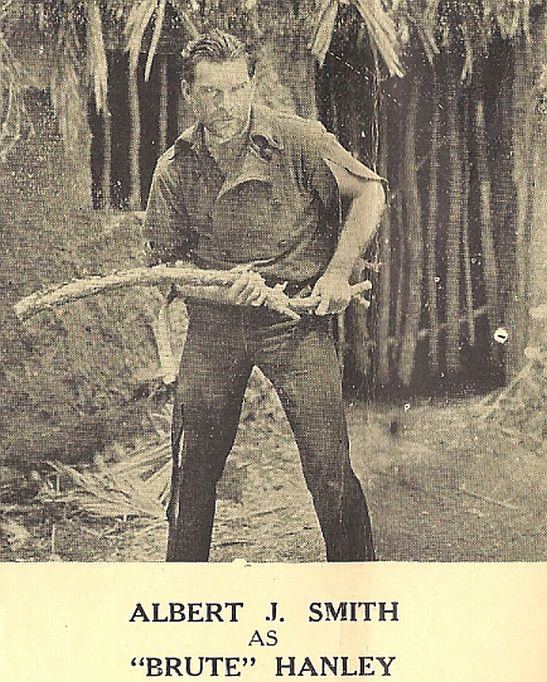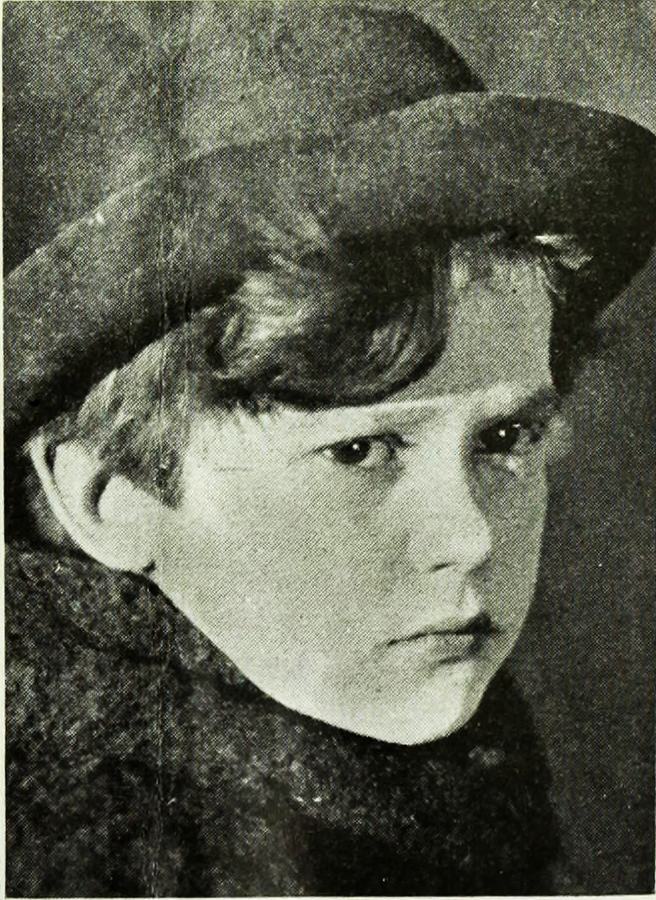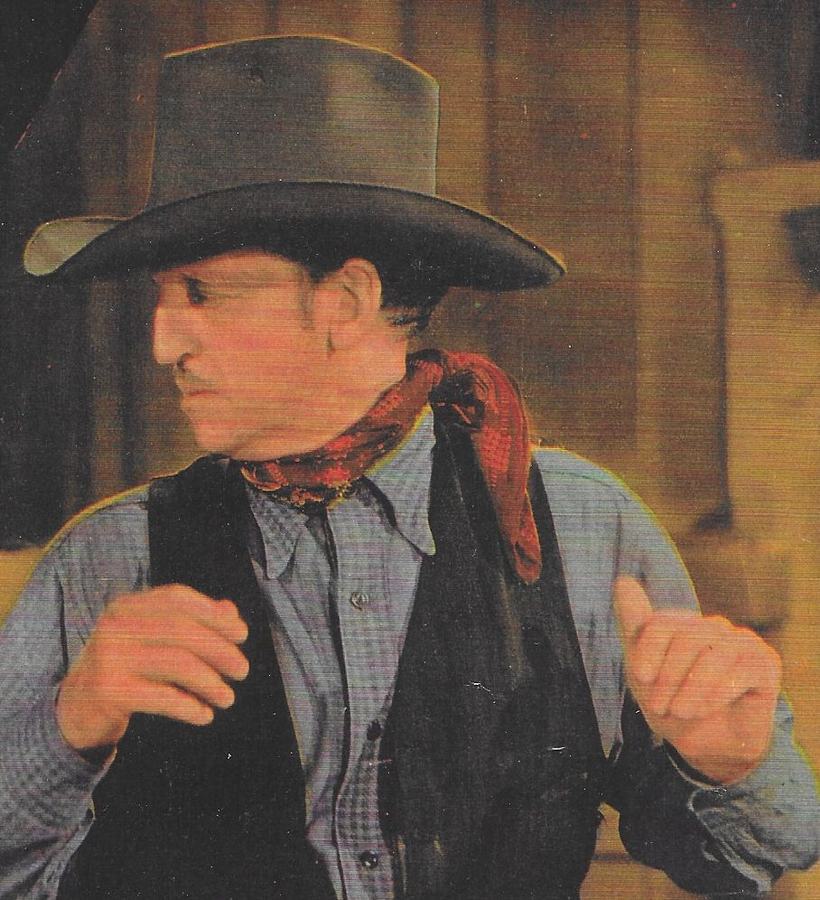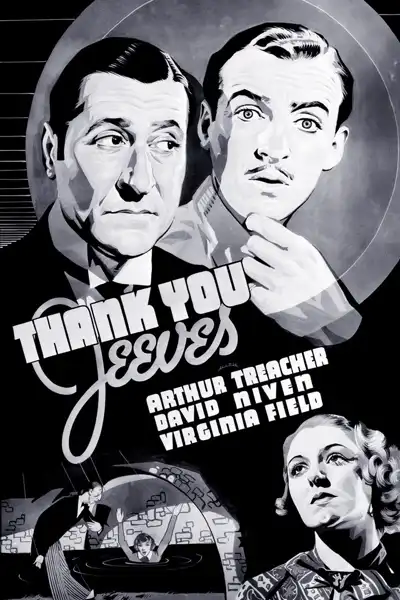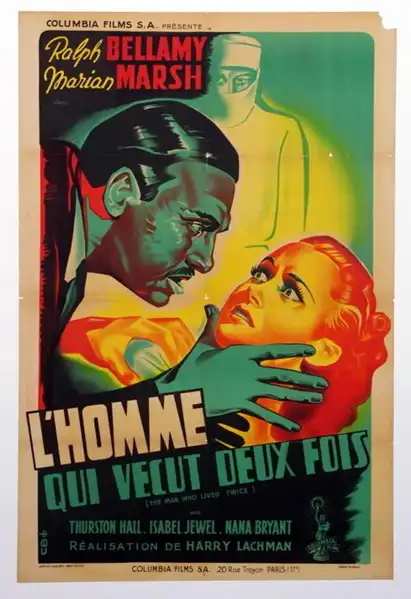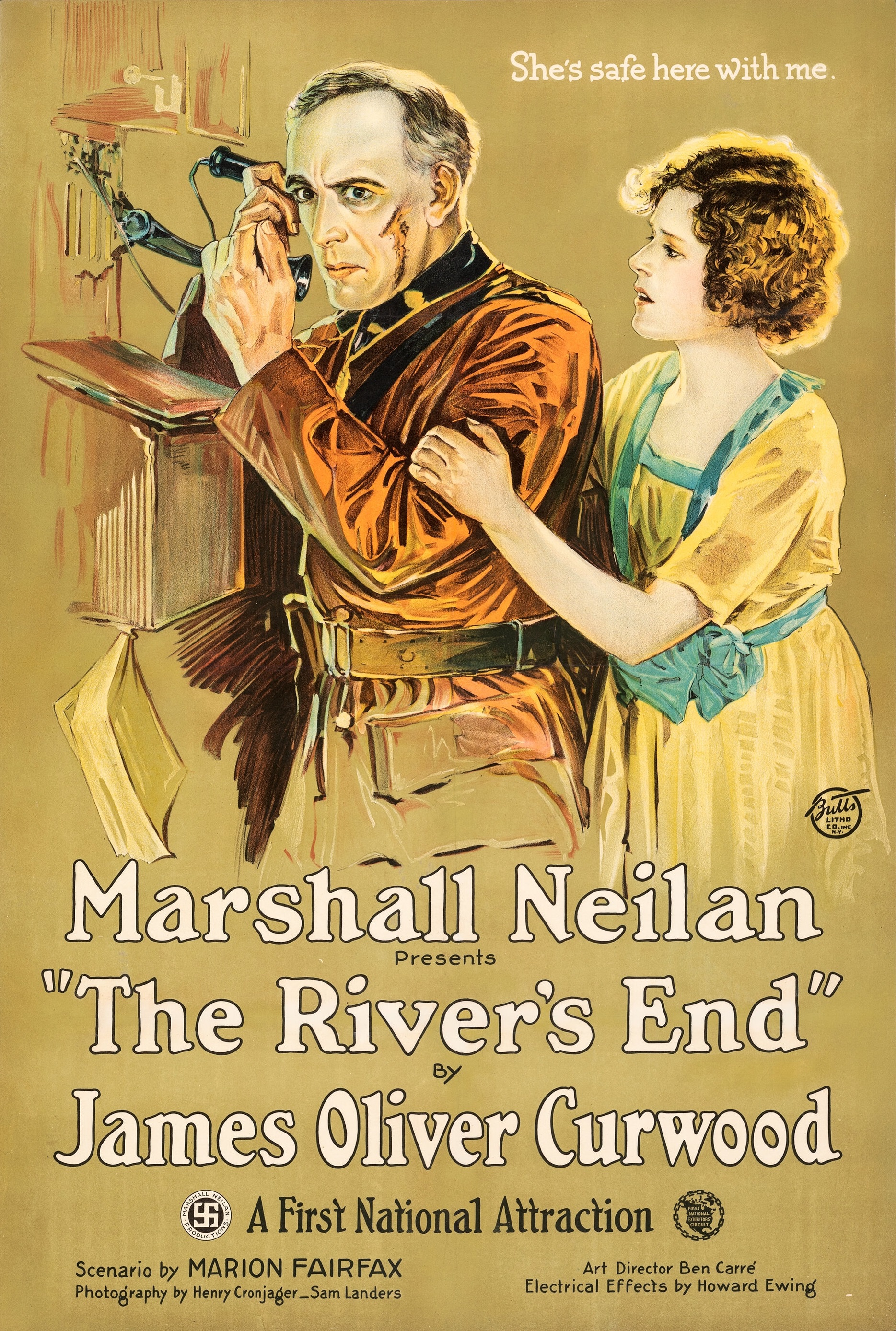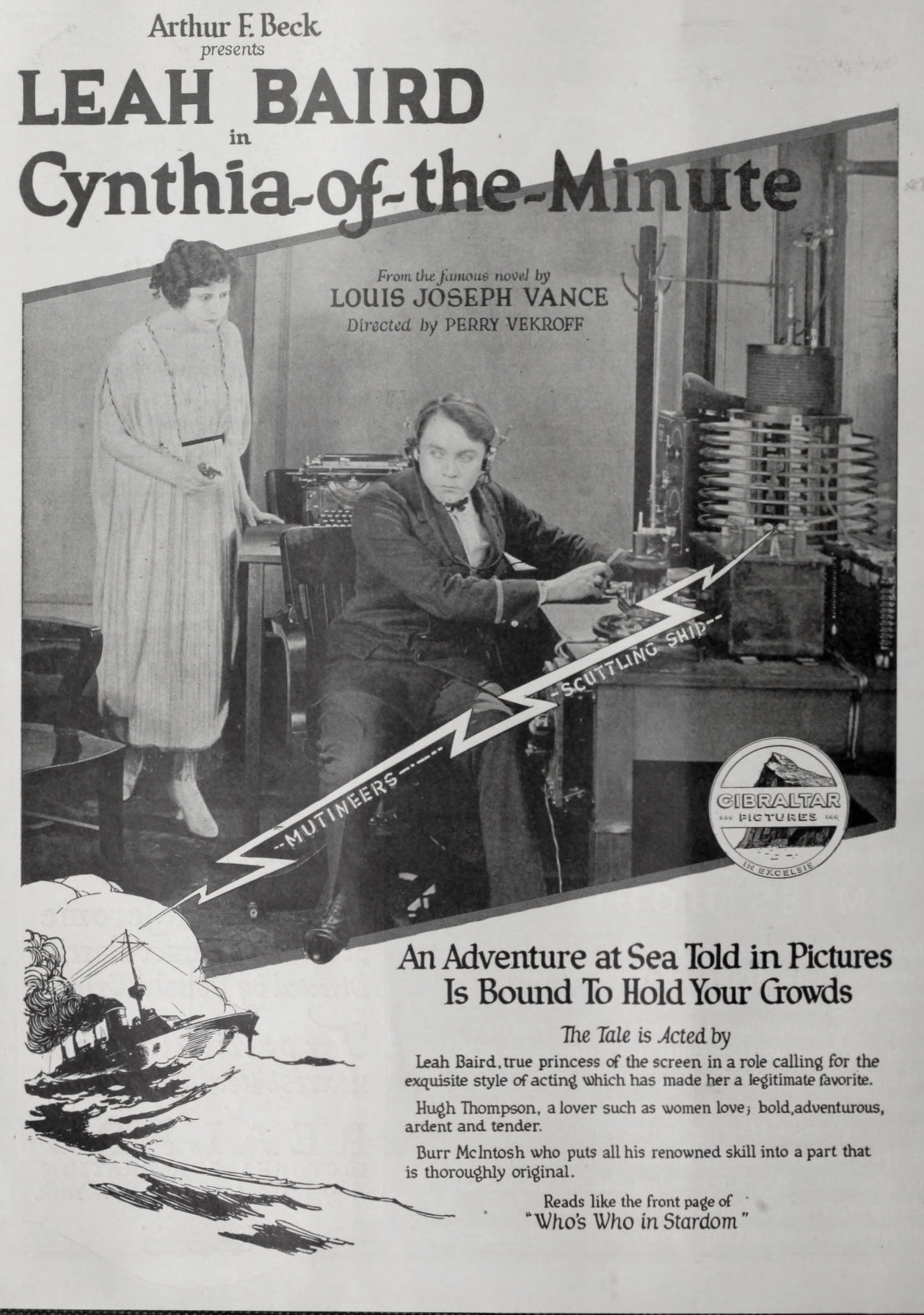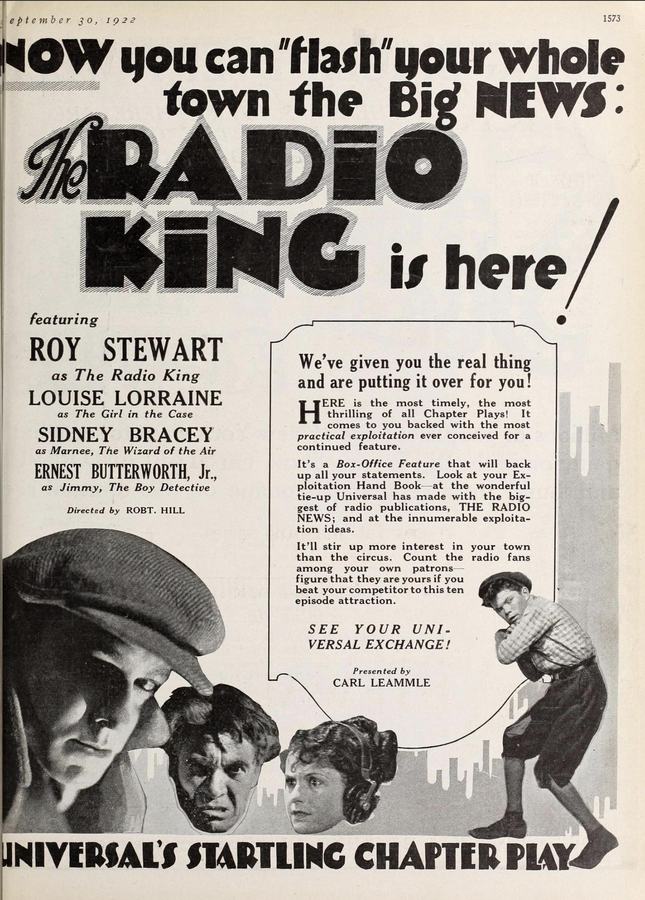
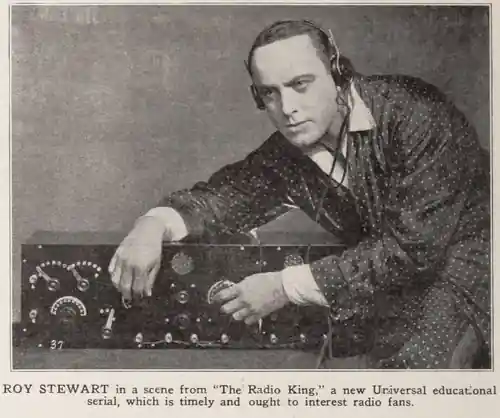
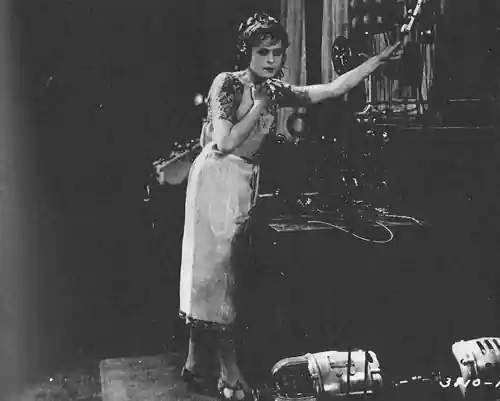
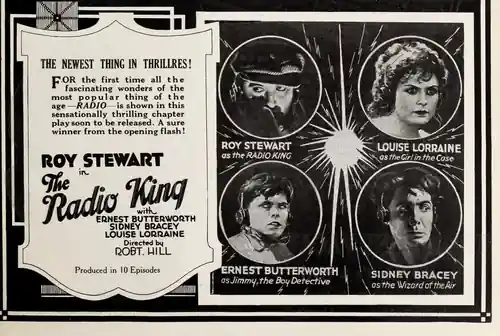
This serial deals with the attempt of a master detective, a man of science, to overcome an equally brilliant inventor who is a criminal and whose warped mind caused him to seek to overthrow society, his genius making him the leader of a band of anarchists. The action hinges on the fight of these two for the possession of a secret invention by which radio messages may be recalled from the air.
A brittle ribbon of nitrate flickers alive, and suddenly the Jazz Age smells of ozone and burning copper. That metallic perfume lingers across every chapter of The Radio King, a 1922 Pathé serial whose 15 episodes once unspooled like black-market mercury in nickelodeons now condemned to parking-lot archaeology. Toda...
production_art
production_art
still_frame
still_frame
production_art
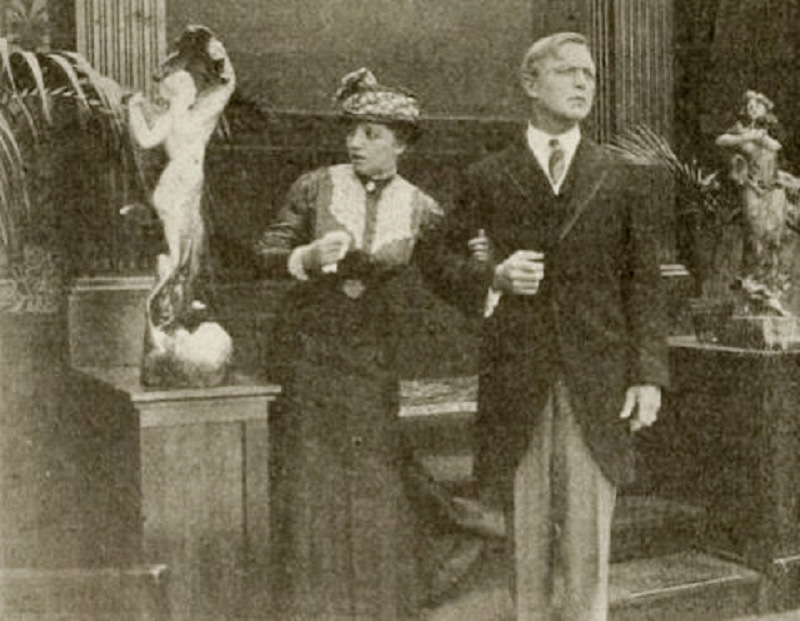
Comparing the cinematic DNA and archive impact of two defining moments in cult history.
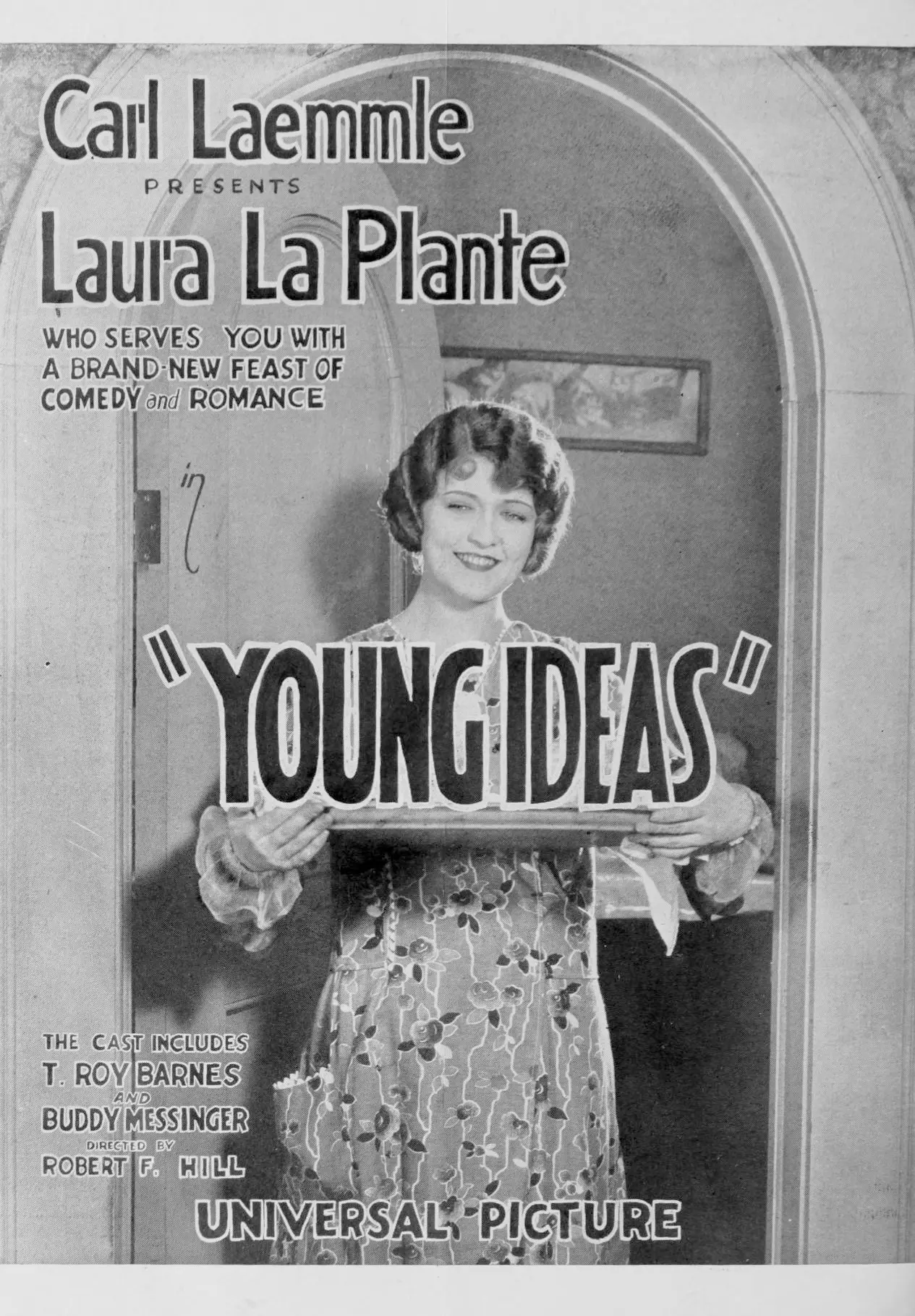
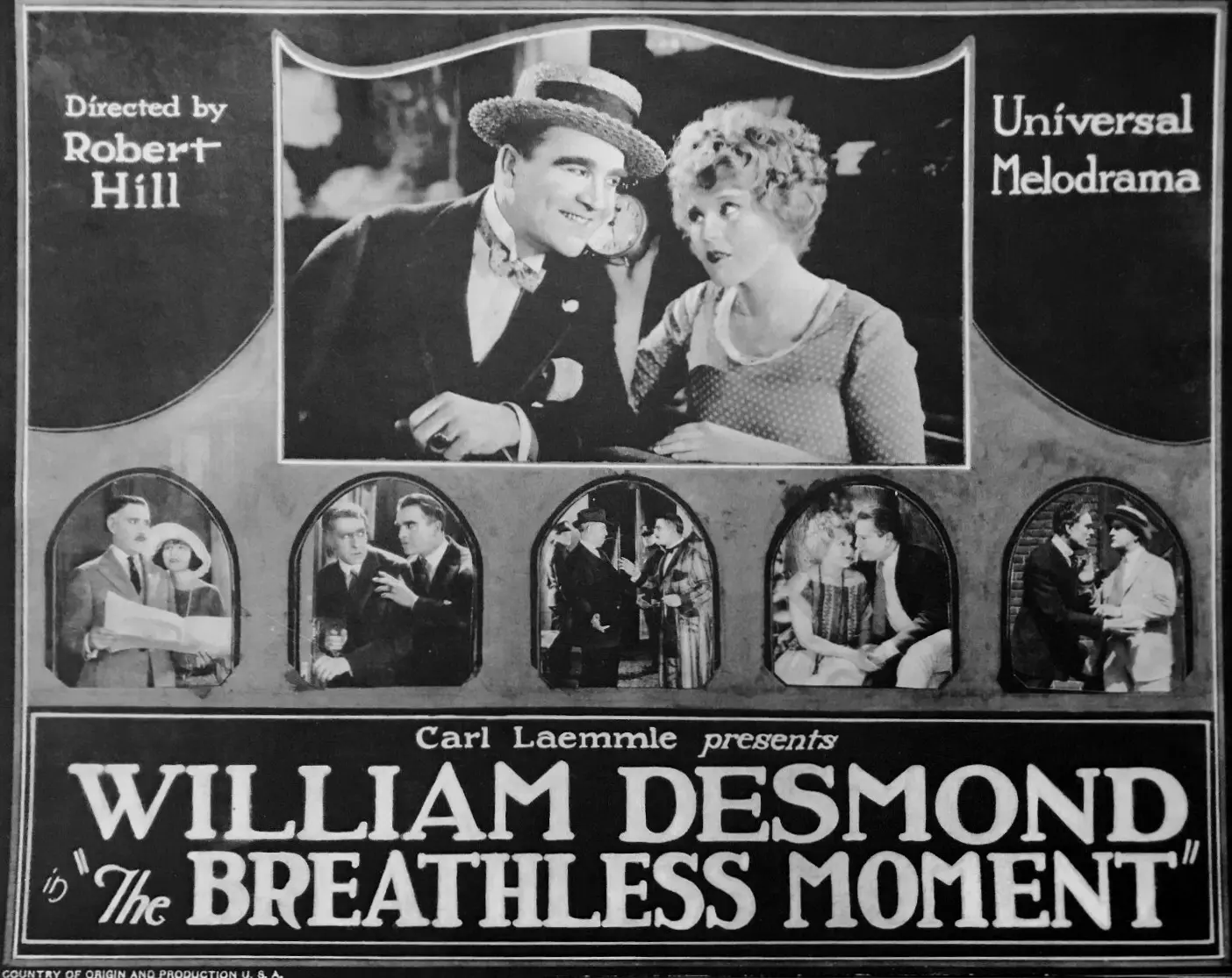
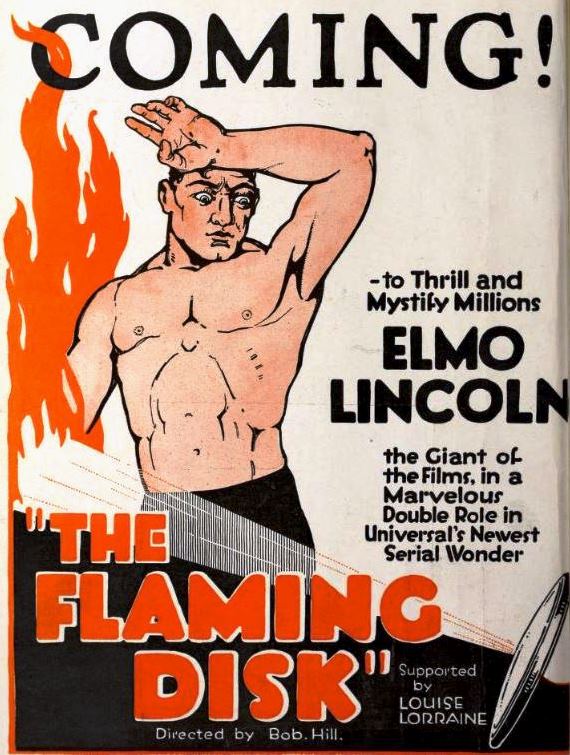
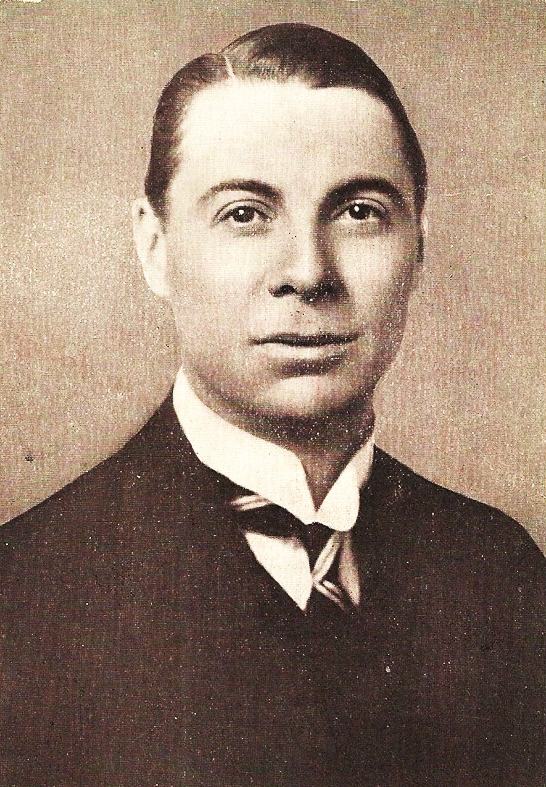
Robert F. Hill
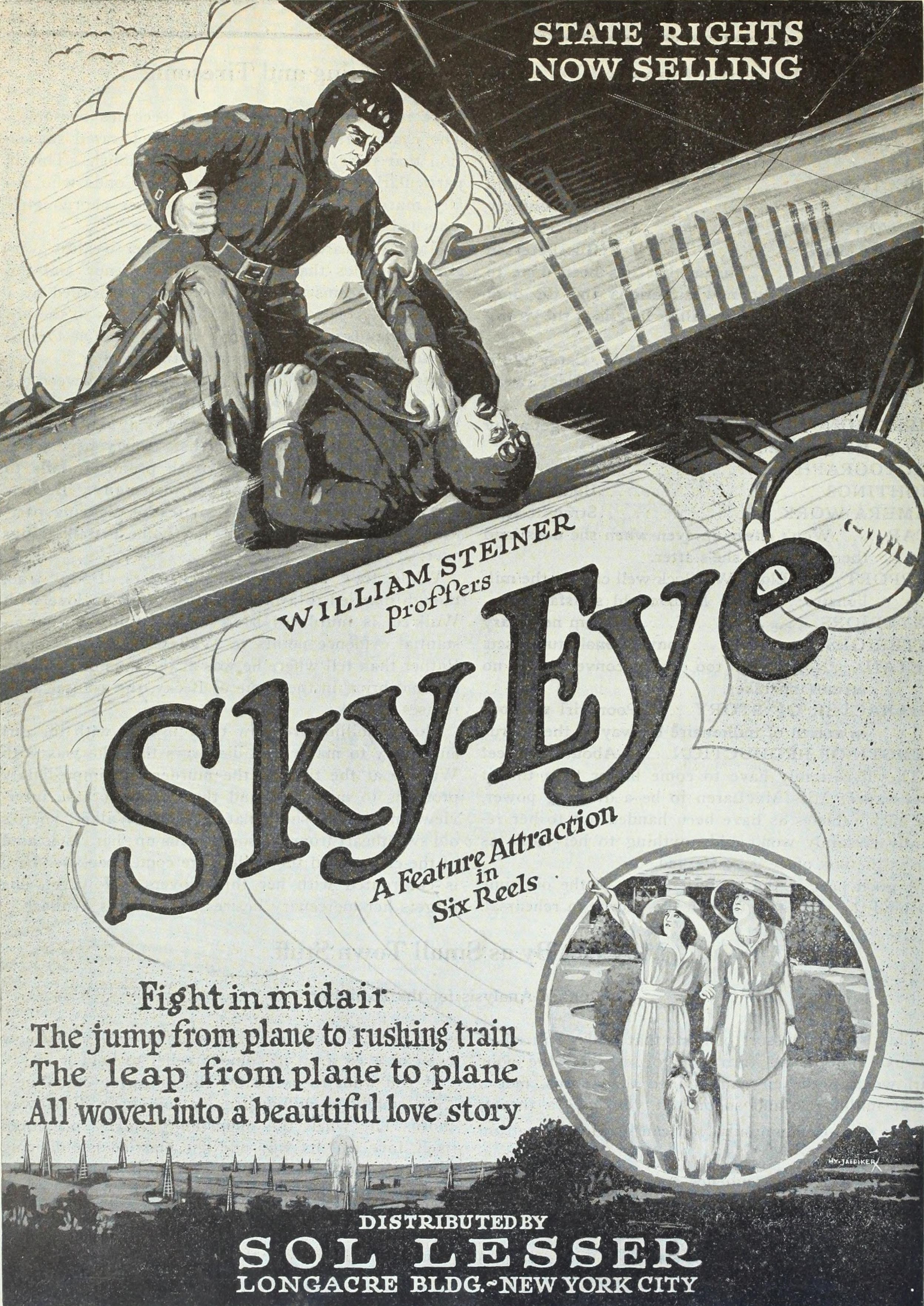
Aubrey M. Kennedy
Community
Log in to comment.
" A brittle ribbon of nitrate flickers alive, and suddenly the Jazz Age smells of ozone and burning copper. That metallic perfume lingers across every chapter of The Radio King, a 1922 Pathé serial whose 15 episodes once unspooled like black-market mercury in nickelodeons now condemned to parking-lot archaeology. Today, only four complete chapters survive—yet what shards we possess detonate in the skull with more voltage than most 4K restorations of better-known silents. Director Robert Dillon,..."
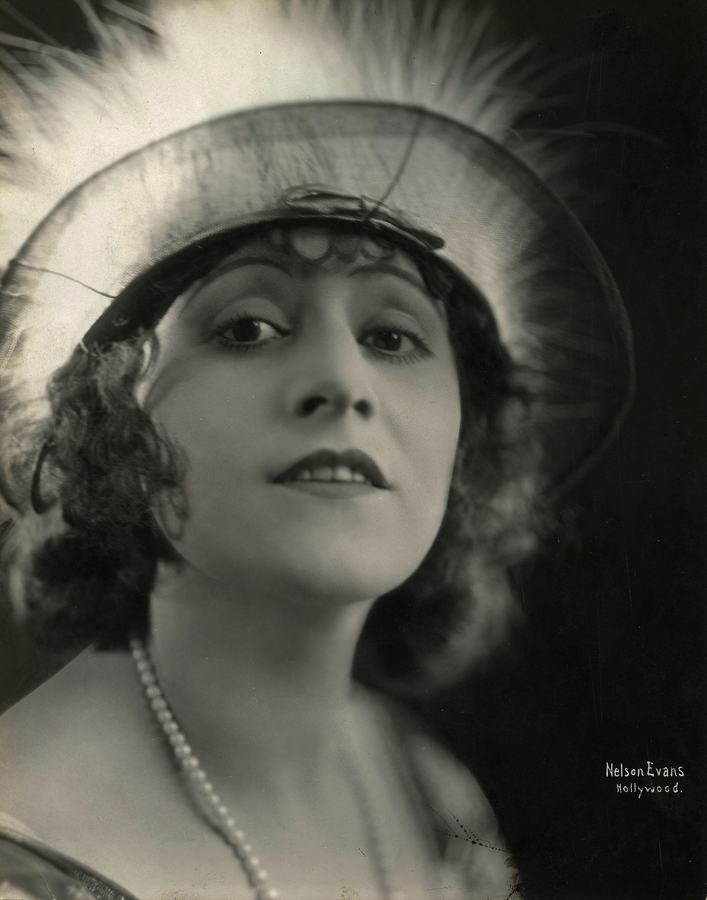
Fontaine La Rue
Robert Dillon
United States