DbcultAccessing Vault...
7/10
Senior Film Conservator
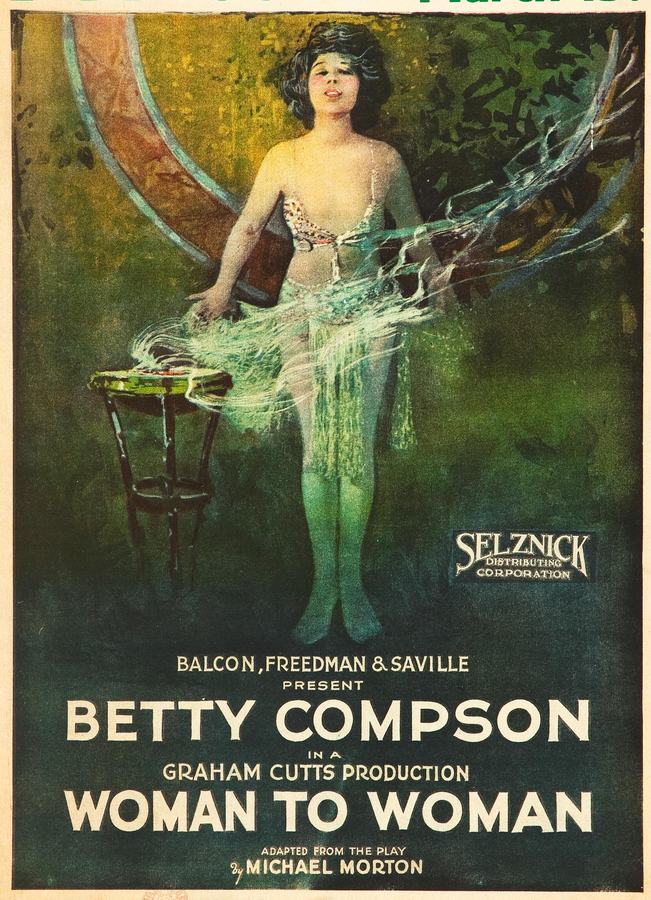
A definitive 7/10 rating for a film that redefined the boundaries of cult cinema. Woman to Woman remains a cornerstone of transgressive art.
When Woman to Woman first flickered across the silver screens of the early 1920s, it arrived at a crossroads of cinematic ambition and societal upheaval. The film, a collaboration between the nascent Alfred Hitchcock and the seasoned Graham Cutts, navigates the turbulent aftermath of the First World War through a lens that is both intimate and expansive. Its narrative architecture, built upon the fragile scaffolding of amnesia and unfulfilled longing, invites a meditation on how personal histories are reshaped by collective trauma.
David Compton, a modest English clerk, abandons the vibrant boulevards of Paris for the grim trenches of the Western Front, leaving behind Louise Boucher, a dancer whose very presence at the Moulin Rouge seems to pulse with the rhythm of the city. Their romance, though brief, is depicted with a tenderness that feels almost anachronistic against the looming specter of war. The battlefield strips David of his memories, rendering him a tabula rasa upon his return.
Reintegrating into civilian life, David settles in London, where he encounters a woman of genteel bearing. Their courtship proceeds with the decorum expected of post‑war Britain, culminating in marriage and the construction of a respectable household. The film meticulously chronicles David’s gradual assimilation, using London’s fog‑laden streets as a visual metaphor for his obscured past.
Conversely, Louise, convinced of David’s demise, gives birth to their son and re‑emerges on the Parisian stage under the evocative stage name Deloryse. Her ascent to stardom is portrayed with a mixture of admiration and melancholy; the glittering footlights mask a body that is steadily succumbing to illness. The audience witnesses her relentless dedication, a devotion that borders on self‑destruction.
The narrative reaches its fulcrum when David, now a seasoned husband, attends one of Deloryse’s performances. The choreography, the music, and the very cadence of her movement act as a catalyst, unlocking the dormant chapters of his memory. In a sudden, cinematic rush, the war’s amnesia collapses, and he recognises the woman who once held his heart.
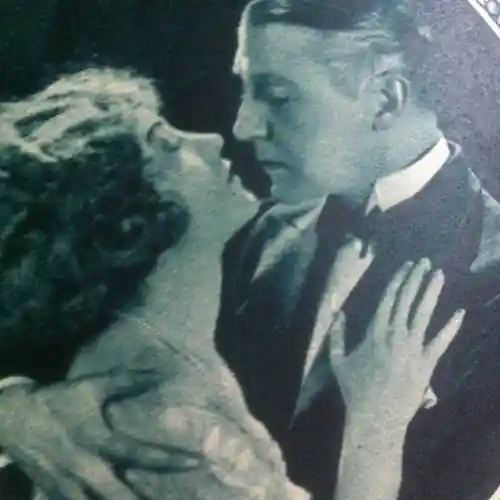
The revelation, however, is bittersweet. Louise discovers that David has remarried, a fact that shatters the fragile hope of a reunion. In an act of maternal sacrifice, she entrusts their son to David’s current wife, ensuring the child’s future within a stable environment. The final scene unfolds at a private party where Louise, exhausted by her relentless performances and the weight of sorrow, collapses and dies, her life extinguished by the very passion that had sustained her.
Betty Compson’s portrayal of Louise/Deloryse stands as a tour de force, her expressive eyes communicating a spectrum of emotions that silent cinema demands. She navigates the character’s transition from a carefree dancer to a mother haunted by loss with a subtlety that rivals the more celebrated performances of the era, such as those in Camille (1921) and Fanchon, the Cricket.
Clive Brook, as David, delivers a restrained yet compelling study of a man fractured by war. His physicality—stoic posture, measured gestures—conveys an internal battle that words cannot articulate. The chemistry between Brook and Compson, though fleeting on screen, is charged with an undercurrent of unresolved yearning.
Behind the camera, Hitchcock’s nascent fingerprints are evident in the film’s visual storytelling. The use of chiaroscuro lighting, especially in scenes where David’s memory resurfaces, prefigures the master’s later fascination with psychological suspense. Cutts’s direction, meanwhile, ensures that the narrative’s pacing never lags, balancing the melodramatic beats with quieter, introspective moments.
The cinematography, orchestrated by a yet‑unnamed director of photography, employs stark contrasts to delineate the two worlds the film inhabits: the war‑scarred, monochrome streets of London and the vibrant, almost surreal Parisian night life. The Moulin Rouge sequences are bathed in a warm, amber hue, echoing the dark orange (#C2410C) that the film’s promotional material later adopted. These scenes pulse with kinetic energy, the camera tracking dancers in fluid, sweeping motions that anticipate the kinetic style of later silent epics such as The Merry Cafe.
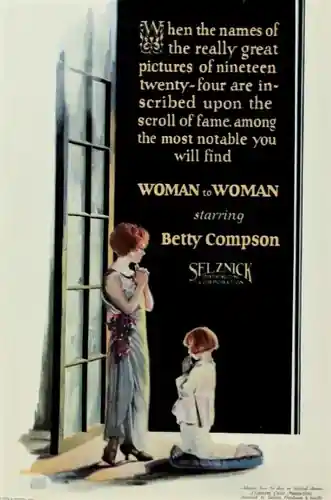
Conversely, the London interludes are rendered in cooler tones, with occasional sea‑blue (#0E7490) accents that underscore David’s emotional detachment. The strategic use of color, albeit in a black‑and‑white medium through tinted frames, adds a layer of symbolic resonance—orange for passion, blue for melancholy, and yellow (#EAB308) for fleeting hope.
At its core, Woman to Woman grapples with the dislocation wrought by war, a theme that resonates with contemporaneous works like Allies' Official War Review, No. 1. The film’s exploration of memory loss as a metaphor for societal amnesia is particularly prescient. David’s inability to recall his past mirrors a nation attempting to move beyond the trauma of conflict while the ghosts of those lost linger in collective consciousness.
Louise’s trajectory, from celebrated performer to a mother forced into anonymity, reflects the shifting roles of women in the post‑war period. Her sacrifice—entrusting her son to another woman—exemplifies the era’s complex negotiations of motherhood, independence, and societal expectation. This narrative thread finds echoes in the silent drama Broken Shadows, where female protagonists confront similar dilemmas.
The script, credited to Michael Morton and the collaborative efforts of Hitchcock and Cutts, weaves a non‑linear structure that was daring for its time. Flashbacks are introduced not through intertitles but via visual motifs—a recurring motif of a red scarf, a lingering shot of a Parisian balcony—that cue the audience to temporal shifts. This technique anticipates later narrative experiments in films such as The Chauffeur.
Dialogue, though sparse by modern standards, is rendered through intertitles that balance poetic lyricism with pragmatic exposition. The line, "Memory is a fickle lover," encapsulates the film’s central conceit, underscoring the fragile nature of recollection.
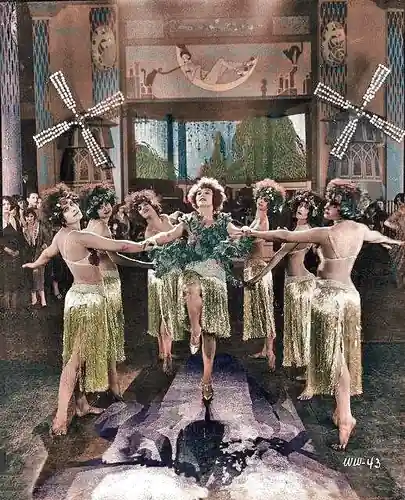
When situated alongside contemporaneous works, Woman to Woman distinguishes itself through its intricate character study and its willingness to confront the psychological aftermath of war. While films like Colonel Carter of Cartersville prioritize external conflict, this film delves inward, presenting a quiet, introspective drama that rewards patient viewers.
The film also shares thematic DNA with Not Guilty (1921), particularly in its exploration of moral ambiguity and the cost of personal sacrifice. However, Woman to Woman elevates the discourse by integrating the motif of performance—both on stage and in daily life—as a metaphor for the masks individuals wear to navigate trauma.
Though not as widely celebrated as Hitchcock’s later masterpieces, this early effort offers valuable insight into the evolution of his cinematic language. The film’s emphasis on visual symbolism, its experimental handling of memory, and its nuanced portrayal of gender dynamics foreshadow the director’s later preoccupations with identity and perception.
In contemporary retrospectives, scholars often cite Woman to Woman as a pivotal text for understanding the transition from melodramatic spectacle to psychologically driven narratives in British cinema. Its restoration, undertaken by the British Film Institute in 2021, has allowed modern audiences to experience the film’s original tinting and orchestral accompaniment, enriching its atmospheric depth.
In sum, Woman to Woman is a haunting meditation on love’s endurance amid the ravages of history. Its layered storytelling, compelling performances, and pioneering visual techniques render it a must‑watch for aficionados of silent cinema and scholars of early 20th‑century film. The tragedy of Louise’s demise, juxtaposed with David’s reclaimed memory, underscores a timeless truth: the past, no matter how deeply buried, inevitably resurfaces, demanding acknowledgment and, perhaps, redemption.
IMDb —
1913
Community
Log in to comment.