DbcultAccessing Vault...
4.5/10
Senior Film Conservator
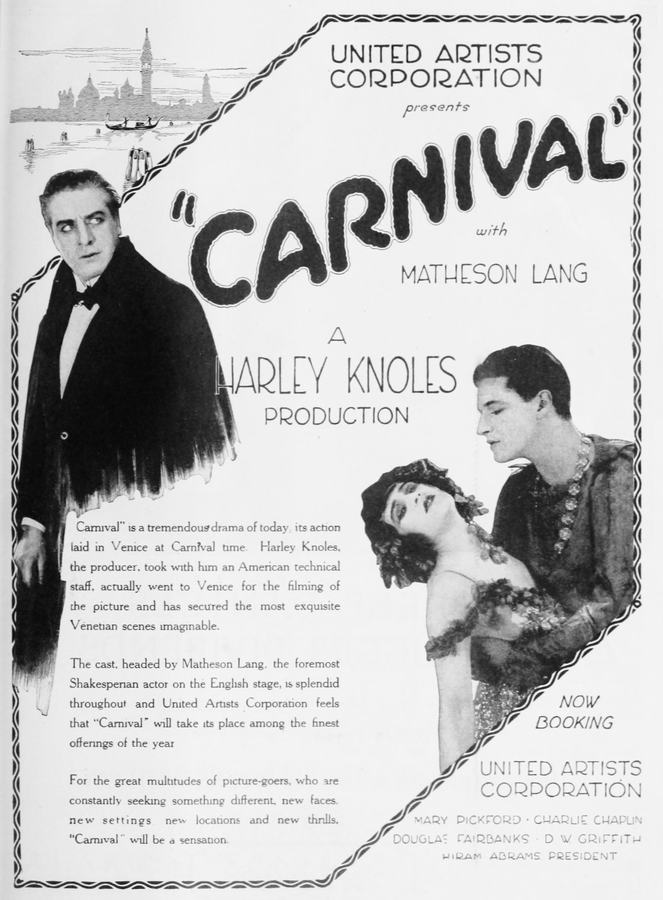
A definitive 4.5/10 rating for a film that redefined the boundaries of cult cinema. Carnival remains a cornerstone of transgressive art.
There is a haunting, almost spectral quality to the way Harley Knoles captures the Venetian landscape in his 1921 magnum opus, Carnival. This isn't merely a film; it is a descent into the fragile architecture of the human ego, framed by the artifice of the theater and the primal screams of unbridled jealousy. As a critic who has traversed the vast landscapes of silent cinema, from the rugged heroism found in Cyclone Smith's Comeback to the domestic intricacies of The Mother of His Children, I find Carnival to be a singular achievement in psychological horror disguised as a Shakespearean melodrama.
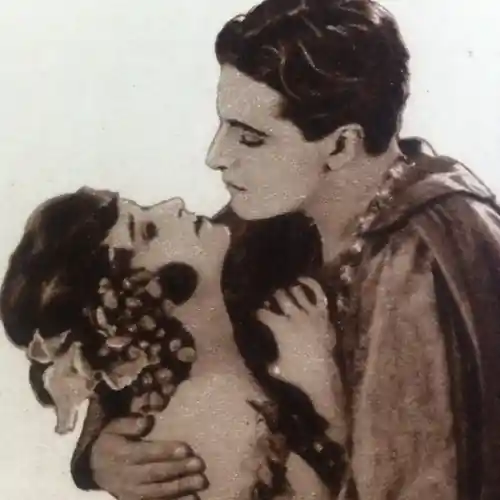
Matheson Lang, an actor whose stage presence was legendary long before the celluloid flicker immortalized him, delivers a performance of such simmering intensity that it feels modern even a century later. He portrays Silvio Steno, an actor whose identity is so thoroughly subsumed by his role as Othello that the distinction between the Moor of Venice and the man of the theater begins to dissolve. Unlike the more whimsical or lighthearted character arcs seen in contemporary works like The Venus Model or Broadway Jones, Lang’s Steno is a study in architectural collapse. We watch, breathless, as his suspicion of his wife Simonetta (the luminous Hilda Bayley) transforms from a nagging doubt into an all-consuming fire.
The brilliance of the screenplay—penned by a collaborative force including Rosina Henley and Matheson Lang himself—lies in its recursive structure. We are watching a film about an actor playing a character who is himself a victim of manipulation and self-deception. This layering creates a sense of vertigo. When Steno looks into the mirror, he doesn't see himself; he sees the greasepaint and the costume of a man destined to destroy what he loves most. It evokes a similar sense of impending doom found in The Mystery of Edwin Drood, though Carnival trades Victorian mystery for the visceral, atavistic terror of the cuckold.
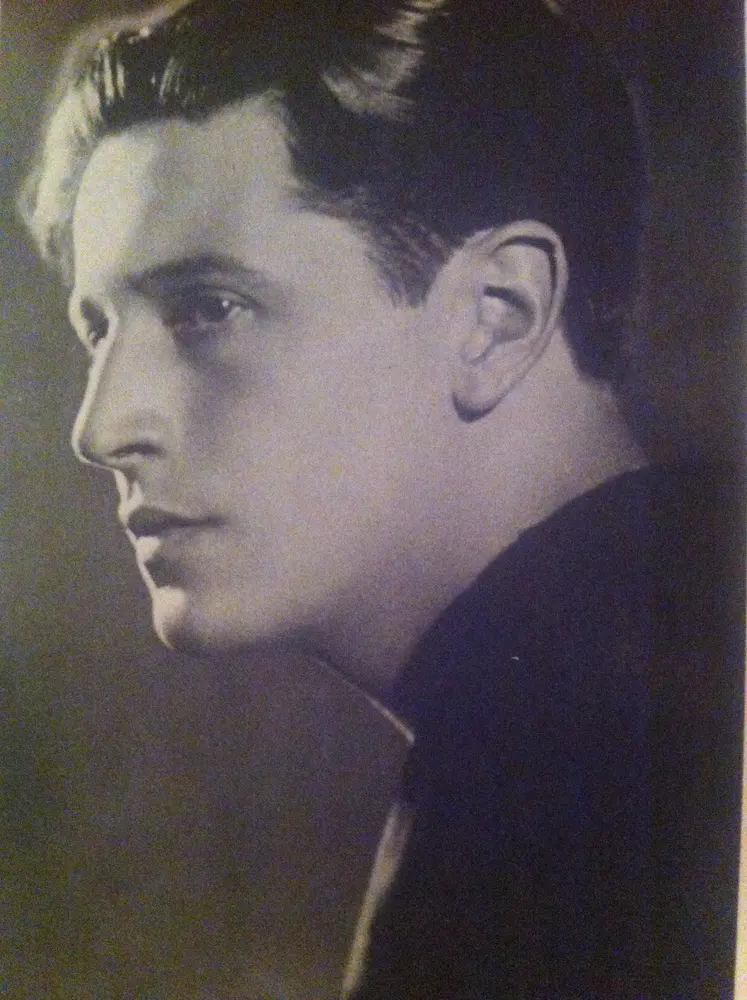
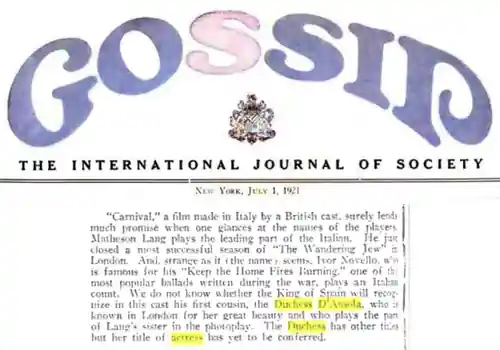
Enter Ivor Novello as Count Andrea. Novello, the quintessential matinee idol, brings an effete, almost dangerous charm to the role. He represents the effortless aristocracy that Steno, for all his theatrical acclaim, can never truly inhabit. The tension between Lang’s rugged, emotional honesty and Novello’s slick, predatory grace provides the film’s central kinetic energy. While films like A Gay Old Dog might toy with the themes of aging and social standing, Carnival weaponizes them. Andrea is not just a rival for Simonetta’s affection; he is the catalyst for Steno’s ontological crisis.
Victor McLaglen, in a supporting role, offers a glimpse of the burgeoning talent that would later dominate Hollywood. Even here, his physical presence is undeniable, providing a grounded contrast to the heightened theatricality of the lead performances. The cast is rounded out by an ensemble that understands the specific demands of the silent medium—where a furrowed brow or a lingering glance must carry the weight of a hundred lines of dialogue. This is not the slapstick world of Bungled Bungalows; this is a realm of shadows and heavy velvet curtains.
The location shooting in Venice is nothing short of revolutionary for the era. The camera lingers on the dark waters of the canals, which serve as a perfect metaphor for the murky depths of Steno’s subconscious. The Carnival itself—with its masks, its anonymity, and its sanctioned debauchery—provides the ultimate backdrop for a story about hidden truths and public deceptions. There is a sequence during the festival that rivals the visual complexity of The Tarantula, where the chaos of the crowd mirrors the internal disintegration of our protagonist.
The cinematography utilizes the chiaroscuro effect to emphasize the duality of the characters. We see Steno in half-light, his face divided between the husband who loves and the actor who kills. This visual language is far more sophisticated than the flat lighting often found in early crime dramas like Partners of the Night. Here, every shadow is intentional, every reflection in the water a portent of the coming tragedy.
The final act of Carnival is one of the most nerve-wracking sequences in silent cinema. As the production of Othello reaches its zenith, the audience within the film—and we, the audience watching the film—are unified in a singular dread. Steno, as Othello, approaches the bed of Desdemona. But he is no longer acting. The line has snapped. The jealousy he feels for Simonetta has completely eclipsed the script. The way Knoles intercuts between the oblivious, applauding audience and the literal life-and-death struggle on stage is a masterclass in suspense. It lacks the pastoral gentleness of Spring or the exoticism of Mr. Fatima; instead, it is a cold, hard look at the lethality of the male ego.
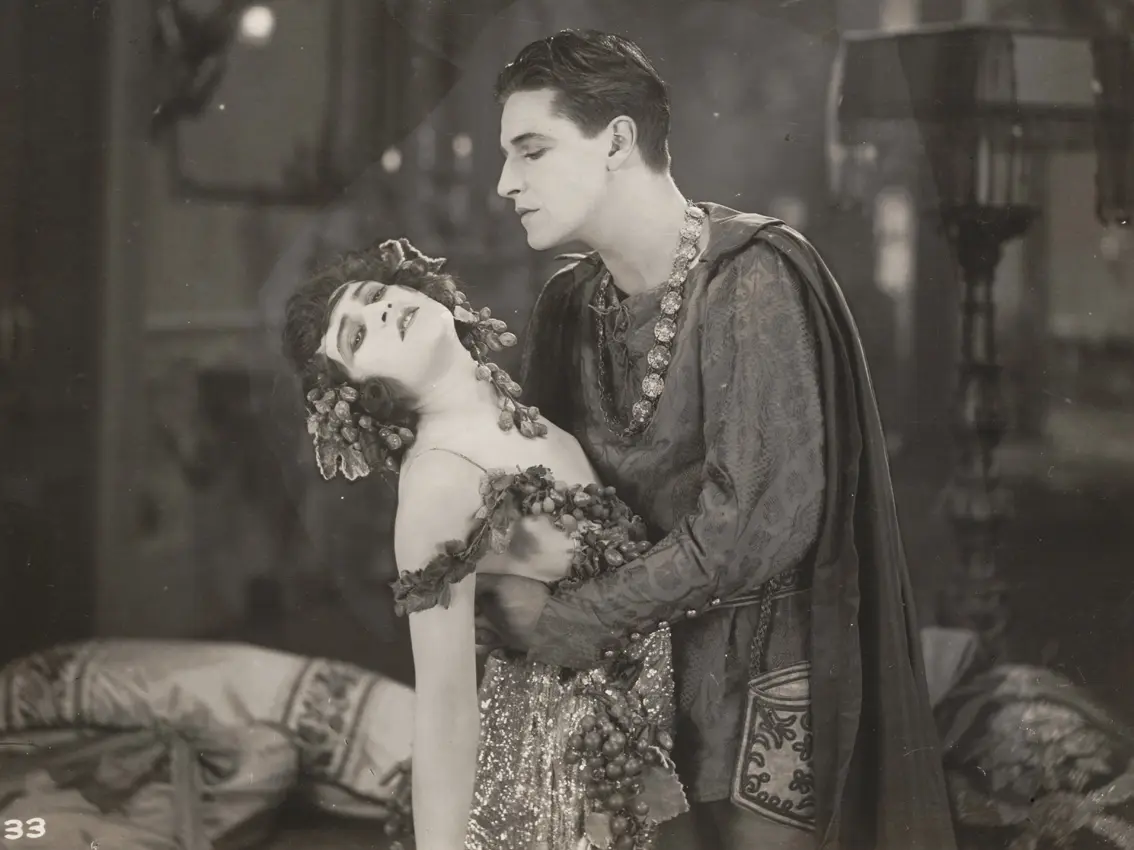
This sequence demands a high level of emotional intelligence from the viewer. We are forced to reckon with our own voyeurism. Are we cheering for the performance, or are we secretly enthralled by the potential for real-world violence? It’s a theme explored with less nuance in A Melbourne Mystery, but in Carnival, it is the very heart of the experience.
When looking at the broader spectrum of 1920s cinema, Carnival stands as a bridge between the theatrical traditions of the 19th century and the psychological realism of the 20th. It lacks the naive charm of Peppy Polly or the straightforward chivalry of Two Knights and Oh, What a Knight. Instead, it offers a gritty, uncompromising look at the dangers of total immersion in one's craft. Matheson Lang’s contribution to the screenplay ensures that the actor’s perspective is prioritized, making the film a rare document of thespian psychology.
The film’s pacing is deliberate, allowing the tension to accumulate like silt in a Venetian lagoon. It doesn't rely on the frantic action of a serial, but on the slow tightening of a noose. The costumes, the set design, and the pervasive sense of history all contribute to a feeling of inescapable fate. Like the best tragedies, the ending feels both shocking and inevitable.
To watch Carnival today is to witness a moment in time where the cinema was beginning to understand its own power to manipulate reality. It is a sophisticated, dark, and deeply moving piece of art that transcends its era. The performances of Lang and Novello are foundational, setting a standard for psychological depth that many modern thrillers fail to achieve. It is a film that reminds us that the most dangerous masks are not the ones we wear at a masquerade, but the ones we don every day to hide our truest, darkest selves from those we claim to love.
In the pantheon of silent film, Carnival deserves a place of honor. It is a testament to the power of visual storytelling and a harrowing reminder that sometimes, the play is not just the thing—it is a trap from which there is no escape. Whether you are a scholar of Shakespearean adaptations or a devotee of early 20th-century suspense, this film is an essential viewing experience that will linger in your mind long after the final intertitle fades to black.
IMDb 5.9
1928
Community
Log in to comment.