DbcultAccessing Vault...
6.6/10
Senior Film Conservator
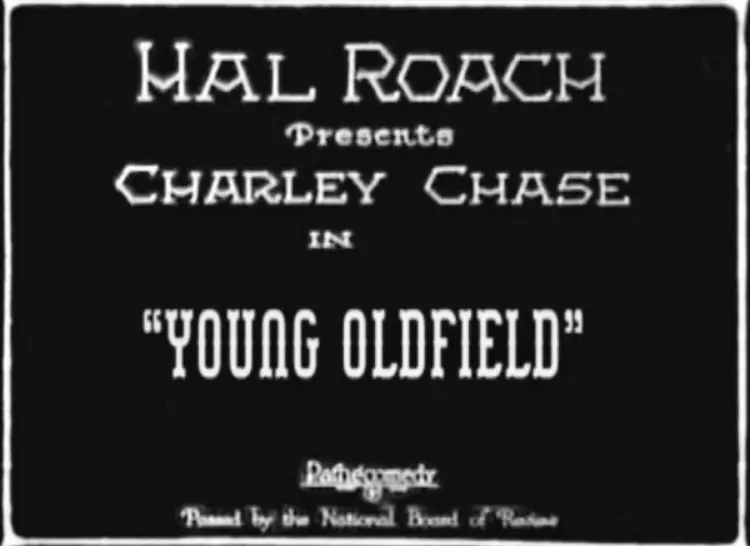
A definitive 6.6/10 rating for a film that redefined the boundaries of cult cinema. Young Oldfield remains a cornerstone of transgressive art.
To witness Young Oldfield (1924) is to observe the precise moment when the American cinematic comedy discovered its speedometer. In an era where the medium was still grappling with its own technical boundaries, this short film—anchored by the incomparable Charley Chase—functions as both a slapstick masterclass and a socio-economic document of the Roaring Twenties. While many contemporary critics might overlook the nuanced desperation of the silent era, 'Young Oldfield' demands a more rigorous interrogation of its themes, specifically the tension between industrial progress and personal insolvency.
The film’s premise is deceptively pedestrian: a race against time to save a shop from foreclosure. However, the execution is anything but mundane. Jimmy’s internal world is a blur of gasoline and glory, a stark contrast to the dusty, stagnant reality of his failing enterprise. Unlike the more surrealist leanings found in Hilde Warren und der Tod, which dealt with the metaphysical weight of mortality, 'Young Oldfield' grounds its stakes in the tangible dirt of the racetrack and the ink of a mortgage contract. The urgency is visceral, propelled by a rhythmic editing style that was revolutionary for its time.
Charley Chase, often overshadowed by the likes of Keaton or Lloyd, demonstrates here a unique brand of athletic vulnerability. His movements are not merely gags; they are expressions of a man trying to outpace his own obsolescence. The physical comedy is intricately choreographed, reminiscent of the complex spatial dynamics we see in Under the Top, yet it maintains a distinct focus on the machine as an extension of the human will. The automobile is not just a prop; it is a temperamental character that demands Jimmy’s total devotion.
The inclusion of the legendary Barney Oldfield—the man who became synonymous with speed in the early 20th century—elevates the film from a mere comedy to a cultural event. Oldfield’s presence provides a bridge between the fictional aspirations of Jimmy and the very real hazards of early motor racing. This blurring of reality and fiction creates a layer of authenticity that many silent dramas, such as Revelation, often struggled to achieve. Oldfield isn't just a name; he is a specter of success that haunts Jimmy’s every waking moment.
When we compare this to the ensemble dynamics in The Three Pals, we see a shift in how heroism is depicted. In 'Young Oldfield', heroism is solitary and mechanical. It is the individual versus the clock, the man versus the piston. The supporting cast, including Marie Mosquini and Noah Young, serve as the friction against which Jimmy must rub to generate his comedic sparks. Each interaction is a cog in a larger machine, meticulously timed to ensure the momentum never falters.
The "mortgage by noon" trope might seem cliché to the modern eye, but in 1924, it resonated with a public intimately familiar with the volatility of the post-war economy. This narrative device creates a relentless forward motion. While a film like Miss Dulcie from Dixie might meander through Southern charm and social etiquette, 'Young Oldfield' is a lean, mean, cinematic engine. There is no room for subplot; every frame is dedicated to the pursuit of the goal.
This singular focus allows for a deep exploration of the "stress-comedy" subgenre. We feel the heat of the engine and the sweat on Jimmy’s brow. The cinematography, handled with the typical Hal Roach flair for outdoor lighting and depth of field, captures the dusty Californian landscapes with a clarity that rivals the dramatic vistas of Colorado or A Sagebrush Hamlet. The camera isn't just observing the race; it is participating in it, vibrating with the intensity of the pursuit.
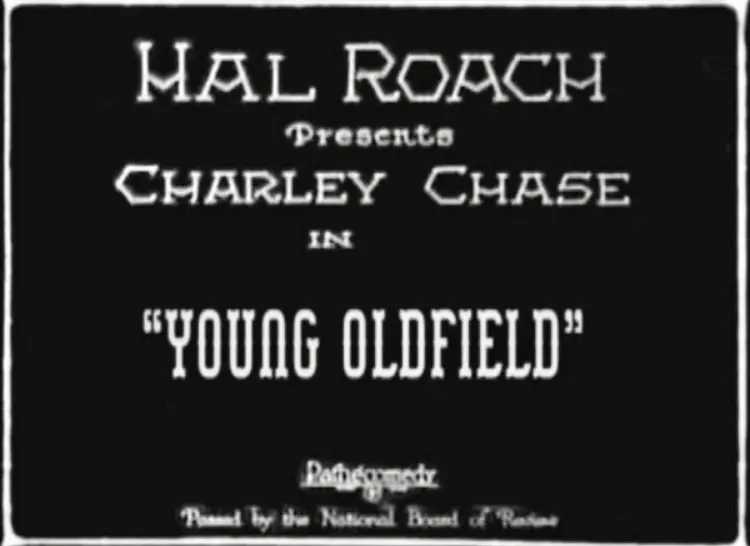
Beneath the surface of the slapstick lies a poignant critique of the American Dream. Jimmy is a dreamer, yes, but he is a dreamer who is one missed payment away from destitution. This vulnerability makes him a far more relatable figure than the aristocratic protagonists of European imports like Montmartre or the tragic figures in La faute d'Odette Maréchal. His shop is not just a building; it is his identity. The loss of his tools would be the loss of his soul.
The film subtly addresses the anxiety of the working class during the rapid industrialization of the 1920s. As machines became faster, life became more demanding. The car, which promised freedom, also brought a new set of financial burdens. This duality is captured perfectly in the scene where Jimmy’s car fails him at the most crucial moment. It is a betrayal of the very technology he worships. This theme of mechanical betrayal is also explored in a different context in Stolen Moments, though 'Young Oldfield' treats it with a levity that highlights the absurdity of our dependence on gadgets.
The direction (often credited to the collaborative environment of the Roach studio) is remarkably sophisticated. The use of long shots to establish the scale of the race contrasted with tight close-ups of Jimmy’s expressive face creates a dynamic visual language. The pacing is impeccable; it builds from a slow simmer of anxiety to a boiling point of comedic chaos. We see elements of the family-driven humor found in Family Affairs, but it is sharpened here by the life-or-death stakes of the mortgage.
One cannot discuss 'Young Oldfield' without mentioning the stunt work. In an age before CGI, every skid, every near-miss, and every high-speed turn was real. This authenticity provides a level of tension that modern action-comedies often lack. When Jimmy swerves to avoid an obstacle, the audience feels the centrifugal force. It is this visceral connection that has allowed the film to age with such grace. Unlike Big Happiness, which relied more heavily on theatrical plotting, 'Young Oldfield' is pure cinema—a story told through movement and light.
As we look back at the century since its release, 'Young Oldfield' stands as a lighthouse of silent comedy. It influenced countless "race against time" films that followed, from the frantic comedies of the 1930s to the high-stakes action of the modern era. It captures a specific American optimism—the belief that with enough pluck, a fast enough car, and a little bit of luck, one can outrun even the most crushing debts. It is a film that celebrates the underdog, the tinkerer, and the dreamer.
In conclusion, while it may not have the gothic grandeur of Zollenstein or the exotic allure of The Woman and the Beast, 'Young Oldfield' possesses a kinetic honesty that is rare. It is a reminder that at the heart of all great comedy is a grain of truth—and usually, that truth is moving at sixty miles per hour toward a deadline. For fans of Charley Chase, or for anyone interested in the evolution of the action-comedy, this film is an essential artifact. It is a high-octane joyride that manages to say something profound about the human condition without ever slowing down to check its mirrors. The film remains a testament to the fact that while technology changes, the human struggle against time and tide remains eternally, and hilariously, the same.
Whether compared to the emotional weight of It Happened to Adele or the adventurous spirit of the era's other shorts, 'Young Oldfield' holds its own as a masterpiece of brevity and impact. It is a shining example of how silent cinema could communicate complex anxieties through the simple, universal language of a car chase. If you have twenty minutes to spare, there is no better way to spend them than in the passenger seat with Jimmy, praying that he makes it to the bank before the clock strikes twelve.
IMDb 7.2
1936
Community
Log in to comment.