DbcultAccessing Vault...
6.8/10
Senior Film Conservator
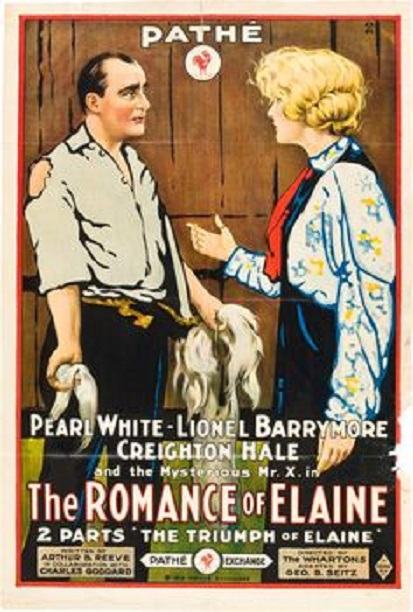
A definitive 6.8/10 rating for a film that redefined the boundaries of cult cinema. The Romance of Elaine remains a cornerstone of transgressive art.
A cobalt flash cuts the title card and we are already drowning.
Pathé’s 1915 serial The Romance of Elaine lands like a rivet in the skull: Episode 1, “The Lost Torpedo,” refuses the polite exposition of its contemporaries—no pastoral overture, no hand-holding iris-in. Instead, cinematographer George B. Seitz smashes the fourth wall with surf and steel, hurling us onto a New England shoal where moonlight rakes the Atlantic into mercury. A fisherman—our surrogate gargoyle—crouches behind salt-chewed granite; his eyes, twin shutter clicks, register the impossible: a periscope rises, a phallic promise of mechanized death, and from its maw emerges not a kraken but a man—Craig Kennedy—scientist, patriot, soon-to-be phantasm. The cut is so abrupt, so marine, you can taste kelp on the nitrate.
Compare this briny ingress to the languid prologue of The Golem or the candle-lit religiosity of The Life of Our Saviour; those films genuflect before their narratives. Elaine, conversely, dropkicks you into the plot like a torpedo with the safety-catch off.
Seriality in 1915 was commerce—studios birthed chapters weekly, feeding projectors like coal furnaces. Yet writers Arthur B. Reeve, Charles W. Goddard, and Basil Dickey lace cliffhanger mechanics with epistemological nitro. The torpedo itself—miniaturized, toy-like—embodies the era’s terror that children might soon unbox Armageddon. When Elaine’s spaniel drags the device across Persian rugs, its propeller still whirring like an angry cicada, the sequence parodies domestic security while foreshadowing drone warfare a century hence.
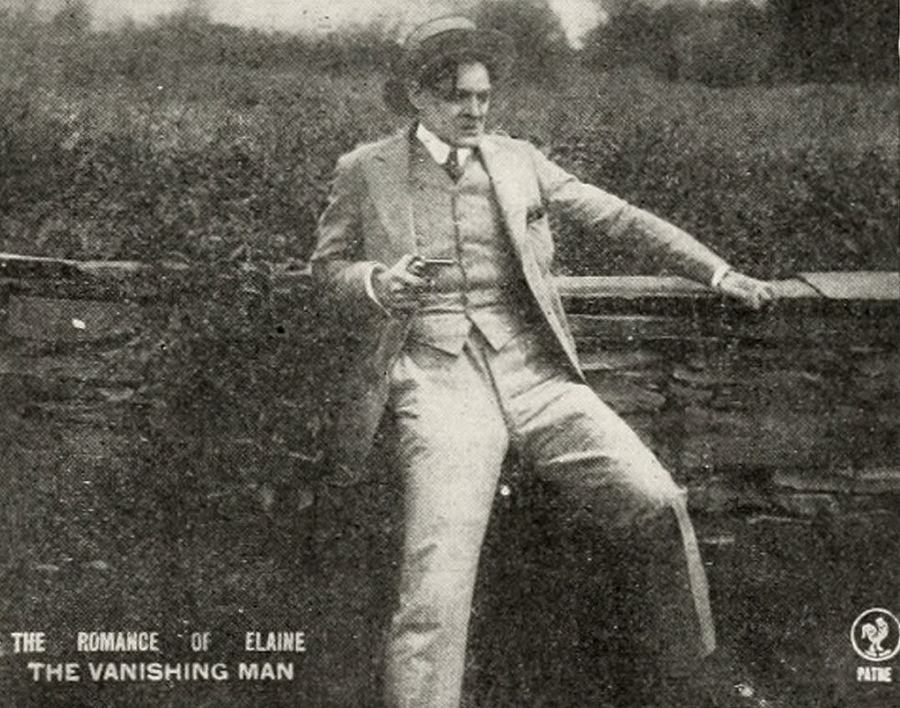
Notice how the screenplay withholds Kennedy’s corpus; we inherit only a note—ink smudged by brackish water—commanding Elaine to forswear grief. The absent hero becomes a negative space around which intrigue coils, recalling the hollow protagonists of Life Without Soul or Lost in Darkness, films that understood the silhouette can terrify more than the flesh.
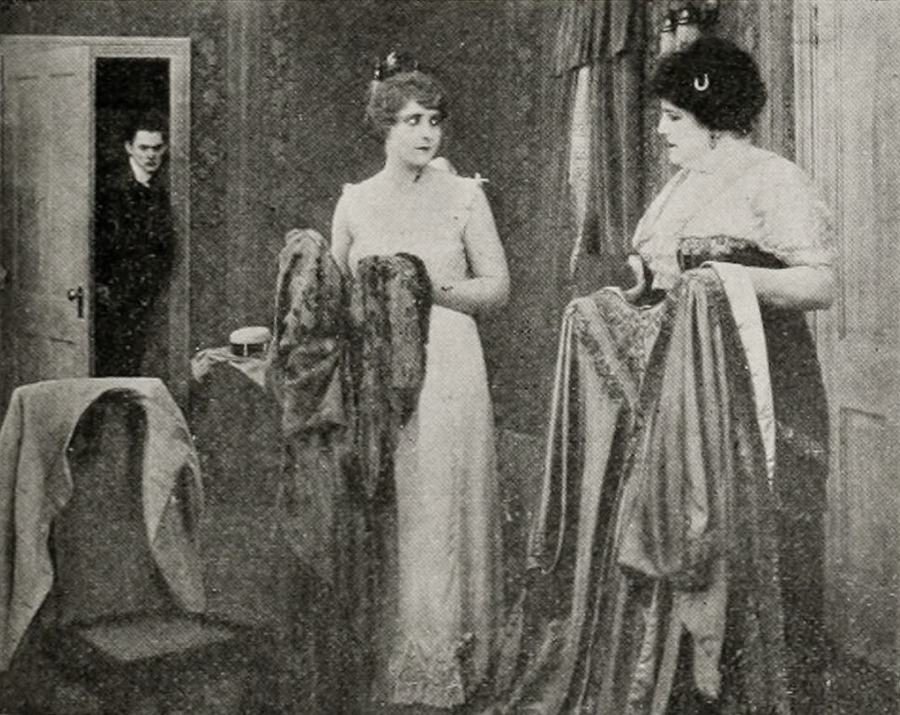
Pearl White’s Elaine is no fainting ingénue; she is mercury in a velvet glove. Watch her body language when Del Mar—that velvet-voiced viper—claims to be Washington’s cloak-and-dagger envoy. Her pupils dilate a single frame, a micro-expression that silent-era audiences devoured like sacrament. She sidesteps Victorian daintiness, preferring the athletic vocabulary that made her famous in The Perils of Pauline, yet here the peril is cerebral—Elaine must decode loyalties while wearing a ball-gown that could strangle her if she missteps.
The film’s feminist valence blooms when contrasted with Marta of the Lowlands or Madeleine, where women suffer as embattled saints. Elaine suffers, yes, but she also engineers—her dog is extension of her will, her attic a clandestine armory.
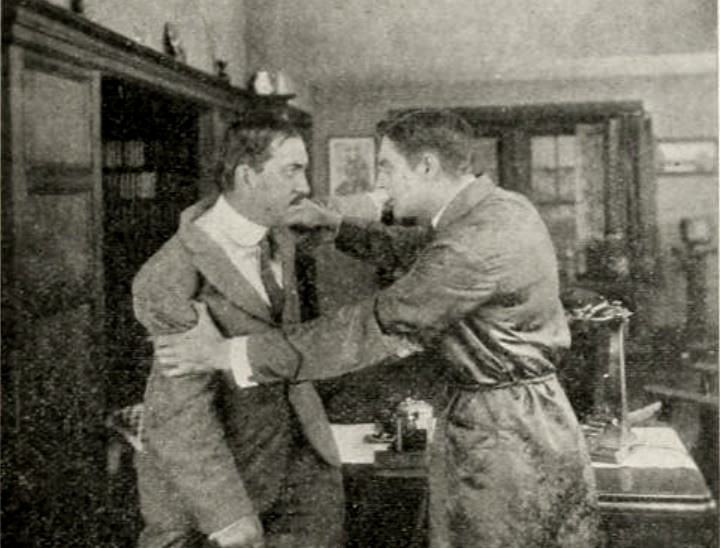
Paul Everton’s Del Mar arrives via oceanic metaphor—he is the tide that steals the shore. His tuxedo fits like sin, and his accent slides between Vienna and Valparaiso, a geopolitical Rorschach. Silent cinema trafficked in such polyglot villains, yet Everton refuses mustache-twirling; instead he projects weary erudition, as though world-domination were simply résumé padding. The screenplay codes him as “foreign” but never specifies nation, allowing xenophobia to seep into viewer projection while maintaining plausible deniability—a trick later perfected by Lang’s Dr. Mabuse.
When the faux-fisherman fires his gas-laden cartridge, the conservatory becomes a proto-surrealist canvas: fronds wilt, stained-glass distorts, Elaine collapses like a marionette with severed strings. The effect—achieved by double-exposure and verdant tinting—anticipates Cocteau’s blood-petal dreams in Beauty and the Beast. The gas itself is narrative Chekhov: introduced as novelty, discharged as climax, leaving both characters and audience asphyxiated on the question of technological ethics. One thinks of the chemical horrors soon to scar Verdun; Pathé́ inadvertently prophesied while merely vying for Saturday-matinee thrills.
Director George B. Seitz, future architect of the Andy Hardy franchise, here wields editing like a stiletto. Cross-cuts between Atlantic surf and Manhattan neon compress geography into synaptic jumps; audiences in 1915 had never felt time shear so violently. Compare his pacing to the pastoral longueurs of The Barnstormers or the tableau pieties of The Passion Play. Seitz’s whip-pans foreshadow Eisensteinian montage, yet they serve pulp adrenaline, not dialectic.
The periscope shot—framed from inside the brass tube—renders America as colonized space, viewed through the monocle of Old-World machination. It reverses Manifest Destiny: the frontier is no longer prairies but coastal darkness, penetrated by Teutonic tech. This inversion resonates with Der letzte Tag, where borders collapse under apocalyptic dread, and with The Tangle, whose urban labyrinth similarly refracts imperial paranoia.
Though mute, the episode orchestrates noise through suggestion: the torpedo’s imaginary whirr, the dog’s claws skittering parquet, the gas-bullet’s hushed phut. Contemporary exhibitors supplied thunder-sheet crescendos, yet modern restorations reveal how the film’s micro-rhythms—achieved via intertitle punctuation—compose their own musique concrète. View today with post-industrial ambient tracks and the conservatory sequence attains Lynchian hypnosis.
Pathé́’s lithographic palette saturates night scenes in nocturnal cerulean, while interiors blush with amber that makes skin resemble cognac. When the gas cloud engulfs Elaine, the print’s green tint oscillates between bile and emerald—an oneiric semaphore. Such chromatic rhetoric predates the unified monochrome of The Dancer and the King, proving that color storytelling need not await three-strip Technicolor.
Cliffhangers weaponize capitalism: the narrative interrupts precisely at the moment exchange-value peaks—your nickel buys only the breath, not the exhalation. Yet “The Lost Torpedo” delivers micro-catharsis; Del Mar and Elaine prone on Persian rug constitute an equilibrium, however toxic. Compare to The Flames of Justice, whose chapters end in conflagration sans resolution, or to A Question of Right, where legal cliffhangers merely defer jurisprudence. Here, the gas-induced slumber offers a perverse tableau vivant—an eroticized defeat that doubles as narrative comma.
Substitute the torpedo for zero-day malware and Del Mar becomes a black-hat contractor; the fisherman’s rummage through hotel drawers anticipates NSA laptop seizures. The film’s core anxiety—intellectual property absconding into saltwater darkness—mirrors our Deep-State neuroses. Watch The Thumb Print for fingerprint biometrics, then return to Elaine and realize cinema predicted the paranoiac cloud under which we stream.
Elaine’s gowns—beaded, hobbling—function as spy-tech; the bustle conceals diagrams, the chiffon veil filters microfilm. When she feigns fainting to mislead Del Mar, her body becomes rhetorical device, recalling Judith Butler’s theory of performativity avant la lettre. Contrast with Loves and Adventures in the Life of Shakespeare, where heroines wear sincerity as unblemished cambric; Elaine weaponizes vulnerability.
The terrier—nameless, scrappy—embodies pure narrative id. His archaeological dig among palms parodies colonial excavation, yet his discovery pivots empire’s fate. Animals in silent film often signal moral absolutes (see Solser en Hesse), but here the dog is chaos agent, indifferent to flags. His attic scamper, torpedo clamped between jaws, is cinema’s first canine leaker.
Century-old nitrate should feel archaic, yet “The Lost Torpedo” vibrates at frequency of modern unease: tech theft, state secrecy, bodies commodified, oceans politicized. The gas bullet prefigures trench warfare; the submarine gaze anticipates drone cams; the serial form models binge culture. Most crucially, Pearl White’s Elaine offers a blueprint for resistance—she negotiates panic with poise, weaponizes fragility, refuses to be archived as mere victim. To watch this episode is to witness the birth of 20th-century adrenaline, bottled in 12 minutes of flickering silver.
Verdict: Essential for cine-poets, spy-fi nerds, feminists, gearheads, and anyone who’s ever felt the ground shift beneath their patriotism. Stream, study, stan—and keep your dog away from the houseplants.

IMDb —
1923
Community
Log in to comment.