DbcultAccessing Vault...
Cult Review
Senior Film Conservator
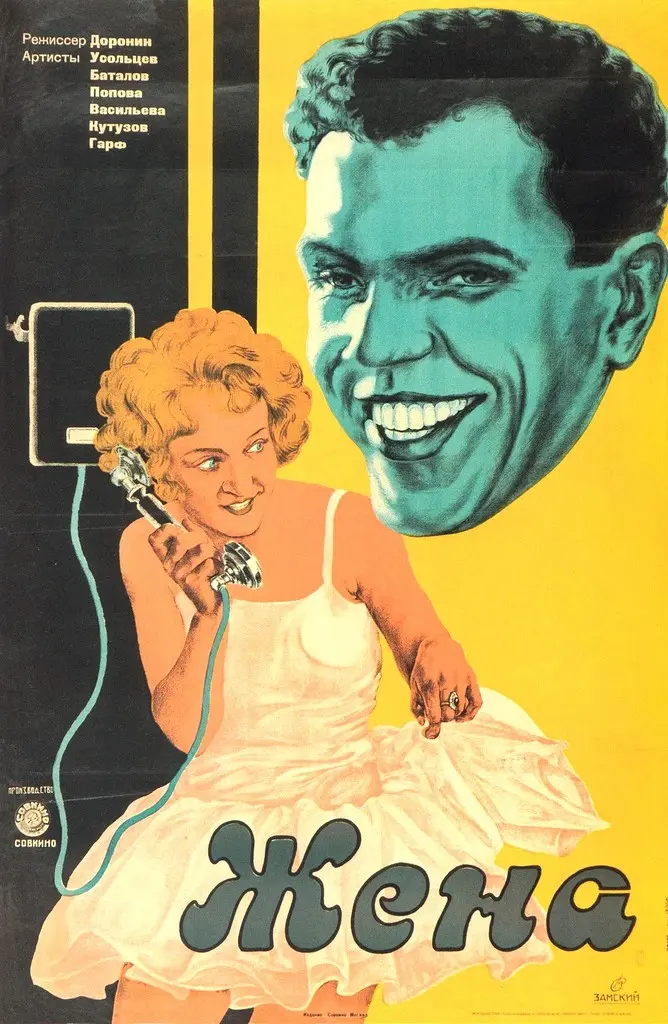
Is Zhena worth watching today? Short answer: yes, but with significant caveats that demand a particular kind of cinematic palate. This film is an essential watch for cinephiles interested in early Soviet cinema and its unique social commentary, particularly those fascinated by the nascent stages of women's emancipation in a rapidly changing political landscape. It is decidedly not for viewers seeking a straightforward, emotionally resonant drama or those unfamiliar with the historical context of the NEP era.
This film works because it fearlessly exposes the hypocrisy that can fester even within revolutionary ideals, presenting a surprisingly nuanced portrayal of female agency for its time. It fails because its pacing can feel uneven, and some of its didactic elements, while historically typical, may alienate modern audiences seeking subtler narrative arcs. You should watch it if you appreciate historical context, enjoy silent film aesthetics, and are keen to see a film that, despite its age, still sparks relevant conversations about gender roles and societal expectations.
Zhena, directed by Aleksandr Dubrovskiy, is not merely a domestic drama; it is a sharp, if sometimes heavy-handed, critique of the performative aspects of early Soviet social reforms. Set against the backdrop of the New Economic Policy (NEP) years, a period of ideological flux and economic pragmatism, the film introduces us to Glazkov (Nikolay Batalov), an assistant director at a textile factory. Glazkov is a man of grand pronouncements, a self-appointed champion of women’s emancipation, often seen delivering impassioned speeches at rallies, his gestures broad and his rhetoric soaring. His voice, though unheard in this silent era, is conveyed through the fervent intensity of his performance, a performative zeal that seems to define the man.
Yet, the film quickly peels back this public facade. Glazkov's commitment to 'emancipating Soviet women' proves to be a convenient ideological cloak for his own less-than-enlightened personal conduct. His swift, whirlwind romance with Tamara Bakhmetyeva (Tatyana Mukhina), a vivacious pop dancer, is not merely an affair; it’s a direct contradiction to the very principles he so loudly espouses. One particularly telling sequence shows Glazkov, fresh from a rally where he’s lauded women’s independence, furtively meeting Tamara in a dimly lit cafe. The contrast between his public posturing and his clandestine desires is stark, almost comical in its blatant hypocrisy, and Batalov plays this duality with an unsettling blend of charm and self-deception.
This central conflict, the chasm between revolutionary rhetoric and individual moral failings, is the film's most potent weapon. It suggests that even in a society striving for radical change, deeply ingrained patriarchal attitudes and personal weaknesses can undermine the loftiest ideals. Glazkov is not presented as a mustache-twirling villain, but rather a product of his time, a man perhaps genuinely believing his own words while simultaneously being unable to live up to them. This makes him, ironically, one of the most tragically human characters in the film, a mirror reflecting the nascent contradictions of a society in transition. His speeches, often depicted with rapid cuts to an enthralled (or perhaps merely polite) audience, serve as a constant reminder of the societal pressure to conform to new ideological norms, even if internal convictions lag behind.
While Glazkov embodies the performative aspects of Soviet emancipation, it is his wife, Varvara (Varvara Popova), who undertakes the film's true, quiet revolution. Initially presented as the wronged wife, her journey transcends mere victimhood or retaliatory spite. Her initial response to Glazkov's infidelity is conventional: she seeks to wound him by redirecting her attention towards Anton (Aleksandr Usoltsev-Garf), Glazkov's friend and factory committee chairman. This act, however, is less about genuine affection for Anton and more about a desperate attempt to regain control and assert her presence in a marriage that has dissolved into a lie.
But Varvara's character arc deepens considerably beyond this initial, almost petty, act of revenge. Her interactions with both Glazkov and Anton gradually reveal the hollowness of their respective moral positions. She sees through Glazkov’s grandstanding and recognizes Anton’s complicity or perhaps just his opportunistic nature. A pivotal scene, conveyed through Popova's subtle yet powerful expressions, shows Varvara observing Glazkov and Anton interacting, perhaps discussing her or the factory. Her eyes, initially filled with hurt, slowly harden into a gaze of profound disillusionment. It’s a moment of quiet epiphany, a realization that neither man offers her genuine respect or partnership, despite the new societal narrative of equality.
Zhena serves as an invaluable cinematic window into the complex social fabric of the NEP years (1921-1928). This was a period of deliberate retreat from the stringent war communism, allowing for limited private enterprise and a partial revival of market mechanisms. While economically pragmatic, the NEP also brought with it a clash of old and new values, a simmering tension between revolutionary idealism and the re-emergence of certain bourgeois tendencies. The film masterfully captures this societal friction.
The presence of Tamara Bakhmetyeva, the pop dancer, is particularly illustrative of this era's contradictions. Her profession, with its emphasis on entertainment and individual performance, represents a certain 'flashiness' that would have been viewed with suspicion by hardline communists but was tolerated, even celebrated, in the more relaxed atmosphere of the NEP. She embodies a kind of modern allure, a departure from the austere, utilitarian image often promoted for Soviet women. Her costumes, her confident demeanor, and her very existence as a public performer highlight the burgeoning cultural shifts and the tentative re-emergence of individual expression, even as the state continued to push its collective agenda.
Furthermore, the setting of the textile factory itself is significant. Factories were the heart of Soviet industrialization, symbols of collective labor and progress. Varvara's decision to work there isn't just a personal choice; it's an alignment with the grander narrative of Soviet nation-building and women's integration into the workforce. The film contrasts the relatively comfortable, if morally compromised, life of Glazkov, the administrator, with the gritty reality of the workers, echoing the ongoing class struggles and the ideological tensions of the time. The visual language of the factory — its machinery, its repetitive motions, the collective effort — stands in stark contrast to the individualistic pursuits of Glazkov and Tamara, grounding the personal drama within a broader socio-political commentary.
The effectiveness of a silent film often hinges entirely on the expressiveness and conviction of its cast, and Zhena is no exception. Nikolay Batalov, as Glazkov, delivers a performance that is both captivating and infuriating. He possesses a natural charisma that makes his character’s public pronouncements believable, even as his private actions betray them. One can almost hear the booming rhetoric in his expansive gestures and the earnestness in his wide, confident smiles. Yet, Batalov also subtly conveys Glazkov's internal conflict, or perhaps his self-deception, through fleeting glances of guilt or a sudden shift in posture when confronted by Varvara. His portrayal elevates Glazkov beyond a simple villain, making him a complex figure of revolutionary hypocrisy.
Varvara Popova, as Varvara, is the film's emotional anchor. Her performance is a masterclass in understated intensity. Unlike Batalov's theatricality, Popova conveys her character’s journey through nuanced facial expressions and controlled body language. The gradual shift from a hopeful, if naive, wife to a woman hardened by disillusionment and finally empowered by self-reliance is beautifully rendered. A particular scene where she witnesses Glazkov's casual disregard for her feelings, perhaps a dismissive wave of the hand, elicits a subtle tremor in her lower lip and a slow, deliberate turning away of her head – gestures that speak volumes more than any intertitle could. Her quiet strength offers a compelling counterpoint to the male characters' bluster.
Tatyana Mukhina, as Tamara Bakhmetyeva, brings a vibrant energy to her role. Her character is less developed in terms of internal conflict but serves as a crucial catalyst. Mukhina embodies the allure and perceived modernity of the pop dancer with a vivaciousness that is palpable even in black and white. Her confident posture, her engaging smiles, and her fluid movements on screen make her an understandable object of Glazkov’s illicit affections. While her role is primarily functional, Mukhina ensures Tamara is more than just a plot device; she is a symbol of the era's evolving social landscape, a woman who navigates her world with a certain independence, albeit one that is still entangled with male attention.
Aleksandr Dubrovskiy's direction in Zhena is a fascinating blend of conventional narrative techniques and moments of striking visual commentary. The film employs a relatively straightforward chronological structure, typical of many silent dramas, but Dubrovskiy often injects visual metaphors and contrasts that elevate the storytelling. For instance, the use of parallel editing is particularly effective in juxtaposing Glazkov's public speeches with his private indiscretions, creating an immediate and impactful visual irony. One sequence cuts rapidly between Glazkov delivering a fiery speech on workers' rights and a shot of him sharing a private, indulgent meal with Tamara, visually underscoring his hypocrisy.
The cinematography, while not groundbreaking when compared to experimental works like Number 13, is functional and often evocative. The camera work is generally static, allowing the actors' performances and the mise-en-scène to convey meaning, yet there are moments of dynamic composition. The factory scenes, in particular, are shot with an almost documentary-like realism, emphasizing the scale of industrial labor and Varvara's integration into it. The stark lighting on the factory floor, contrasting with the softer, more romantic lighting used in scenes with Glazkov and Tamara, subtly reinforces the film's thematic divisions between honest labor and deceptive leisure.
Dubrovskiy also makes judicious use of close-ups, particularly for Varvara, allowing the audience to intimately connect with her evolving emotional state. These tight frames on her face capture the subtle shifts from hurt to resolve, making her quiet rebellion all the more powerful. The overall visual tone is grounded, reflecting the realism often sought in early Soviet cinema, even when dealing with moral allegories. The choice to keep the visual language accessible ensures the film’s message, however ideologically charged, remains clear to its intended audience.
The pacing of Zhena can be described as deliberate, though occasionally uneven. The initial setup of Glazkov’s character and his affair with Tamara unfolds with a certain briskness, establishing the central conflict relatively quickly. The whirlwind romance, depicted through a montage of stolen glances and intimate moments, moves at a clip that suggests passion and recklessness. However, once Varvara’s disillusionment sets in and her journey towards independence begins, the film adopts a more contemplative rhythm. This shift, while serving to emphasize the gravitas of Varvara’s decision, can feel jarring to modern viewers accustomed to more consistent narrative momentum.
The tone of the film oscillates between social satire, domestic drama, and didactic messaging. There's an undeniable satirical edge to Glazkov's character, whose bombastic pronouncements feel almost farcical in light of his actions. This lighthearted critique gives way to a more serious, almost somber tone as Varvara’s plight takes center stage. The final act, focusing on her work at the factory, leans heavily into the didactic, showcasing the virtues of labor and female self-sufficiency, a common trope in Soviet cinema of the period. This tonal fluctuation, while perhaps intended to cover the full spectrum of societal commentary, can sometimes make the film feel a little disjointed, as if it’s trying to serve multiple masters.
One could argue that this unevenness is a deliberate choice, mirroring the chaotic and contradictory nature of the NEP era itself, where old and new ideologies clashed daily. However, it requires a viewer willing to engage with these shifts, rather than expecting a seamless emotional journey. Compared to the more tightly structured narratives of contemporary Hollywood films like The Galloping Kid, Zhena demands patience and an appreciation for its unique blend of social commentary and human drama.
Zhena is a film that operates on multiple levels – a personal drama, a social satire, and a historical document. It works. But it’s flawed. Its true triumph isn't its narrative resolution, which feels almost obligatory in its socialist-realist leanings, but its audacious willingness to expose the nascent hypocrisy within the very ideals it was meant to champion. Varvara's quiet defiance and her embrace of self-sufficiency remain remarkably resonant, offering a powerful, if sometimes understated, commentary on genuine emancipation versus performative rhetoric. While it demands a certain historical and cinematic appreciation, Zhena is a significant piece of early Soviet cinema that continues to provoke thought and discussion. It’s a film that asks us to look beyond the grand narratives and consider the messy, contradictory realities of human nature amidst societal upheaval.
IMDb 6
1925
Community
Log in to comment.