DbcultAccessing Vault...
Cult Review
Senior Film Conservator
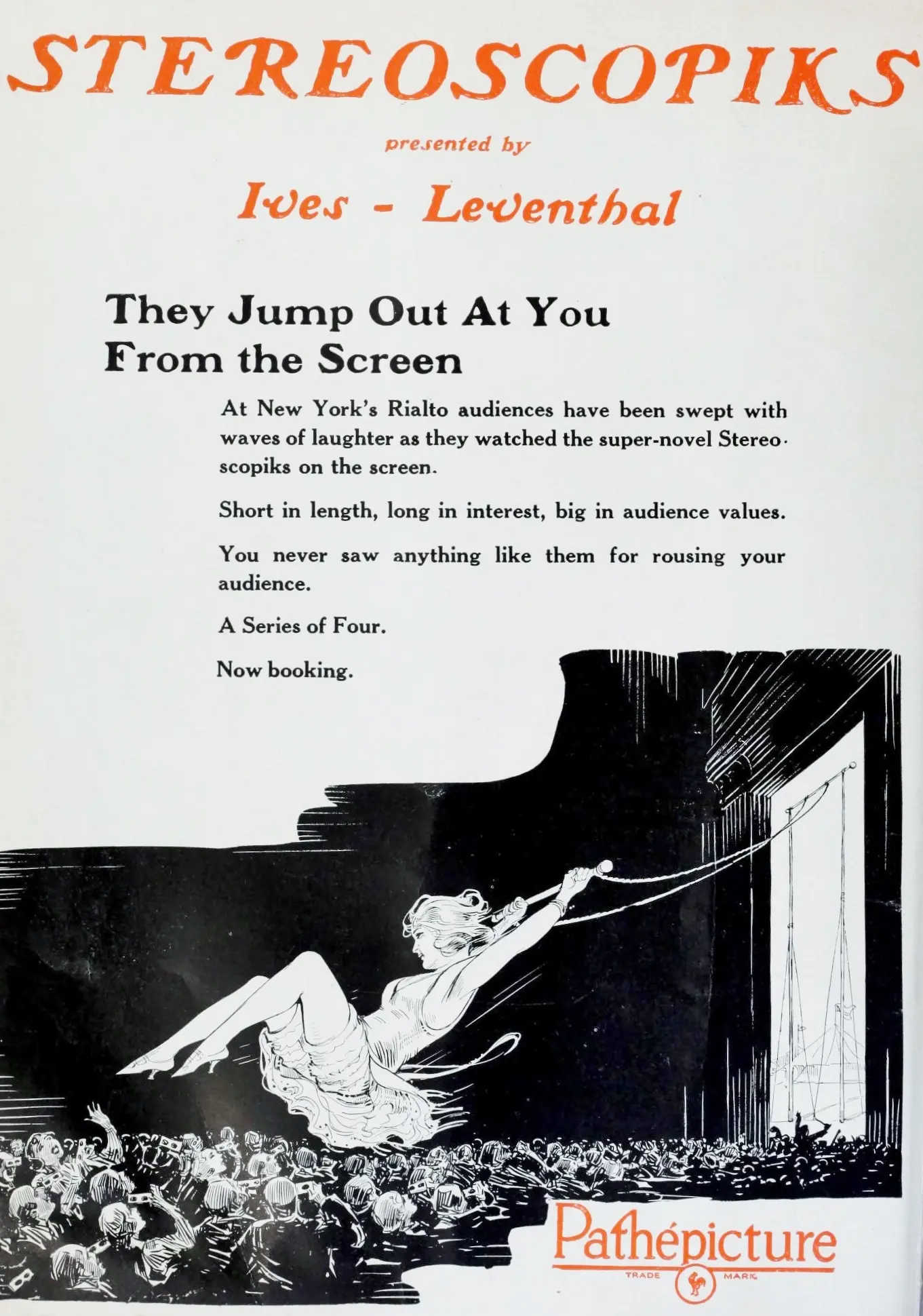
Is Zowie (1925) a essential piece of cinematic history that you need to watch today? Short answer: No, unless you are a dedicated film historian or a glutton for technical oddities. This film is for the archival enthusiast who finds beauty in the grain of a 100-year-old negative; it is certainly not for the modern viewer seeking a cohesive narrative or emotional stakes.
Frederick Eugene Ives and Jacob Leventhal didn't set out to make a movie that would compete with the dramatic weight of The Golem. Instead, they created a 'tech demo' before that term even existed. It is a loud, visual exclamation point that lives up to its title, but leaves the audience wondering where the rest of the story went. It is a ghost of a movie.
1) This film works because it captures the raw, unpolished ambition of early color and optical experimentation during a period of massive industry transition.
2) This film fails because it lacks any semblance of narrative structure, making it feel more like a series of disjointed outtakes than a finished piece of art.
3) You should watch it if you want to see the literal building blocks of visual effects or if you've already exhausted the filmographies of the era's masters.
By 1925, cinema was rapidly maturing. We had already seen the sophisticated storytelling of The Midnight Girl and the atmospheric tension of The Mysterious Stranger. In this context, Zowie feels like a regression, or perhaps a detour. Frederick Eugene Ives was a man obsessed with the mechanics of the image. His work here isn't about acting; it’s about how the light hits the silver halide.
The film lacks the polish of The Dancer of the Nile, but it possesses a manic energy that is hard to ignore. When Jacob Leventhal appears on screen, there is a sense of vaudevillian desperation. Every movement is exaggerated, every gesture is a plea for the audience's attention. It is a performance style that was already becoming dated by 1925, but in Zowie, it feels strangely appropriate.
The cinematography is static, yet the frame feels crowded. Ives uses the limited technology of the time to push the boundaries of what the eye could perceive. He wasn't interested in the sweeping vistas found in The Alaskan. He was interested in the micro-movements of the face and the way color could be simulated or enhanced through early tinting and lighting techniques.
For the average viewer, Zowie is a difficult sit. Even at its short runtime, the lack of a traditional 'hook' makes the seconds feel like minutes. However, for those interested in the evolution of the medium, it is a fascinating artifact. It represents the 'wild west' of filmmaking where rules were still being written and broken simultaneously.
If you compare it to something like His Wooden Wedding, which uses comedy to drive a narrative, Zowie feels hollow. But if you view it as a precursor to modern experimental video art, it gains a new layer of meaning. It is a film that demands you look at the screen, even if it gives you nothing to think about afterwards.
The collaboration between Ives and Leventhal is one of the more curious footnotes of the era. Ives was the scientist; Leventhal was the showman. This tension is visible in every frame of Zowie. There are moments where the technical requirements of the shot clearly override the comedic timing of the performer. It is a battle between the camera and the actor.
In one particular sequence, the lighting shifts so dramatically that Leventhal’s expression is nearly lost. A modern director would call this a mistake. In 1925, for Ives, this was likely the entire point of the exercise. He was testing the latitude of his film stock. He was playing with the medium like a child with a new toy.
This disregard for the 'rules' of cinema is what makes Zowie stand out from more polished works like Time Locks and Diamonds. It is ugly, it is loud (spiritually, if not literally), and it is unapologetically weird. It doesn't care if you like it. It only cares that it exists.
Pros:
Cons:
To understand Zowie, one must understand the year 1925. This was the year of Mania. Die Geschichte einer Zigarettenarbeiterin and the burgeoning influence of international cinema. The industry was becoming a monolith. In this environment, small, experimental shorts like Zowie were the equivalent of 'indie' films today, though they lacked the distribution networks we now take for granted.
The film also exists in a world of censorship, as explored in Cut It Out: A Day in the Life of a Censor. While Zowie is harmless in its content, its chaotic form might have been just as confusing to the censors of the day as it is to audiences now. It defies categorization, which was a dangerous thing in the early 20th century.
Zowie is a reminder that cinema was not born with a set of instructions. It was forged in the basements of scientists and the stages of clowns.
When we look at The Half Breed or Beloved Jim, we see the foundation of modern drama. When we look at Zowie, we see the foundation of the music video, the commercial, and the TikTok. It is a film of 'moments' rather than 'movements.' This is its greatest strength and its most frustrating weakness.
Zowie is not a 'good' film by any conventional metric. It is disjointed, narratively bankrupt, and visually erratic. However, it is a vital film. It represents a branch of the cinematic family tree that didn't quite grow into a trunk but provided the shade for many future innovators. If you can appreciate it as a technical exercise—a 1925 version of a GPU benchmark—then there is value to be found.
But let’s be honest: most people will find it boring. It lacks the charm of Cold Turkey and the mystery of Wisp o' the Woods. It is a cold, calculated experiment that wears a clown mask. It works. But it’s flawed. It is a scream into a void that was already filling up with the voices of much better storytellers. Watch it once for the history, then go back to the classics.

IMDb 6.3
1934
Community
Log in to comment.