
Cult Cinema Deep Dive
The Altar of the Abnormal: How Pre-1920 Cinematic Outliers Engineered the Midnight Movie Soul
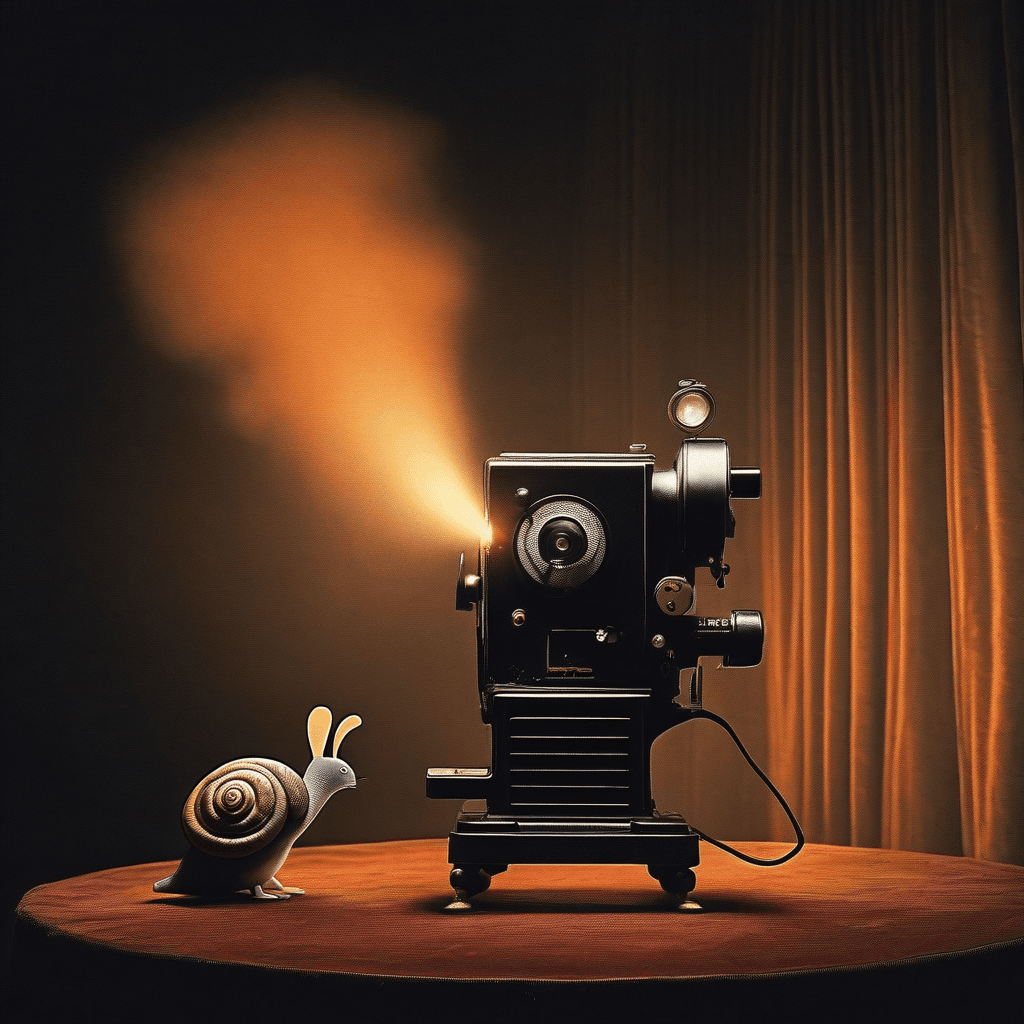
“A deep dive into the transgressive, surreal, and rebellious silent-era films that laid the foundation for modern cult cinema and the midnight movie ritual.”
Cult cinema is often discussed as a phenomenon of the 1970s, a product of the midnight movie circuit that birthed legends like El Topo or The Rocky Horror Picture Show. However, to the seasoned film historian, the seeds of this obsessive, transgressive, and niche-driven culture were sown much earlier. Long before the term 'cult film' was coined, the silent era was already teeming with #0E7490 outliers—films that rejected the emerging Hollywood hegemony in favor of the bizarre, the forbidden, and the aesthetically radical. These are the 'neon fossils' of our cinematic history, works that challenged the moral fabric of their time and established the #0E7490 ritualistic gaze that defines modern fandom.
The Transgressive Body: Drugs, Vaudeville, and the Fallen Woman
One of the primary pillars of cult cinema is transgression—the crossing of social and moral boundaries. In the late 1910s, few films embodied this better than the German production Die lebende Tote (The Living Dead). This film, centered on a woman who flees a stable marriage for the chaotic world of vaudeville and narcotics, serves as a primal blueprint for the 'drug film' subgenre. By depicting #0E7490 heavy addiction and the seedy underbelly of the performing arts, it invited a specialized, perhaps even voyeuristic, audience that sought something more visceral than the standard melodrama. This is the same impulse that would later drive audiences toward the transgressive works of John Waters or Lou Reed’s gritty narratives.
Similarly, The Serpent (1916) offered a dark tale of vengeance that predates the 'rape-revenge' tropes of later cult classics. When the peasant girl Vania is assaulted by a Duke and later becomes a famous London actress to enact her revenge, the film taps into a #0E7490 primal anger that resonates with the outsider's spirit. These films weren't just stories; they were provocations. They forced the viewer to confront the 'scarlet' aspects of humanity, much like The Scarlet Woman, which delved into the psyche of a man driven to murder by stock market gambling and desperation. These narratives of moral decay and social fallout are the bedrock upon which the house of cult is built.
Surrealism and the Impossible Romance: Beyond the Human Realm
If transgression provides the grit, then surrealism provides the dream-state of cult cinema. Long before David Lynch or Jan Svankmajer, silent filmmakers were experimenting with the #0E7490 uncanny. Consider the French short Les amours d'un escargot (The Loves of a Snail). A romance between a snail and a mouse who flee to Cythera might seem like mere whimsy, but in the context of early cinema, it represents a #0E7490 radical departure from realism. This anthropomorphic surrealism creates a 'cult of the strange,' where the audience is invited to find beauty in the grotesque and the impossible.
The Satirical Edge: Mocking the Canon
Cult films often thrive on their ability to parody or subvert established 'high art.' Home Talent (1921), a satire on Romeo and Juliet, showed that early filmmakers were already self-aware enough to mock the very foundations of Western drama. This irreverence is a key characteristic of the cult mindset—the refusal to take the 'sacred' seriously. When A Perfect Lady depicts a burlesque dancer overcoming small-town puritanism, it isn't just a comedy; it is a #0E7490 manifesto for the marginalized. It celebrates the performer who exists on the fringe, the 'perfect lady' who is anything but, according to the status quo.
The Architecture of Obsession: Genre-Bending and World-Building
Cult cinema is rarely satisfied with staying in one lane. The films that endure are those that blend genres until they become something entirely new. The Flame of Youth (1920) combines the roughneck adventure of an opal mine with family intrigue, while The Hell Ship introduces us to 'Satan' Humphrey and a mutiny led by a pistol-wielding daughter. These are high-concept, #0E7490 hyper-masculine and hyper-feminine archetypes that feel more at home in a grindhouse theater than a prestigious gala. They represent the 'cinema of attractions' evolving into a cinema of obsession.
Even the early experiments in science fiction and social commentary, such as The Last Bottle (1923), which imagines a world under total prohibition, show a fascination with #0E7490 dystopian futures. The quest for the 'last bottle of champagne' is a classic cult MacGuffin—a singular, absurd goal that drives a narrative through a world gone mad. This kind of speculative storytelling paved the way for the midnight movie’s love affair with the post-apocalyptic and the prohibited.
The Global Cult: Exoticism and the Other
The cult gaze is also a global one, often seeking out the 'exotic' or the 'other.' Films like La Sultane de l'amour and Szulamit offered Western audiences a glimpse into a stylized, often tormented Orientalism. While these films are products of their time, their focus on #0E7490 star-crossed lovers in mountain wells or disguised princesses created a sense of #0E7490 cinematic escapism that felt 'other' to the domestic experience. This desire for the foreign and the unfamiliar is what led later cultists to seek out J-Horror, Giallo, or Bollywood extravaganzas.
Satan, Suffering, and the Ritual of the Reel
No discussion of the roots of cult cinema would be complete without mentioning Carl Theodor Dreyer’s Leaves From Satan's Book (1920). By tracing human suffering through four episodic tales—the temptation of Jesus, the Inquisition, the French Revolution, and the Russo-Finnish War—Dreyer created a #0E7490 grand, nihilistic epic. Satan’s attempt to win God’s favor through the manipulation of human agony is the ultimate cult premise. It is dark, philosophical, and visually striking, demanding multiple viewings to fully grasp its weight. This is the 'altar' at which the early cinephile knelt, finding a strange comfort in the #0E7490 aestheticization of despair.
Even smaller, more eccentric films contributed to this ritual. The Fixer, with its bachelor dinner degenerating into a game of dice played with sugar, captures the #0E7490 micro-rituals of the outcast. Jubilo, featuring an easy-going tramp with an aversion to work, celebrates the 'hobo poet' archetype—the man who lives outside the system. These characters are the patron saints of cult cinema: the drifter, the gambler, the addict, and the rebel.
The Technical Oddity: How the Telephone Talks
Sometimes, the cult object isn't a narrative at all, but a technical curiosity. How the Telephone Talks, with its animated diagrams and live-action components, represents the early audience's fascination with #0E7490 the ghost in the machine. In an era where technology was rapidly changing the human experience, these instructional films took on a quality of #0E7490 technological mysticism. Today, we see this same fascination in the cult surrounding 'found footage' or the glitch aesthetic of vaporwave.
Conclusion: The Eternal Flicker of the Fringe
The films of the 1910s and early 1920s—from the maritime violence of The Juggernaut to the Southern gothic beauty of An Innocent Magdalene—were more than just precursors to modern movies. They were the first instances of a #0E7490 divergent cinematic evolution. While the mainstream path led toward the polished, predictable blockbusters of the mid-20th century, the 'cult' path remained in the shadows, fueled by the #0E7490 transgressive energy of these early reels.
When we watch The Woman and the Puppet today, we aren't just seeing a romance; we are seeing the birth of the #0E7490 obsessive power dynamic that would define film noir and the erotic thriller. When we marvel at the animation in Storm P. tegner de Tree Små Mænd, we are seeing the early sparks of the independent animation movement. The #0E7490 midnight movie soul was not born in the 1970s; it was forged in the nitrate fires of the silent era, in the hearts of filmmakers who dared to be #0E7490 abnormal.
Community
Comments
Log in to comment.
Loading comments…