
Film History
The Anatomy of the Unwanted: How Silent Era Medical and Social Taboos Birthed the Cult of the Macabre
“From the dissection tables of 1917 to the forbidden romances of the pre-Code era, we explore the transgressive roots of early cinema's most unsettling outcasts.”
The lineage of the midnight movie is not found in the sanitized blockbusters of the 1920s, but in the grime-streaked reels of social pariahs and medical nightmares that dared to flicker in the shadows of the early twentieth century. Long before the term cult cinema was coined by academic circles, a subterranean current of transgressive storytelling was already flowing through the nitrate veins of the silent era. These were films that didn't just entertain; they interrogated the boundaries of the human body, the sanctity of the mind, and the rigid structures of a society terrified of its own reflection. To understand the modern obsession with the 'weird' and the 'forbidden,' we must look back at the anatomy of the unwanted—the moments where early cinema stopped being a novelty and started being a threat.
The Clinical Gaze: Bodies on the Dissection Table
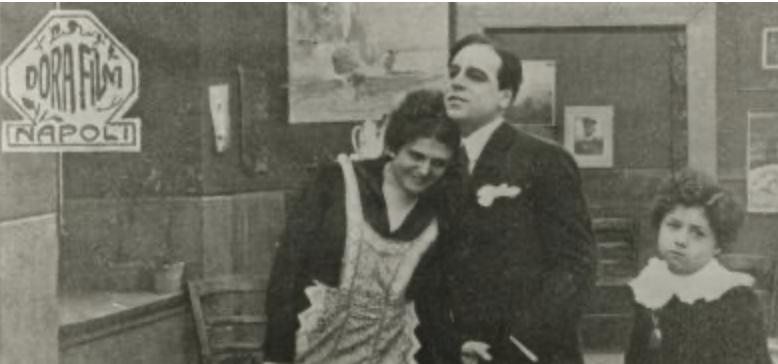
Perhaps no film from the silent era captures the 'cult' fascination with the abject body more viscerally than the 1917 Italian production Mandolinata a mare. In a narrative that feels startlingly modern in its nihilism, a destitute woman named Maria dies in an asylum fire, only for her unclaimed corpse to be donated to a medical academy. The film concludes not with a moralistic resolution, but in the cold, sterile environment of an anatomy dissection theater. It is a moment of pure, unadulterated clinical horror that predates the graphic medical fascination of later underground movements by decades.
This fixation on the body as a mere vessel—disposable, observable, and ultimately decaying—is a cornerstone of the macabre aesthetic. In the early 1900s, the camera was often used as a scientific tool, but when that scientific gaze turned toward the 'unwanted' members of society, it created a friction that audiences found both repulsive and hypnotic. The 'unwanted' body in Mandolinata a mare serves as a precursor to the body-horror tropes we see in the works of David Cronenberg or the transgressive underground of the 1970s. It forces the viewer to confront the physical reality of death without the comforting veneer of religious sentimentality.
The silent camera did not just record reality; it stripped away the social mask, revealing the raw, often terrifying mechanics of existence that the mainstream preferred to ignore.
The Social Pariah and the Forbidden Romance
While medical realism provided the physical shock, the 'cult' spirit of the silent era was equally fueled by social transgression. Early cinema often explored the lives of those existing on the periphery of 'polite' society. Consider the 1919 film The Courageous Coward, which navigated the treacherous waters of Japanese-American identity and interracial romance. For its time, the depiction of Suki Iota’s struggle to find acceptance while pursuing the niece of his guardian was a radical departure from the caricatured 'yellow peril' tropes that dominated the era's mainstream output.
These films are the ancestors of the 'outsider' narratives that define modern niche fandoms. They speak to a sense of 'otherness' that mainstream cinema, with its focus on universal appeal, often fails to capture. We see a similar theme in the Hungarian film Az obsitos, where a young man from a good family falls for a woman he is forbidden to marry. The resulting desperation—leading him to the front lines of war—is a recurring motif in cult narratives: the idea that social constraints are a prison from which only extreme, often self-destructive action can offer escape.
- The rejection of traditional family structures in favor of radical individuality.
- The exploration of ethnic and racial identities beyond the white-centric Hollywood lens.
- The romanticization of the 'loser' or the 'misfit' who refuses to conform.
Fractured Minds: Visualizing the Internal Abyss
Before the psychological thriller became a codified genre, silent filmmakers were experimenting with ways to visualize the 'unwanted' thoughts of the human psyche. Madness was not just a plot point; it was an aesthetic. In the 1920 film Aylwin, a woman goes mad following the death of her father in a landslide. The visual representation of her mental collapse—the frantic editing, the expressive use of light and shadow—prefigures the psychedelic and hallucinatory sequences of later surrealist cinema.
Similarly, A Sleeping Memory deals with the psychological fallout of social disgrace and suicide. These films didn't shy away from the darker corners of the mind. They embraced the 'unwanted' emotions: grief, trauma, and insanity. By doing so, they created a blueprint for the psychological horror and 'mind-fuck' movies that would later populate the midnight movie circuit. The audience for these films wasn't looking for a happy ending; they were looking for a reflection of their own internal chaos.
The Shadow of the Occult and the Satanic Seed
No discussion of early transgressive cinema would be complete without mentioning the flirtation with the supernatural and the satanic. The 1920 anthology Satanas, often associated with the early genius of F.W. Murnau, took the viewer through a historical journey of evil, from ancient Egypt to the Russian Revolution. It presented Satan not as a cartoonish villain, but as a persistent, shadow-like presence throughout human history. This 'unwanted' spiritual influence became a recurring theme in cult cinema, from the folk horror of the 1960s to the satanic panic films of the 1980s.
Moral Masquerades: The Transgressive Woman
The silent era was also a battleground for gender roles, often featuring women who harbored 'unwanted' secrets that threatened the patriarchal order. Lady Audley's Secret (1920) is a prime example of the 'sensation' narrative that found new life on the screen. The protagonist, believing her husband dead, remarries into the aristocracy, only to have her past return to haunt her. This theme of bigamy and social deception was a direct challenge to the Victorian morality that still gripped much of the public imagination.
In Mrs. Erricker's Reputation, we see a widow compromising her own standing to protect a family member. These women were not the 'virginal' heroines of mainstream melodrama; they were complex, often morally ambiguous figures who navigated a world of 'unwanted' reputations. They are the direct ancestors of the femme fatale of film noir and the transgressive heroines of exploitation cinema. They used their 'unwanted' status as a weapon, a way to navigate a society that offered them few legitimate avenues for power.
The Legacy of the Forgotten Nitrate
Why do these forgotten reels still resonate with the cult film enthusiast today? It is because they represent a time when cinema was still figuring out its own moral compass. Before the Hays Code and the homogenization of the studio system, filmmakers were free to explore the 'unwanted' aspects of life with a raw, often unpolished intensity. Films like The Grip of Jealousy, which tackled the complexities of illegitimacy and slavery in the pre-Civil War era, or The Paliser Case, where murder disrupts a forced marriage, offered a glimpse into a world that was far from the 'golden age' idealism we often associate with the past.
The 'cult' of these films lies in their very obscurity. To seek out a lost adaptation like the 1923 version of The Spoilers or to analyze the morbid ending of Mandolinata a mare is an act of cinematic archeology. It is a refusal to accept the curated history of the medium. We find in these films a rebel spirit—a willingness to show the 'unwanted' corpse, the 'unwanted' lover, and the 'unwanted' truth. This is the true DNA of cult cinema: a devotion to the things the world would rather forget.
As we continue to digitize and rediscover these silent fragments, we aren't just finding old movies; we are finding the roots of our own modern obsessions. The next time you find yourself in a dark theater at midnight, watching a film that challenges your comfort or your morality, remember that someone was doing the exact same thing in 1917, staring at a flickering screen and finding beauty in the anatomy of the unwanted.
Community
Comments
Log in to comment.
Loading comments…