
DbcultAccessing Vault...
Recommendations
Senior Film Conservator
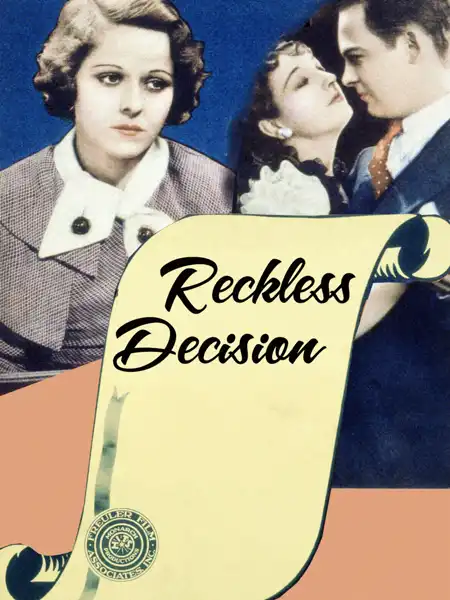
If the thematic gravity of John W. Noble's work in Reckless Decision left an impression, the cinematic shorthand used by John W. Noble is both ancient and revolutionary. We've prioritized films that capture the 1933 aesthetic with similar precision.
By merging thematic gravity with Drama tropes, it to articulate the unspoken anxieties of United States's 1933 era.
A mother and father try to find a way to protect their young daughter against the influences of booze, wild parties and (gasp!) dancing during the Jazz Age.
Reckless Decision was a significant production in United States, showcasing the immense talent of Donald Thompson, Adeline Hayden Coffin, Doris Eaton. It continues to be a top recommendation for anyone studying Drama history.
Based on the unique thematic gravity of Reckless Decision, our vault has identified these titles as the most compelling follow-up experiences for fans of Drama cinema:
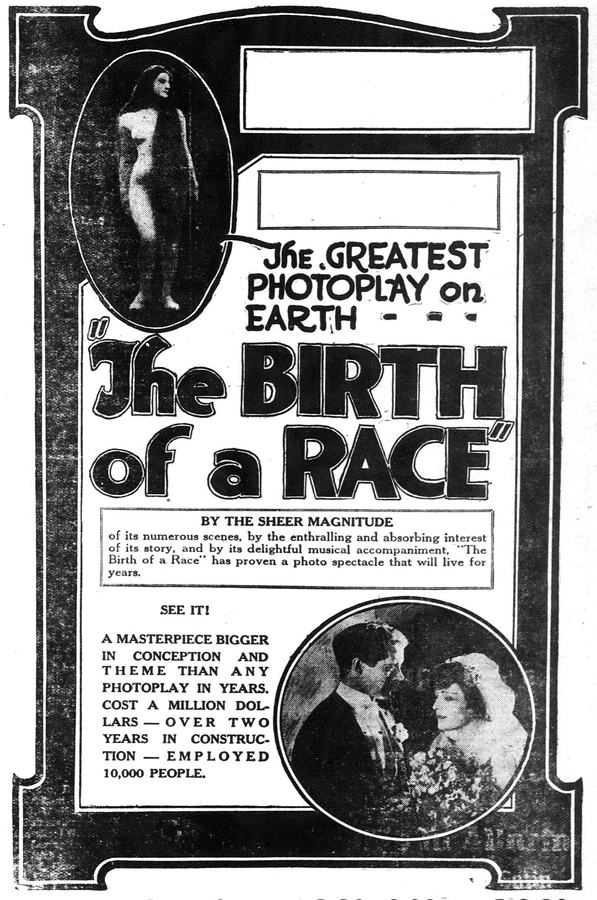
Dir: John W. Noble
After a biblical and historical prologue detailing the evolution of the idea of democracy through the creation of the world, the flood, the crucifixion of Christ, the discovery of America, the signing of the Declaration of Independence, and the Civil War, the present-day threat to this idea by autocratic powers is dramatized. Fritz Schmidt, a German-American steel plant owner, and his son Oscar remain loyal to the Kaiser, while son George fights for the Allies. When the American army hospital where Louisa Schmidt works as a nurse is attacked by the Germans, Oscar, now a German soldier, assaults her, not recognizing his sister in the confusion. George, recovering in the hospital, kills his brother and then returns home to find his mother and a German spy struggling for some secret papers. George kills the spy, Fritz realigns his loyalty to the American cause, and the family is reunited.
View Details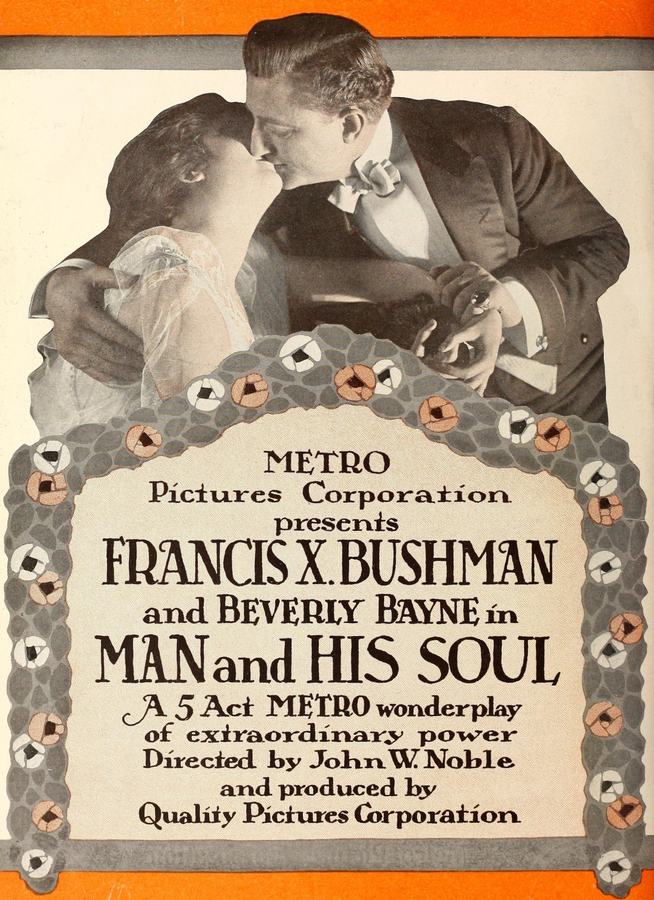
Dir: John W. Noble
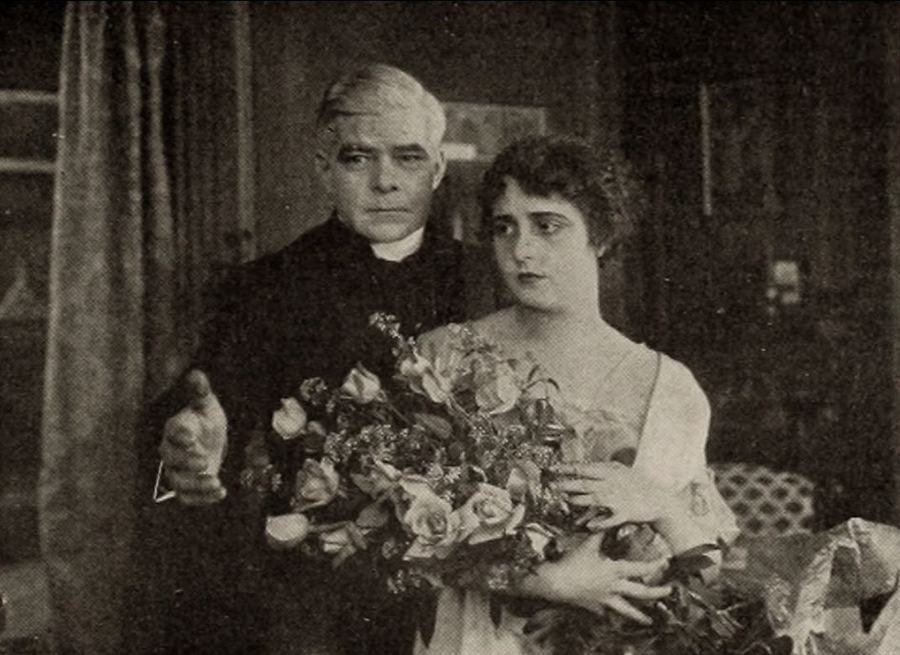
The allegory which begins the story represents the world before the creation of man. Out of the elements is born Conscience. Conscience is then present at the fall of the first parents, and drives them from the garden. Conscience is again present when Moses breaks the tablets of stone in his anger at the Israelites for their idolatry on Sinai. At last Conscience sustains the Christ when He stands on trial before the Roman Governor of Judea, Pontius Pilate. Then begins the story. A child is born, bearing the name of John Conscience. The figure of the allegory is seen to touch the newborn babe, and it is fore-ordained that he is to be a creature of Conscience. The child grows to manhood. He holds the chair in economics in a great university, and is delivering an exhortation to the graduating class. He tells the young men of some of the shameful conditions the wealthy employer class is imposing upon the poor and helpless class. He bids them go forth with conscience to guide their careers, and that they will be successful in the real sense. The wealthy men, trustees of the university, etc., who are in audience, disagree with John Conscience's principles to such an extent that they demand his resignation, as the result of the speech. One of them, however, Stephen Might, whose son Stephen Might. Jr., is among the students, feels that John Conscience will be a great success in some business where the question of conscience will not be raised, and tells him that he will have a position for him whenever be may want it. John Conscience, sustained by the encouragement of his mother, tries in various fields, without success. He happens to see a girl who is about to end her efforts to succeed and still remain good, by plunging into the river. He dissuades her and takes her to his mother. She tells her story, how she had left her father's roof to earn her living and be useful in the world, and the mother advises her to go back to her father. John is inspired with new hope after his good deed, goes to Stephen Might, obtains a position for himself, and also one for the girl. He rises in position with this concern, and a love affair develops between them, but Stephen Might, Jr., also falls in love with the girl. At a time when a rival company is trying to bribe John Conscience to divulge secrets which will mean the undoing of Might and Company, John Conscience comes upon Mary Knowles, the girl, in the arms of Stephen, and thinks she has accepted him. His mistake causes him to throw off conscience, and begin a grinding, resolute, uncompromising drive for wealth. In Chicago John Conscience takes the name of John Power. He comes to the control of great interests, owns factories, and rules over all these interests with a hand of iron. His employees are but mechanical parts of his structure, and he has no soul, no heart. When the girl realizes what he had meant to her, she denounces Might, Jr., and her father, who had helped about the situation, and runs away. At the time Power's success is at its zenith she us a stenographer in one of his factories. At this time also, in his determination to avenge himself upon Stephen Might, Jr. he is using unfair business methods to drive the Might concern to the wall. Young Might learns that it is the Power firm which is oppressing them and goes to see Power, not knowing who he is. He arrives, and as John is about to drive home his revenge, Stephen tells h him of a mistake, that he thought Mary was with him, as she ran away the same night he had disappeared. John has been harassed by the public safety committees about the unsanitary conditions and lark of safety in his factories, and has been obdurate and unresponsive. Now, he sees that he was wrong, experiences a faint hope, and tells Might he will let him know the next day what can be done. He goes home, and sits by the fireplace in his library to think. Conscience appears to him again, and shows him, by a series of contrasts, the difference between the power he has achieved over the financial world and that which Conscience wields over the souls of men. He is receptive, and Conscience again enters his soul. He calls for architects and builders to reconstruct his factories, for the safety of his employees, and before they can begin work a great fire breaks out in one of his factories, and Mary is caught in an upper story. John rides to the scene, and sees her at a window. He rescues her and their romance finds its proper conclusion.
View Details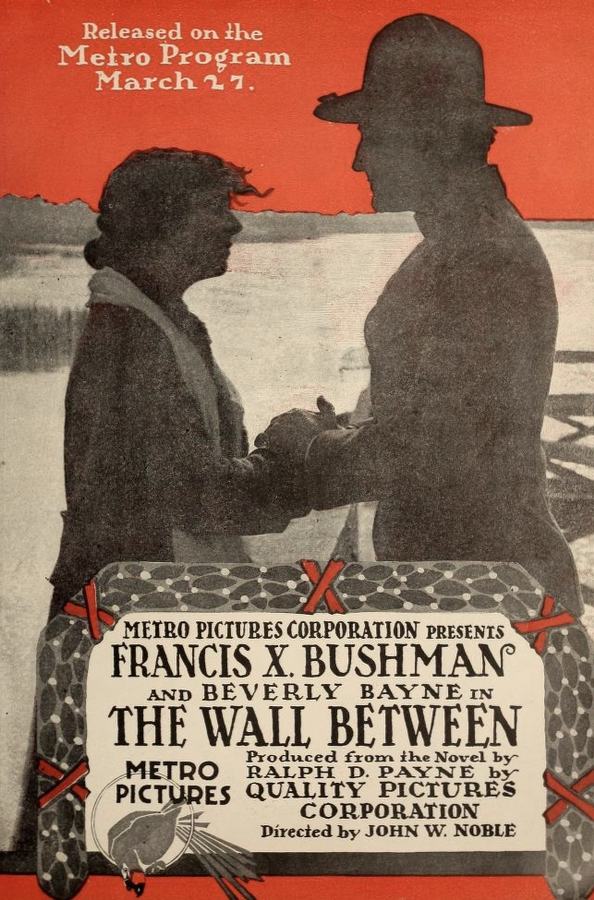
Dir: John W. Noble
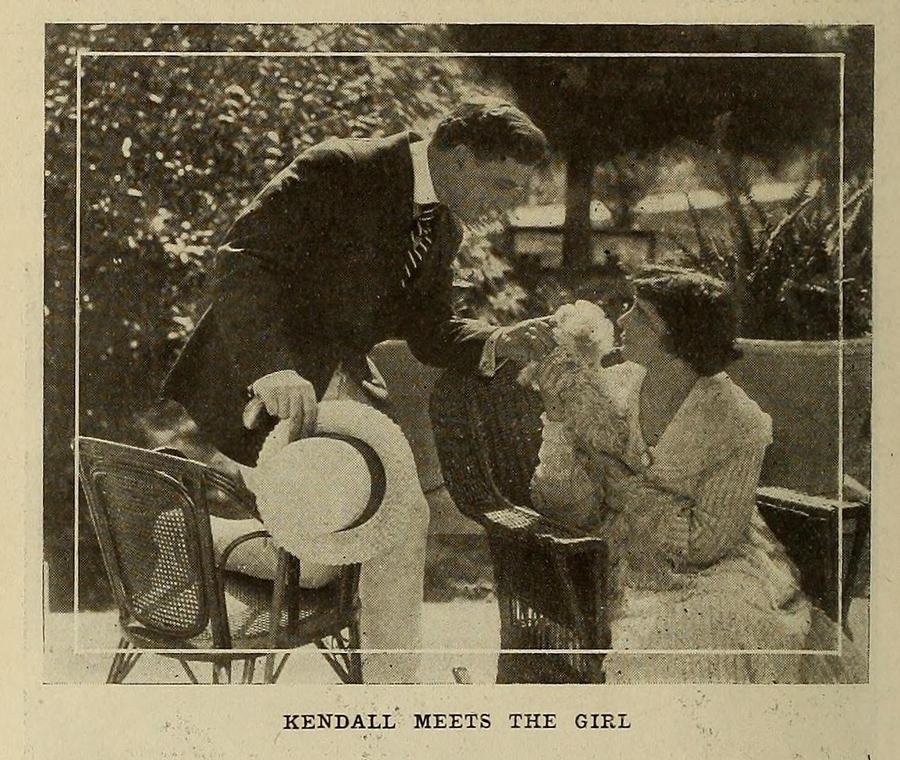
John Kendall was brought up in a wealthy family, but when his father loses the family fortune and then dies, John is left penniless. He joins the army and rises to the rank of sergeant. He soon meets and falls in love with Edith Ferris, the daughter of Col. Dickinson. When he talks to her at a party, Lt. Burkett upbraids him for fraternizing with an officer's family. Edith's mother, not wanting her daughter getting involved with a lowly enlisted man, conspires with Lt. Burkett to discredit John.
View Details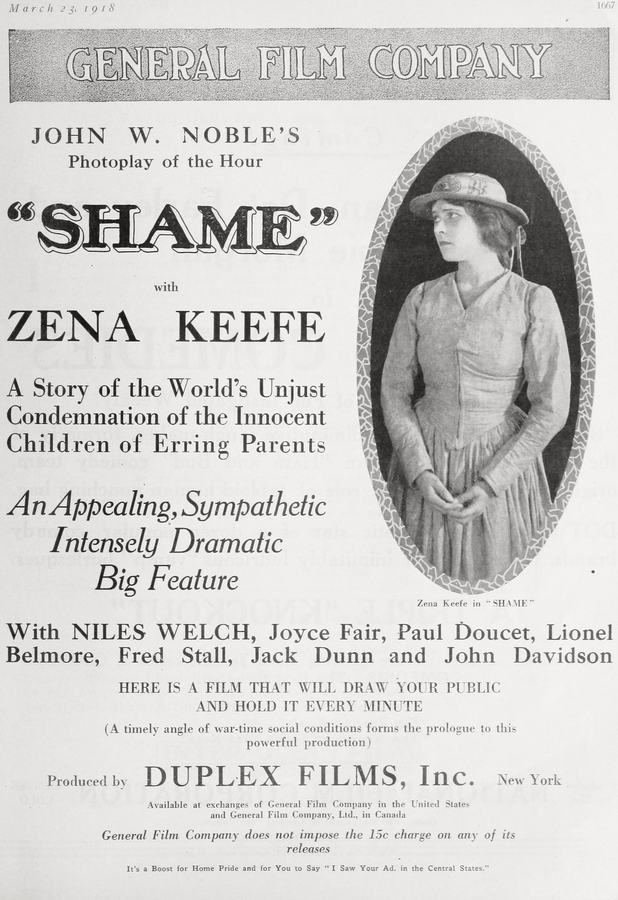
Dir: John W. Noble
At the outbreak of the Spanish-American War, John Grey enlists in the Army and leaves his sweetheart Mary for Cuba. Later Mary discovers that she is pregnant, but John is killed before they can legalize their union. When Mary dies, her daughter Little Mary is taken into an orphanage and adopted by Peters, a cruel farmer who turns her into a slave. Befriended by Seppe, a hunchback farmhand of similar parentage, young Mary escapes to the city where she finds work at a hospital run by Dr. Strong. Soon after, she falls in love with Strong's son Donald and accepts his marriage proposal. When Donald learns from Peters, who comes to the city to reclaim Mary, that she is illegitimate, he backs out of the engagement. To stop Peters from stealing Mary, Seppe shoots him, wounding him only slightly. The incident shocks Donald into rethinking his decision; but even after she and Seppe are freed from Peters and the law, Mary refuses to compromise Donald's reputation and returns to the country with Seppe.
View Details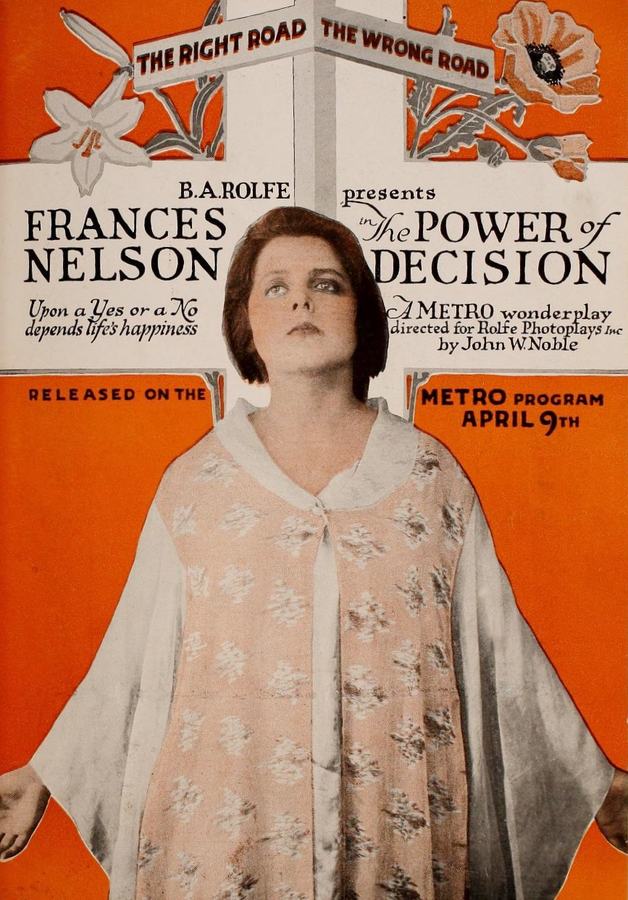
Dir: John W. Noble
Wood Harding, the illustrator, first sees Margot, the model, at a sale of the effects of a poor old artist who befriended her. The auctioneer is belittling the old man's work when Margot rushes upon the platform and tells how kind he has been to her. Harding buys the picture that has been ridiculed, and makes her a present of it. From that time on she poses only for him, and the two fall in love. Harding has a wife from whom he has been separated for some time, but he marries Margot without saying anything about her. The real Mrs. Harding returns, and threatens to have her husband arrested for bigamy. To save the man she loves Margot denies that she has been married to him. The girl goes to a distant city and poses for Mrs. Hall, a miniature painter. Mrs. Hall introduces her to Austin Bland, a novelist, who falls in love with her and asks her to marry him. She tells him frankly that she already has given all the love she possesses to another man. Bland says he will be content if she will only marry him, and she does so. Bland is writing a novel called "The Power of Decision." Its central theme is that "Every mortal has within himself the God-given power of decision." By his own decision each man must act for himself in every crisis. The publishers have engaged Wood Harding to illustrate Bland's book. It is the author's wish that his wife pose as the heroine, and Harding comes to visit at the Bland residence. Neither Margot nor Harding gives a sign of recognition on meeting, but Harding tries to exert his old spell over her. Her husband's book seems to have a special meaning for her. One paragraph in particular fascinates her: "This was the turning point in her life. The choice between these two men, one bound to her by the holy sanctity of the marriage vow, the other calling from out the darkness of the past. Which road? What lies beyond? The power of decision rests with her." Gordon, the butler, surprises Harding in the act of attempting to embrace Margot, and later when she discovers him trying to open the safe he prevents her from calling the police, threatening to expose her to her husband. Bland learns the truth through Mrs. Harding, who sees Margot's picture in an announcement of the new novel. Bland has been asked by his publishers to take a trip with an arctic explorer, to write a series of articles. He accepts. Harding has been urging Margot to go away with him and she cannot come to a decision. She promises to signal him by switching the library lights on and off when she has made up her mind. Bland leaves in his car for the railroad station, but the machine breaks down and he misses his train. Returning, he sees Harding across the street watching the library windows, and then the lights flash off and on. He goes into the house and confronts Margot, who tells him she has been tempted to go away with Harding, but has finally come to a realization of her love for her husband and has summoned Harding to tell him so. Bland does not believe her. The curtains at the French window move and Bland fires at them. A man falls, enveloped in the curtains. Margot urges her husband to escape, saying she will take the blame. Bland finds he has shot not Harding, but the butler, Gordon, who has come to attempt robbery. Harding has hurried away on hearing the shot. Margot finally makes her husband realize that, like his heroine, she has chosen the right road and has exercised her God-given power of decision.
View Details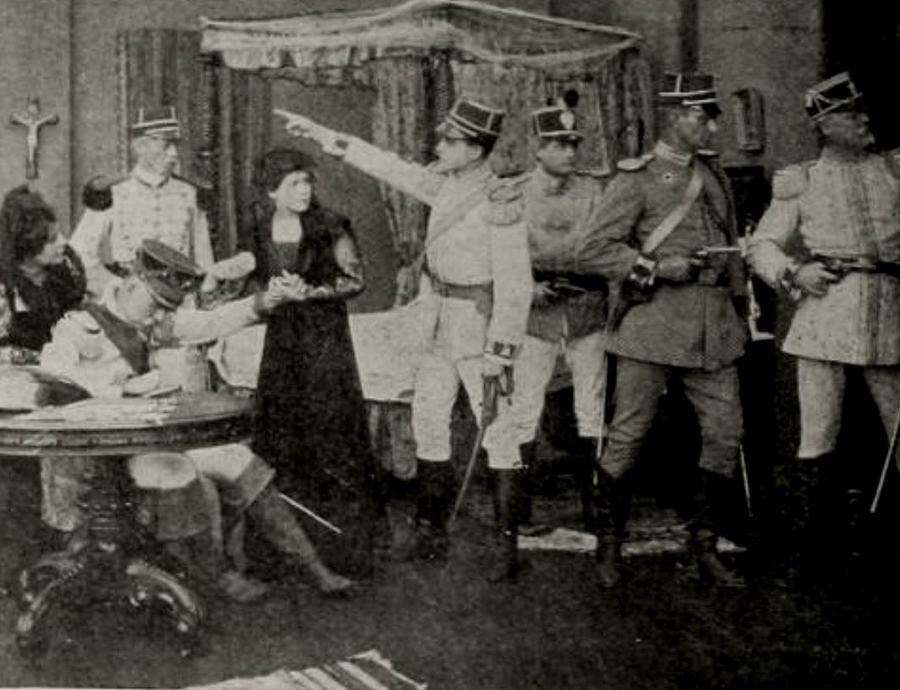
Dir: John W. Noble
News of the approaching death of the President of Lorento is received by "Fighting Bob" Rensaler at college in a letter from General Braga, an intimate friend of his deceased father, and further that Mendoza, the marshal, aspires to the presidency, and assisted by guerrilla warfare, intends to proclaim himself dictator, with the assistance of a guerrilla leader named Ladero. Dulcina Garnia, Bob's sweetheart, is beloved by Ladero. Manuel Garni, her guardian, has promised her in marriage to Ladero for assisting the revolutionists. Bob determines to give his aid to General Braga, and accompanied by his two chums, Cyrus Browa and Comin Hartley, he embarks on Brown's yacht for Lorento. Realizing that Dulcina will not marry him because she loves Bob, Ladero kidnaps her at the instigation of her guardian, intending to force her to marry him. When Bob has left Dulcina to visit General Braga, Ladero's men make away with Dulcina and confine her in a monastery. Riaz, leader of the kidnappers, has gone to the Tavern Verduga, where Bob is in consultation with the general. Dulcina's maid finds Bob there, tells him of Dulcina's plight, and points out Riaz as one of the kidnappers. Bob and his two chums grab Riaz, take him to the yacht, and force a confession from him. Riaz escapes from them by jumping overboard. Ladero, receiving no news from Riaz. sets out with his men for the monastery. Riaz has secured a horse and intends to head off Bob. Ladero has found a priest who is about to marry him to Dulcina but she succeeds in secretly notifying the priest of her predicament and he aids her to escape. She meets Riaz, who forces her into a telegraph station, where the operator is drunk. Kicking the operator out, he attempts to assault Dulcina, who picks up a revolver and shoots him. Bob and his pals have reached the monastery, have a fight with the band of kidnappers, and Bob sees the priest who tells him of Dulcina's escape, and they set out to find her. Ladero on his way to the monastery hears the shot fired by Dulcina and reaches the station as Dulcina is about to rush out. Bob meets the operator, disguises himself in his uniform, locates Dulcina, unseen by Ladero, overhears a message read by Ladero that the president is dead and for him to join Mendoza, and he sees him start away. Ladero has ordered his men to fire on the station. Bob's chums, hearing the firing, come to Bob's aid. Mendoza and Ladero's men attack Braga's forces in the city amid terrific gunfire of infantry, and the cavalry have a tremendous fight which ends in a complete routing of Ladero's supporters. When Bob and his friends are about to give up hope of holding off the outlaws. General Braga and his soldiers arrive to rescue them. Eventually Bob is proclaimed president for his services and is married to Dulcina.
View Details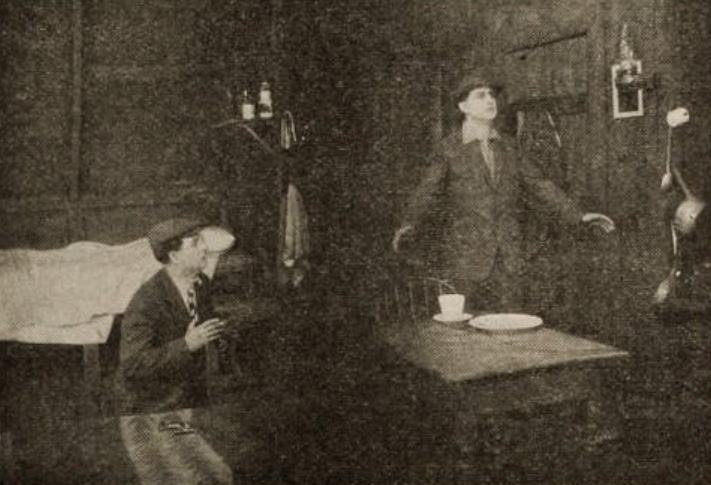
Dir: John W. Noble
The story of Reverend 'Satan' Sanderson, Hugh Stires and Jessica Holmes, a beautiful and romantic blind girl and ward of David Stires, father of Hugh. The latter is signing his will, making Jessica his sole heir, thereby disinheriting his dissolute son. Jessica protests and Reverend Sanderson protests to David on behalf of Hugh. Sanderson acknowledges that he himself was a wayward youth in college, the leader of a fast-set and looked favorably upon by Hugh, and he feels responsibility for Hugh's downfall. David Stires is obdurate and Jessca's sympathy goes out to Hugh and she blames Sanderson for Hugh's troubles. Sanderson, though, is in love with Jessica. Hugh returns home, gains his father's forgiveness, and weds Jessica, whose eyesight had been restored by a medical operation. And then David learns that Hugh has forged his name to a check. Davis threatens his son with jail and Hugh runs away and seeks Sanderson's help, again. From there the story takes a few turns.
View Details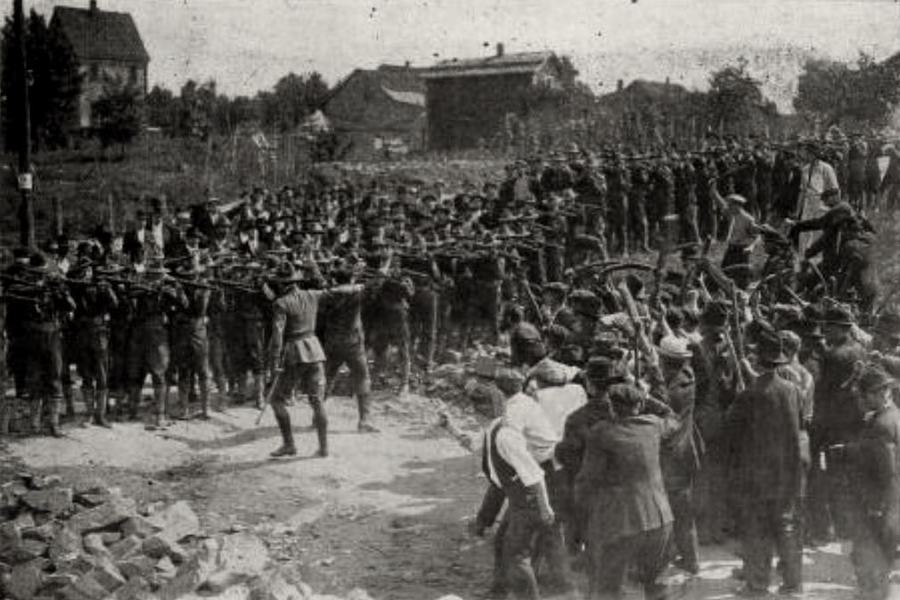
Dir: John W. Noble
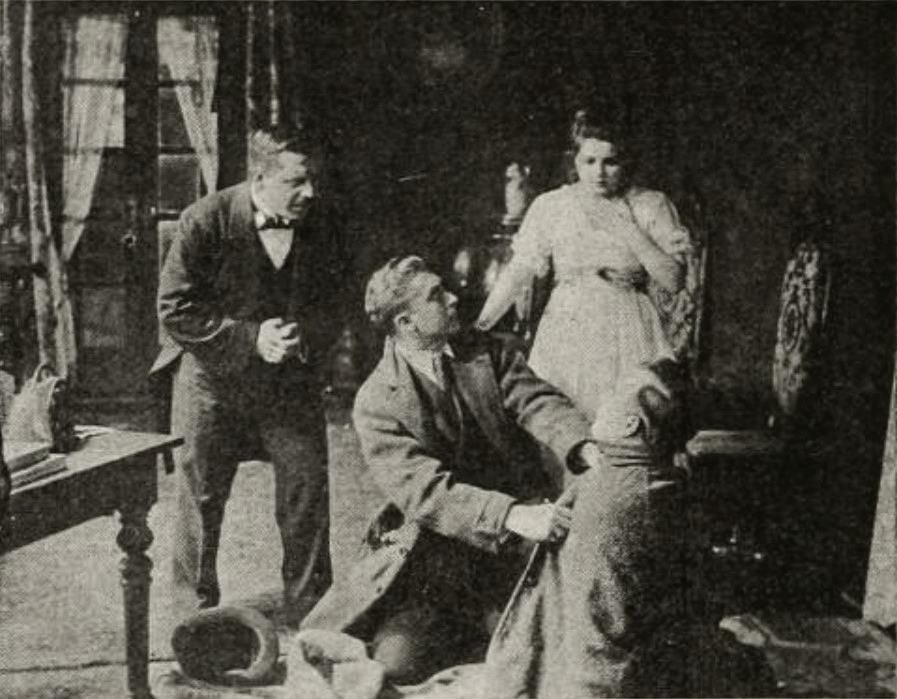
In a prologue, the relationship between capital and labor throughout history is shown in caveman days, Biblical times, and the feudal period. In the main story John Stoddard, a construction chief building a gigantic bridge for capitalist Courtlandt Van Nest, sympathizes with the workers' dissatisfaction with low salaries and subsistence conditions. When his attempts to negotiate with Van Nest fail, the workers, led by agitator Lavinsky, prepare to strike. Van Nest's daughter Janet, who is engaged to a militia captain, visits the site and is appalled by the squalor. Despite their differences, Janet and Stoddard fall in love. When the strike breaks, Van Nest sends in the militia. As they prepare to fire, Stoddard sees Lavinsky about to throw dynamite, and wrestles it away. He then agrees to Van Nest's demand for settling the strike that he refrain from seeing Janet. After Janet leaves home to help poor families, Van Nest looks for her at Stoddard's house where Stoddard demonstrates that because of their similar ancestry, he and Van Nest are not very different. When Stoddard's sister Edith allows Van Nest to witness the surprise reunion of a worker and his wife from Europe, to whom Janet had sent transportation money, Van Nest softens and agrees to Janet's marriage to Stoddard. An epilogue follows showing blindfolded Justice saying to fat Capital and burly Labor, "Why quarrel? You are worthless without the other."
View Details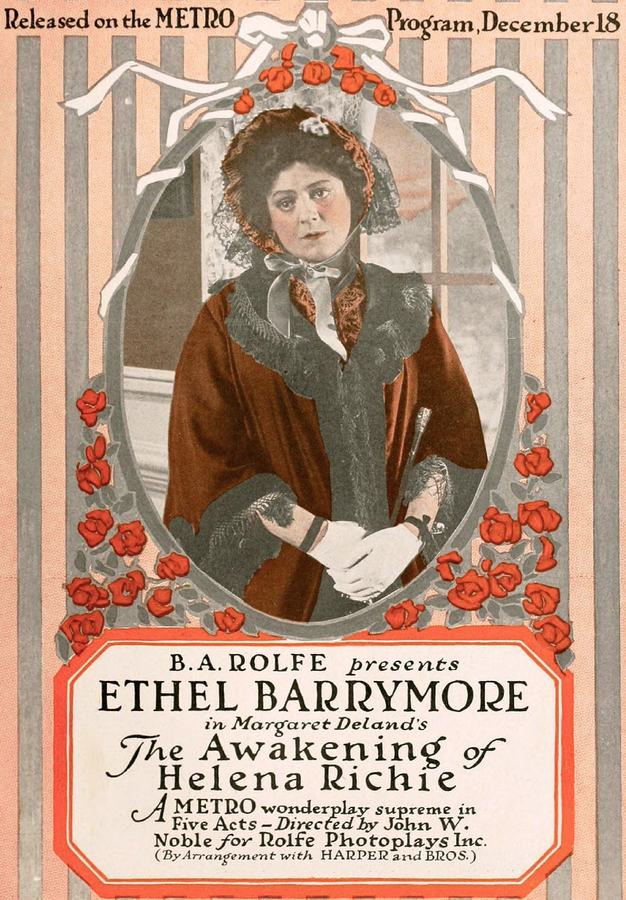
Dir: John W. Noble
To the village of Old Chester comes Helena Richie in search of balm for a broken heart. Her dissolute husband, in a drunken rage, has killed their little child. This tragedy induces Helena to listen to the pleadings of Lloyd Pryor to leave Paris, where the Richies are living, and come to America with him. Pryor makes frequent visits to Helena in the little home he establishes for her in Chester, and the townspeople accept the statement that he is her brother. Old Benjamin Wright, however, has his own suspicions as to the relations between the two. His interest is more than a casual one, for his grandson, Sam Wright, a young poet, is in love with Helena. The old man tells him his belief with regard to Mrs. Richie. Sam asks her whether the suspicion has any foundation, and when she admits that it has he kills himself. Dr. Lavendar, the kindly old minister, has in his charge a child who needs a home. He has decided to send the little boy, David, to Mrs. Richie for a trial visit. She welcomes the boy, who fills the place in her heart left vacant by the death of her own child. Her heart becomes bound up in the boy, though she is torn by conflicting emotions by the thought of her own false position. Helena's husband has been in such feeble health, owing to his dissipations, that she has constantly expected his death to release her so that she and Pryor may be married. Finally the long-expected event happens, but Pryor has tired of her. His promise of marriage has been nothing but a ruse to get her to elope with him. Looking about for an excuse to break the bonds which have become irksome to him, he tells her that she must give up David. She refuses and he says she must choose between the child and himself. Realizing Pryor's unworthiness, she clings to the child, and Pryor leaves her. Helena goes to Dr. Lavendar, tells him the truth about her past relations with Pryor, and asks him to let her keep the child with her always. The old man's answer is: "Can you teach him to tell the truth, you who have lived a lie? Can you make him brave, you who could not endure? Can you make him honorable, you who have deceived all?" Helena is silent in the face of this accusation. She decides to give David up and to leave Old Chester. She tells Dr. Lavendar that on her way to the station next day she will come to bid David goodbye. Next day at the rectory Dr. Lavendar asks her to take with her a parcel which she will find wrapped up in the coach. She promises, and in the coach finds the package to be little David, all wrapped up for traveling. Her willingness to sacrifice her own happiness for the boy has proved her worthiness to keep him, and Helena and little David leave Old Chester to find peace among new surroundings.
View Details
Dir: John W. Noble
A rich libertine leaves all his money to a college girl who had refused his advances. The ensuing scandal makes her retire to a small town, where she meets the dead man's son.
View DetailsAnalysis relative to Reckless Decision
| Film Title | Atmosphere | Complexity | Similarity |
|---|---|---|---|
| The Birth of a Race | Tense | High | 85% Match |
| Man and His Soul | Ethereal | Abstract | 85% Match |
| The Wall Between | Tense | Abstract | 91% Match |
| Shame | Surreal | Abstract | 96% Match |
| The Power of Decision | Gritty | Abstract | 88% Match |
This guide was algorithmically generated using the cinematic metadata of John W. Noble's archive. Last updated: 6/24/2026.
Back to Reckless Decision Details →