
DbcultAccessing Vault...
Recommendations
Senior Film Conservator
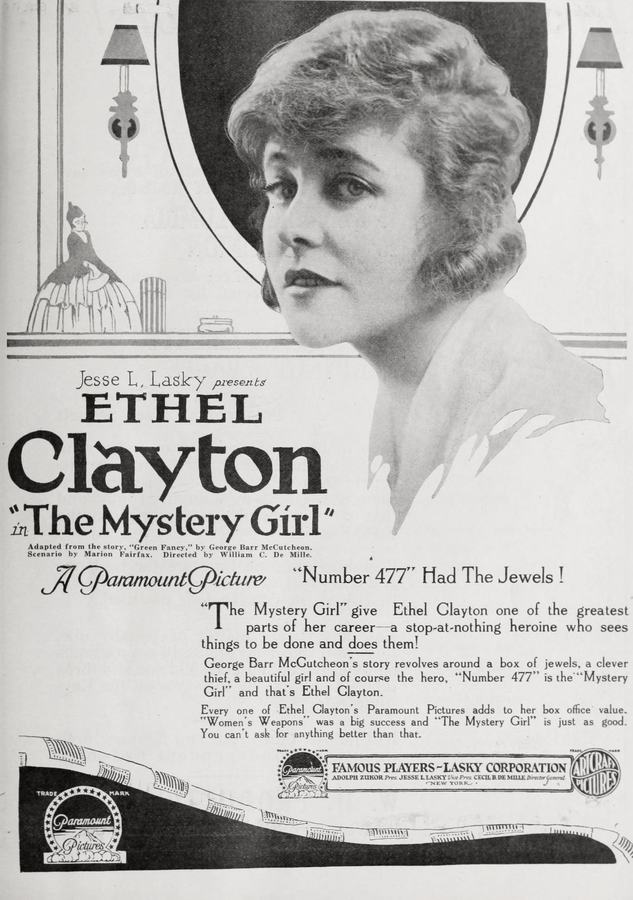
Navigating the complex narrative architecture of The Mystery Girl is a unique vision experience, the legacy of The Mystery Girl is a beacon for those seeking the unconventional. Unlock a new level of cinematic understanding with these cult alternatives.
The artistic audacity of The Mystery Girl ensures it to sustain a sense of mystery that persists after the credits roll.
Prince Sebastian of Lurania is forced to go into hiding when German forces invade his country. His niece, Countess Therese, is an ambulance driver with the French army, and one day she hears from her uncle, who requests that she meet him in a small town in Maine and bring the crown jewels with her. Unfortunately, a jewel thief finds out about the meeting and makes a deal with the Luranian pretender to the throne: he will steal the jewels and he can keep them if he kidnaps and turns over the Countess to the usurper.
Critics widely regard The Mystery Girl as a cult-favorite piece of cult cinema. Its unique vision is frequently cited as its strongest asset, solidifying its place in United States's film legacy.
Based on the unique unique vision of The Mystery Girl, our vault has identified these titles as the most compelling follow-up experiences for fans of cult cinema:
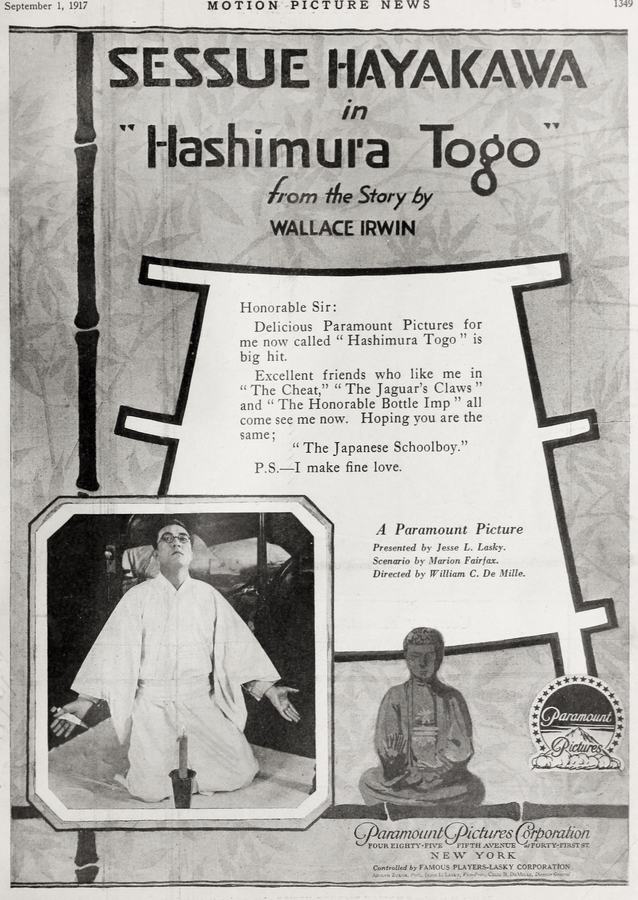
Dir: William C. de Mille
After an accusation of a breach of diplomacy committed by his brother, Hashimura Togo bears the burden and leaves Japan in disgrace for the United States where he enters the employ of Mrs. Reynolds as a butler. Togo discovers that Mrs. Reynolds' daughter Corinne is in love with Dr. Garland but is being coerced into marrying Carlos Anthony who, having seized all of her deceased father's funds, now promises to save the family from financial ruin in return for Corinne's hand in marriage. Enlisting the aid of a reporter, Hashimura succeeds in proving Anthony's deception in time to stop the marriage, freeing Corinne to marry Garland. After a series of misadventures, his name is cleared and Hashimura returns to his sweetheart in Japan.
View Details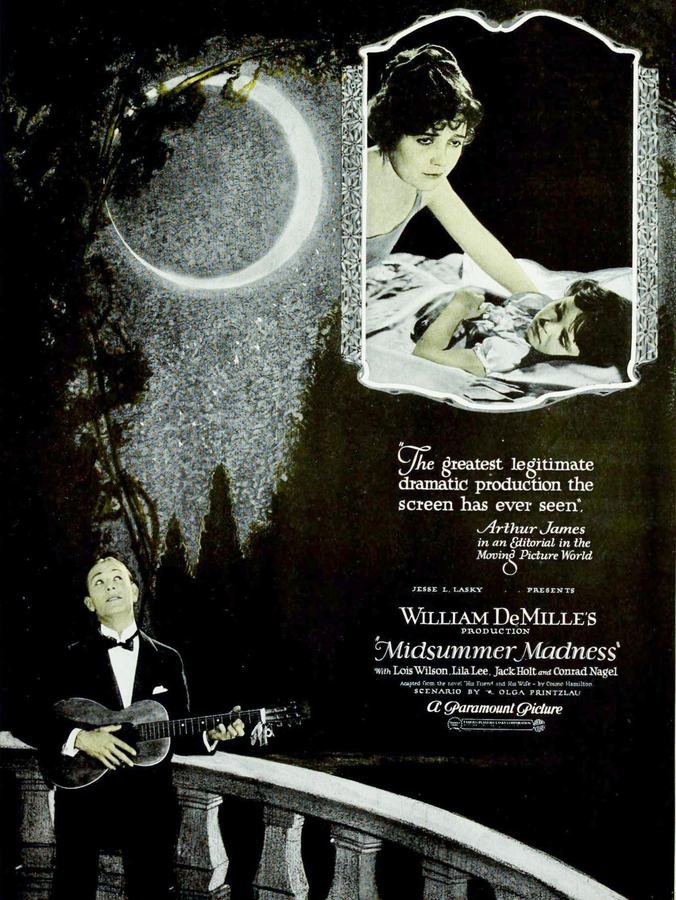
Dir: William C. de Mille
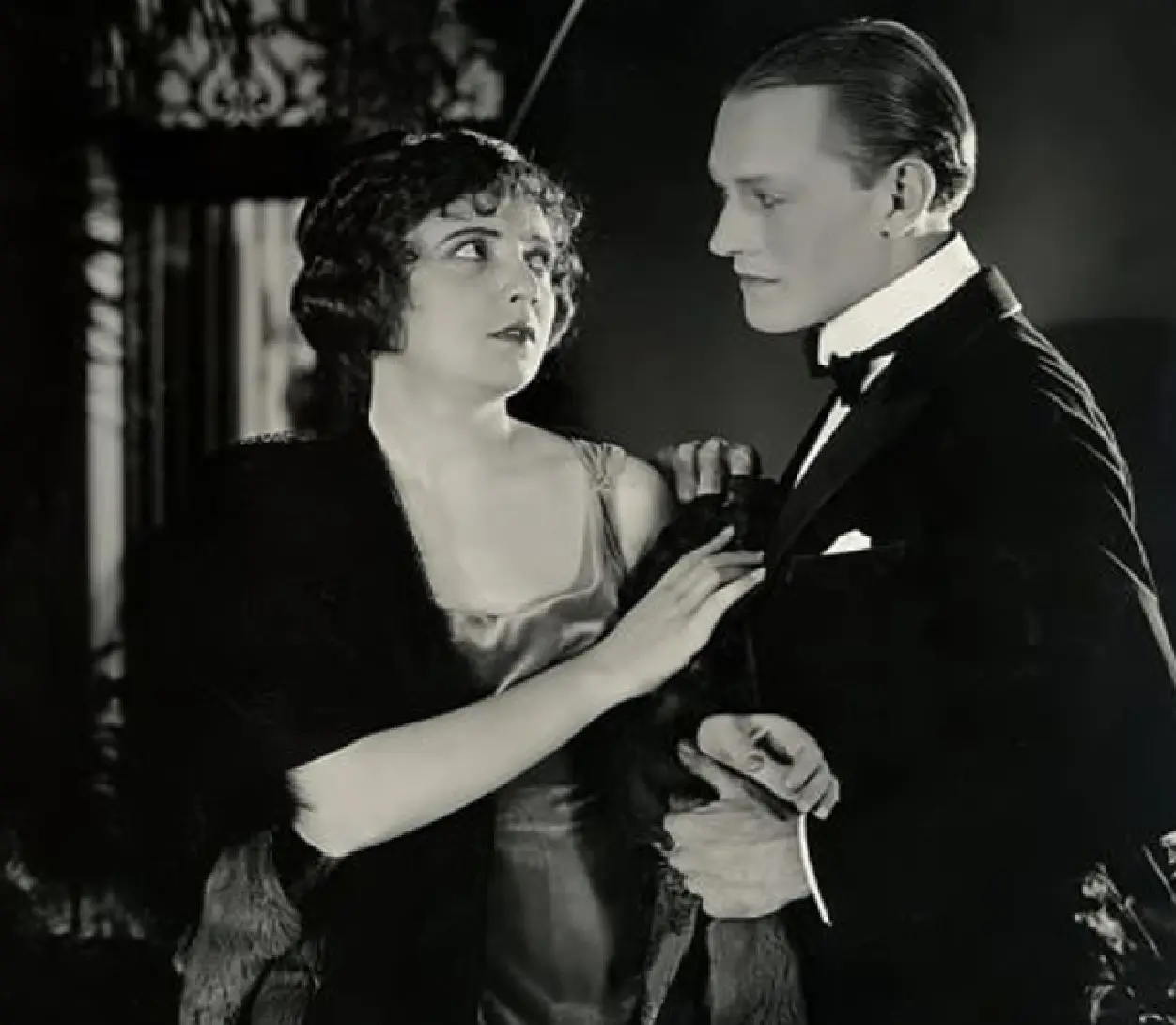
When Julian's wife Daisy leaves home to visit her sick father, he finds himself attracted to his best friend's wife Margaret, who has been neglected by her husband. Julian and Margaret take a drive to a mountain resort, and find themselves about to consummate their affair when something happens that makes her have second thoughts. Complications ensue.
View Details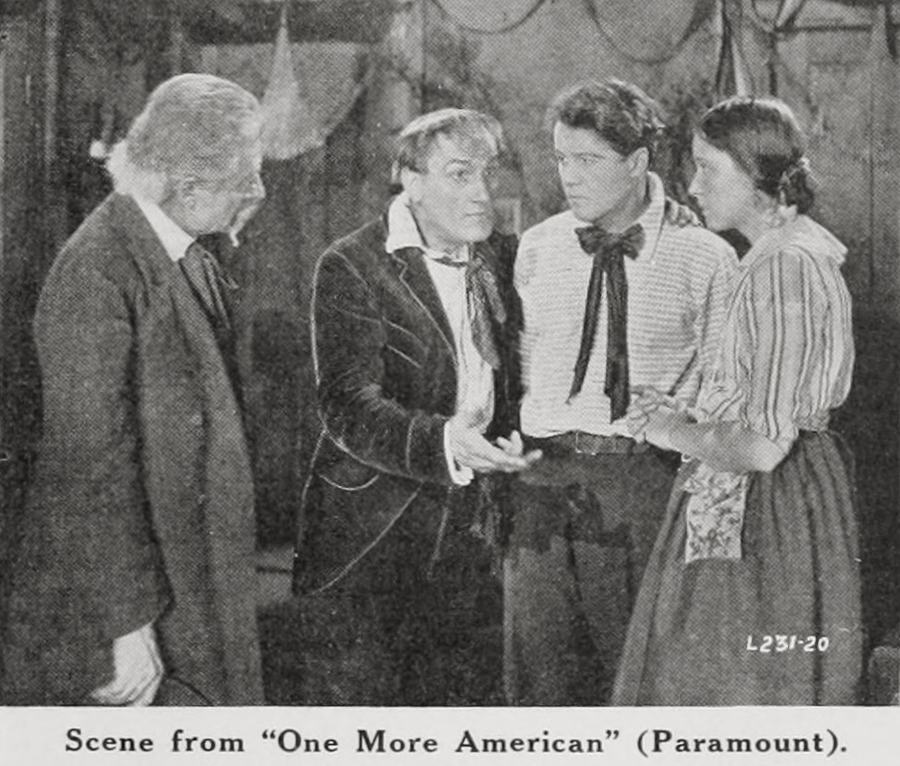
Dir: William C. de Mille
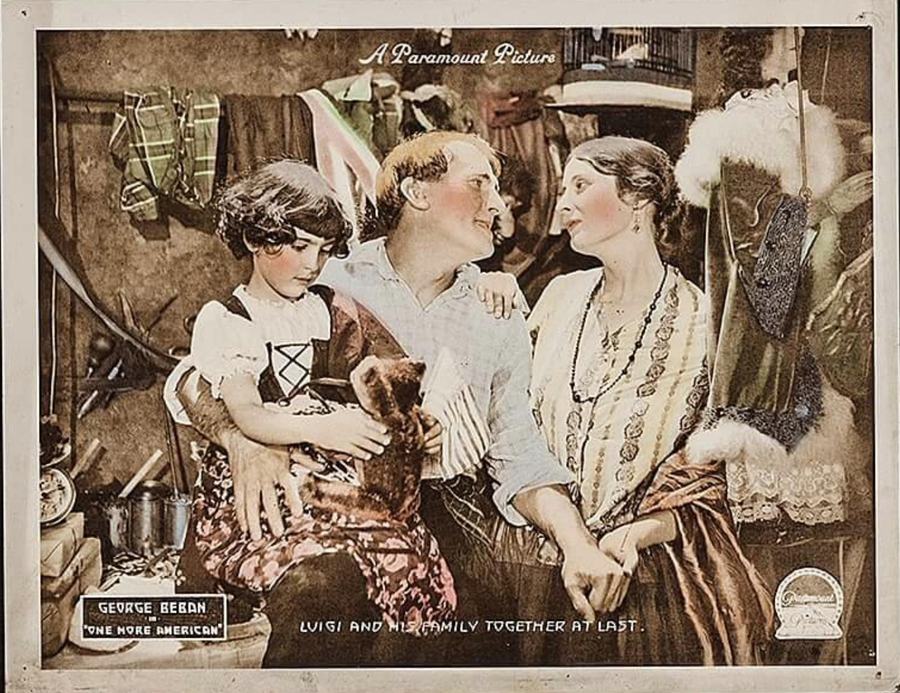
Luigi Riccardo, the proprietor of a marionette theater in New York's Little Italy, eagerly anticipates the arrival of his wife Maria and daughter Tessa, whom he has not seen in five years. Luigi dreams of becoming an American citizen, but because he refuses to make graft payments to Regan, the ward boss, he is informed that he will not receive his naturalization papers. When Regan orders Dr. Ross, an Ellis Island physician, to classify Maria and Tessa as unfit to enter the country, Luigi becomes wild with grief. Newspaper reporter Sam Potts learns of the Italian's misfortune and, through local prizefighter Bump Rundle, offers Regan a phony bribe in exchange for Luigi's papers. Regan accepts and Sam exposes him publicly, enabling Luigi to welcome his wife and daughter as American citizens.
View Details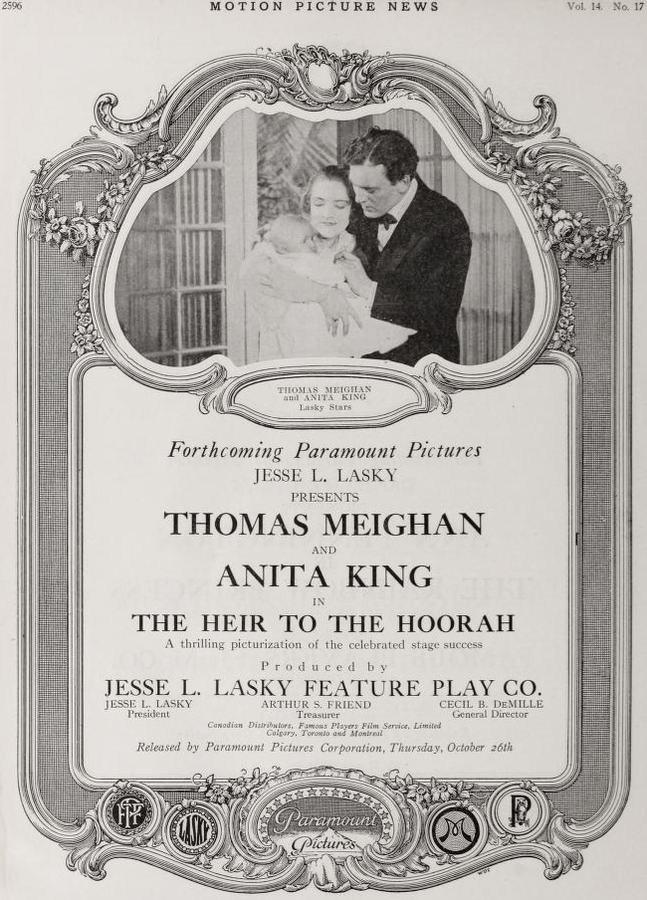
Dir: William C. de Mille
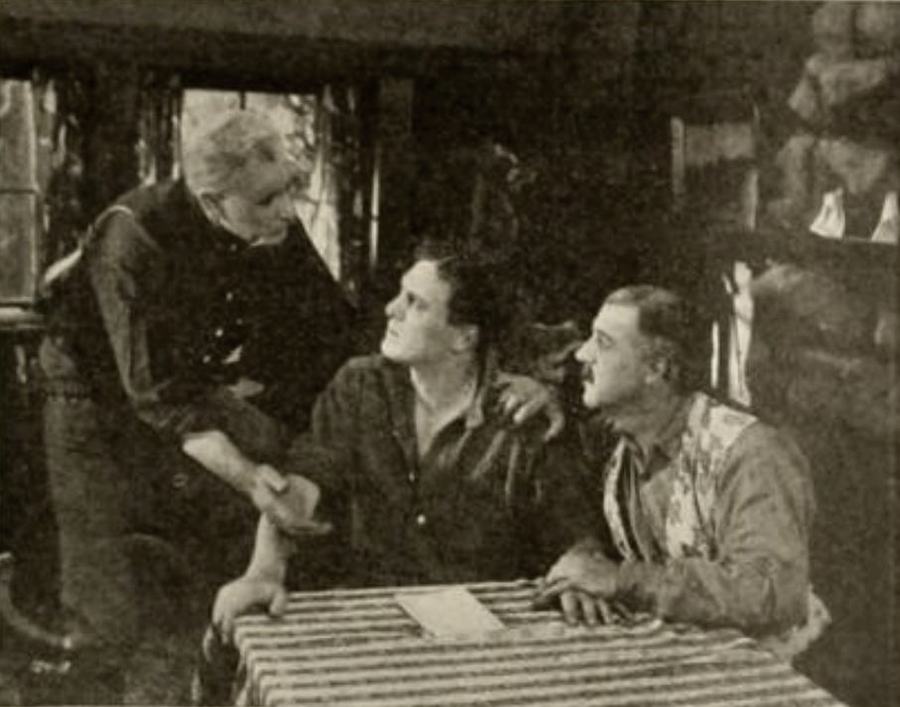
The Hoorah, richest mine in California, has made millionaires of its three bachelor owners, Joe, Bud, and Dill. It occurs to the two latter men that this wealth, representing the labor and sacrifices of many long years, must, in the event of their death, revert to strangers. They decide that Joe, the most eligible partner, should marry and give them an heir. This Joe refuses to do. However, Bud and Bill set about to find a suitable wife for him. Their efforts are unrewarded, and Joe, in disgust, leaves town. Geraldine Kent, daughter of a poor but aspiring society woman, accepts the invitation of a friend to take a western trip. The mother, of her own invitation, accompanies them. Arriving at the hotel, they discover Joe in an undignified position on the floor playing with a youngster of five. The mother is shocked, but when she learns that Joe is wealthy, she is attentive to him, and persuades Geraldine to accept his proposal of marriage. Joe's lack of polish is such a source of constant embarrassment to him and his wife that his suggestion to Geraldine that they run away from it all is gladly accepted. Discovered by her mother just as they are about to leave, Joe is enlightened by Mrs. Kent's expression of her sorrow at forcing Geraldine to marry such a boor because they were so sadly in need of money. Heartbroken, Joe gives them the money and departs. At the end of a year, Geraldine sues for divorce. Bud and Bill leave Hoorah City for a trip to see Joe's baby. Not until Joe reads in the paper an account of the divorce proceedings does he know that he has a son. He also starts out to see the baby, and the three men meet. Both Bud and Bill claim the right to be the namesake of what they consider a "partnership baby," but learning the little one is a girl, they order at once baby wardrobes by the carload. Joe realizes the mother-in-law's responsibility for his unhappiness and sends her east by the first train. Geraldine has learned that Joe's greatest desire was for a child, and when he accuses her of marrying him for his money, she meets it with a statement that he married her for the baby. He suggests that she take the money and he the baby, but as the little one starts to cry, he is frightened, and hands it to the mother. As they look at the baby, and then at each other, they realize how foolish they have been, and Joe takes both mother and child into his arms.
View Details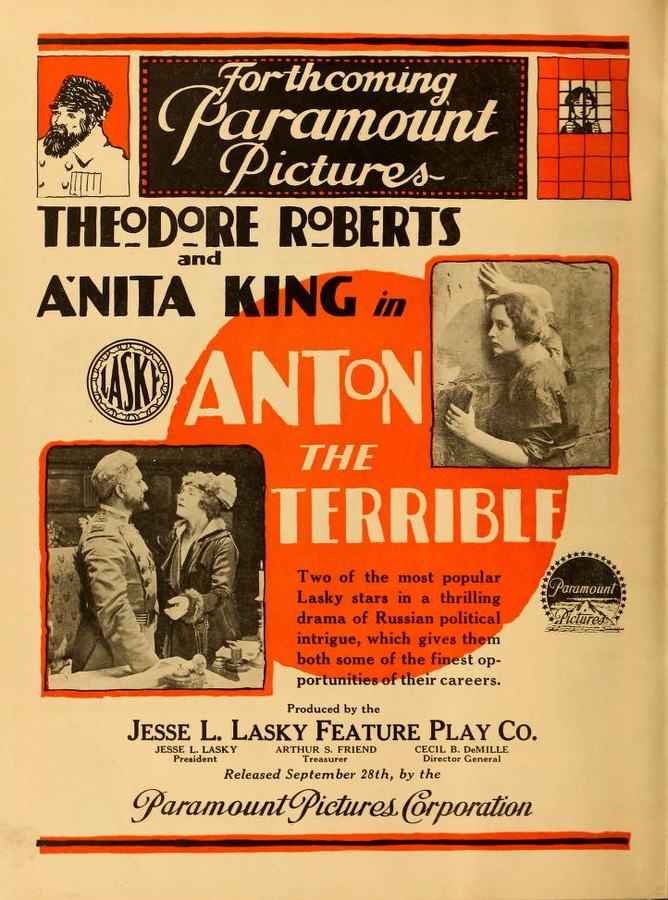
Dir: William C. de Mille
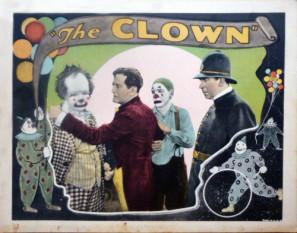
Piffle, a circus clown, is badly injured after saving the son of Judge Jonathan Le Roy from a team of runaway horses. During his convalescence at the Le Roy home, Piffle falls in love with Millicent, the judge's daughter. When she learns that Dick Ordway, the father of her unborn child, has died while prospecting in the desert, Millicent tries to drown herself. Piffle comes to the rescue once again, proposing to marry Millicent and be a father to her child. Although she does not love Piffle, Millicent agrees. At the judge's insistence, Piffle leaves the circus to become a banker. Some time later, Dick reappears, but decides not to pursue Millicent, focusing instead on selling shares in his mine. The mine becomes a bonanza, and Dick tries to buy back all of the shares, but Piffle refuses to sell. Dick visits Piffle's home, hoping to negotiate a sale, and has an unexpected reunion with Millicent. Realizing that Millicent and Dick are still in love, Piffle returns to the circus, where he finds fulfillment bringing joy to children.
View Details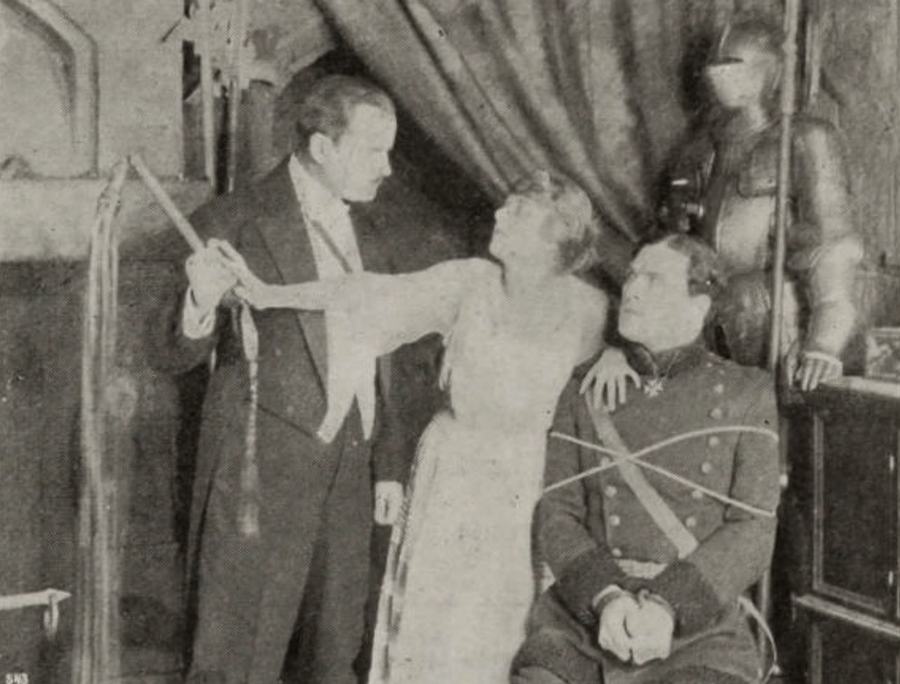
Dir: William C. de Mille
Headed by a young nobleman, the Russian League of Freedom determines to free the peasants from oppression by the government. Prince Paul Alexis is in love with Karin Dolokhof, daughter of the chancellor. Both are working for the league. Shortly after they announce their engagement the prince receives word from the Czar that he must marry the Princess Tanya, for political reasons. Upon receiving the command the prince expresses his intention to leave Russia with Karin Dolokhof, but she reminds him of his allegiance to the freedom league. Princess Tanya is in love with Count Egor Strannik, but under pressure, she discards the count and marries the unwilling prince. Through espionage, the chief of the secret police learns of the prince's affiliation with the freedom league and as Prince Alexis and his wife, Princess Tanya, hold a reception, at which the government heads are present, he sends Count Egor Strannik to secure the evidence. The count, who is still in love with Princess Tanya, tries to force his love upon her, and as he holds her in his arms, Prince Alexis discovers them and beats the count with a knout. For revenge the count, with a band of followers, forces the prince to reveal the hiding place of some important league papers.
View Details
Dir: William C. de Mille
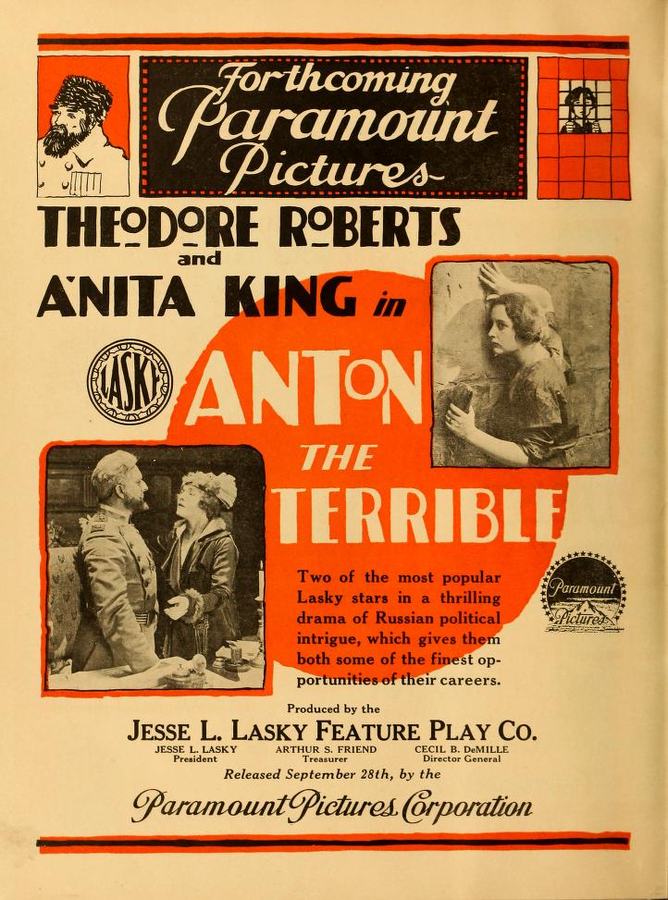
During the Great War, German and Japanese spies face off in the United States.
View Details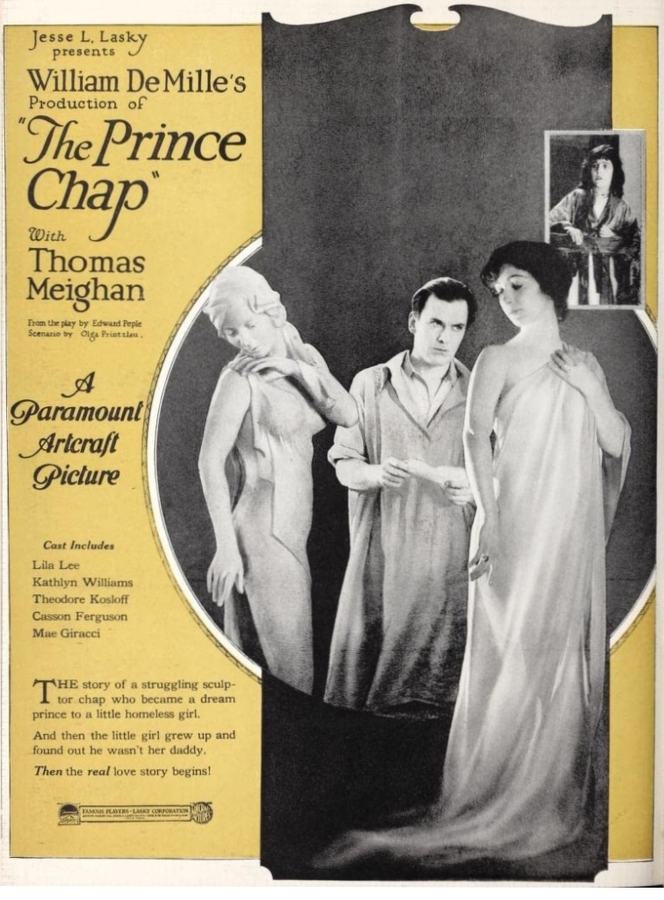
Dir: William C. de Mille
An artist in England is torn between an old flame and the now grown up little girl he has adopted.
View Details
Dir: William C. de Mille
The Kid, a product of the slums, is employed at an artificial flower factory, as an expert "slipper-on." She possesses a monstrosity of a hat which is the envy of her companions wherever it appears, and she loves it. Judge Evans, a young man of unapproachable character, takes up his residence in the tenement district in order to unearth the man at the head of the vice ring composed of social and political parasites. In reality, he is the father of Doris Mordant, to whom Evans is engaged. Realizing that he must "get" the Judge or be ruined himself, Mordant, assisted by unscrupulous politicians, arranges a plot in which the Kid (whom the Judge has discovered in the tenement where he himself lives), evidently accosts a man on the street. She is taken into Judge Evans' court and to prove his assertion that "there is some good in all of 'em" the Judge tells the Kid to select five companions and he will send them all to his farm for three months. Mordant frames up a scheme to send with them a woman of the streets, and provides her with money and a camera. At the farm, the Kid discovers the girls plotting to secure a compromising picture of the Judge and the woman, but they persuade her to keep still by telling her they will "queer" Evans' engagement to Doris and then he will turn to her, and the Kid's love is so great, she finally acquiesces. Following his trial and disgrace, the Judge falls ill and the Kid cares for him. He learns to love the child of the slums, and her devotion to him is as pitiful as it is sincere. The Kid believes the Judge is pining for Doris, and with her companions, whom she forces into telling the truth, goes to the District Attorney's office and before Mordant, Doris, Evans and others, makes a clean breast of the while affair. Evans' love for Doris is dead and he turns to the Kid, declaring his love. She is taken to the home of the competent woman for one year. Every month the Judge receives a photograph which shows the metamorphosis of both hat and girl. At the end of the year Evans goes to claim as his own the girl who saved him from ruin, and finds her the embodiment of refinement and simplicity.
View DetailsAnalysis relative to The Mystery Girl
| Film Title | Atmosphere | Complexity | Similarity |
|---|---|---|---|
| Hashimura Togo | Surreal | Layered | 98% Match |
| Midsummer Madness | Tense | Layered | 85% Match |
| One More American | Gritty | Linear | 93% Match |
| The Heir to the Hoorah | Gothic | High | 92% Match |
| Anton the Terrible | Gritty | Dense | 88% Match |
This guide was algorithmically generated using the cinematic metadata of William C. de Mille's archive. Last updated: 6/27/2026.
Back to The Mystery Girl Details →