
DbcultAccessing Vault...
Recommendations
Senior Film Conservator
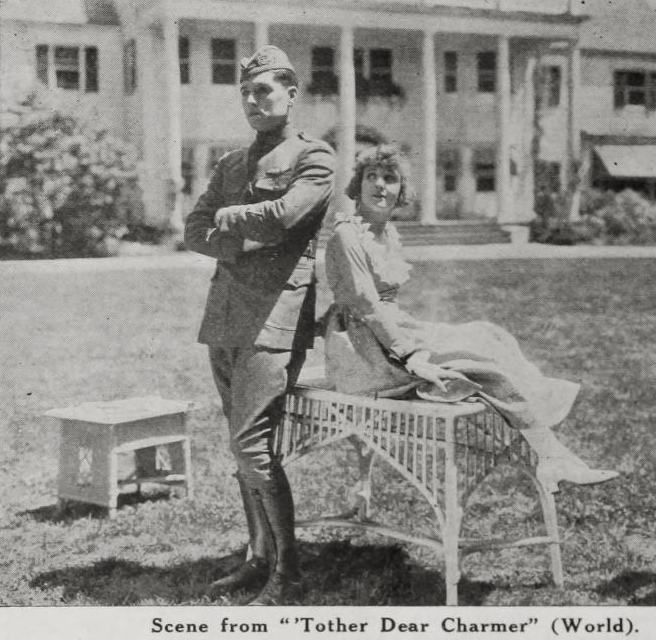
Ever since T'Other Dear Charmer hit screens in 1918, fans have sought that same cult status, the search for similar titles reveals the deep impact of William P.S. Earle's direction. These recommendations provide a deep dive into the same stylistic territory occupied by T'Other Dear Charmer.
Whether it's the cult status or the thematic depth, this film to capture the existential zeitgeist of 1918.
When heiress Betty Hallowell organizes a Red Cross bazaar to raise money for the American effort in The Great War, she is disappointed that the event is not a success, so she decides to lease her beautiful country house to Mrs. Wentworth, a wealthy widow whose son Tom is recuperating from injuries received overseas. When Mrs. Wentworth suddenly demands the services of a maid for the summer, Betty, unable to secure a servant on such short notice, dons a dark wig and poses as "French maid Bettina." Much to his mother's embarrassment, Tom and "Bettina" fall madly in love, but necessity forces Betty to temporarily drop her disguise and reappear as the mistress of the house. Confused, Tom falls just as madly in love with Betty. Finally, he decides that he prefers Bettina to Betty, but Betty's uncle arrives and her deception is revealed. Tom explains his infidelity by stating that Betty's sweetness caused him to love her in both of her identities, and she is satisfied.
The influence of William P.S. Earle in T'Other Dear Charmer can be felt in the way modern cult films handle cult status. From the specific lighting choices to the pacing, this 1918 release set a high bar for atmospheric immersion.
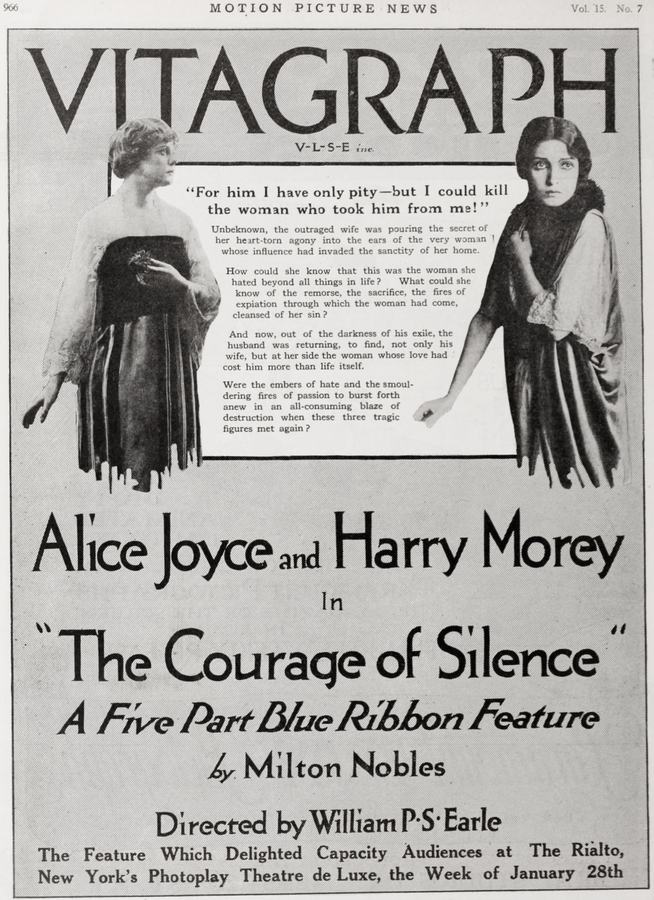
Based on the unique cult status of T'Other Dear Charmer, our vault has identified these titles as the most compelling follow-up experiences for fans of cult cinema:
Dir: William P.S. Earle
Bradley, who is happily married and loves his family, is called to London on business. There he meets Mercedes, wife of the Spanish Ambassador. The marriage has been forced upon her, and her husband is cruel. Unaware that Bradley is married, she falls in love with him, and he is also infatuated. His better nature finally prevails, and he returns home and is happy until he receives a photograph from Mercedes. On pretext of business, he again goes back to Mercedes, finds there has been a quarrel, and that the ambassador has struck her. She and Bradley go away together, and while crossing the channel, he inadvertently discloses the fact that he is married. Mercedes unwilling to come between husband and wife, flees to a convent, and Bradley, unable to find her, joins an expedition to the forests of South America. Bradley has written his wife that he is a coward. Her health fails and her father takes her and the children for a trip abroad. The children are attacked by an epidemic of fever, and Mercedes, now a nurse, is summoned. She learns the identity of the family, and, when the boy calls for his father, she starts a search for him. After the crisis, Mercedes who has concealed her identity by use of a veil, wins her fight against a renewal of their relations, and warns Bradley, who has recognized her, to keep his wife in ignorance. Recovering from the fever which has now claimed her, she sees the reunited family depart for America, and knows her heart is empty and closed forever to love.
View Details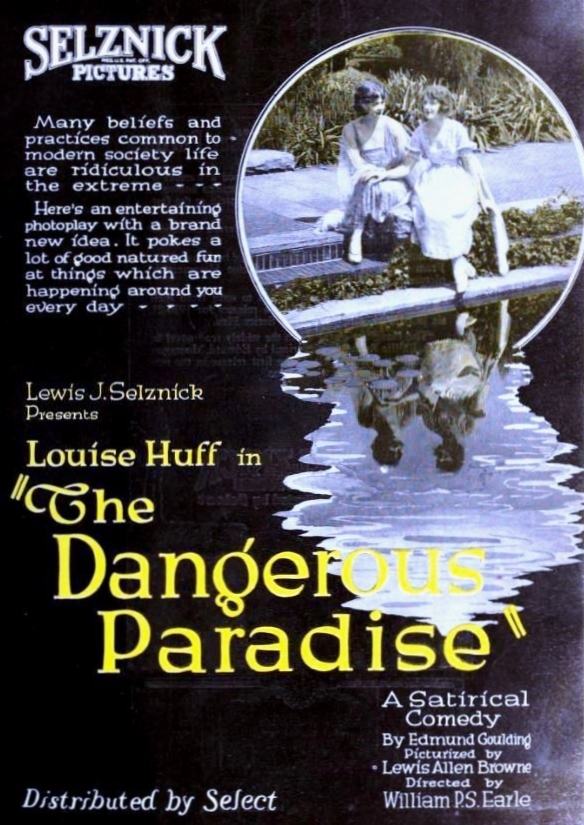
Dir: William P.S. Earle
To avoid marrying the elderly suitor her aunt has chosen for her, young socialite Ivis Van Astor decides to hire Horatio Worthington to pose as her husband. She hopes that as a "married woman" she will pique the romantic interest of Norman Kent, who perceives her as a sweet young thing. Ivis and her hired husband go to Newport, where she begins to flirt with Norman, who discovers her ruse and decides to teach her a lesson. He stages a duel over Ivis with Horatio and pretends to die. Once Ivis is properly chagrined, Norman "recovers," Ivis' aunt falls in love with Horatio, and all ends happily.
View Details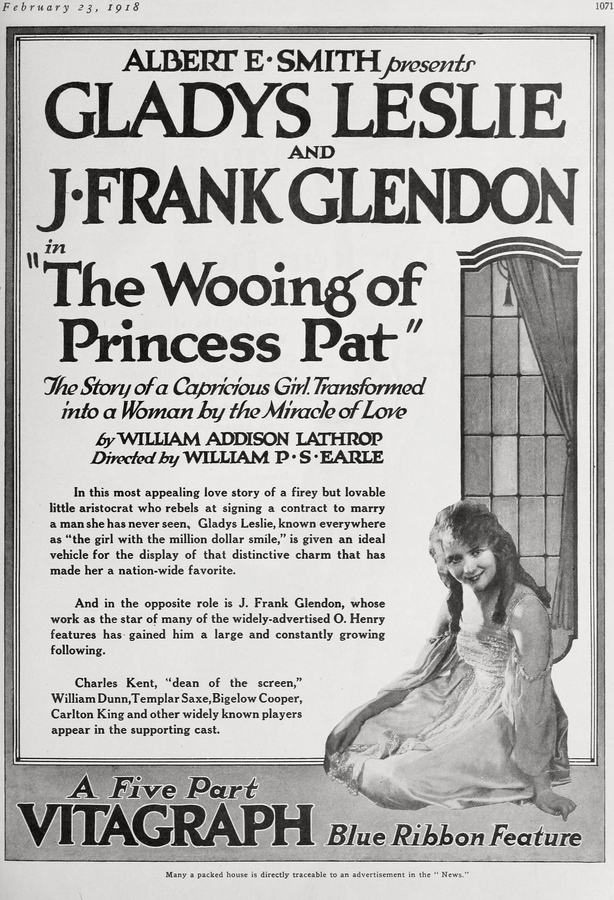
Dir: William P.S. Earle
To stave off war with a neighboring kingdom, Princess Pat of Paxitania agrees to marry Warburg's King Eric. Still very young and rebellious, the new queen finds it difficult to adjust to court life, and when she accepts an invitation to take a ride with the villainous Count Ladislaus, King Eric's patience gives out and he rebukes her severely. The banished count informs Pat's father, the Grand Duke of Paxitania, that she is cruelly abused, whereupon Pat's three brothers set out to bring her back home. In the end, however, King Eric and Princess Pat come to love each other dearly, and she sends her brothers home reassured of their sister's happiness.
View Details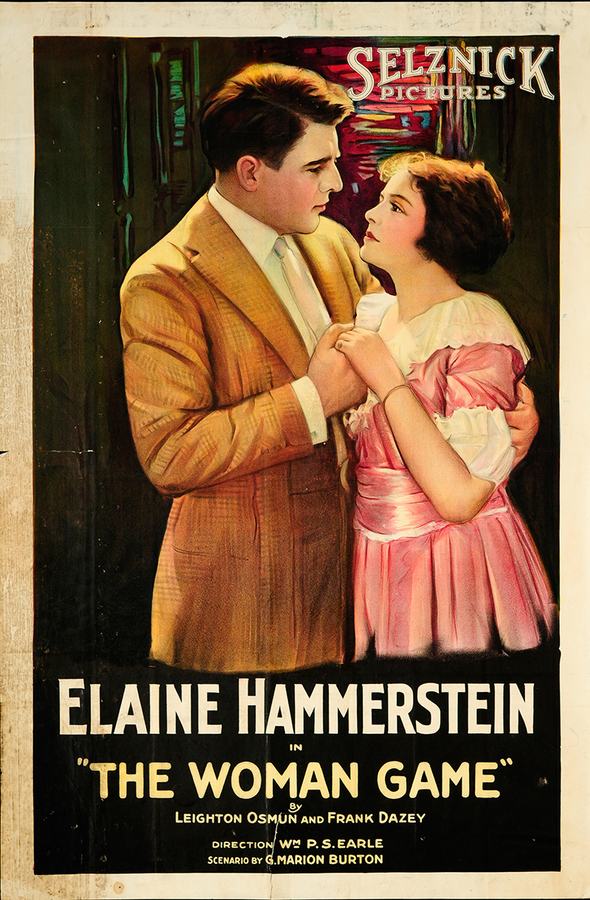
Dir: William P.S. Earle
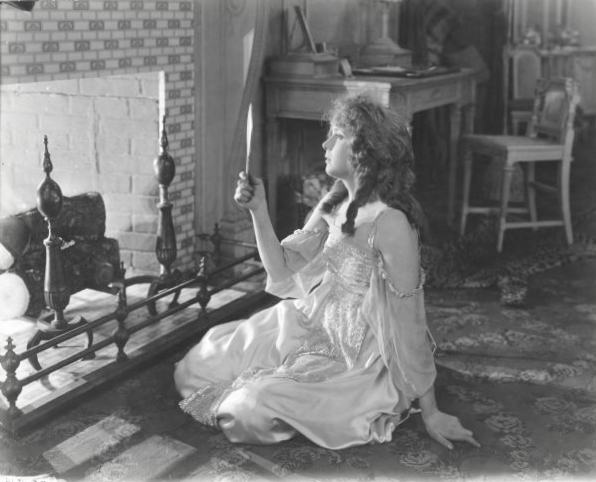
To please her once-wealthy mother, Amy Terrell fraternizes with members of high society who find her entertaining because of her beauty and charm. At one of Mrs. Van Trant's house parties, Amy is requested by her hostess to amuse Andrew Masters, an influential businessman who has an aversion to society women. Impersonating an old-fashioned girl, Amy wins Masters--until he learns of her deception and denounces her. However, when Mrs. Van Trant attempts to shield herself by involving Amy in a scandal with a young captain, Masters realizes that Amy really is the innocent girl he loves.
View Details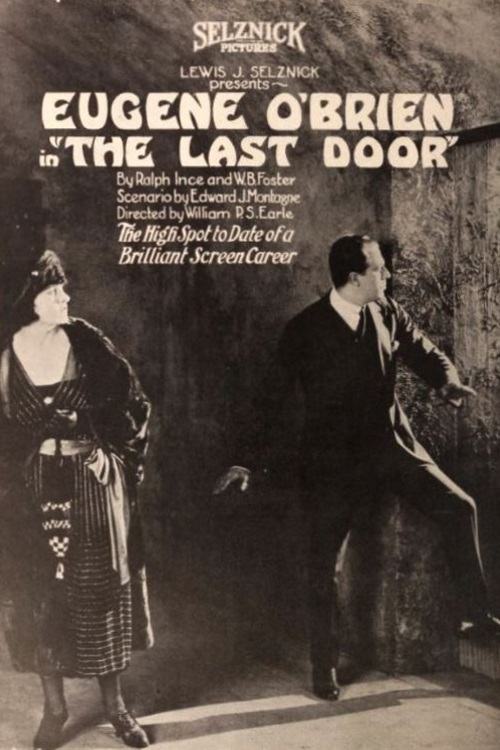
Dir: William P.S. Earle
At a reception given at the Rogers mansion in his honor, Somerset Carroll surprises the guests by averring that he would give aid to a female convict reported to have escaped. Later, alone in the library, he is appealed to by a young girl who confesses to being pursued by the police, and he takes her to his own house. There she reveals herself to be Helen Rogers, playing a game with him on the advice of her guests. He then declares himself a crook, holding the real Carroll prisoner, with the intention of robbing the Rogers mansion. She follows and shields "The Magnet" from the police, the real Carroll having escaped and notified them, and through her interference he eludes his would-be captors.
View Details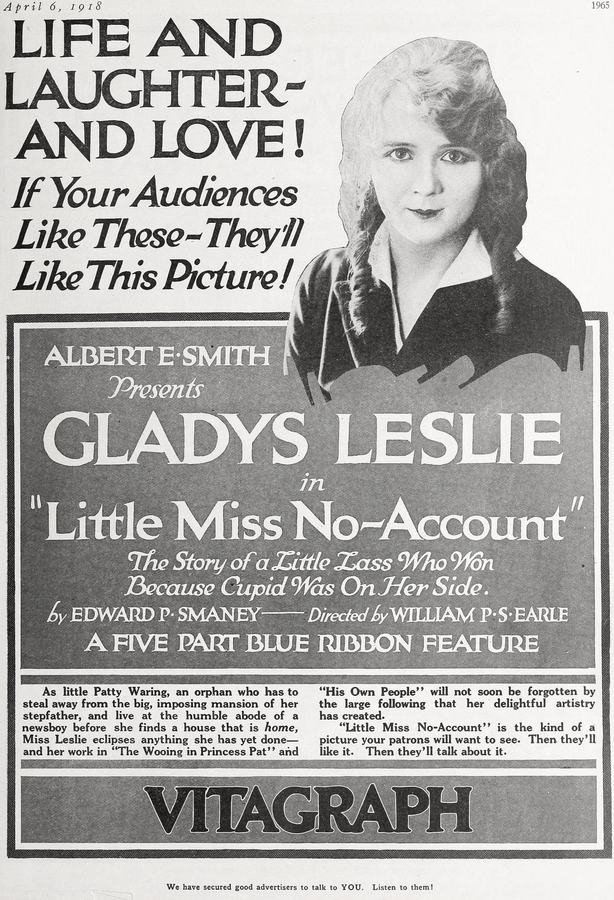
Dir: William P.S. Earle
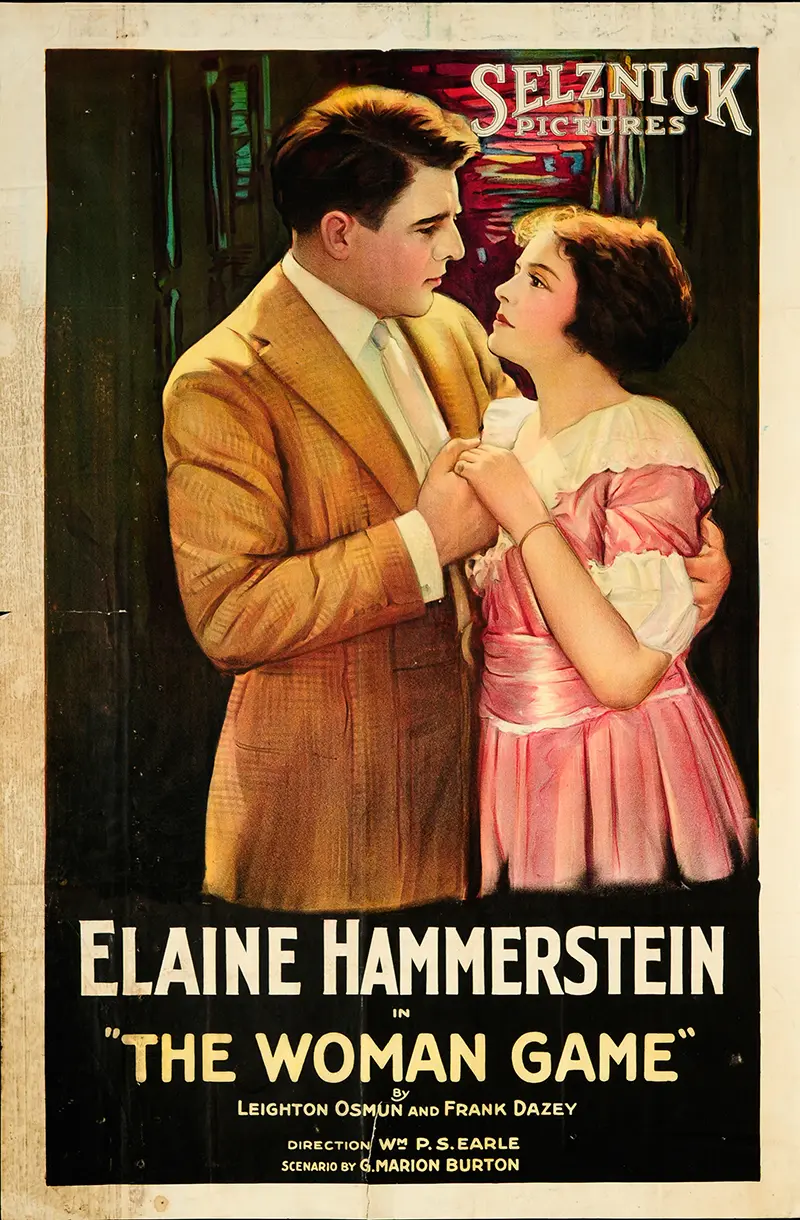
Patty Baring will lose the fine old Washington Square house she is to inherit if her scheming stepfather Josiah Wheeler's plan to acquire it for himself is successful. Cruelly abused by Wheeler, a gambling hall owner, Patty runs away to live with a newsboy named Bobby and his grandfather Herman. There, in spite of her shabby dress and humble companions, she arouses the admiration of Edwin Sayer, the district attorney. Ned, a soft-spoken gambler, desires to possess Patty, and at the instigation of her stepfather, lures her into a gambling den that Edwin has been planning to raid. Patty is arrested, but Edwin secures her release and places her in the charge of his mother. Ned and Josiah are imprisoned, leaving Patty free to claim her inheritance and wed Edwin.
View Details
Dir: William P.S. Earle
After preaching at a camp revival meeting that charity begins in the home, Littleton minister Hamilton Gregory finds a girl calling herself only Fran on his doorstep and takes her into his home. Fran soon finds that Mrs. Gregory is unhappy because Gregory has no affection for her, preferring instead his secretary Grace Noir. When Fran admits to Gregory that she is his daughter by an abandoned woman, and attempts to have him get rid of Grace, Grace has Bob Clinton make inquiries concerning Fran's past. When the circus comes to town, Fran, in disguise, substitutes for an ill lion tamer, because the circus is her hidden background. Seeing her in danger, Gregory realizes his familial responsibilities and refuses Grace. Fran then marries the superintendent of her school.
View Details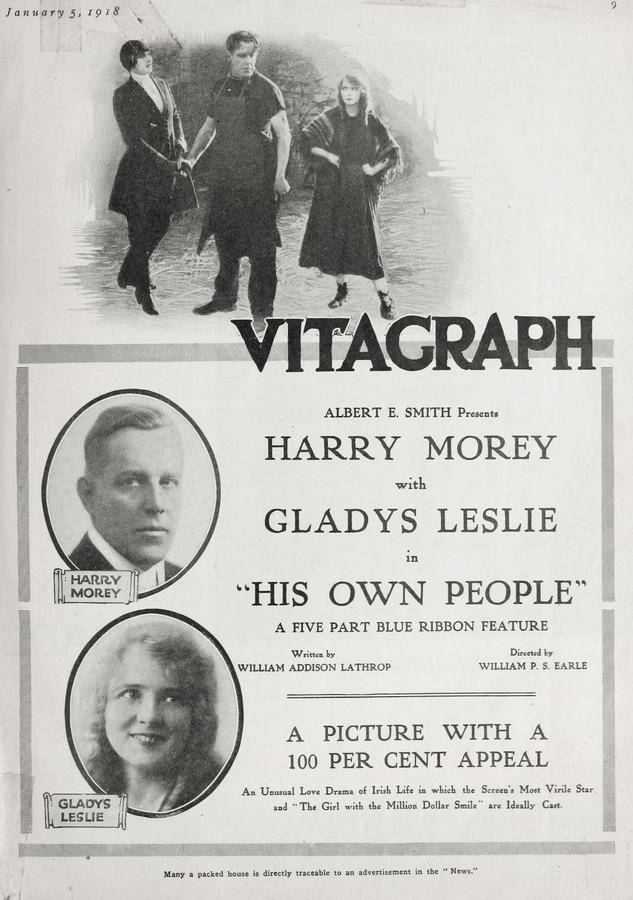
Dir: William P.S. Earle
Hugh O'Donnell, the town blacksmith and leader among the people, is in love with Molly Conway, who shows her love for Hugh in mischievous pranks at his expense. Lord Percival Cheltenham owns most of the village and is hated for his war on poachers. One day, Lady Mary Thorne, who is visiting Cheltenham, stops at the blacksmith shop to have her horse shod and, impressed by Hugh's rugged manliness, invites him to visit. Molly, overhearing the conversation, follows Hugh to the manor, where she is seen by Cheltenham, who has been drinking, and dragged inside. That night, Cheltenham's gamekeeper shoots a poacher, and the peasants storm the manor in revenge. Hugh holds them at bay and promises to turn the culprit over to the law. Searching the manor for its master, Hugh breaks into the library and finds Cheltenham with Molly. Believing that they are having an affair, the blacksmith attempts to choke the lord until Molly explains that she had flirted with Cheltenham in order to arouse Hugh's jealousy, and all is forgiven.
View Details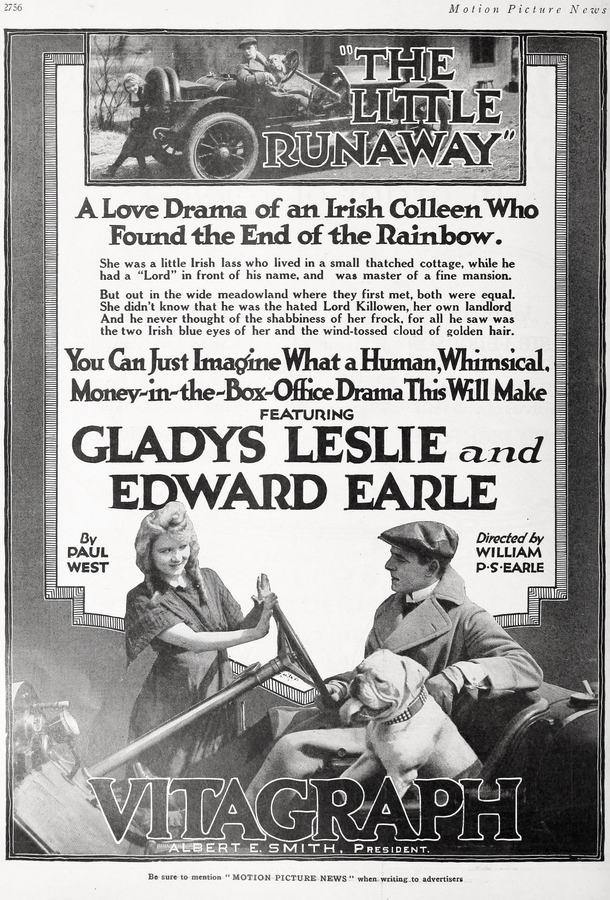
Dir: William P.S. Earle
Lord Killowen, the landlord of a little village in Ireland, employs Harvey Dowd and his worthless son, Peter, to collect the rents. When Peter arrives at the modest home of Ann, a young lace maker who lives with her aunt and blind grandmother, he makes improper advances towards her, but Killowen, who is motoring through the area, rescues her. Without leaving her a receipt, Peter absconds with the rent money to America, and Ann's family is evicted. Determined to recover her money, Ann follows Peter to New York, where she is befriended by a policeman, who informs her that Killowen has come to America to court the wealthy Eileen Murtagh. Lord Killowen takes Ann to Eileen's home, but the latter, in a fit of jealousy, orders the girl to leave. When Ann returns during Eileen's engagement party, Killowen realizes that he prefers the little lace maker and proposes to her.
View Details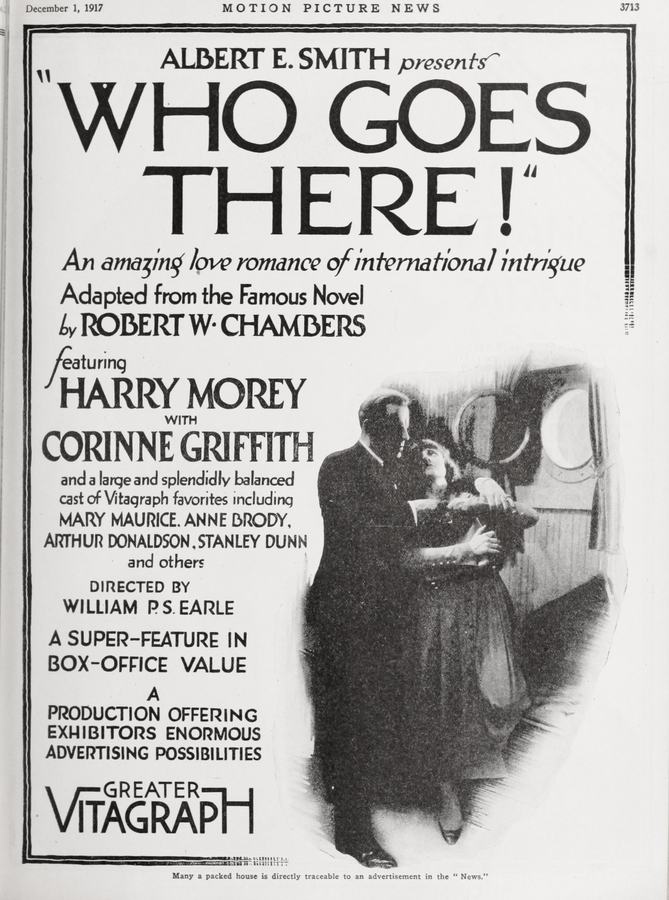
Dir: William P.S. Earle
During World War I, Kervyn Guild, an American citizen who was born in Belgium, is captured with other Belgian refugees by the Germans. Brought before the commanding officer, General Von Reiter, Guild is offered his own freedom as well as that of the other refugees if he goes to London and returns with the officer's daughter, Karen Girard, who actually is his mistress. In the hope of saving lives, Guild consents and is sent to London where he locates Karen. Guild's suspicions are aroused when he notices that they are being protected by the German agents and hunted by the British. His instincts prove correct when he learns that Karen is carrying dispatches to the general. On their journey back, Karen falls in love with Guild and agrees to join the Belgian cause. Before they can escape, the general arrives and demands both Karen and the papers. Guild duels to defend both and fatally wounds the general. In a breach of military ethics, the dying general then gives the lovers his blessings, and grants them a pass to go through the German lines.
View DetailsAnalysis relative to T'Other Dear Charmer
| Film Title | Atmosphere | Complexity | Similarity |
|---|---|---|---|
| The Courage of Silence | Tense | Abstract | 86% Match |
| The Dangerous Paradise | Surreal | Layered | 88% Match |
| The Wooing of Princess Pat | Surreal | High | 93% Match |
| The Woman Game | Gritty | Dense | 95% Match |
| The Last Door | Gritty | Dense | 91% Match |
This guide was algorithmically generated using the cinematic metadata of William P.S. Earle's archive. Last updated: 6/12/2026.
Back to T'Other Dear Charmer Details →