
Cult Cinema Deep Dive
The Flicker’s Forbidden Archive: Unveiling the Primal Transgressions and Rebel Rhythms of Cinema’s Original Midnight Mavericks
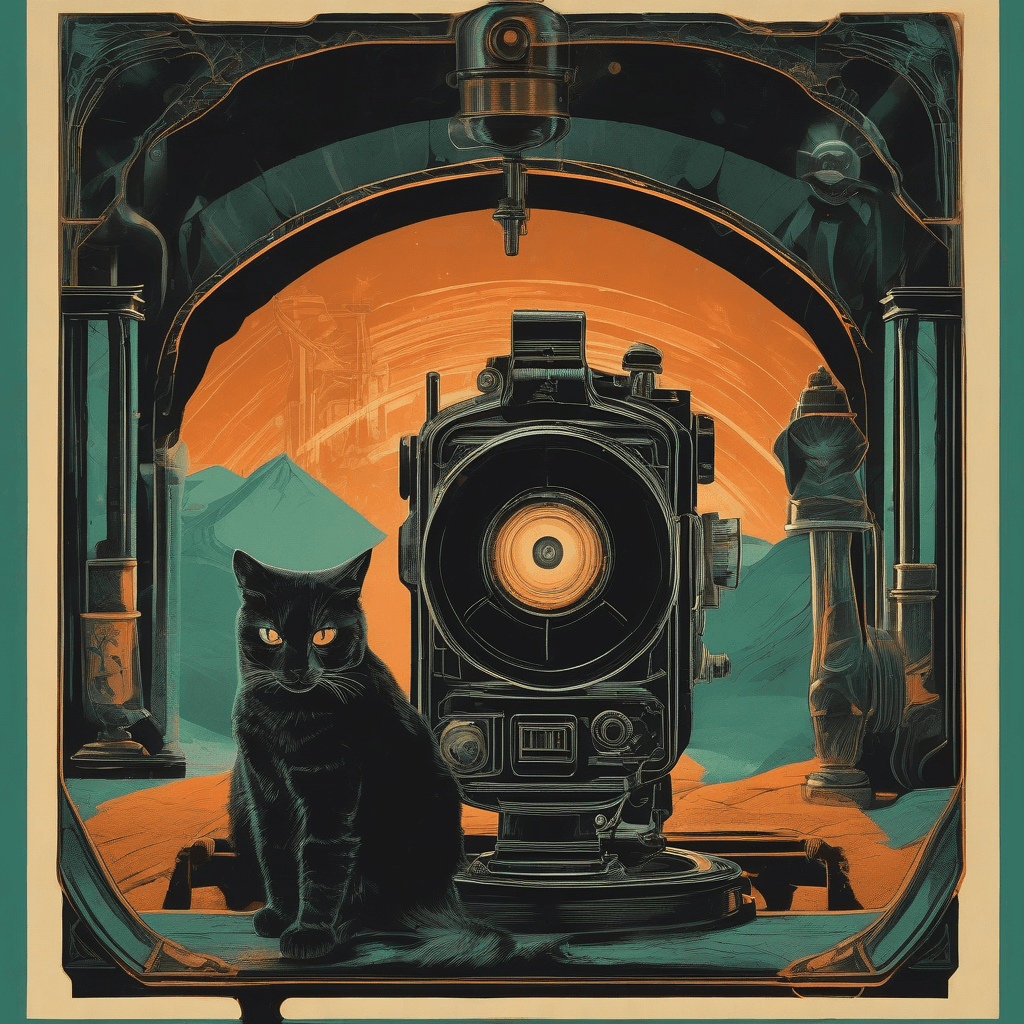
“An expansive deep dive into how the silent era's psychological thrillers, social rebellions, and surrealist shorts birthed the modern cult cinema phenomenon.”
The history of cinema is often told through the lens of the blockbuster or the prestige drama, yet the true soul of the medium resides in its fringes. Long before the term 'midnight movie' entered the common lexicon, a subterranean current of narrative rebellion was already flowing through the silent and early sound eras. This editorial explores how the seeds of cult obsession were sown by films that dared to be different, films that embraced the bizarre, the transgressive, and the psychological—creating a blueprint for the niche devotion we see today.
The Psychological Fracture: Nerven and the Birth of Social Unrest
To understand the origins of cult devotion, one must look at Nerven (1919). This film, emerging from the post-war trauma of Germany, represents the quintessential psychological cult film. It isn't merely a story of a rebellion's figurehead facing a court case for alleged rape; it is a visceral manifestation of doubt and uncertainty. The cult film often thrives on this sense of collective anxiety. By portraying characters whose internal states are as fractured as the society around them, Nerven established a precedent for films that challenge the viewer's mental comfort, a hallmark of the 'transgressive' cinema that would later define the underground movement.
Domestic Dissidence: Challenging the Prerogatives of Power
Cult cinema has always been a vehicle for social critique, often focusing on the domestic sphere as a site of rebellion. In A Man's Prerogative, we see an early exploration of marital dynamics where the wife, a writer of repute, challenges the traditional conduct of her lawyer husband. This proto-feminist narrative serves as a precursor to the strong, independent female leads of later cult classics. Similarly, The Toll of Mammon offers a biting look at the corrosive nature of luxury and poverty, as a young physician's wife rebels against their financial state. These films were not just entertainment; they were social provocations that resonated with audiences who felt out of step with the status quo, forging the early bonds of niche community.
The Archetype of the Rebel: From Huckleberry Finn to The Little Terror
The figure of the outcast is central to the cult experience. Huckleberry Finn, with its story of a rebellious boy escaping a humdrum world with the slave Jim, provides the fundamental 'on the run' narrative that fuels so many road-movie cults. This rebellion against social norms is mirrored in The Little Terror, where a millionaire's son elopes with a circus rider, choosing the trapeze over the boardroom. This rejection of inherited wealth and social standing in favor of a bohemian, performative life is a recurring theme in cult cinema, celebrating those who live on the periphery of 'polite' society.
The Surreal and the Strange: Escapism as Radical Act
If there is one element that defines the cult aesthetic, it is the embrace of the weird. Consider the short animation Wonders of the Deep, where a cat observes the ocean from inside a bottle. This kind of surreal, non-linear logic is the DNA of experimental film. It invites a specific kind of viewing—one that values visual oddity over traditional plot. This surrealist streak continues in Missing Husbands, where explorers find the lost city of Atlantis and its mysterious ruler, Queen Antinea. The 'lost world' trope, filled with fantasy and mystery, provides the escapist fodder that allows a film to transcend its era and become a timeless object of fascination.
Mythology and the Divine: Veer Abhimanyu and The Independence of Romania
Cult cinema often taps into deep-seated cultural myths to create a sense of 'sacred' viewing. Veer Abhimanyu, a mythological tale from the Mahabharata, brings the legendary battle formations of the Chakravyuha to the screen. For audiences, these films are more than stories; they are rituals. This ritualistic quality is also found in nationalistic epics like The Independence of Romania. While seemingly mainstream in their intent, these films often develop cult followings due to their specific cultural resonance and the grand, sometimes idiosyncratic, scale of their production.
The Comedy of the Absurd: Slapstick as Subversion
Early comedy was often far more transgressive than we remember. Feline Follies, introducing the world to Master Tom (who would become Felix the Cat), utilized the animation medium to explore chaotic, mouse-infested domesticity and romantic failure. The absurdity of The Sleepyhead, where an assistant replaces nurses with showgirls in a sanitarium, highlights the 'misrule' that often characterizes cult comedy. These films play with authority and social decorum, allowing the audience to laugh at the breakdown of order—a key component of the 'midnight' mindset.
Even the darker side of comedy, as seen in Ruined by Love, where a man seeks various ways to commit suicide after a romantic rejection, points toward the 'black comedy' genres that would later find a home in the cult canon. By taking serious subjects and treating them with a mix of slapstick and cynicism, these early shorts paved the way for the tonal complexity of modern independent cinema.
Mystery and the Macabre: The Roots of the Midnight Thriller
The 'cult of the detective' and the 'cult of the criminal' were born in the fog-drenched streets of silent mystery. The Face in the Fog, featuring Boston Blackie and a gang of terrorists chasing Russian jewels, is the prototype for the high-stakes, atmospheric crime thriller. Similarly, Der Bär von Baskerville brings the Sherlock Holmes mythos into a world of family curses and inherited estates. These films rely on 'mood' as much as 'mystery,' a quality that encourages repeat viewings and deep analysis by devoted fans.
The Spectacle of Disaster: The Juggernaut and The House Surrounded
Early cinema's obsession with spectacle also contributed to the cult phenomenon. The Juggernaut, with its focus on preventing a train from falling off a damaged bridge, utilized the visceral thrill of disaster to captivate audiences. This focus on physical danger and high-stakes action is mirrored in the war drama The House Surrounded, which moves from an English town to the African desert. These films often became cult objects because of their technical ambition or their unique, sometimes jarring, transitions between genres.
The Enduring Allure of the Misfit Narrative
What connects Sally's Blighted Career—a story of a country girl tricked into believing she has an opera career—with the mythological weight of Veer Abhimanyu? It is the focus on the unconventional path. Whether it is the heartbreak of War Brides, where a woman faces the loss of her husband and brothers to the front, or the comedic deception of Just Out of College, where a man sells a non-existent business to win a bride, these stories celebrate the hustler, the dreamer, and the victim of circumstance.
Cult cinema is ultimately a sanctuary for these narratives. It is a space where the 'blighted career' of a girl like Sally is not just a tragedy, but a point of connection for an audience that has felt the sting of broken dreams. The 'misfit' is not an outsider in the world of cult film; they are the protagonist. This reversal of social hierarchy is what makes films like The Sawdust Doll, with its poignant story of a blacksmith's daughter using a doll to replace a mother, so enduringly powerful.
Conclusion: The Legacy of the Silent Fringe
The films of the early 20th century, from the psychological depths of Nerven to the mythic heights of Aladdin and the Wonderful Lamp, created the foundational language of cult cinema. They taught us that a film does not need a massive budget or a conventional hero to be loved. It needs a soul, a touch of the bizarre, and a willingness to speak to the 'outcasts' of the world. As we look back at the Death-Bell, the Cradle, and the Rainbow Girl, we see the echoes of our modern obsessions. These were the original midnight mavericks, and their flicker continues to illuminate the dark corners of our cinematic imagination.
Community
Comments
Log in to comment.
Loading comments…