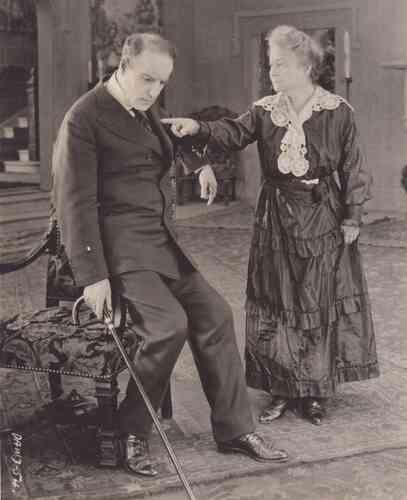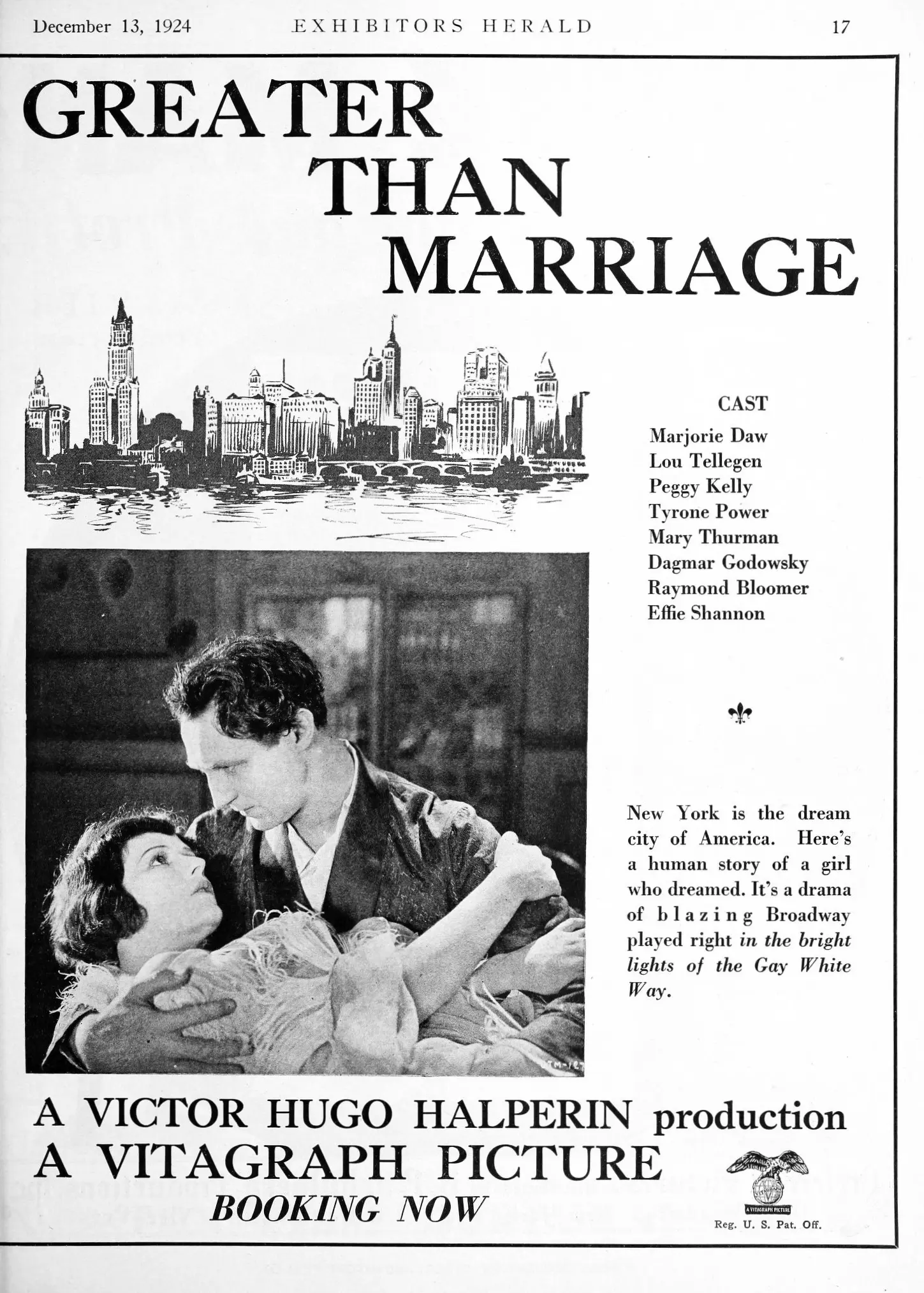
Joan Thursday leaves home because of her father's opposition to her becoming an actress and later marries playwright John Masters, who also disapproves of Joan's pursuing a career outside of home. When John is called to California to supervise rehearsals of his new play, Joan cannot resist the temptation of the stage and accepts backer Vincent Marbridge's offer to star in a new production.
The silent era of cinema remains a fertile ground for exploring the shifting tectonic plates of gender roles and the burgeoning independence of the 'New Woman.' Victor Halperin’s 1924 drama, Greater Than Marriage, serves as a poignant, if somewhat conservative, artifact of this transition. It is a film that breathes th...

Comparing the cinematic DNA and archive impact of two defining moments in cult history.
Victor Halperin
Bruno Ziener
Community
Log in to comment.
"The silent era of cinema remains a fertile ground for exploring the shifting tectonic plates of gender roles and the burgeoning independence of the 'New Woman.' Victor Halperin’s 1924 drama, Greater Than Marriage, serves as a poignant, if somewhat conservative, artifact of this transition. It is a film that breathes through its silences, capturing the agonizing friction between a woman's individual agency and the societal mechanisms designed to harvest her domesticity.The Architect of Despair: P..."

Mary Thurman
Victor Halperin, Louis Joseph Vance
United States
Deep dive into the cult classic
Discover similar cinematic experiences
A Directorial Spotlight on Victor Halperin