Summary
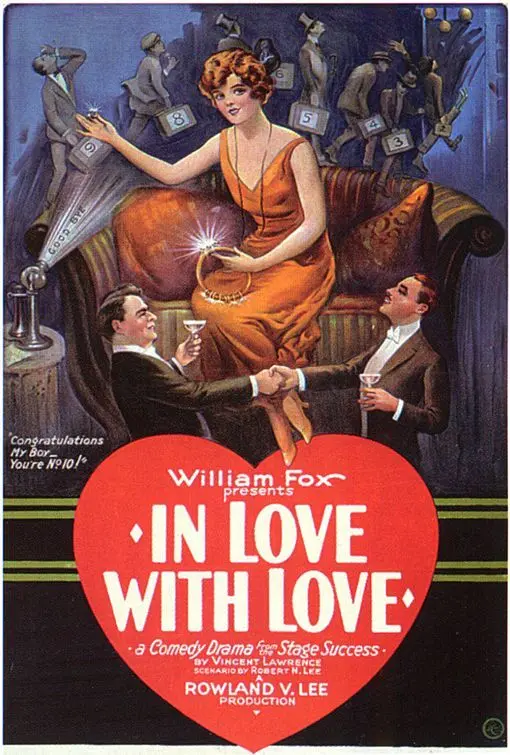
At the intersection of Jazz Age caprice and industrial ambition lies Ann Jordan, a mercurial debutante whose emotional landscape is as cluttered as her father’s architectural blueprints. Ann, portrayed with a shimmering volatility, finds herself entangled in a web of contradictory engagements: first to the stolid, almost glacial Robert Metcalf, and subsequently to the tempestuous Frank Oaks, whose courtship is less a romance and more a blitzkrieg. Yet, the narrative’s true structural integrity is forged through the arrival of Jack Gardner, a modest engineer whose bridge designs become the catalyst for a complex game of paternal manipulation and romantic revelation. When Ann’s father, a ruthless contractor, surreptitiously appropriates Jack’s intellectual property to secure a prestigious commission, the film shifts from a comedy of manners into a poignant exploration of professional integrity and personal sacrifice. The bridge, intended to span physical chasms, becomes a metaphor for the distance between Jack’s quiet devotion and Ann’s performative flirtations. The resolution, a masterstroke of dramatic irony, reveals that the elder Jordan’s apparent larceny was a labyrinthine test of Jack’s character, designed to bind the young engineer to the family firm and the daughter whose flighty heart finally finds its anchor in Jack’s steadfast, unpretentious brilliance.
Synopsis
Ann Jordan, flirtatious and pampered daughter of a wealthy contractor, is engaged to Robert Metcalf, a relaxed and boring young man. She then meets Frank Oaks, who aggressively sweeps her off her feet, and she is presently engaged to him also. Mr. Jordan, Ann's father, becomes interested in one of Robert's friends, Jack Gardner, an engineer who is preparing a design for a bridge competition. The elder Jordan invites Jack to the house and covertly copies Jack's plans for the bridge. Ann falls in love with Jack, who is eligible and seemingly indifferent; Jack is too modest to declare his love, so Ann is forced to propose to him, and Jack accepts. Jack's plan for the bridge wins the competition, but in Jordan's name rather than his own. Jack breaks off with Ann, believing that she has professed love for him only to help her father steal his plans. Jack and Ann are reconciled, however, when her father explains that he prevented Jack from winning the competition only to be sure that Jack was free to accept an extremely important position with the Jordan firm.
Review Excerpt
"The cinematic landscape of 1924 was a period of profound transition, a moment where the visual vernacular of the silent era reached a zenith of expressive sophistication. Within this milieu, In Love with Love emerges not merely as a romantic divertissement, but as a nuanced examination of the feminine psyche navigating the rigid structures of post-Victorian society. Directed with a deft hand and written by the formidable duo of Robert N. Lee and Vincent Lawrence, the film eschews the melodramati..."