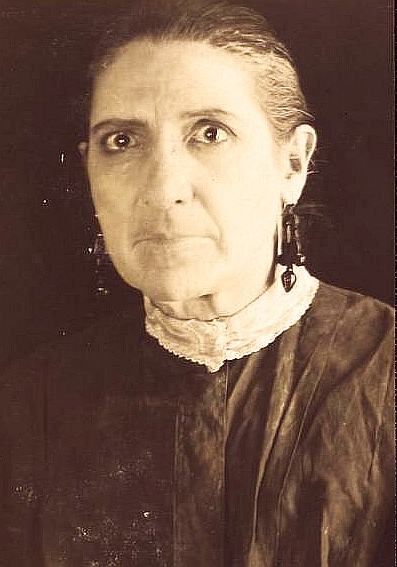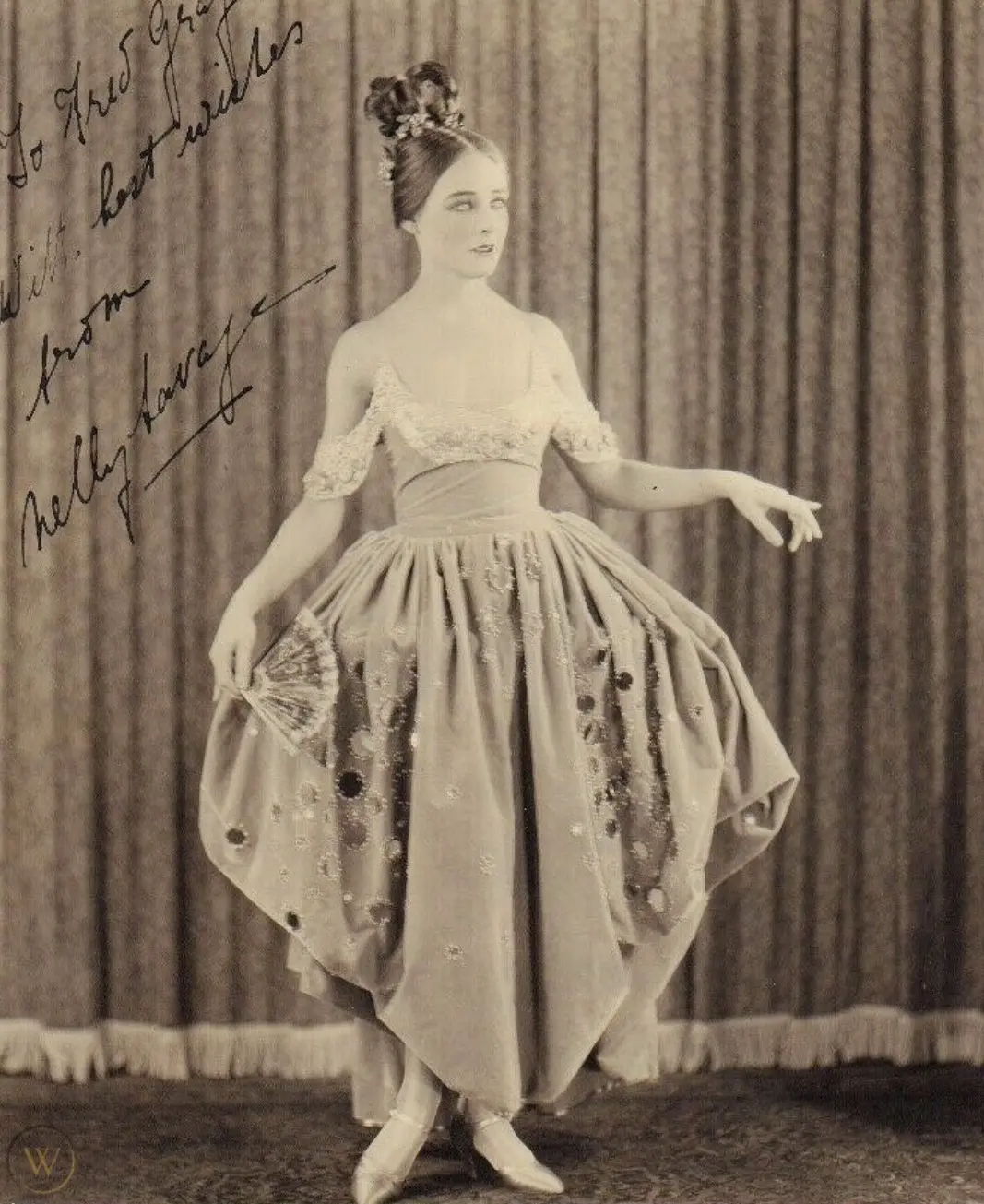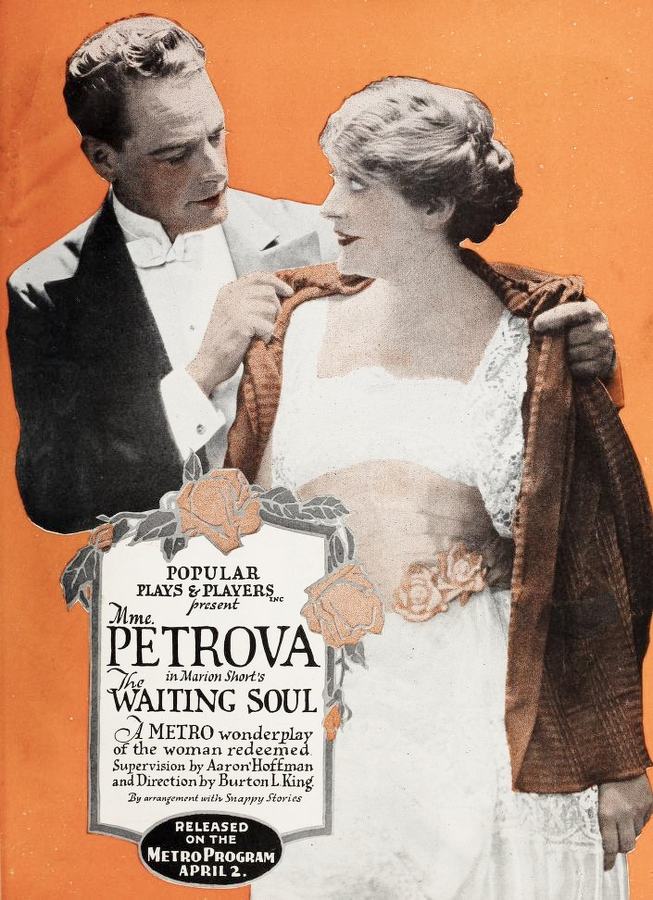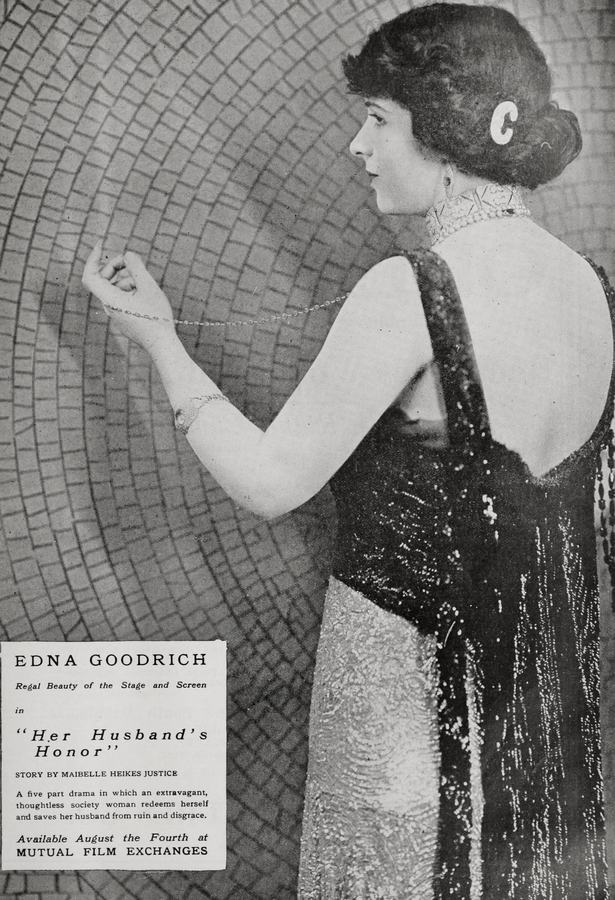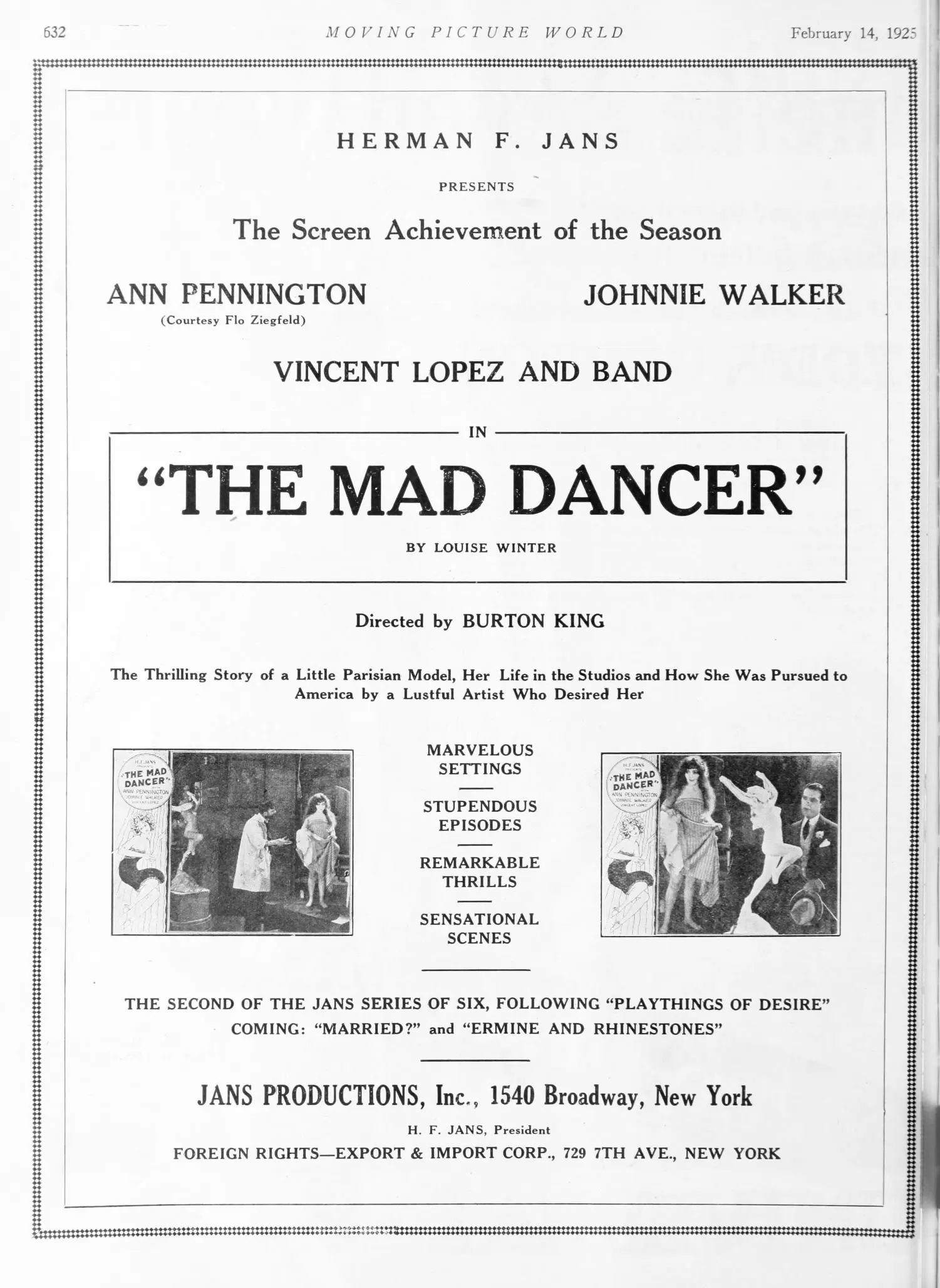
Mimi, known in the Latin Quarter as "The Mad Dancer," poses in the nude for sculptor Verlaine. When her father later commits suicide, she goes to the United States to live with his family, but she is insulted by them for having posed for Verlaine.
The Mad Dancer (1920s), a silent film steeped in the chiaroscuro of early cinema, unfolds as a taut psychological drama where the body becomes a contested site of power. Mimi, the titular figure, is not merely a dancer but a symbol of modernity’s dissonance with tradition—an archetype of the 'New Woman' whose sensua...

Comparing the cinematic DNA and archive impact of two defining moments in cult history.
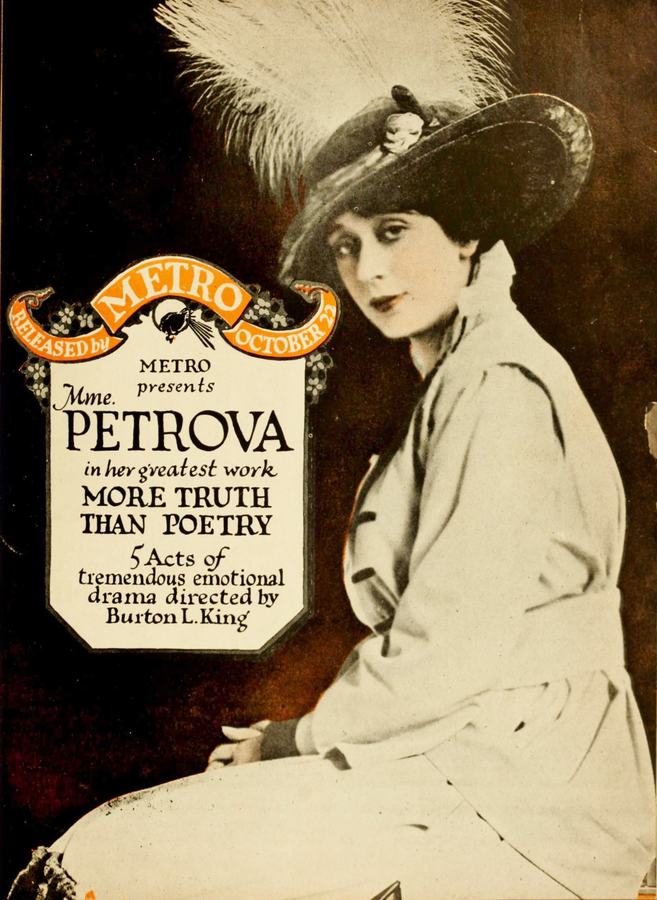
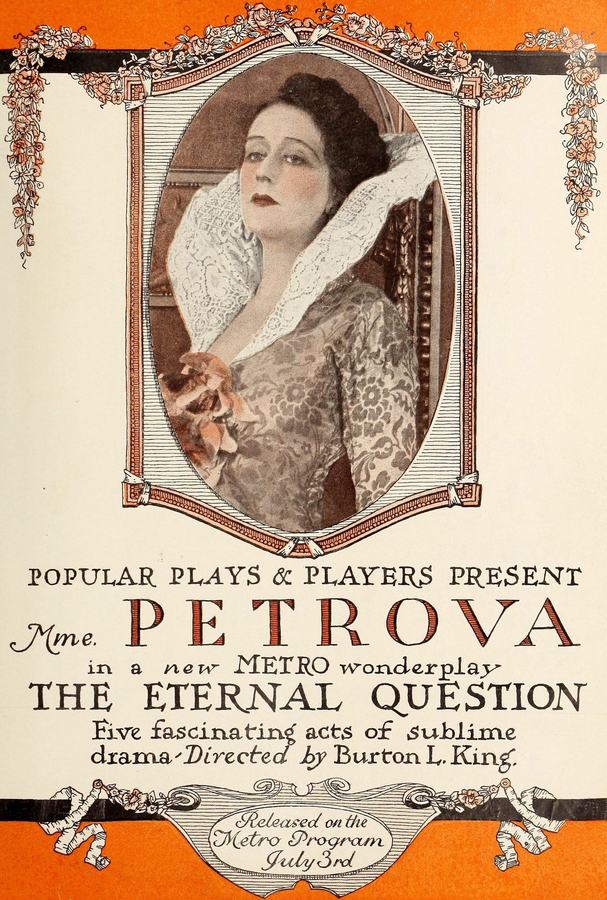
Burton L. King
Burton L. King
Community
Log in to comment.
" The Mad Dancer (1920s), a silent film steeped in the chiaroscuro of early cinema, unfolds as a taut psychological drama where the body becomes a contested site of power. Mimi, the titular figure, is not merely a dancer but a symbol of modernity’s dissonance with tradition—an archetype of the 'New Woman' whose sensuality threatens to destabilize the moral order. The film’s opening scenes, shot in the Latin Quarter’s shadowy alleys, use chiaroscuro to frame her as both muse and outcast, her nud..."
William B. Laub, Louise Winter
United States

Deep dive into the cult classic
Discover similar cinematic experiences
A Directorial Spotlight on Burton L. King