DbcultAccessing Vault...
6.8/10
Senior Film Conservator
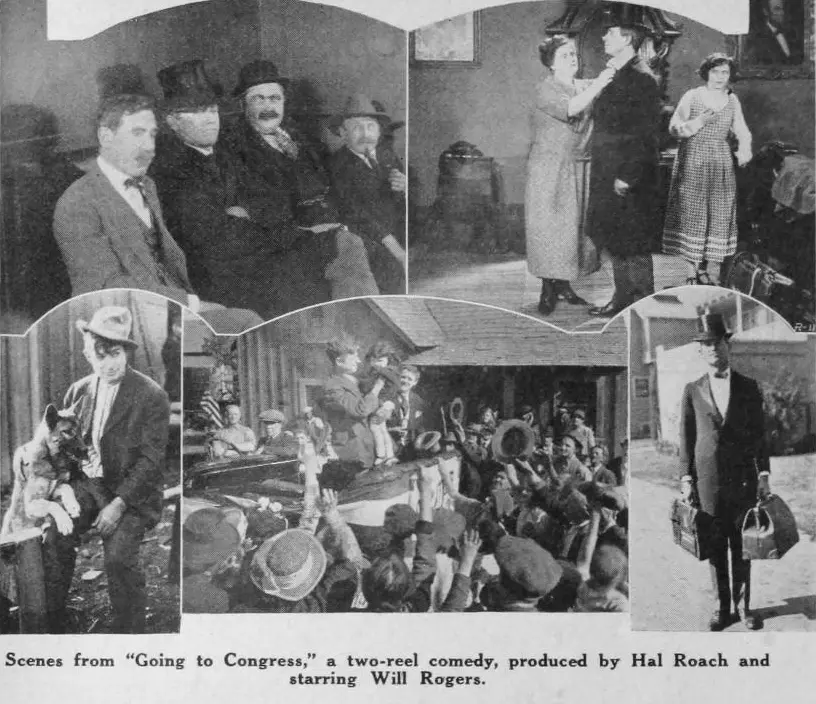
A definitive 6.8/10 rating for a film that redefined the boundaries of cult cinema. Going to Congress remains a cornerstone of transgressive art.
The cinematic landscape of 1924 was one of burgeoning sophistication, yet amidst the grand epics and burgeoning German Expressionism, a small, incisive piece of Americana emerged that remains hauntingly relevant. Going to Congress, directed with a lean, comedic efficiency, serves as a vessel for the incomparable Will Rogers. Rogers, portraying the quintessential idler Alfalfa Doolittle, captures a specific brand of American hubris—the conviction that proximity to a wood-burning stove and a captive audience constitutes a political education. Unlike the darker explorations of social climbing found in The City of Masks, Rogers’ vehicle treats the ascent to power as a whimsical accident of the plebeian spirit.
Alfalfa Doolittle is a character of immense lethargy and even greater loquaciousness. For years, he has been the self-appointed oracle of his local community, a man whose primary occupation is the consumption of time and the production of platitudes. The film’s brilliance lies in its refusal to mock Doolittle’s ignorance directly; instead, it mocks the system that finds such ignorance charming. When he is nominated for Congress, the film pivots from a character study of a village eccentric into a biting satire of the electoral machine. This transition mirrors the thematic weight of The Torch Bearer, though Rogers swaps civic earnestness for a droll, almost accidental subversion of authority.
The supporting cast provides a sturdy framework for Rogers’ improvisational energy. Marie Mosquini and Blanche Mehaffey offer more than just decorative presence; they reflect the bewildered and often opportunistic reactions of a public suddenly faced with the reality of their own voting choices. 'Tonnage' Martin Wolfkeil, with his imposing physical presence, acts as a wonderful visual foil to Rogers’ wiry, restless physicality. The chemistry here is not of romantic tension, but of a shared realization of the absurdity inherent in their social strata, a theme explored with less levity in The Honor of His House.
Rogers, who also took a hand in the writing, imbues the film with his signature wit—a blend of sharp-tongued observation and gentle self-deprecation. The dialogue, delivered via intertitles, crackles with a vernacular authenticity that was often missing from the more theatrical productions of the era. While films like Once a Mason relied on situational tropes of fraternal secrecy, Going to Congress finds its humor in the public square, in the very transparency of Doolittle’s incompetence. There is no hidden identity here, no Alias Mary Brown style deception; Doolittle is exactly who he appears to be, which makes his political success all the more damning for the society that elects him.
The cinematography, though standard for the Hal Roach studios at the time, manages to emphasize the claustrophobia of the country store versus the intimidating scale of the political stage. There is a visual rhythm to the film that mimics the pacing of a Rogers monologue—deliberate, slightly meandering, but always landing on a sharp point. The inclusion of character actors like Charlie Hall and Sammy Brooks adds a layer of slapstick pedigree that ensures the film never becomes too bogged down in its own message. It maintains a lightness of touch that is often absent in modern political commentary.
When we look at Going to Congress alongside Be a Little Sport, we see a fascinating dichotomy in how the 1920s viewed leisure and ambition. In the latter, sport and social standing are intertwined with a sense of modern playfulness. In Rogers’ film, leisure is the precursor to power. Doolittle’s refusal to work is his greatest political asset; it gives him the time to talk, and in the world of politics, talk is the only currency that matters. This is a far cry from the existential weight found in international works like La luz, tríptico de la vida moderna, which viewed modernity with a more fragmented, perhaps more honest, trepidation.
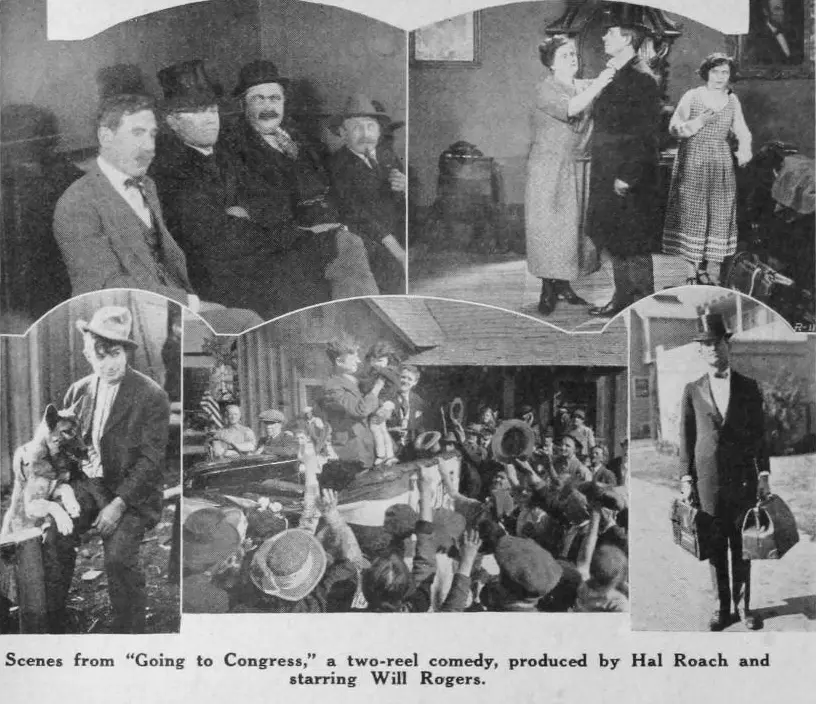
The film also touches upon the concept of the "man of the people" in a way that feels incredibly prescient. Doolittle is the original populist, a man who converts his lack of expertise into a badge of honor. He is the antidote to the "Millionendieb" or the sophisticated criminal seen in Der Mann ohne Namen - 1. Der Millionendieb. Where the European cinema of the time was often obsessed with the mysterious and the grand theft, American comedy was obsessed with the mundane and the grand delusion.
One cannot discuss this film without acknowledging the editing. The way the film cuts between Doolittle’s grandiose speeches and the mundane reality of his surroundings creates a persistent irony. It’s a technique that would be refined in later decades but is present here in its raw, most effective form. The pacing is brisk, avoiding the narrative bloat that occasionally plagued features like During the Plague. Instead, it operates with the precision of a short story, focusing on a single arc: the elevation of the unfit.
The use of light and shadow in the rural scenes evokes a sense of nostalgia that Rogers would later become the face of for the entire nation. Yet, beneath that warmth is a cold realization of how easily the levers of power can be grasped. This juxtaposition is what elevates the film above mere slapstick. It isn't just about a man falling down; it's about a man falling upward. This theme of unexpected elevation or social shifting is a common thread in the era, also appearing in Queens Are Trumps, though with a focus on the feminine experience of class mobility.
As we reflect on the film's conclusion—which I shall not spoil for the uninitiated—it becomes clear that Rogers was not just a comedian, but a philosopher of the mundane. He understood that the American dream had a satirical underbelly where the least capable were often the most rewarded. This is the same cynical vein that runs through Somebody Lied, where the discrepancy between word and deed forms the core of the drama. In Going to Congress, the lie is the campaign itself, a collective agreement to believe in the impossible wisdom of the common man.
The film’s brevity is its strength. It does not overstay its welcome or attempt to provide a moral lesson. It simply presents the spectacle of Alfalfa Doolittle and asks the audience to look in the mirror. While films like Winter Has Came might deal with the literal change of seasons and the hardships thereof, Rogers deals with the intellectual winter of a nation that prefers a good story over a good policy. Even in the silence of the 1920s, the roar of the populist was deafening.
In the final analysis, Going to Congress is a vital artifact of political cinema. It serves as a reminder that the tropes of the "outsider" and the "plain-spoken truth-teller" are as old as the medium itself. Rogers’ performance is a masterclass in subtlety; he never winks at the camera, never lets us in on the joke, because to Alfalfa Doolittle, there is no joke. He truly believes he belongs in the halls of power, and that is the most frighteningly funny thing of all. This film stands alongside The White Masks and The Faded Flower as a testament to the diversity of silent era storytelling, moving from the personal to the political with effortless grace.
For those who appreciate the evolution of satire, this 1924 gem is indispensable. It lacks the cynicism of modern political thrillers but possesses a much sharper edge because of its inherent optimism about the absurdity of life. Much like Boman på utställningen, it captures a moment in time where the world was expanding, and the small-town man was suddenly thrust into a global, or at least national, spotlight. Will Rogers didn't just play Alfalfa Doolittle; he warned us about him.
IMDb —
1916
Community
Log in to comment.