Summary
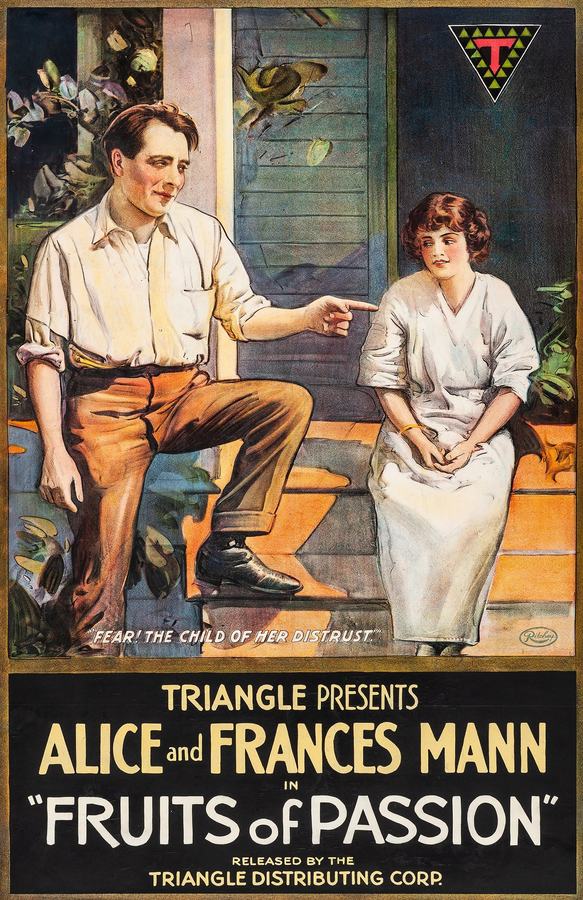
In the silent era's opulent, yet morally fraught, tapestry of human desire, "Fruits of Passion" unfurls the poignant saga of Elara Vance (Alice Mann), a young woman whose artistic soul, pure and unblemished, finds itself ensnared within the gilded cage of high society's machinations. Hailing from humble origins, Elara possesses an innate gift for sculpting, a talent that, like a nascent bloom, promises extraordinary beauty. Her world is irrevocably altered by the magnetic, yet ultimately deceptive, allure of Julian Thorne (Colin Campbell), a celebrated art connoisseur and social arbiter whose charm masks a predatory ambition. Thorne, captivated less by Elara's raw talent than by the potential for its exploitation, draws her into his glittering orbit, promising patronage and a path to recognition. Elara, blinded by nascent affection and the intoxicating prospect of artistic validation, gradually becomes a pawn in Thorne's elaborate charade, her original works subtly appropriated or recontextualized to bolster his own fading reputation. Her creative fervor, initially a source of joy and liberation, slowly transmutes into a bitter harvest of emotional entanglement and artistic compromise. The film masterfully portrays the insidious erosion of innocence as Elara grapples with the disquieting realization that the 'passion' Julian professes is a thinly veiled avarice, a desire to consume rather than cultivate. A pivotal exhibition, intended to be Elara's grand unveiling, instead becomes the crucible where truth and deception collide. The narrative culminates not in a simple triumph or tragedy, but in a profound, internal reckoning for Elara, as she must choose between the illusory comfort of a tainted adoration and the arduous, yet ultimately liberating, path of artistic integrity and self-reclamation. Her journey through this moral labyrinth ultimately reveals that the true 'fruits of passion' are not found in societal accolades or fleeting romance, but in the unwavering fidelity to one's authentic self and creative spirit.
Review Excerpt
"
Unveiling the Bitter Sweetness: A Deep Dive into "Fruits of Passion" (1919)
Stepping back into the nascent decades of cinema, one encounters a fascinating tapestry of storytelling, where the absence of spoken dialogue demanded an eloquence of gesture, expression, and visual metaphor. "Fruits of Passion," a 1919 silent drama, stands as a particularly potent example of this era's capacity for profound narrative and emotional resonance. Directed with an astute eye for human frail..."