DbcultAccessing Vault...
Cult Review
Senior Film Conservator
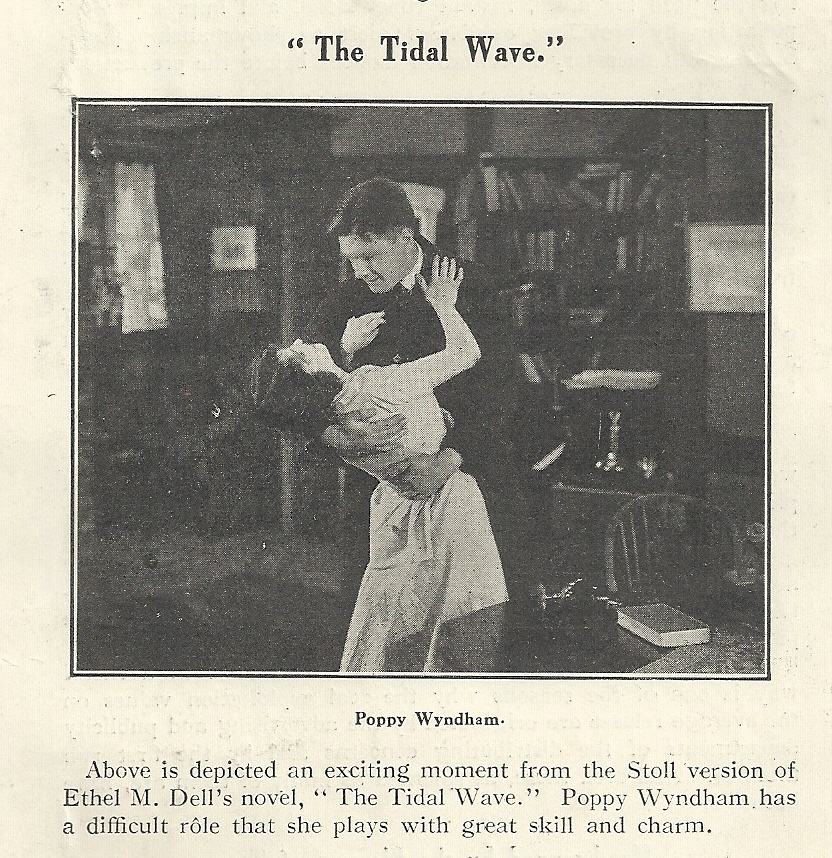
In the nascent years of the 1920s, British cinema was navigating a precarious transition from the primitive sketches of the previous decade into a more robust, narrative-driven medium. Sinclair Hill’s The Tidal Wave emerges as a quintessential artifact of this era, a film that captures the zeitgeist of a post-war society yearning for both simplicity and emotional depth. Unlike the slapstick frivolity often associated with early silents, such as the energetic Sleuths and Slickers, Hill’s work leans heavily into the weight of melodrama, grounded by the physical reality of the English shoreline. The film is an adaptation of Ethel M. Dell’s literature, a writer known for her ability to synthesize romance with a sense of impending doom, and Hill translates this onto celluloid with a surprising degree of visual sophistication.
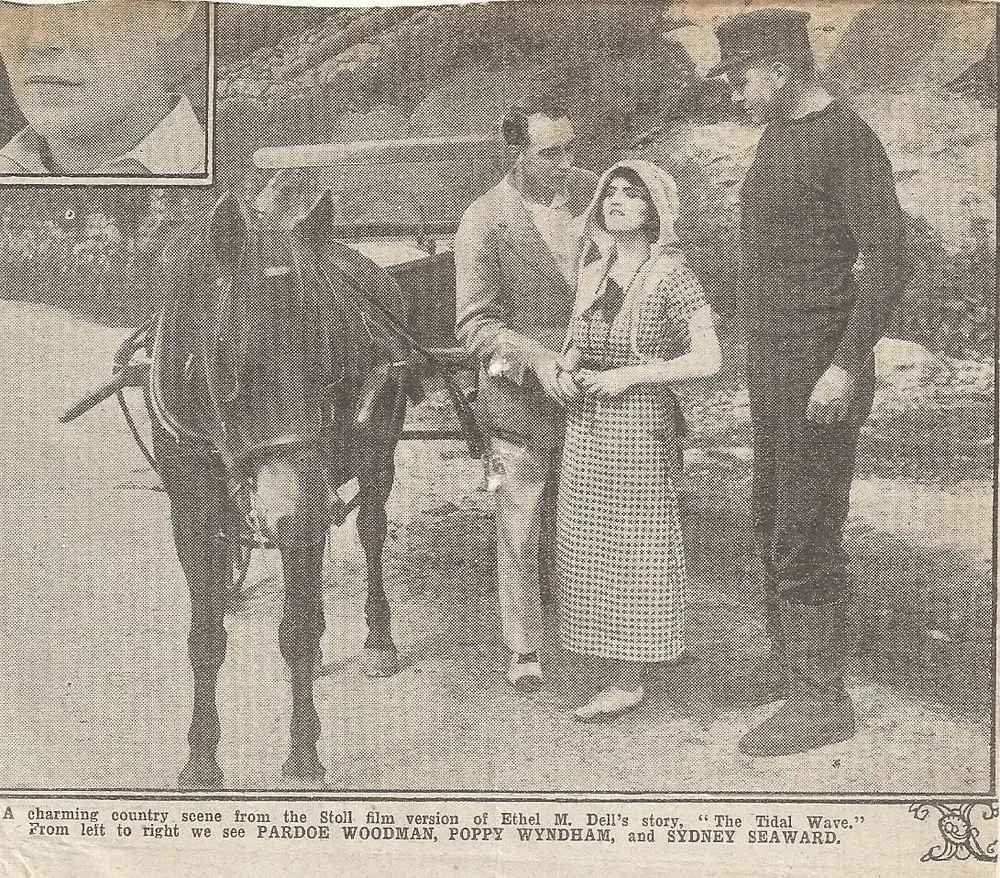
The narrative arc of The Tidal Wave is deceptively straightforward, yet its execution is layered with atmospheric nuance. We are introduced to a fisherman, played by Pardoe Woodman, whose life is an endless cycle of salt and toil. Woodman’s performance is a masterclass in silent-era restraint; he avoids the histrionics common in contemporary works like Called Back, opting instead for a physicality that suggests a man more comfortable with the tides than with human conversation. When he discovers Poppy Wyndham’s character—an artist whose presence on the shore represents an intrusion of the 'civilized' world into his wild domain—the film shifts from a documentary-like observation of maritime life into a poignant character study.
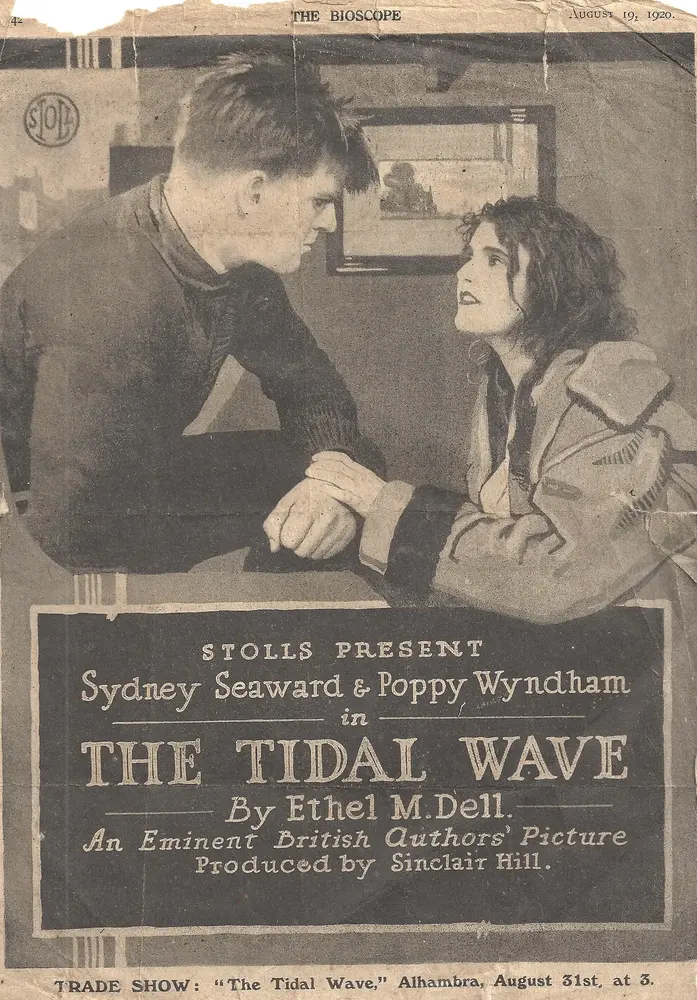
The rescue scene itself is a triumph of early practical effects and editing. While it may lack the sheer historical scale of The Life of General Villa, it compensates with an intimate, claustrophobic tension. The water is not just a setting; it is an antagonist. As the fisherman battles the surf to save the artist, Sinclair Hill utilizes the natural light of the coast to create a high-contrast aesthetic that mirrors the internal conflicts of the protagonists. This visual language is reminiscent of the gritty textures found in Shifting Sands, where the environment serves as an externalization of the characters' psychological states.
Woodman’s portrayal of the fisherman provides the film with its moral and emotional anchor. In an era where male leads were often either dapper aristocrats or bumbling Everymen, his rugged, salt-of-the-earth persona feels strikingly modern. There is a palpable sense of alienation in his character—a man who saves life but struggles to integrate it into his own. This theme of the 'noble outsider' is a recurring motif in the Stoll Film Company’s repertoire, often contrasting with the more lighthearted military narratives like Hay Foot, Straw Foot or the propagandistic leanings of With the Army of France.
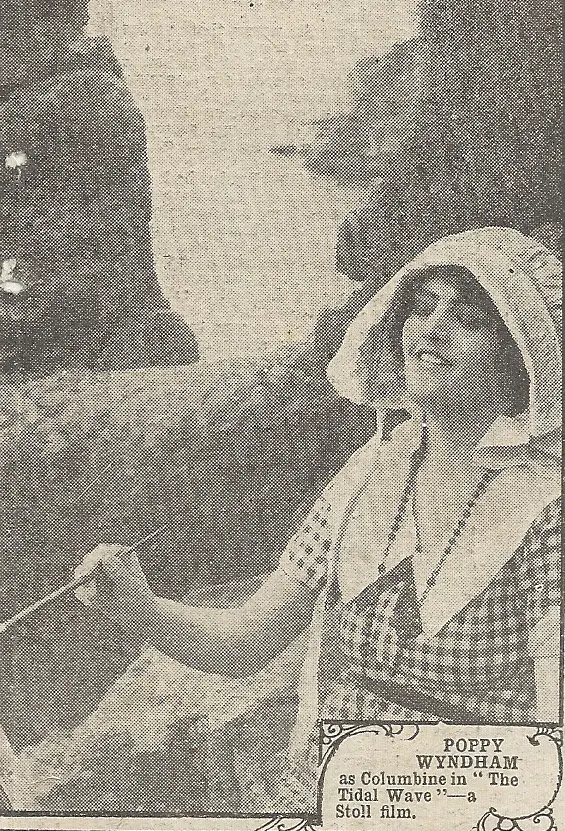
The chemistry between Woodman and Wyndham is built on silence and glances, a necessity of the medium that Hill exploits to great effect. Wyndham, as the artist, brings a delicate vulnerability that never descends into mere caricature. She represents the 'New Woman' of the 1920s—independent, creative, yet physically fragile when confronted with the raw power of nature. Her fascination with the fisherman is not merely romantic; it is an artistic obsession. She seeks to capture his essence on canvas, creating a fascinating meta-narrative about the act of looking and being looked at. This dynamic of the urbanite seeking truth in the rural landscape echoes the thematic underpinnings of Sealed Valley, though with a distinctly British sensibility.
The script, penned by Sinclair Hill and Ethel M. Dell, carries the hallmark of Dell’s popular fiction: a blend of high-stakes emotion and rigid moral frameworks. While some might find the plot’s reliance on a literal 'tidal wave' to resolve emotional tension a bit convenient, it fits perfectly within the cinematic grammar of 1920. In many ways, The Tidal Wave is a more grounded counterpart to the spiritual and moral explorations found in The Seventh Sin. It deals with the 'sin' of class boundary-crossing, but resolves it through the purifying force of the ocean.
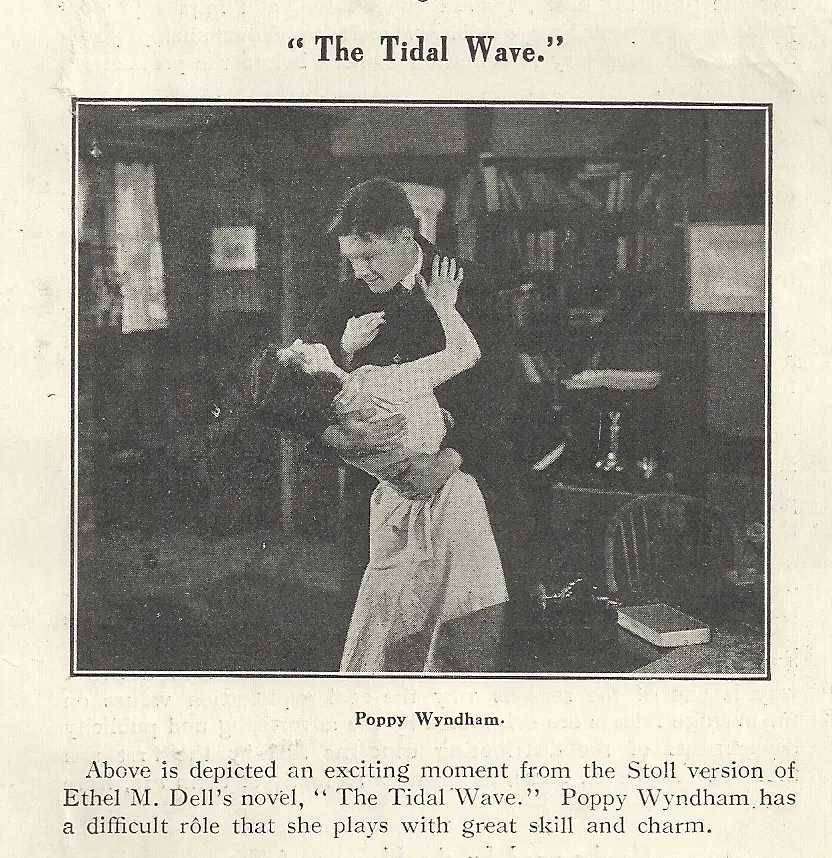
The supporting cast, including Sydney Seaward and Annie Esmond, provides the necessary social context for the central romance. They represent the community’s skepticism and the rigid expectations of the time. This societal pressure is a common thread in Hill’s work, often mirroring the domestic tensions explored in The Heart of Jennifer. However, in The Tidal Wave, the stakes feel higher because they are played out against the vast, indifferent backdrop of the sea rather than the confines of a drawing room.
From a technical standpoint, the film is an intriguing study in early location shooting. Hill’s decision to move away from the studio and into the elements gives the film a visceral quality that stage-bound productions lack. The way the camera captures the spray of the waves and the jagged edges of the cliffs adds a layer of realism that was quite revolutionary for the time. It lacks the surrealism of German expressionism seen in Der Alchimist, opting instead for a rugged naturalism that would become a staple of British cinema.
The pacing of the film is deliberate, allowing the audience to soak in the atmosphere of the fishing village. This isn't the frantic energy of A Day and Night at Coney Island; it is a slow-burn drama that respects the silence of its characters. Every frame feels intentional, from the wide shots of the desolate beach to the tight close-ups of the artist’s brushes. The use of tinting—common in this era—further enhances the mood, with cool blues for the night scenes and warm ambers for the interior moments of burgeoning love.
When placed alongside other films of the period, The Tidal Wave holds its own as a serious piece of art. While The Varmint focused on youthful rebellion and Betty to the Rescue leaned into the 'damsel' trope for broader appeal, Hill’s film feels more adult, more preoccupied with the complexities of the human condition. It shares a certain DNA with Possession in its exploration of how one person can become an all-consuming force in another’s life, but it filters this through a lens of maritime survival.
Even the more overtly political films of the time, such as The Bullshevicks, lack the elemental power that Hill achieves here. By stripping away the political and focusing on the primal—man versus nature, man versus his own social conditioning—The Tidal Wave achieves a timelessness that many of its contemporaries lost as soon as the political winds shifted.
As we look back at The Tidal Wave from a century’s distance, its significance remains clear. It is a bridge between the Victorian melodrama of the past and the psychological realism of the future. The film’s climax, where the metaphorical and literal waves collide, serves as a powerful reminder of cinema’s ability to use the natural world as a mirror for the soul. Sinclair Hill didn't just film a story; he captured a feeling—the feeling of being swept away by forces beyond one's control.
In the grand tapestry of silent film, this work stands as a testament to the power of visual storytelling. It reminds us that before there were voices on screen, there was the roar of the ocean and the silent, searing gaze of a fisherman who found more than just a survivor in the wreckage—he found a reason to reconnect with a world he had long since abandoned. For any serious student of film history or lover of classic melodrama, The Tidal Wave is an essential viewing experience, providing a window into a vanished world that still feels remarkably close to the surface.
IMDb 4
1929
Community
Log in to comment.