DbcultAccessing Vault...
Cult Review
Senior Film Conservator
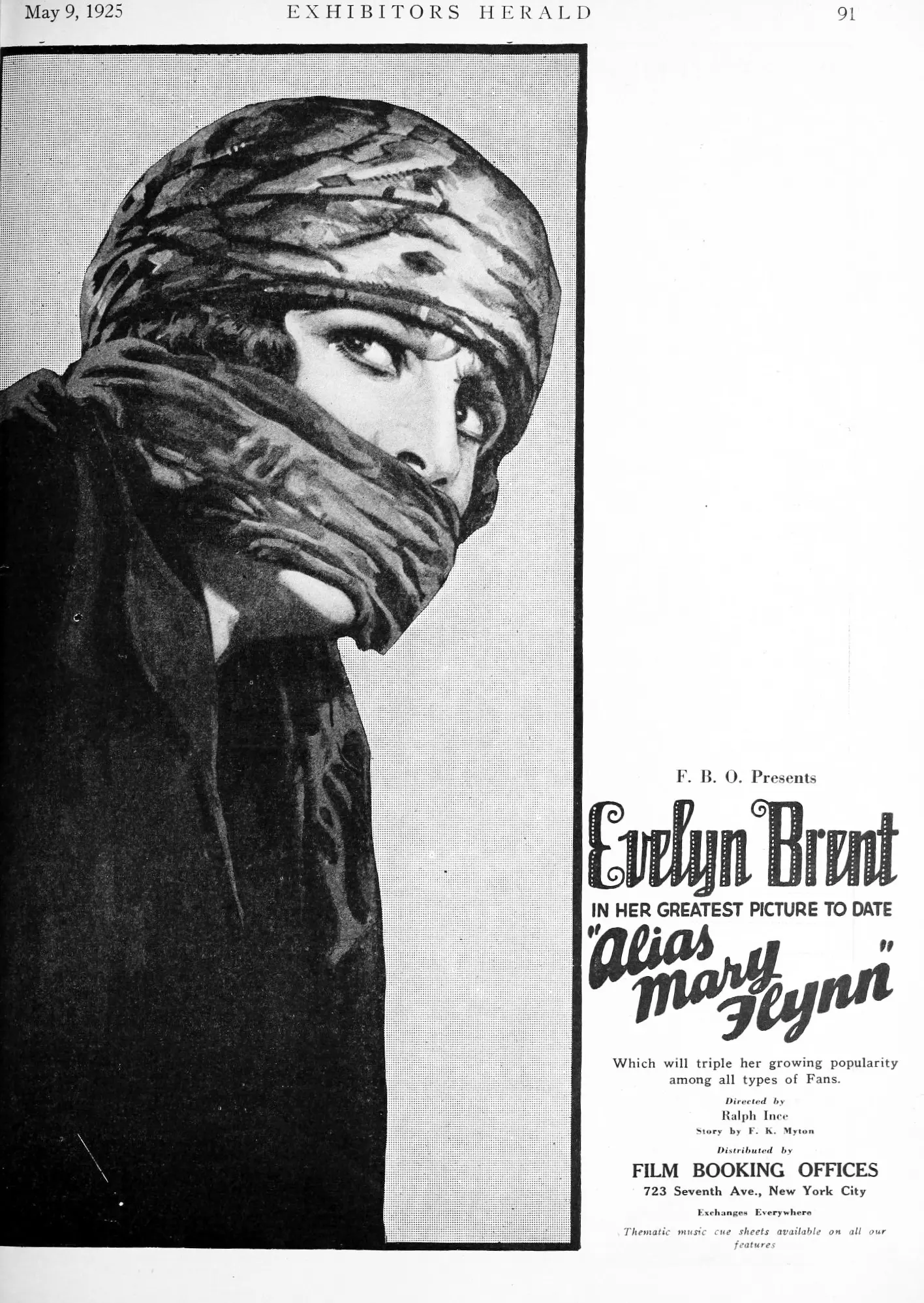
The year 1925 stood as a pivotal juncture in the evolution of cinematic language, a period where the silent medium achieved a sophisticated visual eloquence just before the sonic revolution of the late twenties. Within this fertile ground, Alias Mary Flynn emerges not merely as a relic of its era but as a pulsating precursor to the noir sensibilities that would eventually dominate the American screen. This is a film that grapples with the duality of human nature, the fragility of social standing, and the relentless gravity of one’s past. Unlike the more fantastical explorations seen in The Isle of the Dead, which leans into the macabre, Alias Mary Flynn anchors its tension in the gritty, asphalt-paved reality of the urban underworld.
At the epicenter of this narrative maelstrom is Evelyn Brent, an actress whose physiognomy alone could convey volumes of unspoken trauma and steely resolve. Brent does not merely play Mary Flynn; she inhabits her with a mercurial intensity that fluctuates between the predatory instincts of a street-smart grifter and the burgeoning vulnerability of a woman glimpsing a life of grace for the first time. Her performance serves as a masterclass in silent-era subtlety, avoiding the histrionic gesticulations often associated with the period. In many ways, her character arc mirrors the psychological depth found in The Branded Woman, where the stain of reputation becomes a primary antagonist. Brent’s Mary is a survivor, a woman who understands that in the predatory ecosystem of the city, one must either be the hunter or the prey.
The chemistry between Brent and Malcolm McGregor, who portrays Tim Reagan, provides a necessary emotional counterweight to the film’s more cynical machinations. Tim, as the Assistant District Attorney, represents the rigid, uncompromising arm of the law—a force that Mary has spent her entire existence evading. Their romance is not merely a subplot; it is a thematic battlefield where the concepts of justice and mercy collide. The tension is palpable: can the law truly embrace the transgressor? This dynamic is handled with a deftness that avoids the saccharine pitfalls of lesser melodramas, such as the occasionally over-earnest The Runt.
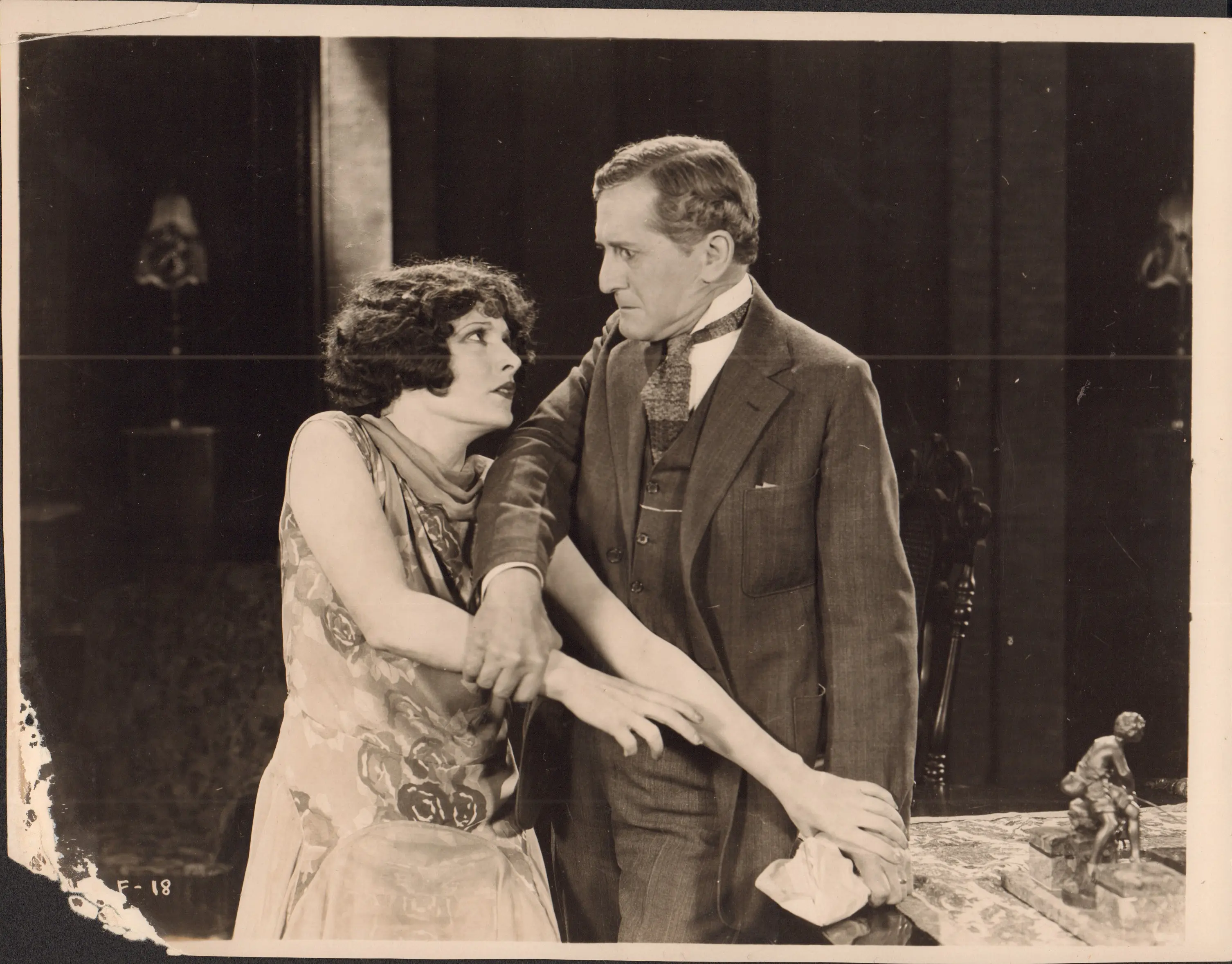
The screenplay, penned by the collaborative efforts of Edward J. Montagne and Fred Myton, exhibits a structural rigor that is frequently absent in contemporary silent features. The plot is a clockwork mechanism of cause and effect, where every choice carries a heavy weight of consequence. The introduction of John Reagan, played with a quiet dignity by Louis Payne, serves as the moral fulcrum of the story. Reagan is not a saint; he is a man with a shadowed history, a detail that the film uses to critique the facade of bourgeois respectability. When the villainous Forbes—a character whose avarice rivals the antagonists in Trapped by the London Sharks—appears, he isn't just a threat to Reagan’s freedom, but to the very concept of the 'fresh start' that the film so desperately wants to believe in.
The blackmail subplot is particularly effective because it forces Mary Flynn to revert to her criminal skillset for a noble cause. This paradox—the act of stealing to preserve a man’s honor—elevates the film into the realm of ethical inquiry. It challenges the viewer to consider if the morality of an action is determined by its intent or its legality. While films like Green Eyes focus on the mystery of the act, Alias Mary Flynn focuses on the soul of the actor. The diamond itself becomes a MacGuffin of sorts, but its true value lies in what it represents: the price of silence and the cost of redemption.
Visually, the film utilizes the chiaroscuro lighting that would later become a hallmark of the noir genre. The scenes involving Piccadilly Charlie, Mary’s former accomplice, are drenched in a sense of impending doom. Charlie represents the inescapable gravity of the underworld, a dark reflection of what Mary could have remained. His murder of Forbes is a visceral moment that shifts the film from a suspenseful drama into a high-stakes thriller. The subsequent arrest of John Reagan for a crime he didn't commit creates a ticking-clock scenario that is executed with remarkable precision. The pacing here is far superior to the often-plodding nature of historical epics like Christopher Columbus.

The climax, in which Mary sets a trap for Charlie, is a sequence of taut, economical filmmaking. It showcases Mary’s intellect and her rejection of her former life. She uses the very tools of her previous trade—deception, baiting, and the allure of wealth—to dismantle the last vestige of her past. This is not a passive heroine waiting for rescue; this is a woman who takes agency over her destiny, a theme that resonates far more powerfully than the domestic constraints seen in Married in Name Only or the whimsical nature of A False Alarm.
To understand Alias Mary Flynn, one must view it through the lens of the post-WWI era, a time of shifting social mores and a burgeoning fascination with the criminal element. The film avoids the preachiness of something like In a Naturalist's Garden, opting instead for a pragmatic view of human failure and triumph. It acknowledges that the path to righteousness is often paved with the very sins one seeks to escape. This nuanced perspective is what keeps the film relevant nearly a century later. While it lacks the international scope of Syndig Kærlighed or the ensemble chaos of Seven Bald Pates, it compensates with a laser-focused character study.
The resolution, while ostensibly a 'happy ending' with the wedding of Tim and Mary, carries an undercurrent of hard-won peace. The viewer is left with the sense that Mary’s past is not erased, but integrated into a new identity. She is no longer just a thief, nor just a wife; she is a woman who has navigated the abyss and returned with her humanity intact. This depth of characterization is a testament to the writers and the cast, who elevate the material above its pulp origins. Even when compared to the high-society dramas like The Shuttle or the glitz of Broadway Gold, Alias Mary Flynn stands out for its grit and its heart.
In the final analysis, Alias Mary Flynn is a quintessential example of the 'fallen woman' subgenre that flourished in the silent era, but it distinguishes itself through its refusal to punish its protagonist for her survival instincts. It is a film that values loyalty, intelligence, and the capacity for change. The technical craft, from the evocative cinematography to the tight editing, ensures that the story never loses its kinetic energy. It avoids the aimless wandering of Loose Lions or the tonal inconsistencies of Sadhu Aur Shaitan.
For the modern cinephile, Alias Mary Flynn offers a window into a world of shadows and light where the stakes are life and death, and the ultimate prize is not a diamond, but a soul. It is a compelling, vibrant piece of cinema that deserves a prominent place in the pantheon of early American crime drama. Evelyn Brent’s performance remains a beacon, a reminder of the power of the silent screen to convey the most complex of human emotions through a single, haunting gaze. This is a film that doesn't just tell a story; it captures a feeling—the feeling of running through a dark alley toward a distant, flickering light.
IMDb 5.7
1934
Community
Log in to comment.