DbcultAccessing Vault...
5.4/10
Senior Film Conservator
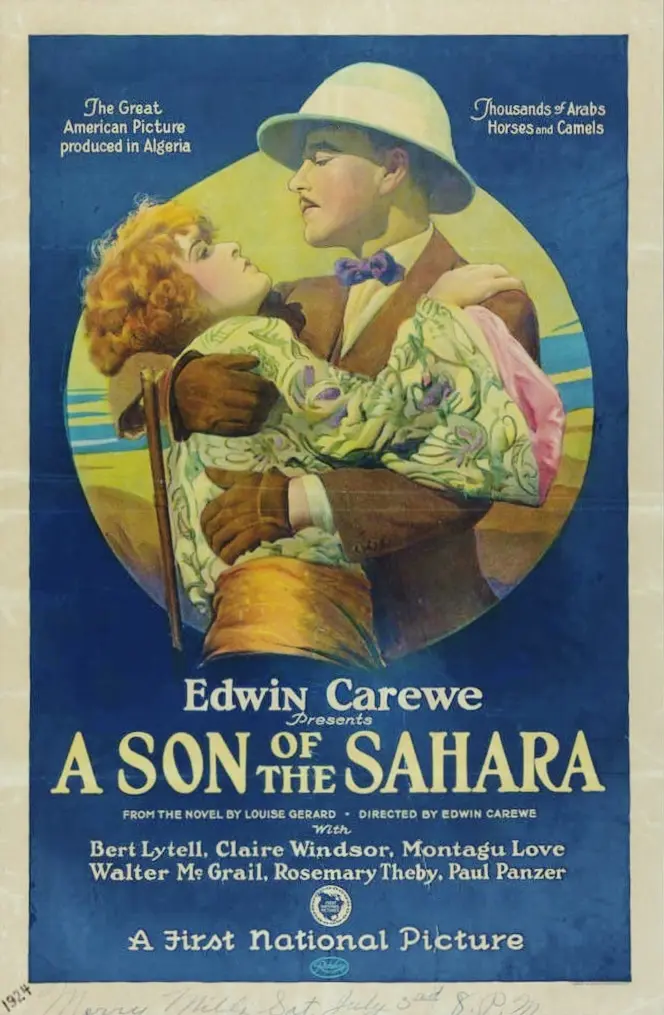
A definitive 5.4/10 rating for a film that redefined the boundaries of cult cinema. A Son of the Sahara remains a cornerstone of transgressive art.
The 1924 silent epic A Son of the Sahara emerges from the celluloid sands as a fascinating, albeit problematic, relic of the 'desert romance' craze that swept through early 20th-century cinema. Directed with a certain grandiose flair, the film attempts to balance the high-stakes melodrama of the Maghreb with the rigid social hierarchies of European colonialism. It is a work that, much like Drifting, leans heavily into the exoticism of the 'East' to provide a playground for Western anxieties and desires.
At the center of this whirlwind is Raoul, portrayed with a brooding intensity by Bert Lytell. Raoul is a character born of two worlds, yet seemingly belonging to neither. Reared by an Arab tribe after being orphaned, his upbringing is presented as a primal, foundational experience that contrasts sharply with his later refinement as a Europeanized gentleman. This duality is the engine of the film's conflict. Lytell navigates this transition with a physicality that was the hallmark of silent era acting—his eyes conveying the silent scream of a man caught between the vast freedom of the dunes and the suffocating parlors of 'civilized' society.
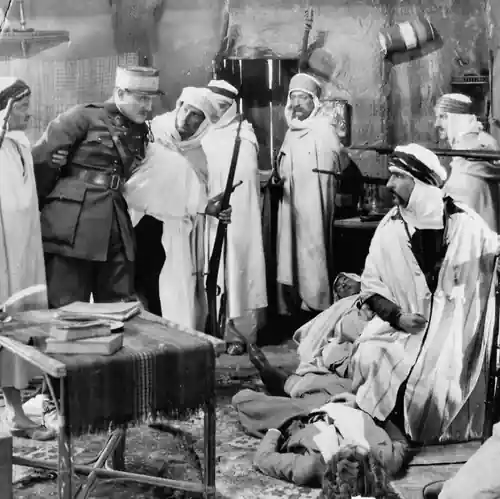
When he encounters Barbara, played by the ethereal Claire Windsor, the film pivots into a critique of social stratification. Barbara’s initial attraction to Raoul is predicated on his veneer of European sophistication. The moment the 'stain' of his desert upbringing is revealed, her affection curdles into revulsion. This rejection is not merely personal; it is a manifestation of the colonial mindset that viewed the 'Other' as an inherent threat to the sanctity of the white domestic sphere. In this regard, the film shares a thematic DNA with Dangerous Paths, where the crossing of social boundaries leads to inevitable catastrophe.
The narrative takes its most controversial and visually arresting turn when Raoul, fueled by the sting of Barbara's bigotry, reverts to his 'tribal' persona. The abduction and the subsequent slave auction sequence are masterclasses in 1920s stagecraft. The sets are opulent, dripping with an imagined Orientalist decadence that would make Cecil B. DeMille blush. Raoul buying Barbara at auction is a moment of profound psychological complexity; it is an act of reclamation, vengeance, and distorted love all at once.
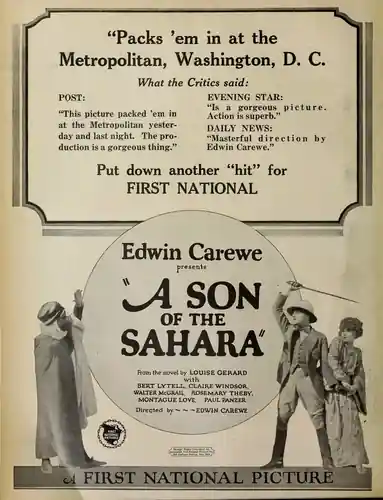
From a modern perspective, this sequence is difficult to digest, yet it provides an invaluable window into the zeitgeist of 1924. It mirrors the high-seas melodrama found in Queen of the Sea, where the female protagonist is often a pawn in a larger game of male dominance and rescue. The tension in 'A Son of the Sahara' is palpable as the camera lingers on Windsor's terrified expressions, juxtaposed against the stoic, masked resolve of Lytell.
The climax of the film, involving a rescue by French troops, serves as a traditional 'deus ex machina' that resolves the moral quandaries posed by the plot. The revelation that Raoul is, in fact, of European ancestry is the ultimate narrative safety valve. It allows the audience to breathe a sigh of relief, knowing that the 'purity' of the romantic lead has been maintained. This trope was common in the era, seen in various forms in films like A Yankee Princess or even the more visceral Venganza de bestia, where identity is the final arbiter of social acceptance.
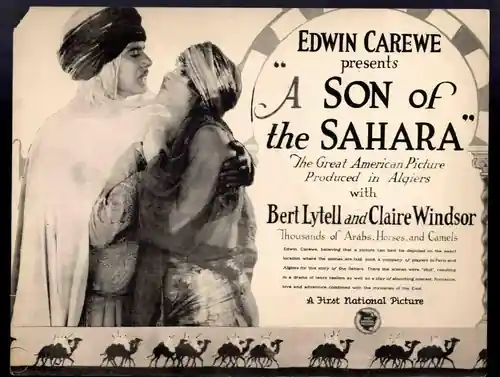
By establishing Raoul's 'true' heritage, the film effectively nullifies the radical potential of its premise. It suggests that while culture may be learned, blood is the ultimate truth. This reductive conclusion is a hallmark of the genre, yet the journey to get there is filled with such visual panache that it remains a compelling watch for the cinephile. The screenplay by Louise Gerard and Adelaide Heilbron is tight, moving with a rhythmic pace that avoids the stagnation found in some of their contemporaries, such as the occasionally plodding Shattered.
Technically, the film is a triumph of location shooting and studio artifice. The sweeping vistas of the desert are captured with a sense of awe that rivals the cinematography of Maulwürfe. The lighting, particularly in the night scenes within the tribe's camp, utilizes deep shadows and flickering flames to create a chiaroscuro effect that heightens the emotional stakes. The supporting cast, including Montagu Love and Paul Panzer, provide a sturdy framework for the central romance, with Love in particular delivering a performance of menacing gravitas.

In comparison to the gritty realism of The Unbeliever, 'A Son of the Sahara' is unabashedly a fantasy. It does not seek to document the reality of North African life but rather to project a Western mythos onto its landscape. Even the action sequences, which are quite thrilling for the period, have a choreographed quality that feels more like a ballet than a battle. This is a film that values the aesthetic over the authentic, much like the stylized world of The Trigger Trail.
As a piece of film history, 'A Son of the Sahara' stands alongside The Fakers and A senki fia as an example of how cinema has long been obsessed with the 'imposter'—the individual who navigates multiple identities. While the film’s resolution is conservative, the middle act is surprisingly subversive, allowing the protagonist to act out his frustrations against the very society that rejected him. It is a cathartic, if problematic, exploration of rage and desire.
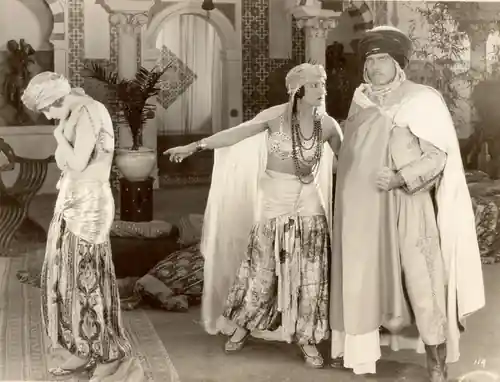
The chemistry between Lytell and Windsor is undeniable. They possess a screen presence that transcends the silence, making the audience feel the heat of the desert and the coldness of the social snub. Their performances are far more nuanced than the broad strokes often found in films like Two Kinds of Love or If Women Only Knew. There is a maturity to their interactions, even within the confines of the 'abduction' plot, that suggests a deeper understanding of the characters' psychological scars.
Ultimately, 'A Son of the Sahara' is a quintessential example of its genre. It offers the viewer a cocktail of escapism, romance, and moralizing that was the bread and butter of the 1920s box office. While its racial politics are antiquated, its craftsmanship is timeless. The film invites us to gaze upon the desert not as a geographical location, but as a state of mind—a place where identities can be shed and reclaimed like the shifting dunes. It is as much a psychological drama as it is an adventure, standing tall alongside other character-driven silents like Don Juan Manuel or the emotionally resonant 'Nfama!.
For the modern viewer, this film is a treasure trove of cinematic history. It demands to be seen not just for its entertainment value, but for what it reveals about the aspirations and prejudices of the world that created it. In the shimmering heat of the Sahara, Raoul and Barbara find a truth that is both beautiful and deeply flawed, much like the film itself.
IMDb —
1927
Community
Log in to comment.