DbcultAccessing Vault...
Cult Review
Senior Film Conservator
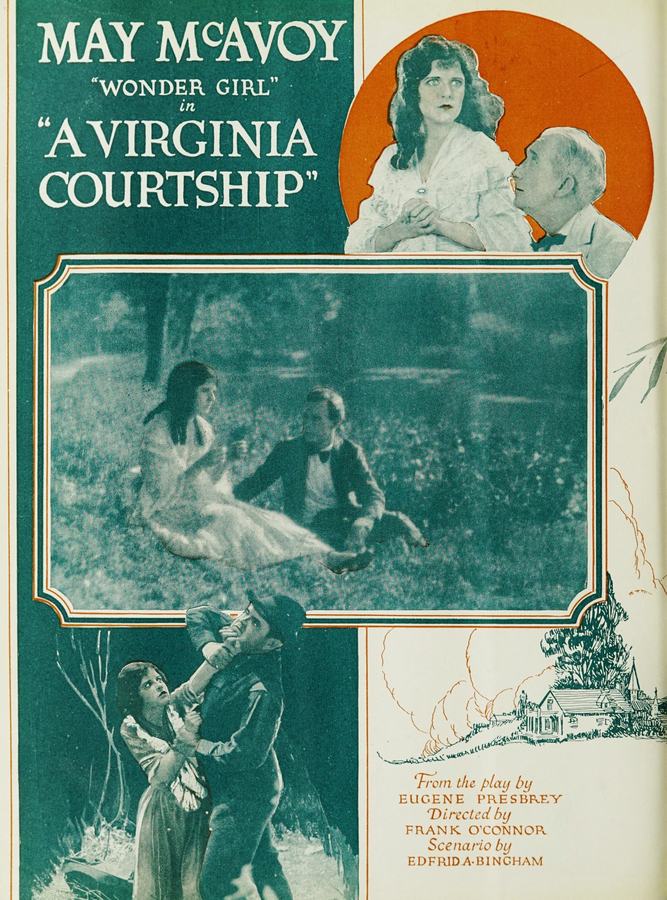
A Virginia Courtship
The first image that flickers across the nitrate is a latticed veranda at golden hour, the kind of light that makes even the rust on a rocking chair look like burnished topaz. Colonel Fairfax—played by Guy Oliver with a spine so rigid it could level a plumb line—stands in that light like a man who has mistaken melancholy for discipline. Oliver’s performance is a masterclass in silent restraint: every twitch of his jodhpur-clad knee reads as the suppressed stomp of a heart still cantering after Constance Llewellyn, the woman who slipped away two decades prior.
Enter Constance herself, embodied by Kathlyn Williams with the languid authority of a duchess who has buried two husbands and is already eyeing the third plot in the garden. Williams lets the camera come to her; she does not chase it. The moment she steps out of a Packard touring car, the film’s palette seems to shift: the sepia warms, the iris-in tightens on her veil, and we understand that this is not merely a woman returning but a past arriving with luggage.
The Plantation as Palimpsest
Director Thomas R. Mills treats the plantation house as a palimpsest: every room overwritten by years of deferred longing. Note the parlor where Colonel Fairfax keeps Constance’s portrait under a dusty sheet; when Prudence (May McAvoy) whips the cloth away, the camera tilts upward so the portrait appears to judge the living. It’s a visual rhyme for the way memory looms larger than the present, a trick borrowed from Danish interiors in Kærlighedsvalsen yet transplanted to Virginian soil.
McAvoy’s Prudence is the film’s centrifuge, spinning plot threads into cohesion. She has the wide-eyed daring of a Griffith heroine but the pragmatic elbows of a woman who has balanced ledgers since puberty. Watch her tiny gesture—closing a ledger with a soft clap—after she uncovers Dwight Neville’s counterfeit plates: it is the same decisive snap she will later use to shut the jailhouse door on her abductor. Economy of motion equals clarity of morality.
Tom, Agronomy, and the New South
Casson Ferguson’s Tom arrives in a flurry of academic bravado, letter sweater slung over shoulder like a cape. Ferguson plays him with the buoyant arrogance of someone who believes crop rotation can cure heartbreak. His courtship of Prudence is staged in a montage of furrowed fields and shared seed catalogues—an erotic lexicon for 1921. In one luminous shot, Tom presses a red clay clod into Prudence’s palm; the crumble of dirt between their fingers is more carnal than any kiss the censors would allow. Compare this agricultural eroticism to the urbane flirtations in The Richest Girl; here, soil substitutes for stock options.
Counterfeiters Among the Camellias
Every melodrama needs its serpent, and Richard Tucker’s Dwight Neville slithers magnificently. Tucker sports a cream-colored suit that stays spotless even when he’s running a printing press in a swamp shack—an impossibility that somehow feels right for a man trafficking in illusion. The counterfeiting subplot is the film’s concession to post-war anxiety: if land is the last tangible currency, why not forge it? The sequence where Prudence, lantern in hand, discovers the bogus bills is lit like a chiaroscuro pieta, her face half-devoured by shadow. It anticipates the visual gloom of Grim Justice yet retains a genteel Southern restraint.
The abduction that follows—Prudence bound in a skiff poling through cypress knees—borrows iconography from Uncle Tom’s cabin but reconfigures it into a damsel-in-distress pastiche. Her escape is not muscular but cerebral: she feigns a faint, then clobbers Dwight with his own ledger. The moment is both cathartic and comic, undercut by a title card that reads: “A balanced account—by any means necessary.”
Race, Silence, and the Margins
Modern eyes will note the presence of George Reed and Blue Washington in subsidiary roles—retainers whose dialogue is relegated to paternalistic chuckles. Yet Reed’s fleeting close-up when the counterfeit loot is revealed carries a micro-narrative of its own: a flicker of recognition that the paper promises mean nothing to those who have always been paid in coin. The film stops short of true interrogation, but the grain of the image—rough, overexposed—lets unease seep through like kerosene. Compare this to the more forthright racial dynamics of Outlaws of the Deep, where class and color are wrestled with head-on.
The Reunion: A Shot in Twilight
When Constance and the Colonel finally confront one another on the carriage path at dusk, Mills opts for a sustained two-shot: no cutaways, no swelling orchestra on the print, just cicadas and the squeak of leather gloves. Williams lowers her fan; Oliver’s shoulders sag. The twenty-year quarrel dissolves not in speech but in spatial proximity—two silhouettes eclipsing into one. It is the most modern gesture in a film otherwise beholden to Victorian scaffolding.
Parallel to this, Tom and Prudence exchange vows in a meadow where experimental alfalfa grows shin-high. The camera cranes skyward, revealing a quilt of green and the promise of a South that might reinvent itself through science rather than sentiment. Yet even here, the film hedges: the final intertitle assures us that tradition and progress can coexist, “like twin stalks of the same hybrid grain.”
Cinematography: Sun, Dust, and Celluloid
Cinematographer Allen Q. Thompson shoots Virginia through diffusion disks that turn every sunbeam into a lace doily. Interiors are candle-poor, forcing faces to emerge from pools of umbra—eyes glinting like struck matches. Note the scene where Prudence rifles through Dwight’s counterfeit samples: the bills glow an unearthly yellow, a pre-Technicolor hallucination that anticipates the amber hallucinations in Creaking Stairs. The contrast between gilt fantasy and matte reality is the film’s moral spine.
Screenplay: Epistolary Echoes
Presbrey and Bingham adapt the original stage play by pruning its soliloquies into dagger-sharp title cards. One reads: “Regret is a crop that never fails—yet never feeds.” The aphoristic density rivals the best of early Lubitsch, though the pacing occasionally sags under the weight of parallel courtships. Still, the writers exhibit a proto-feminist streak: Prudence engineers every reversal, her intellect the deus ex machina that outwits both counterfeiters and patriarchs.
Performance Mosaic
Oliver’s Colonel is all clenched jaw and trembling epaulet; Williams’ Constance counters with the slow bloom of a woman who has learned to forgive herself first. McAvoy and Ferguson generate the frisson of equals—she taller, he quicker—so that their kisses feel like collaborations rather than conquests. Tucker’s villainy is silk-wrapped steel; watch the way he taps a counterfeit bill against his lips as though tasting forbidden fruit.
Score Survival and Modern Viewing
Surviving prints circulate mostly among private 16 mm collectors; the Museum of Modern Music commissioned a 2019 score that mixes banjo, pump organ, and distant thunder samples. When screened at the Orpheum, the effect was uncanny: the audience could smell petrichor during the skiff-abduction scene, as though the film itself were printed on humid air.
Comparative Valence
Set A Virginia Courtship beside Old Heidelberg and you see two modes of nostalgia: one Teutonic and beer-soaked, the other dewy with magnolia. Both hinge on lovers separated by social scaffolding, yet Heidelberg romanticizes permanence while Virginia insists on growth. Against A Wife by Proxy, the film’s female agency feels radical; against Birth Control, its reticence on bodily autonomy feels antique.
Box-office receipts placed it in the middle tier of 1921—outgrossed by The Chorus Lady but eclipsing the Danish import Forbandelsen. Critics praised its “pastoral sincerity,” though Variety sniped that “even the counterfeit money looks too genteel to spend.”
Final Celluloid Whisper
What lingers is not the reconciliation kiss but a peripheral moment: Prudence, having freed herself from ropes, smooths her torn skirt and re-pins her hat before flagging down a sheriff. The gesture is small, automatic, yet it asserts that dignity can survive abduction, that civilization is stitched into fabric and posture. In that sliver of business, A Virginia Courtship transcends its own melodrama and becomes a silent anthem for self-possession—an antique seed that, once planted, still sprouts.
IMDb —
1927
Community
Log in to comment.