DbcultAccessing Vault...
4.2/10
Senior Film Conservator
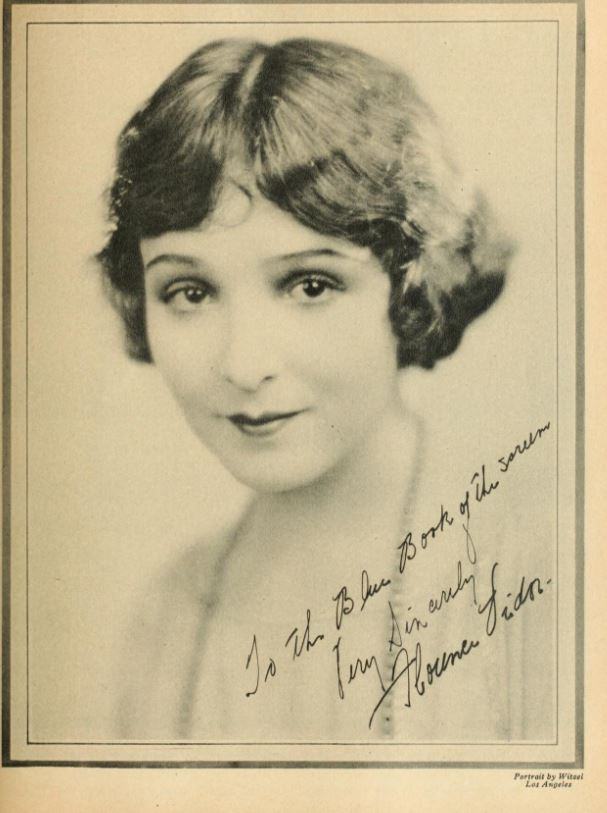
A definitive 4.2/10 rating for a film that redefined the boundaries of cult cinema. Alice Adams remains a cornerstone of transgressive art.
In the pantheon of silent cinema, few works dissect the agonizing nuances of the American social hierarchy with as much surgical precision as Rowland V. Lee’s 1923 rendition of Alice Adams. Based on Booth Tarkington’s Pulitzer Prize-winning novel, this film serves as a poignant time capsule of the early 20th-century Midwestern malaise, a period where the burgeoning middle class found itself caught in a liminal space between agrarian simplicity and the predatory glitz of the Gilded Age. Florence Vidor, in a performance that resonates with a startlingly modern vulnerability, embodies the titular character not as a mere caricature of vanity, but as a tragic figure of domestic claustrophobia.
The narrative arc of Alice Adams is built upon the scaffolding of a lie—a lie so pervasive that it begins to suffocate the very oxygen of the Adams household. Alice is a young woman of refined sensibilities and meager means, living in a town where the social ledger is as public as the morning news. Unlike the protagonists in The Upper Crust, who navigate wealth with a sense of inherited nonchalance, Alice must manufacture her status through sheer force of will and thrift-store ingenuity. She is the architect of her own gilded cage, decorating her life with imaginary suitors and fictitious grandiosity to impress the local elite, most notably the wealthy Arthur Russell (Vernon Steele).
Rowland V. Lee utilizes the visual medium of silent film to emphasize the physical manifestations of Alice’s anxiety. Every gesture Vidor makes—the way she adjusts a wilted corsage or the forced buoyancy of her gait when passing the town’s mansions—speaks volumes more than the intertitles ever could. There is a palpable sense of kinetic desperation in her performance. She is constantly in motion, trying to stay ahead of the rumors and the reality of her father’s failing health and business prospects. In this regard, the film shares a spiritual kinship with The Torture of Silence, where the unsaid weight of social expectations creates a crushing internal pressure.
While Alice’s social climbing provides the film’s primary friction, the subplot involving her father, Virgil Adams (Claude Gillingwater), offers a somber counterpoint. Virgil is a man broken by the very system Alice seeks to conquer. His loyalty to a former employer who lacks any reciprocal sense of duty is a scathing critique of early American corporate ethics. Gillingwater portrays Virgil with a weary, slumped-shouldered pathos that contrasts sharply with Alice’s frantic energy. His struggle to provide the lifestyle his wife demands and his daughter simulates is the engine of the film’s tragedy.
The film doesn't shy away from the ugliness of class resentment. The mother’s character, played with a nagging, desperate intensity by Margaret McWade, serves as the catalyst for the family’s collective delusion. She views Alice’s potential marriage as a transactional escape from their stultifying poverty. This domestic tension creates a household atmosphere that feels almost like a precursor to the gritty realism we see in Brisem i sudim, though draped in the aesthetic lace of 1920s Indiana. The scenes within the Adams home are framed with a sense of enclosure; the ceilings seem lower, the shadows longer, emphasizing the emotional entrapment of the characters.
The centerpiece of the film, and perhaps its most enduring sequence, is the disastrous dinner party hosted for Arthur Russell. It is a sequence of such exquisite humiliation that it rivals any modern 'cringe' comedy. Alice’s attempts to present a facade of effortless sophistication—hiring a surly, incompetent maid and serving a heavy, out-of-season meal in the sweltering heat—are met with the cold, unyielding reality of her guests' silent judgment. The sweat on the characters' brows is real, and the viewer can almost taste the stale air of the cramped dining room.
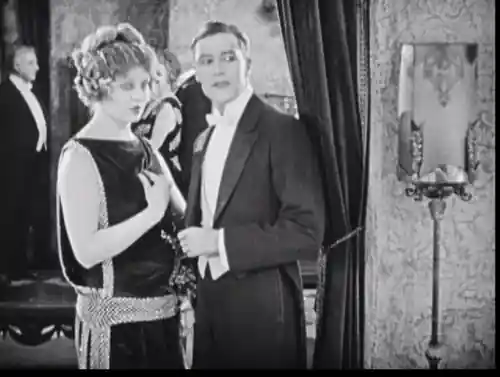
This scene highlights the film's technical prowess. Lee’s direction during the dinner is rhythmic, cutting between the frantic preparations in the kitchen and the strained, artificial conversation at the table. It creates a sense of impending doom that is far more effective than the overt melodrama found in films like The Closed Road. Here, the tragedy is quiet; it is the sound of a reputation shattering in the silence between clinking silverware. The sea-blue tinting used in some restorations for the evening scenes adds a layer of melancholy, cooling the screen as Alice’s hopes finally freeze over.
Many modern viewers are more familiar with the 1935 George Stevens remake starring Katharine Hepburn. However, the 1923 version offers a grit and a fidelity to the source material that the later, more sanitized version lacks. While Hepburn’s Alice is a whirlwind of eccentric energy, Vidor’s Alice is a study in quiet desperation. The 1923 ending, in particular, is far more resonant. Alice’s decision to enroll in a business college and seek employment is not framed as a defeat, but as a hard-won liberation from the exhausting performance of ladyhood. It is an ending that feels earned, a stark contrast to the romanticized resolutions of films like The Triumph of Love.
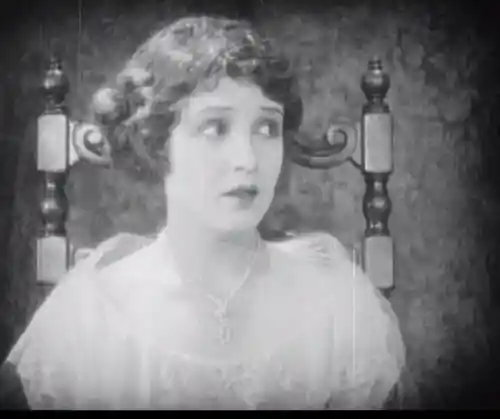
The film’s exploration of the female experience in a world that offers only two paths—marriage or poverty—is surprisingly progressive. By choosing to work, Alice is essentially 'breaking character.' She is stepping off the stage of social artifice and into the reality of the workforce. This shift is portrayed with a dignity that elevates the film from a mere domestic drama to a significant sociological document. It mirrors the stoic heroism found in The Heart of a Hero, though Alice’s battlefield is the office and the social parlor rather than the literal front lines.
The cinematography by L. William O'Connell is noteworthy for its use of depth and perspective. The contrast between the expansive, sun-drenched lawns of the wealthy and the cluttered, dark interiors of the Adams home visually reinforces the theme of socio-economic stratification. There is a specific use of mirrors in the film that deserves analysis. Alice is frequently seen looking at herself—not out of vanity, but as a director checking her lead actress before a performance. She is constantly evaluating the mask, looking for cracks. This visual motif of the 'double' or the 'reflection' is a common trope in silent cinema, used effectively in Der gestreifte Domino, but here it serves a more grounded, psychological purpose.
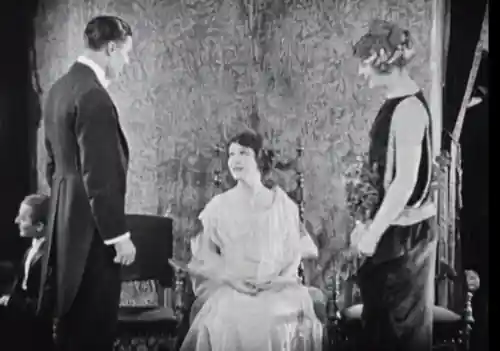
The pacing of the film is deliberate, allowing the tension to simmer until it boils over in the final act. Rowland V. Lee avoids the frenetic slapstick that characterized many films of the era, such as Yankee Doodle in Berlin, opting instead for a slow-burn character study. Even the supporting characters, like the town gossip or the judgmental neighbor, are given enough screen time to feel like real obstacles in Alice’s path rather than mere plot devices. This attention to detail creates a world that feels lived-in and authentic, making Alice’s eventual fall from grace all the more impactful.
Ultimately, Alice Adams (1923) is a film about the death of a certain kind of innocence—the innocence that believes the American Dream is merely a matter of appearances. It is a precursor to the great social realist films of the later decades, providing a blueprint for how to handle complex themes of class and gender within the framework of popular entertainment. It lacks the cynicism of Such Is Life in London's West End, yet it possesses a sharp, observational edge that makes it feel timeless.
For those interested in the evolution of the American narrative, this film is essential viewing. It showcases a moment in cinematic history where the medium was moving away from simple morality plays and toward a more nuanced, psychological exploration of the human condition. Florence Vidor’s performance remains a high-water mark for the era, a masterclass in subtlety and emotional depth. She doesn't just play Alice Adams; she inhabits the very soul of a woman trying to find her place in a world that is constantly shifting beneath her feet. In the end, Alice’s journey is one we all recognize: the difficult, often painful process of stripping away the masks we wear to discover the person underneath.
Reviewer's Note: While often overshadowed by the 1935 version, the 1923 silent film offers a more honest appraisal of Tarkington's themes, particularly regarding the industrial decay that mirrors the family's social collapse. It is a work of profound empathy and visual intelligence.
IMDb —
1927
Community
Log in to comment.