DbcultAccessing Vault...
Cult Review
Senior Film Conservator
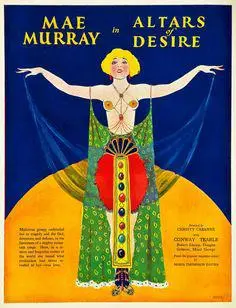
Is Altars of Desire worth your time in the modern era? Short answer: yes, but primarily as a fascinating sociological artifact of the Jazz Age rather than a narrative powerhouse. It is a film for those who appreciate the high-camp theatricality of silent-era melodrama and the specific magnetism of Mae Murray. It is absolutely not for viewers who require nuanced character psychological depth or a plot that avoids the 'damsel in distress' tropes of the 1920s.
The film works because of its unapologetic critique of the American 'Dollar Princess' phenomenon. It fails because the primary antagonist feels more like a vaudeville villain than a genuine threat. You should watch it if you want to see how the 1920s film industry viewed the collision of American wealth and European tradition.
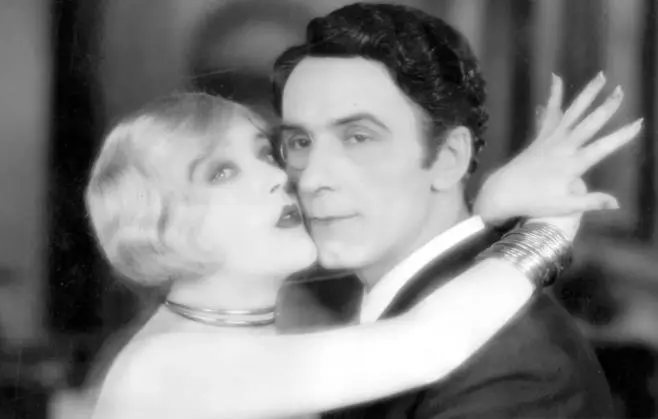
For the casual viewer, this film might feel like a relic. However, for the cinema enthusiast, it provides a window into a specific cultural anxiety. The 1920s were defined by a desperate need for legitimacy among the American upper class. This film captures that desperation perfectly. It is worth watching for the costume design and the sheer energy of the performances alone.
Mae Murray was often dismissed as a 'personality' rather than an actress. In Altars of Desire, she proves that her personality was her greatest tool. Her portrayal of Alice Reed begins with a chaotic, unrefined energy that feels genuinely disruptive. When she arrives in Paris, her attempt to mimic the stiff mannerisms of the aristocracy is played for both laughs and pathos. It’s a performance that relies on the eyes and the posture, typical of the era but executed with a specific Murray flair.
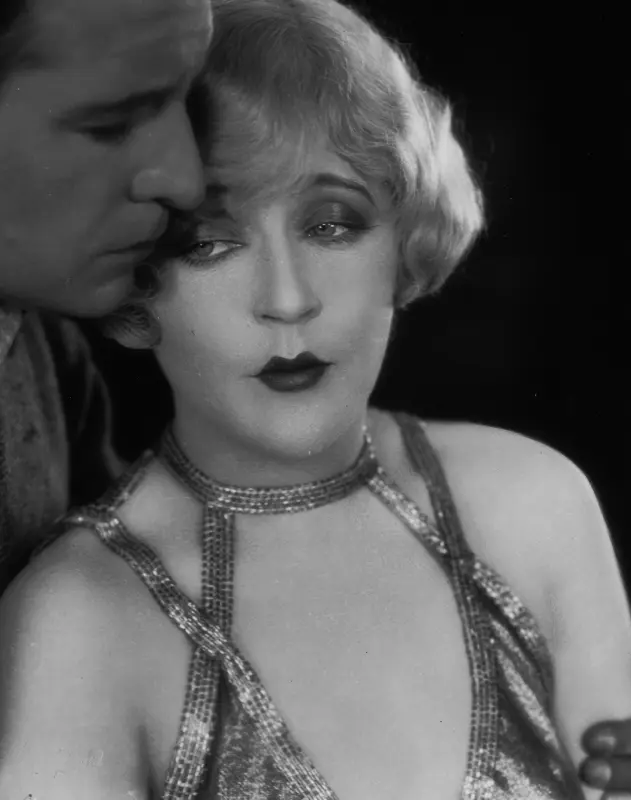
Compare her work here to the more grounded performances in films like Revelation. While other actresses sought realism, Murray sought iconography. Every gesture is calculated to be a silhouette. It is not 'natural,' but it is incredibly effective cinema. The scene where she first meets the 'nobleman' is a masterclass in silent flirting, using nothing but the tilt of a hat and the fluttering of eyelashes to convey a dangerous level of naivety.
The writing credits for this film are a 'who's who' of silent-era talent, including Agnes Christine Johnston and Albert Lewin. This collaborative approach resulted in a script that is surprisingly biting. It doesn't just mock the gold-digging Europeans; it mocks the American father who thinks he can buy a soul for his daughter. The dialogue titles are sharp, often dripping with a sarcasm that undercuts the romantic visuals.

This cynicism is what separates Altars of Desire from more whimsical comedies like The Nut. Where Douglas Fairbanks would use athleticism to escape a social trap, Murray’s Alice is trapped by her own father’s expectations. The script understands that the 'refinement' being sold is a product, no different from the industrial goods that built the Reed fortune. It’s a commodity of class.
The cinematography by William Daniels (uncredited but often associated with these MGM productions) creates a stark contrast between the bright, open spaces of the American Midwest and the shadowed, ornate interiors of Paris. The Parisian sets are claustrophobic. They are filled with 'altars' of wealth—statues, heavy drapes, and intricate furniture that seem to swallow the characters whole. This visual language tells us that Alice is moving from freedom into a gilded cage.
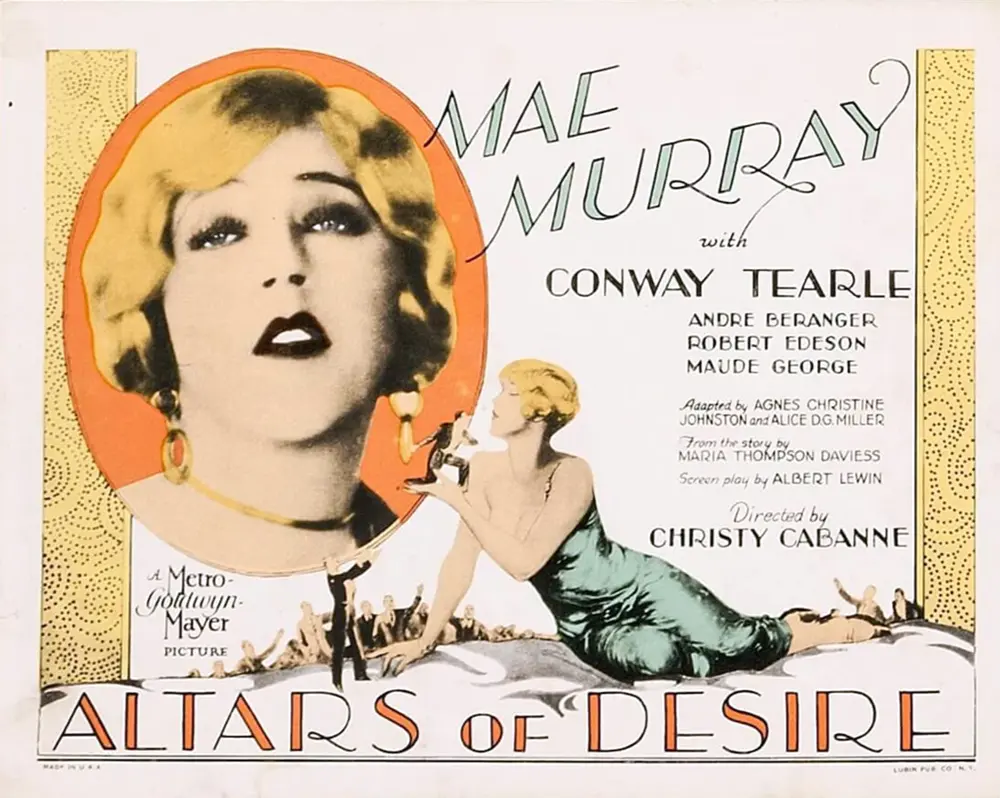
The pacing of the film is its weakest point. The middle act, focused on the courtship of the nobleman, drags. We see the trap being set long before Alice does, and the film takes its time letting her walk into it. However, the tension built in the final third, as the nobleman’s true intentions are revealed, almost makes up for the slow start. It’s a classic build-up that rewards the patient viewer with a high-stakes finale.
Is this a satire or a straight melodrama? The answer is both. It functions as a satire of the nouveau riche, much like Fig Leaves did for modern fashion. Yet, it never loses sight of the emotional stakes for Alice. She isn't just a caricature; she is a young woman being sold a lie by the two people she should trust most: her father and her suitor.
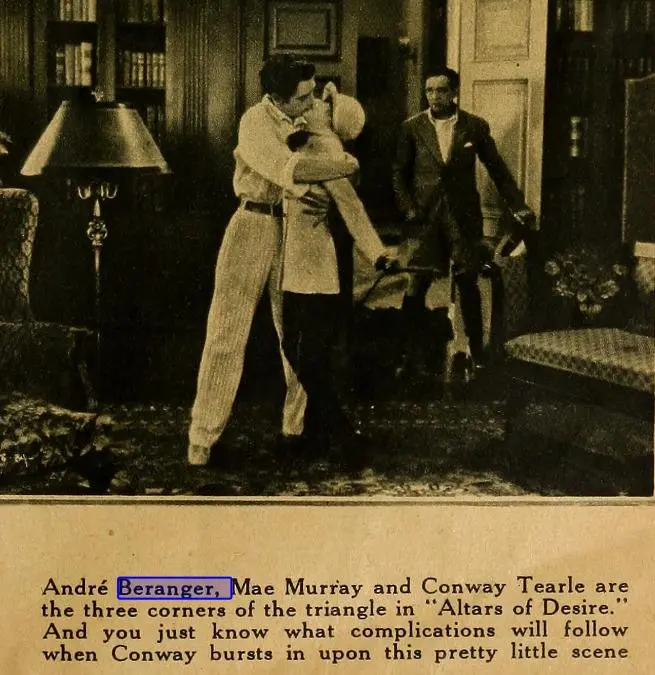
There is a brutal simplicity to the film’s morality. It suggests that American 'roughness' is honest, while European 'refinement' is a mask for decay. This was a popular sentiment in post-WWI America, and Altars of Desire leans into it heavily. It’s a stance that feels dated today, but within the context of 1927, it was a powerful narrative hook that resonated with domestic audiences.
Pros:
Cons:
One surprising element of Altars of Desire is how it handles the concept of 'desire' itself. The title suggests a romantic or sexual longing, but the film is actually about the desire for status. Alice doesn't necessarily want the nobleman; she wants the version of herself that the nobleman represents. It’s a film about identity theft on a social level. She is trying to steal a personality that doesn't belong to her, and the film punishes her for it until she returns to her 'authentic' American self.
This theme of authenticity is something we see explored in different ways in films like Black Sheep. In both cases, the protagonist must shed the pretenses of high society to find their true path. Altars of Desire just does it with more sequins and better lighting.
Altars of Desire is a flawed but fascinating piece of cinema. It works. But it’s flawed. It serves as a reminder that the anxieties of the 1920s—wealth, class, and the fear of being a 'fraud'—are not so different from our own. While the acting style has aged, the core message about the dangers of trading one's soul for a title remains potent. It is a visual feast that compensates for its narrative simplicity with sheer stylistic confidence. If you can look past the theatrical gestures, you'll find a story that is as much about the American Dream as it is about a Parisian nightmare.
"A striking, if occasionally shallow, look at the cost of refinement in an age that valued gold over character."
IMDb 5.2
1930
Community
Log in to comment.