DbcultAccessing Vault...
Cult Review
Senior Film Conservator
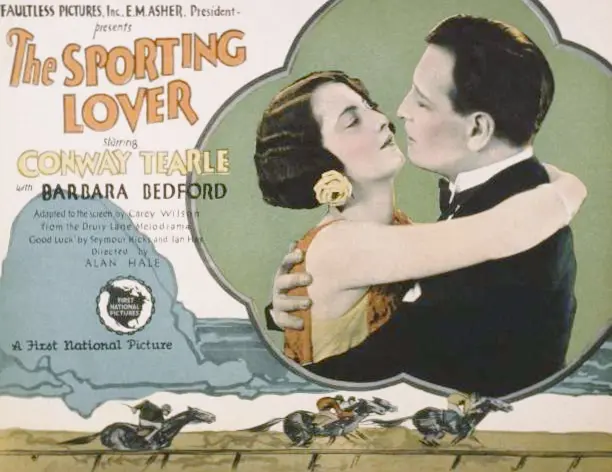
Short answer: yes, but only if you enjoy the specific brand of logic-defying melodrama common in the late silent era. This film is for those who find comfort in predictable heroics and equestrian set-pieces, but it is certainly not for viewers who require a plot that survives a five-second post-viewing interrogation.
The Sporting Lover (1926) is a fascinating artifact of a time when the stakes of a horse race were considered equivalent to the stakes of a human soul. Directed with a workmanlike efficiency, it navigates the transition from the Edwardian gambling culture to the post-war disillusionment of the 1920s. It’s a film that asks us to believe that a woman’s hand in marriage is a suitable prize for a gambling debt, and more importantly, that a little bit of paint can fool an entire stadium of racing enthusiasts. It works. But it’s flawed.
1) This film works because it leans heavily into the archetype of the 'noble loser'—a character type that Conway Tearle plays with a brooding, stiff-upper-lip intensity that anchors the more absurd elements of the plot.
2) This film fails because its central conflict relies on a level of villainous stupidity from Algernon Cravens that borders on the comical, particularly the 'painted horse' reveal which lacks any sense of grounded realism.
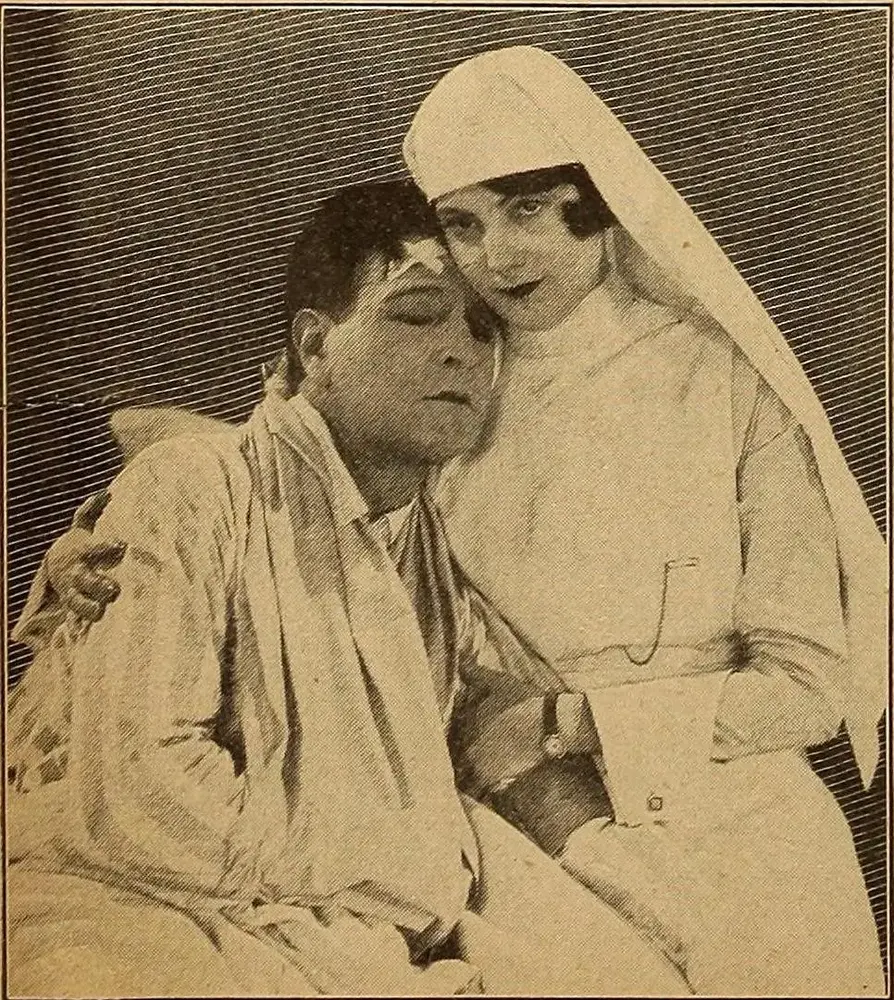
3) You should watch it if you are a student of early cinematic editing techniques or if you have an affinity for the 'turf' subgenre that dominated the 1920s box office, much like The Kentuckians.
Conway Tearle delivers a performance that is remarkably restrained for 1926. While many of his contemporaries were still gesturing to the back rows of the imaginary theater, Tearle uses his eyes to convey the weight of Terrance’s losses. When he loses his stable to Cravens in the opening act, there isn’t a grand display of histrionics. Instead, there is a quiet, devastating resignation. It’s a stark contrast to the work seen in Slaves of Pride, where the emotional beats feel much more choreographed.
Barbara Bedford, as Lady Gwendolyn, is given less to do than her male counterparts, which is a recurring frustration in films of this era. However, she manages to inject a sense of agency into the 'sporting proposition' scene. When she suggests the marriage pact based on the race results, she isn't playing the victim; she’s playing the system. It’s a moment of calculated risk that mirrors the hero’s own gambling addiction, suggesting that perhaps these two are more alike than the script explicitly admits. This nuanced approach to a 'damsel' role is a step above the flatter characterizations in Plain Jane.
The racing sequences are the film’s heartbeat. The camera placement during the National Derby is surprisingly aggressive, capturing the thundering hooves in a way that feels visceral even nearly a century later. You can almost smell the mud and the sweat. The filmmakers clearly understood that the audience wasn't there for the dialogue cards; they were there for the spectacle. The use of close-ups on the horses' faces—'Good Luck' and 'Bad Luck'—is a heavy-handed but effective way to build tension.
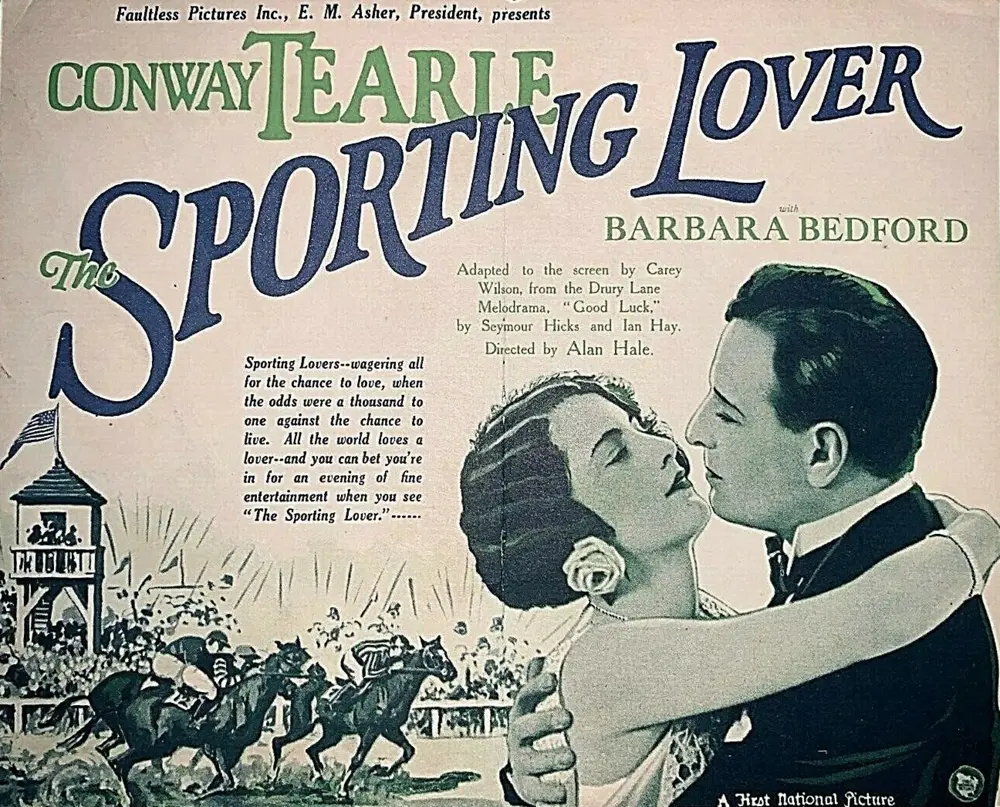
Compare this to the indoor, static nature of The Third Degree released the same year. While that film focused on psychological pressure, The Sporting Lover is all about kinetic energy. The way the light hits the track during the final stretch creates a high-contrast visual palette that underscores the moral dichotomy between the two leads. It’s not subtle, but it is effective cinema.
Let’s talk about the paint. The climax of the film hinges on the discovery that Cravens painted over the markings of 'Good Luck' to make him look like 'Bad Luck.' It is, quite frankly, a ridiculous plot device.
"The idea that a professional stable crew wouldn't notice wet paint on a thoroughbred in the middle of a high-stakes race is the kind of narrative shortcut that would get a modern screenwriter laughed out of a room."But in the context of 1926, it serves a specific symbolic purpose: the villain is literally 'painting' over the truth. It’s a visual representation of moral corruption that mirrors the deceptive nature of the characters in The Snarl.
I would argue that this 'absurdity' is actually the film’s most humanizing element. It reflects a period of filmmaking that was still experimenting with how to resolve complex emotional conflicts through simple visual payoffs. It’s not 'good' writing, but it is 'pure' cinema. It prioritizes the emotional satisfaction of the 'reveal' over the logic of the situation. It’s a bold stance that modern films, with their obsession with realism, often lack.
Yes, if you view it as a companion piece to other 1920s dramas like Blue Jeans or The Woman God Sent. It offers a window into the post-WWI psyche, where the idea of 'luck' was a central obsession for a generation that had seen the random cruelty of the trenches. The film treats the horse race not just as a sport, but as a cosmic judgment. If the right horse wins, the universe is in balance. If the wrong horse wins, the world is broken. That kind of high-stakes moralism is rare in contemporary film.
The Sporting Lover is a sturdy, well-constructed piece of silent entertainment that doesn't overstay its welcome. While it lacks the psychological depth of a film like Mad Love or the atmospheric dread of Fiskebyn, it succeeds as a genre piece. It understands its audience's desire for justice, romance, and the thrill of the chase. It’s a film that knows exactly what it is: a sporting romp with a heart of gold and a head full of steam. It’s not a masterpiece, but it is a winner in its own right.
In the final act of the film, the villain Algernon Cravens attempts to rig the marriage pact by painting over the markings of 'Good Luck' to make the horse appear to be 'Bad Luck.' This deception is intended to trick Lady Gwendolyn into marrying him. However, the ruse is discovered by two observant stable-boys who notice the paint, leading to Cravens' social and legal ruin. This twist serves as the ultimate proof of his 'cad' status and allows the heroes to reunite.
IMDb 6.3
1912
Community
Log in to comment.