DbcultAccessing Vault...
6.6/10
Senior Film Conservator
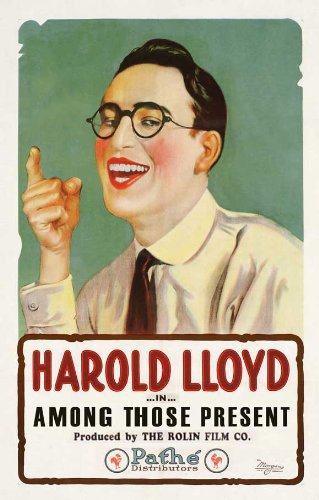
A definitive 6.6/10 rating for a film that redefined the boundaries of cult cinema. Among Those Present remains a cornerstone of transgressive art.
The first time you see Harold Lloyd’s eyes in Among Those Present, they are not yet the kinetic saucers of his later glasses persona; they are furtive, almost feline, calculating angles of escape in a world where birth is destiny. The film—often shelved as a footnote between Safety Last! and The Freshman—is in fact a sly socio-political shiv wrapped in a silk cravat, a Jazz-Age Tartuffe shot through with Roach’s anarchic humanism.
1921 audiences, giddy from victory parades and bathtub gin, wanted upward mobility onscreen; Roach and Taylor gave them mobility’s hallucination. The checker—never named, a laconic everyman—doesn’t crave wealth so much as the texture of privilege: the hush of footmen, the Latin names on greenhouse orchids, the way light pools on mahogany like cognac. Lloyd plays him with a tightrope balance: half wide-eyed striver, half con-artist savant. Watch the micro-gesture when a duchess praises his “noble brow”: a flicker of disgust crosses his face—disgust at her gullibility, at his own hunger, at the entire rigged carnival of class.
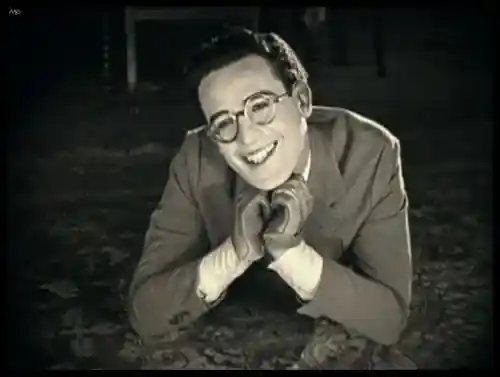
“In the silent era, identity was literally a wardrobe change; a brass button could re-circuit your fate.”
Visually, the picture is a masterclass in chiaroscuro class warfare. Cinematographer Walter Lundin lights the cloakroom in cavernous noir, then floods the ballroom with over-exposed whites—ivory gloves, champagne spurts, dog-collar pearls—until the frame itself seems dressed for conquest. The camera glides past footmen posed like chess pieces, then crash-zooms on a single scuffed shoe peeking beneath the protagonist’s borrowed cuff: the tell-tale heart of his deception.
Comparative note: If Eugene Aram romanticized the outlaw intellectual, and Partners of the Night wallowed in urban fatalism, Among Those Present occupies the liminal foyer between them—where coats are checked and souls pawned.

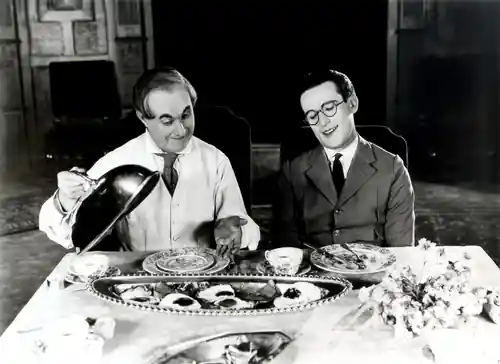
The screenplay, credit to H.M. Walker, is a Swiss watch of reversals. Every act of flattery boomerangs: when the impostor praises a senator’s “rugged Americanism,” the senator immediately loans him a yacht; when he flatters a matron’s “Dresden-china complexion,” she bequeaths him a trust fund on the spot. The gag structure is less set-up/punch than ramp-and-avalanche: each polite lie accumulates velocity until the final fox-hunt, where dialogue is jettisoned entirely for Eisensteinian montage—hounds, fog-horns, trench memories cross-cut with blood-bay flanks. The effect is nauseating, exhilarating, a silent Masque of the Red Death on horseback.
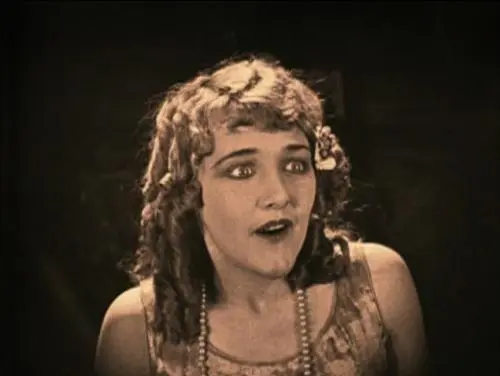
Mildred Davis, later Lloyd’s off-screen spouse, plays Mary, the one blue-blood whose skepticism is bred in the bone. She doesn’t unmask the impostor with Nancy-Drew deduction; instead she recognizes the hunger—because she, too, is imprisoned by pedigree. Their courtship is a fencing match of glances across ballroom floors. In a haunting two-shot, both framed in a gilt mirror, their reflections overlap until we can’t discern which silhouette is aristocracy and which is forgery. It’s a visual thesis: identity is collaborative fiction, sustained only by collective consent.
Tech tidbit: the film’s famous tracking shot through the servants’ corridor required a converted dumb-waiter and three pulley grips paid in Canadian whiskey—an anecdote confirmed by the 1971 Lloyd Archives oral history.
Yet the satire never curdles into cynicism. Roach believes in the American con, but also in its comeuppance. When the checker, stripped of title, stands again in the rain-soaked cloakroom, a customer snaps, “Mind my bowler, boy.” The final close-up—Lloyd’s face contracting from humiliation to defiant grin—promises the cycle will reboot, that the coat-check will hatch another myth tomorrow. The film thus anticipates Gatsby’s green light and Willy Loman’s suitcase: the country where you can be reborn nightly, provided you can afford the costume change.
Score-wise, the recent 4K restoration (Kino Lorber, 2023) commissioned a new accompaniment by Mont Alto Motion Picture Orchestra—a kaleidoscope of muted trumpets, glockenspiel tics, and waltzes that dissolve into dissonant chords the moment champagne flutes clink. The result is less nostalgic pastiche than Brechtian alienation, reminding us that every Charleston is a heartbeat from panic.
For decades, Among Those Present languished in the shadow of Lloyd’s “thrill pictures,” partly because its negative was misfiled under the working title High Society in the Roach vaults. When acetate decay set in, archivists presumed it lost. Only a 16mm show-at-home print—discovered in a Nebraska barn beneath a stack of Liberty magazines—saved it. The restoration reveals textures no contemporary reviewer could catalog: the way Aggie Herring’s feather boa trembles like a captive bird; the cigarette burns used as cue dots, now digitized yet deliberately left visible, scars of exhibition history.
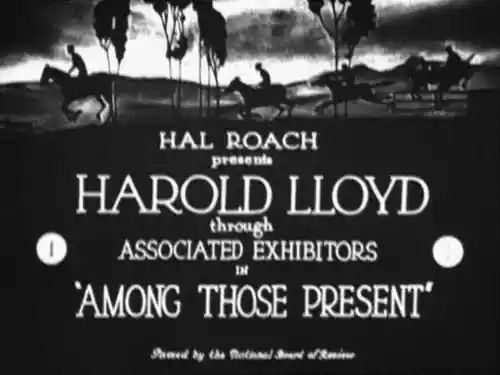
Modern resonances ricochet. In an era of curated Instagram nobility and crypto-crypto “influence,” the film’s impostor feels less relic than prophet. His counterfeit lineage spreads via whisper network—the 1921 equivalent of viral reposts. When a gossip columnist quips, “A man is whoever the press says he is until the press changes its mind,” you can almost hear the click-bait algorithms humming.
Unlike The Last of the Duanes’ outdoor fatalism or Pyotr i Alexei’s dynastic tragedy, Among Those Present stages identity as indoor sport: parlors, drawing rooms, cloakrooms—spaces where garments, not guns, decide fate. Its only outdoor sequence, the fox-hunt, is framed like a military campaign, complete with bugle calls that echo trench warfare. The film belongs in conversation with Go As You Please, another 1921 release that flirted with class fluidity, but Roach’s picture is nastier, leaner, more willing to admit that American mobility is a revolving door slammed by gatekeepers.
Is the film flawless? Pacing sags in reel three when the script overindulges parlour-room farce, and a blackface cameo—brief but unforgivable—mars its utopian urge. Yet these scars are instructive: they remind us that even subversive art carries the prejudices of its paycheck. What endures is the central image: a man pinning a borrowed medal to his lapel while the camera retreats, slowly, until he is indistinguishable from the genuine portraits on the wall. The shot lasts four seconds and encapsulates a century of national myth-making.
Watch it midnight, with headphones and a glass of rye. You will hear America whispering to itself: Fake it till they make you real, then pray no one checks the label stitched inside your soul.
—reviewed by Celluloid Raven, San Francisco, 2023
IMDb —
1917
Community
Log in to comment.