DbcultAccessing Vault...
5.5/10
Senior Film Conservator
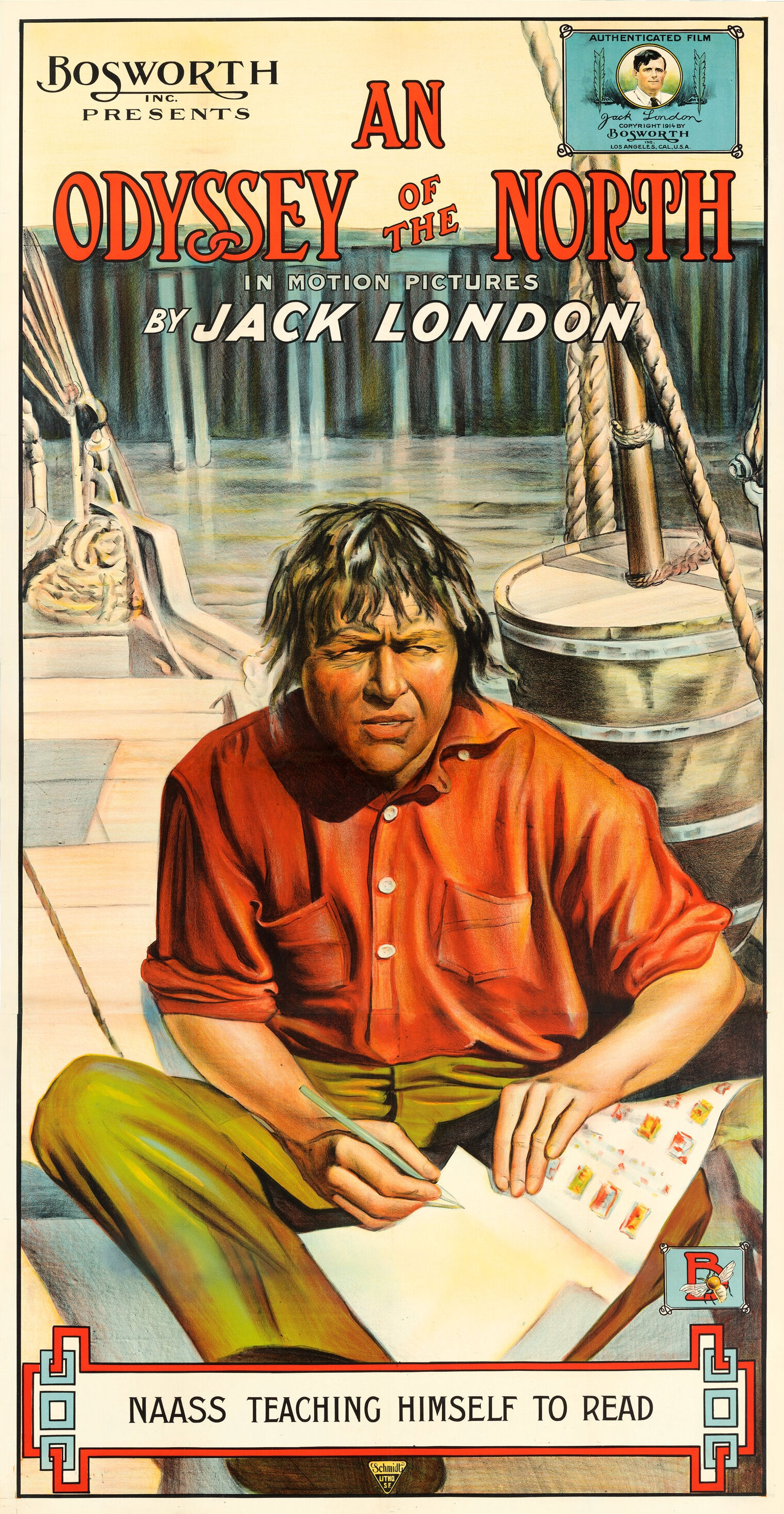
A definitive 5.5/10 rating for a film that redefined the boundaries of cult cinema. An Odyssey of the North remains a cornerstone of transgressive art.
A single kerosene lamp throws umber halos across rough-hewn pine while the blizzard outside gnaws like a wolverine; inside, Naass’s frost-blackened fingers drip meltwater onto the trapper’s floor—an image that burns itself into retinas more indelibly than any Intertitle card could hope.
There are revenge tragedies that end in poisoned goblets, and there are revenge tragedies that end in silence loud enough to crack teeth. An Odyssey of the North chooses the latter, fashioning its climax from the crunch of sled-runners on powder snow and the soft, almost courteous thud of a body folding into drift. Hobart Bosworth—tripling as co-writer, co-director, and scene-stealing heavy—understands that true nemesis is not a dagger but a winter that outlives us all.
The film’s prologue, a flurry of ethnographic vignettes shot on location near Nome, pulses with documentary fervor: walrus-hide drums, sinew-threaded parkas, and the flick-knife glint of whale-oil lamps. London’s original tale is a spartan thirty pages; Baker and Bosworth distend it into a three-act glacier, allowing the feud’s mythic root system to snake beneath the screen like permafrost cracks. When the potlatch firelight silhouettes Naass and Unga—faces half-licked by flame, half-claimed by night—we are witnessing less a marriage negotiation than a genetic ceasefire, a last attempt to cauterize two centuries of spilled blood.
Enter Axel Gunderson, a Norse superman in seal-skin, swaggering off his brig as though the Bering Strait were merely his private moat. Gordon Sackville plays him with the unsmiling erotic confidence of a man who believes geography exists to be trespassed. His abduction of Unga is filmed not as snatch-and-grab but as ritual theft: the camera hovers at waist height, mirroring the perspective of villagers who can only watch masts recede into fog. The sequence’s tinting—cyan for sea, bruise-magenta for sky—renders the world itself complicit in the violation.
Naass’s pursuit detonates into a picaresque fever: Yokohama dockyards reeking of coal tar, the acrid incense of a Vladivostok opium den, the sealing floes where spouts of steam from harpooned animals mingle with human breath. Cinematographer Gilbert Warrenton—later renowned for his chiaroscuro horror—shoots the Russian seizure in jagged montage: a Cossack boot fracturing ice, the tricolor hoisted like a wound against the Arctic grey. The salt-mine sequence that follows could sit unshamed beside Soviet realism or Swedish despair; pickaxes ring against mineral veins while prisoners’ breath crystallizes into brief, ghostly halos.
Yet even here, the film refuses monotony of suffering. Naass’s escape is lit by aurora borealis, ribbons of spectral green that make the pursuing sled dogs look like iron engravings brought to life. The cut from Siberial desolation to San Francisco’s Barbary Coast is a vertiginous smash of palette—sepia suddenly slashed with crimson bunting—announcing that civilization can be every bit a carnivore as tundra.
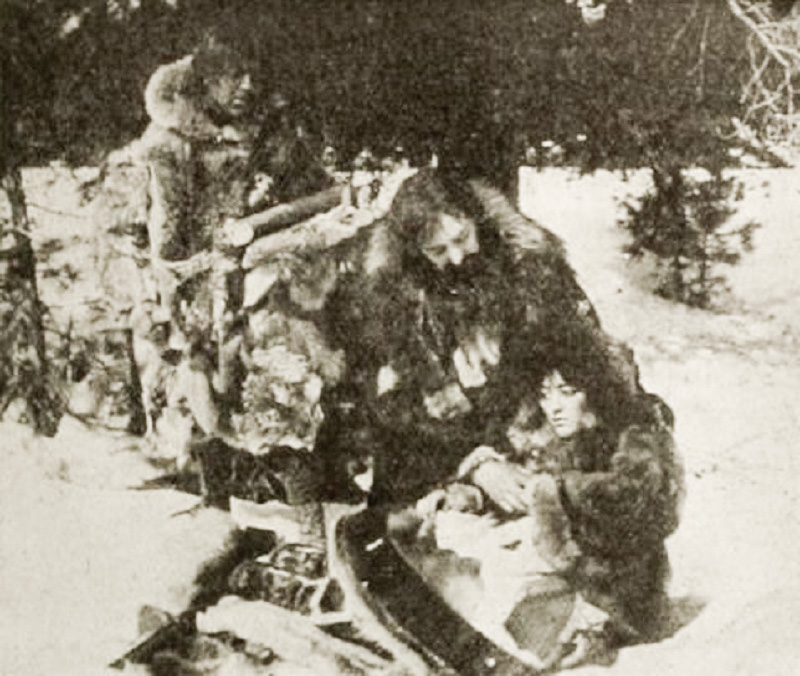
By the time the three central figures reunite in Dawson City, the film has become a study in thermal contrasts: the Gundersons’ marriage now iced over by complicity, Naass’s heart a furnace stoked purely by memory. The phantom map he flourishes—inked on cured caribou hide—might as well be a death warrant. Their trek into the interior is shot with horizontal snowfall that turns every wide frame into an etching; figures merge and re-emerge like charcoal smudges.
Bosworth the director stages sabotage as liturgy. Naissure. He slices dog traces with the reverence of a priest elevating host; each cache he burns is framed low-angle so sparks ascend like freed souls. Axel’s wasting is not the operatic writhing of pinkertonian betrayal but a slow mineral depletion—cheekbones sharpening to tectonic ridges, eyes calcifying into anthracite. Rhea Haines’s Unga, meanwhile, oscillates between brittle fury and animal patience; her final laugh—a brittle cackle that shatters the sound of wind—ranks among silent cinema’s most unnerving aural voids.
Joe Ray’s Naass is a master-class in minimalist metamorphosis. Watch how, in early village scenes, his smile arrives a half-second late, as though shy of its own brightness; by the time he reveals his identity on the death-crag, that same mouth forms a rictus so stiff it seems carved from driftwood. The transformation is achieved without prosthetics—merely the cumulative erosion of hope. Gordon Sackville has the more operatic arc, yet he reins in bombast, letting arrogance leak away in micro-tremors: a glove removed too slowly, a gulp of frozen air that catches in the throat like shards.
Tinting here is not decorative but dramaturgical. Blue sequences denote moral hypothermia; amber interiors pulse with the false warmth of gold lust. When Naass torches the final cache, the film momentarily floods scarlet—a synesthetic wound that makes the audience feel heat they cannot receive. Warrenton’s camera also exploits depth: foreground snow haze acts as a veil through which background figures advance, creating layers of temporal as well as spatial distance. One thinks of Danish battlements shrouded in fog, yet here the ghost is not a father but a self one cannot relinquish.
Though originally accompanied by live quartet, the film survives in a 2018 restoration with a new score by minimalist composer Ola Kvernberg—strings treated so that bow pressure mimics the crunch of sled runners. Viewed thus, the absence of diegetic noise becomes presence: every creak of timber, every exhalation the viewer subconsciously supplies. The technique recalls Victorian parlour chiaroscuro, yet achieves something more primordial—a cinema that happens inside the thorax.
Make no mistake: though Naass drives the narrative, Unga owns its moral pivot. London’s text treats her largely as chattel; Baker’s screenplay restores vocal cords. Her refusal—nay, her ridicule—of rescue annihilates the Victorian angel-in-the-snow trope. She becomes a Fury in fur, choosing to die beside the man who abducted her rather than accept liberation from the one who annihilated him. The gesture is ethically vertiginous, a refusal that rewrites the very grammar of victimhood. In 1920, such agency was rare; in 2024, it still feels transgressive.
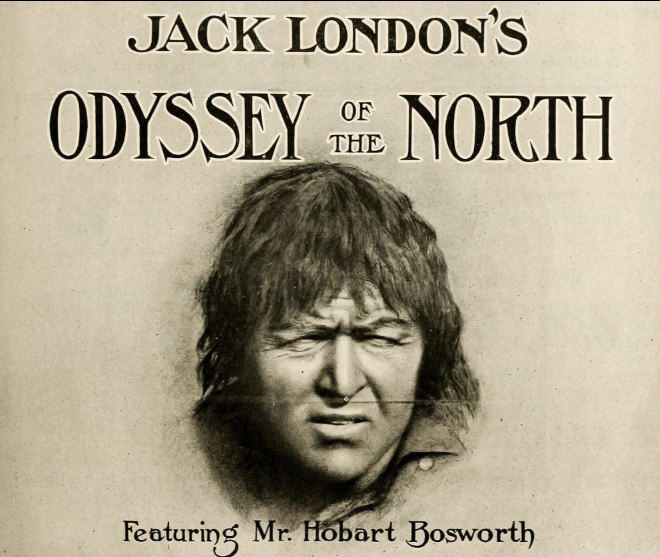
Modern eyes will flinch at the nomenclature (“Esquimau”), yet the film’s ethnographic curiosity is double-edged. Naass’s lineage is framed with anthropological exactitude—ulu knives, umiak frames, throat-songs passed down through qajaq builders—while simultaneously exposing colonial extraction: Yankee sealers, Russian carceral outposts, Canadian mounties who map terrain only to auction it. The critique is implicit: every pouch of dust that changes hands carries molecules of indigenous land. When Naass finally repays Cal with interest, the gold is heavy not merely with weight but with centuries of stolen topology.
Place this film beside other race-based revenge tales or Gothic inheritances of guilt and notice how geography modulates destiny. Where tropical moral rot accelerates decay, Arctic space stretches revenge until it becomes cosmological. Or contrast it with ethnically-marked heroines whose interiority is filtered through orientalist gaze; here the indigenous protagonist authors the final shot, even if that shot is a suicidal stare into flame.
Upon release, exhibitors billed it as “Jack London’s Mightiest Melodrama,” but time has recalibrated the term. What once sounded hyperbolic now reads as understatement: few silent works survive with such granular physicality. The 2022 4K restoration by the San Francisco Silent Film Festival (from a 35mm Dutch print) reveals texture: individual ice crystals on parka trim, the fibrillation of a severed dog trace, the pores in Axel’s parchment skin as he realizes rescue is a mirage. When Naass whispers his true name, lips tremble in 4K clarity—an intimacy unattainable in 1920 projection.
Flaws? A middle-act reel—San Francisco gambling sequence—survives only in Dutch title cards, creating narrative ellipses. And the film’s ethical refusal of catharsis could strike some as nihilistic. Yet these blemishes are frostbite scars on an otherwise immaculate expanse. An Odyssey of the North is less a story you watch than a temperature you inhabit; long after credits, your breath still ghosts in front of you.
Seek it on Blu-ray, turn heating down, let the sound of your own chattering teeth become the score. In an age of algorithmic comfort, here is a film that dares to leave you stranded on an ice divide between vengeance and absolution, with no sled dogs left to carry you home.
Review cross-posted under an-odyssey-of-the-north for permalink and schema markup.
IMDb —
1926
Community
Log in to comment.