DbcultAccessing Vault...
Cult Review
Senior Film Conservator
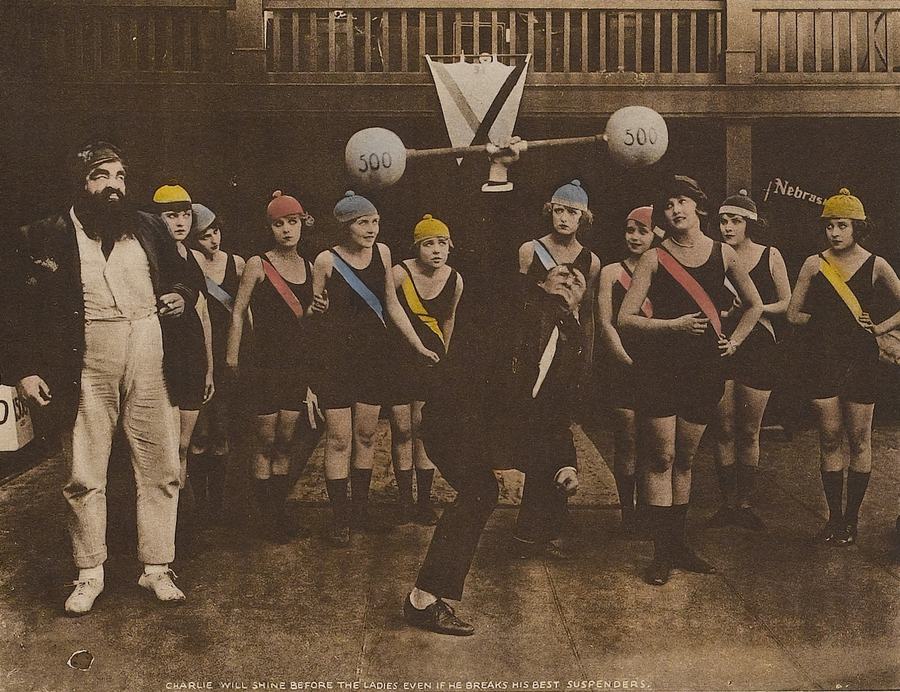
In the grand tapestry of early cinematic comedy, a distinctive thread is woven by films that deftly explore the intricate, often absurd, landscape of marital fidelity and its inevitable breaches. Among these, 'Up in Alf's Place' emerges as a particularly vibrant and enduring example, a testament to the timeless appeal of human foibles and the comedic potential of domestic discord. This particular gem, featuring the redoubtable Charles Murray at its epicenter, plunges headfirst into the tumultuous waters of a husband's momentary lapse in judgment, meticulously dissecting the ensuing chaos with an almost surgical precision, yet always maintaining a light, farcical touch that prevents it from descending into mere melodrama. It is a delightful spectacle, a finely tuned machine of comedic timing and character-driven humor that resonates even a century after its initial screening.
The narrative, deceptively simple on its surface, hinges upon a pivotal transgression: Charles Murray, ensnared by the vivacious charm of a dancer in the titular establishment, finds himself indulging in a flirtatious exchange that, while perhaps innocent in intent, carries the heavy weight of marital impropriety. The film, without preamble, thrusts us into this precarious scenario, allowing the audience to witness the delicate dance of illicit attraction. Murray, portrayed with a masterful blend of sheepish charm and burgeoning panic, embodies the archetype of the well-meaning but easily swayed husband. His interactions with the dancer are a study in escalating audacity, each stolen glance and whispered word pushing the boundaries of decorum just a little further, creating a palpable tension that crackles beneath the surface of the seemingly innocuous revelry.
The brilliance of 'Up in Alf's Place' lies not merely in the setup, but in the inevitable, catastrophic reveal. The wife’s entrance, perfectly timed and executed, transforms the atmosphere from one of carefree indulgence to an immediate, palpable dread. This moment, a classic comedic trope, is handled with an exquisite finesse that maximizes its impact. The camera lingers on Murray’s face, registering a kaleidoscope of emotions – disbelief, terror, resignation – in rapid succession. It’s a moment that transcends mere slapstick, delving into the universal human experience of being caught red-handed, the sudden collapse of a carefully constructed façade. The film understands that true comedy often stems from genuine discomfort, and it exploits this understanding with admirable skill.
The ensemble cast, a veritable who's who of cinematic talent from the era, elevates the material beyond its foundational premise. Gordon Lewis, Thelma Bates, and Marvin Loback contribute significantly to the film's vibrant energy, each carving out memorable performances that add layers of richness to the proceedings. Clarence Lyndon and Thelma Hill, alongside Gladys Whitfield and Fanny Kelly, populate Alf's Place with a motley crew of patrons and performers, creating an authentic, bustling backdrop against which Murray's predicament unfolds. Kalla Pasha and Frank Earle provide moments of robust physical comedy, while the inimitable James Finlayson, known for his distinctive expressions, adds a subtle layer of nuanced reactions that are a joy to behold. Isabelle Keith and Billy Armstrong, Mildred June and Garry O'Dell, further flesh out the supporting cast, ensuring that every corner of the frame is alive with character and personality. Harriet Hammond, Grover Ligon, Sybil Seely, and Dave Anderson, alongside Elva Diltz and Phyllis Haver, contribute to the dynamic atmosphere of the locale, each an integral cog in the comedic machinery. Marie Prevost and Patrick Kelly, Charlotte Mineau and Ben Turpin, not to mention Harry Gribbon and Ethel Teare, all deliver performances that, while perhaps brief, are impactful, cementing the film's reputation for strong character work even in its peripheral roles. Kathryn McGuire, George Jeske, and Edgar Kennedy, too, leave their indelible marks, contributing to the overall comedic rhythm that propels the narrative forward with an infectious vivacity.
The direction, uncredited but undeniably deft, showcases a profound understanding of visual storytelling. The staging of scenes, the blocking of actors, and the judicious use of close-ups all contribute to a cohesive and engaging experience. The pacing is brisk, never allowing a moment to overstay its welcome, yet affording ample time for gags to land and character reactions to register. One can draw parallels to the crisp comedic timing seen in films such as Keep Moving, where physical comedy and rapid-fire gags drive the narrative, or the more subtle character-driven humor of Barry Butts In, which similarly explores social faux pas. 'Up in Alf's Place' manages to synthesize both approaches, offering a blend of broad humor and finely observed character moments.
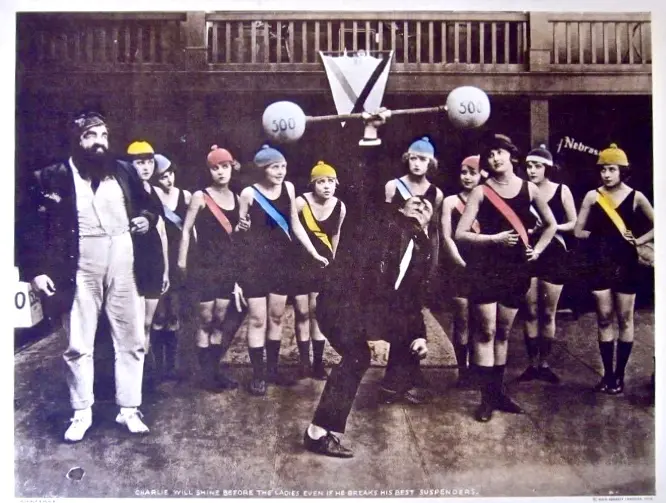
The film's thematic depth, while couched in comedic terms, is surprisingly resonant. It explores the societal pressures placed upon individuals within a marital construct, the allure of forbidden desires, and the precarious balance between personal freedom and communal expectation. Murray’s flirtation is not merely a cheap laugh; it’s a commentary on the human tendency to seek novelty, even at great personal risk. The wife’s reaction, while played for laughs, also speaks to the profound sense of betrayal and public humiliation that such an act can engender. This underlying current of realism grounds the farce, preventing it from becoming entirely frivolous. Much like the exploration of complex relationships in Henriette Jacoby, though approached from a vastly different genre perspective, 'Up in Alf's Place' delves into the intricacies of human connection and disconnection.
The production design, though perhaps constrained by the technological limitations of the era, effectively conjures the atmosphere of 'Alf's Place.' The sets are bustling and believable, immersing the audience in the smoky, lively environment where such indiscretions might plausibly occur. The costumes, too, are period-appropriate, adding to the film's authenticity and visual appeal. Every detail, from the background extras to the incidental props, feels meticulously chosen to contribute to the overall verisimilitude of the setting, a testament to the dedication of the creative team, even if their names are not explicitly listed. This attention to detail is reminiscent of the immersive world-building found in more dramatic works like Potop, demonstrating that a compelling environment is crucial regardless of genre.
Furthermore, the film's legacy is undeniable. It contributed to the evolving language of cinematic comedy, refining tropes and techniques that would be utilized by countless filmmakers in subsequent decades. The portrayal of Charles Murray, a man caught between desire and duty, resonated with audiences then and continues to do so today. His character arc, however brief, reflects a universal struggle, making the comedy both accessible and enduring. It's a foundational piece, much like The Moment of Victory might be seen in its own genre, establishing conventions and benchmarks for future endeavors. The rapid-fire comedic exchanges and physical gags set a precedent for future slapstick, while the character-driven elements foreshadowed more nuanced comedic performances.
While the specific writers are not explicitly credited, the screenplay demonstrates a keen understanding of comedic structure and character development. The dialogue, though sparse in the silent era, is conveyed through expressive intertitles that punctuate the visual narrative, adding layers of wit and exposition. The comedic beats are meticulously planned, building from subtle flirtations to the explosive climax of discovery. The narrative progression feels organic and inevitable, a hallmark of well-crafted storytelling. This structural integrity is akin to the methodical narrative construction observed in films like The Chauffeur, where every plot point serves a distinct purpose.
The performances, particularly that of Charles Murray, are a masterclass in silent screen acting. Murray conveys a vast spectrum of emotions through subtle facial expressions and body language, communicating his character’s inner turmoil and external bravado with remarkable clarity. The wife's portrayal, equally strong, captures both her indignation and her underlying vulnerability, adding a layer of empathy to what could otherwise have been a one-dimensional character. The chemistry between the leads, though adversarial, is electric, driving the central conflict with an undeniable force. Their dynamic echoes the intricate interpersonal struggles depicted in The Weakness of Strength, albeit through a comedic lens.
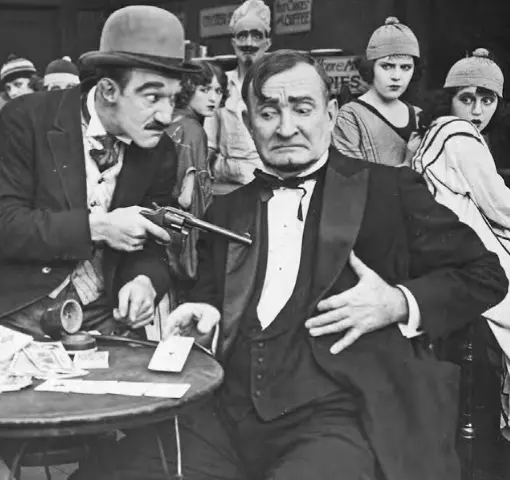
The film’s commentary on social mores is particularly insightful for its time. It subtly critiques the double standards often applied to men and women in marital relationships, and the public scrutiny that accompanies any deviation from expected behavior. While presented as a comedy, there’s an underlying sharpness to its observations that elevates it beyond mere entertainment. It's a cultural artifact that offers a window into the anxieties and hypocrisies of its period, much like how Das Defizit provides a glimpse into socio-economic concerns. The film's ability to fuse humor with social critique is one of its most commendable attributes.
From a technical perspective, the cinematography, while adhering to the standards of its time, is remarkably effective. The camera work is dynamic enough to keep the audience engaged, utilizing various angles and shot compositions to enhance the comedic effect. The editing is sharp and precise, contributing to the overall brisk pace and ensuring that each gag lands with maximum impact. The visual storytelling is paramount in a silent film, and 'Up in Alf's Place' excels in this regard, using every frame to advance the narrative and elicit laughter. This visual prowess can be compared to the compelling imagery found in The Trap, showcasing how visual elements are crucial for narrative impact.
The enduring appeal of 'Up in Alf's Place' lies in its universal themes and its expertly crafted humor. The scenario of a husband caught in a compromising position is a timeless comedic premise, and the film executes it with a panache that few others have matched. It’s a work that deserves to be revisited, not just as a historical curiosity, but as a vibrant, laugh-out-loud comedy that still holds its own against contemporary fare. Its influence can be traced through countless subsequent comedies dealing with infidelity and domestic disputes. The film's charm lies in its simplicity and its profound understanding of human nature, a quality shared with character studies like Sanz y el secreto de su arte, which similarly explores the intricacies of a character's public and private life.
The film's exploration of public versus private persona is particularly insightful. Charles Murray's transformation from a respectable husband to a clandestine flirt, and then to a humiliated man, offers a compelling, albeit comedic, look at the masks people wear in different social contexts. The sudden stripping away of this façade is where much of the humor, and indeed the underlying pathos, resides. This duality of self, a theme explored in various forms across cinema, finds a delightful articulation here. The film’s ability to highlight these societal tensions through humor makes it more than just a series of gags; it’s a keen observation of human behavior. This examination of identity and societal roles is also a central theme in Daughter Angele, demonstrating a shared interest in the complexities of individual experience within societal structures.
In conclusion, 'Up in Alf's Place' stands as a vibrant, essential piece of early comedic cinema. Its sharp writing, exceptional performances from a sprawling cast including the likes of Charles Murray, Gordon Lewis, Thelma Bates, James Finlayson, and Marie Prevost, and astute direction combine to create a film that is both uproariously funny and surprisingly thought-provoking. It transcends its simple plot to offer a nuanced portrayal of human weakness, marital strife, and the enduring power of laughter in the face of embarrassment. This film is a definitive watch for enthusiasts of classic comedy and anyone interested in the foundational elements of cinematic storytelling. Its continued relevance speaks volumes about its quality and the timeless nature of its comedic insights. Its lasting impact, much like the cultural resonance of films such as Árendás zsidó or El último malón, lies in its ability to capture a specific moment while speaking to universal truths. It’s a delightful journey into the heart of domestic chaos, a masterclass in how to turn a simple premise into an unforgettable cinematic experience. The film’s ability to evoke genuine empathy for its flawed protagonist, even as we laugh at his predicament, is a testament to its masterful execution. It joins the ranks of other enduring classics like The Mystic Hour and The Brute Breaker in demonstrating the profound storytelling capabilities of early cinema, albeit through a lens of uproarious humor rather than dramatic tension. This is a film that doesn't just entertain; it reminds us of the perennial absurdities of human relationships with an infectious, timeless glee.
IMDb 7.2
1924
Community
Log in to comment.