DbcultAccessing Vault...
5/10
Senior Film Conservator
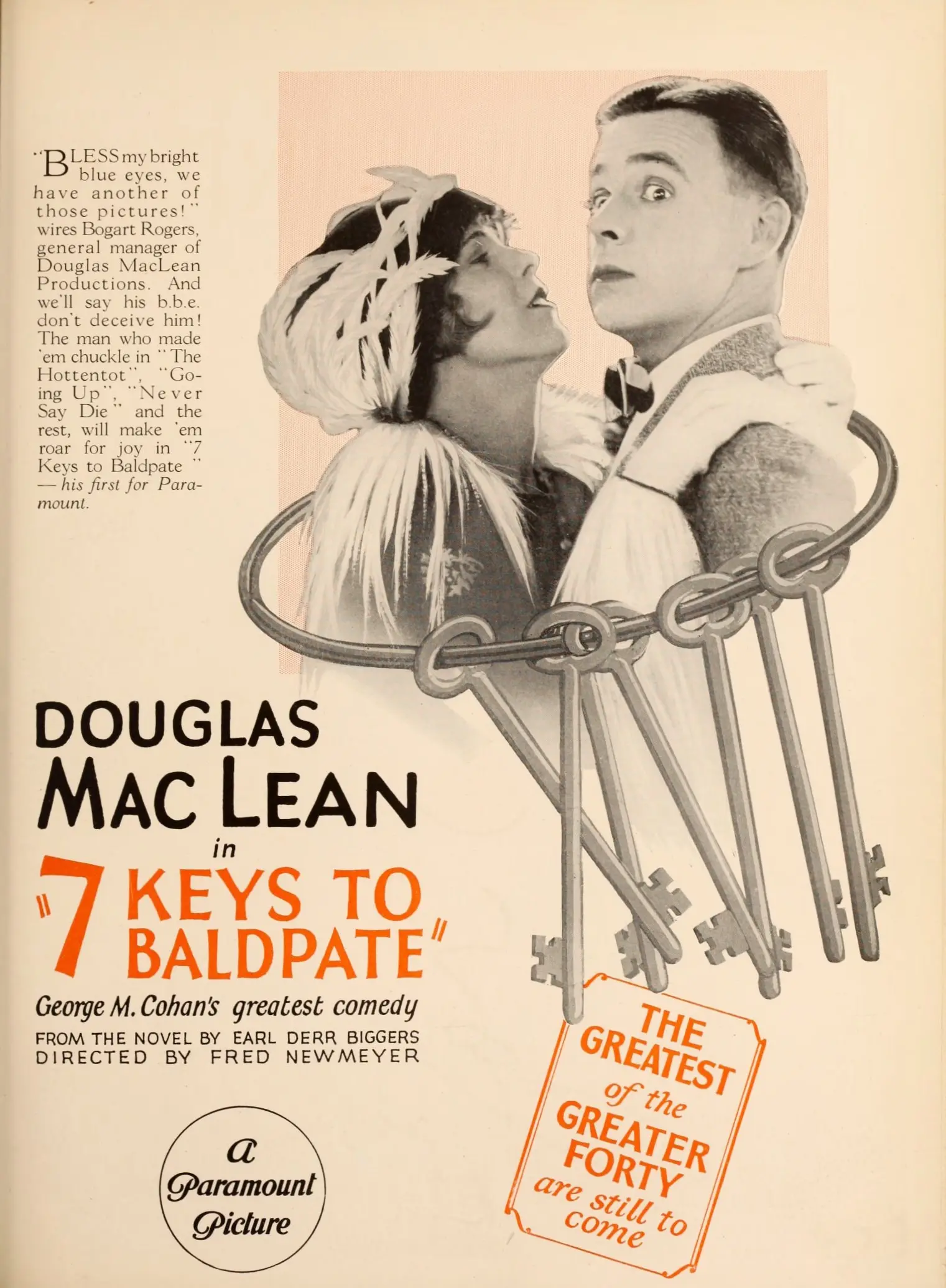
A definitive 5/10 rating for a film that redefined the boundaries of cult cinema. Seven Keys to Baldpate remains a cornerstone of transgressive art.
Stepping into the spectral halls of Baldpate Inn, one might anticipate a straightforward mystery, perhaps a ghostly encounter or a classic whodunit. However, the 1925 cinematic adaptation of Seven Keys to Baldpate transcends such conventional expectations, plunging its audience into a labyrinthine narrative that ingeniously blurs the lines between reality and fiction. Directed with a keen eye for suspense and a playful wink at its own artifice, this silent film gem, penned by the collaborative talents of Wade Boteler, George M. Cohan, Earl Derr Biggers, and Frank Griffin, offers a unique viewing experience that remains remarkably fresh nearly a century later. It’s a testament to the power of a well-crafted story, where the very act of storytelling becomes the central plot device, challenging perceptions and delighting with its audacious meta-narrative twist.
The premise is delightfully simple yet profoundly clever: a frustrated author, William Magee (Douglas MacLean), retreats to an isolated inn, ostensibly to write a novel under the pressure of a looming deadline and a publisher's ultimatum concerning his engagement to Mary Norton (Betty Francisco). He believes he holds the sole key to this desolate sanctuary, a promise swiftly, and dramatically, broken. What unfolds is a dizzying procession of eccentric characters, illicit dealings, and escalating chaos, all seemingly conspiring to shatter his peace and impede his creative flow. This cinematic journey is less about uncovering a single culprit and more about navigating a swirling vortex of engineered confusion, leaving both protagonist and spectator questioning the very fabric of the unfolding events. It’s a masterclass in narrative misdirection, executed with a silent film's unique capacity for visual storytelling.
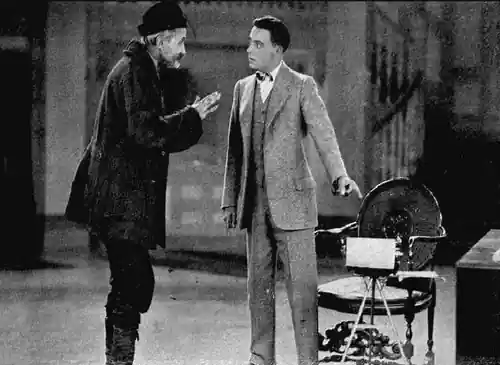
At the heart of Seven Keys to Baldpate lies its groundbreaking meta-narrative, a structural conceit that elevates it beyond a mere mystery thriller. Magee’s initial belief that the parade of intruders—from the enigmatic Bland (Anders Randolf) depositing a suitcase full of cash into the inn's safe, to the subsequent arrival of various nefarious figures like the corrupt politician and the seductive femme fatale—is an elaborate prank designed to disrupt his writing, serves as a brilliant narrative smokescreen. The film expertly plays on this misperception, drawing the audience into Magee's bewildered perspective. We, too, are led to believe in the reality of the escalating peril, the hidden money, the double-crosses, and the eventual arrival of the law, only for the rug to be pulled out from under us in the most satisfying manner imaginable.
The climax, where the caretakers return and Magee reveals he has completed his novel, followed by the revelation that every single event we’ve witnessed has been a figment of his literary imagination, a product of his creative process, is a stroke of genius. This audacious twist transforms the entire viewing experience, prompting a re-evaluation of everything that came before. It’s a profound commentary on the power of storytelling itself, demonstrating how a writer conjures entire worlds and complex characters from the ether of their mind. This narrative audacity was, and remains, incredibly forward-thinking, predating many later works that would explore similar themes of reality versus fiction. It’s a delightful narrative sleight of hand that rewards careful attention and encourages a second viewing to appreciate the subtle clues and comedic undertones that might have been missed amidst the initial suspense.
This film doesn't just tell a story; it tells a story about telling a story. Such self-referential narratives are common now, but in the silent era, this was remarkably innovative. While not a documentary in the vein of something like Kino-Pravda No. 18: A Movie Camera Race Over 299 Meters and 14 Minutes and 50 Seconds in the Direction of Soviet Reality, which broke cinematic conventions through its experimental form, Seven Keys to Baldpate similarly challenges audience expectations by playing with the very nature of narrative truth. It's a playful deconstruction of genre tropes, transforming what appears to be a tense mystery into a whimsical exploration of the creative mind. The audience becomes complicit in Magee's creative journey, experiencing the same disorientation and eventual enlightenment as he does.
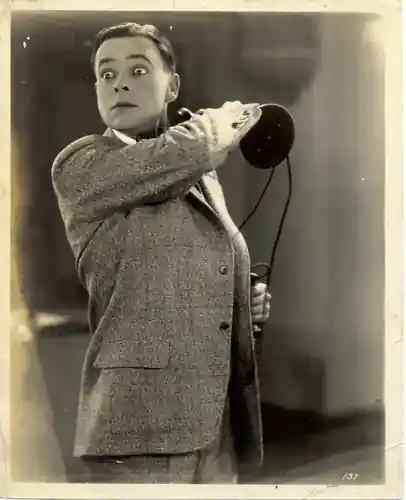
Douglas MacLean as William Magee delivers a performance that perfectly balances comedic exasperation with a writer’s focused determination. His initial nonchalance regarding the increasingly bizarre occurrences, stemming from his conviction that it's all a charade, provides much of the film's humor. MacLean’s facial expressions and body language convey a delightful blend of annoyance, curiosity, and a deep-seated belief in his own narrative control, making his eventual realization all the more impactful. He anchors the film with a charismatic presence, allowing the audience to empathize with his plight even as they are in on the larger secret.
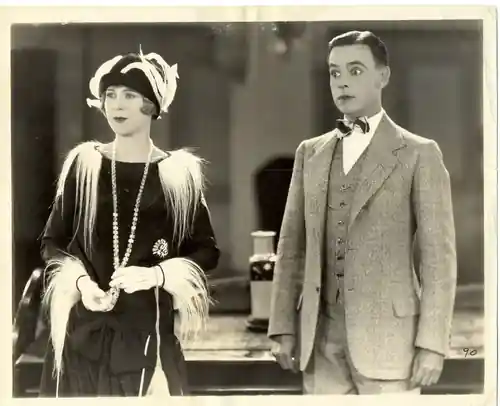
The ensemble cast, a motley crew of characters designed to populate Magee's fictional world, are equally captivating. Betty Francisco brings a charming earnestness to Mary Norton, the concerned fiancée whose warnings fall on creatively deaf ears. Anders Randolf as Bland, the initial intruder, exudes a suitable air of menace, while Ned Sparks and Edith Yorke, as the caretakers, provide a grounding presence that bookends the fantastical events. The quick succession of entries and exits, the whispered conspiracies, and the frantic searches for the money are all choreographed with a theatrical precision that speaks to the film's stage origins. Each actor contributes to the escalating sense of delightful pandemonium, creating a tapestry of exaggerated archetypes that perfectly serve the film's self-aware premise.
The pacing of Seven Keys to Baldpate is a marvel for a silent film. It maintains a brisk, almost breathless rhythm, with each new character or plot development adding another layer to Magee's unfolding 'story.' The use of intertitles is judicious, allowing the visual storytelling to take precedence, as it should in a silent feature. The escalating tension, punctuated by moments of genuine comedy, keeps the audience engaged, constantly guessing and re-evaluating. Unlike some contemporary melodramas such as The Reckless Sex or A Soul for Sale, which often relied on dramatic exposition and overt moralizing, Seven Keys to Baldpate allows its intricate plot and character interactions to drive the narrative, making its eventual reveal all the more impactful. The film demonstrates a sophisticated understanding of how to build suspense and then subvert it, a technique that would influence countless thrillers and comedies for decades to come.
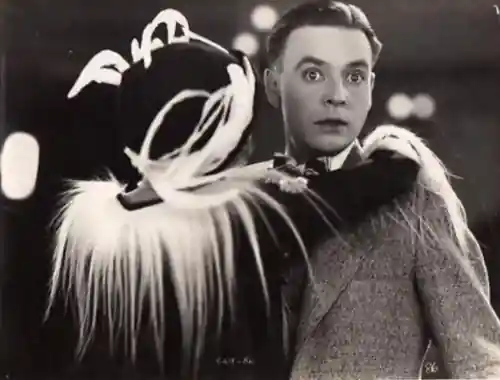
The direction, though uncredited on some records, exhibits a clear understanding of space and movement within the confines of the inn. The various entrances and exits, the hiding places, and the constant shifting of characters create a dynamic visual landscape. The cinematography, while typical of the era, effectively utilizes shadows and light to enhance the mysterious atmosphere, particularly in the secluded, seemingly abandoned inn. The camera often frames Magee in moments of contemplation or exasperation, drawing the audience into his internal struggle, even as external chaos erupts around him. The effective use of close-ups on key objects, such as the safe or the various keys, maintains focus and reinforces the central themes of discovery and deception.
What truly distinguishes Seven Keys to Baldpate is its enduring relevance. Its central theme—the nature of creation and the blurred lines between imagination and reality—is timeless. In an age where digital media often blurs the lines between what is real and what is fabricated, the film's playful exploration of a constructed reality feels remarkably prescient. It reminds us that stories, whether in books or on screen, have the power to transport us, to deceive us, and ultimately, to enlighten us. The film's self-awareness and its willingness to break the fourth wall, even implicitly, set it apart from many of its contemporaries, which often pursued more straightforward narratives like The Big Game or Alice Adams. Instead, Baldpate invites us to consider the very act of cinematic consumption.
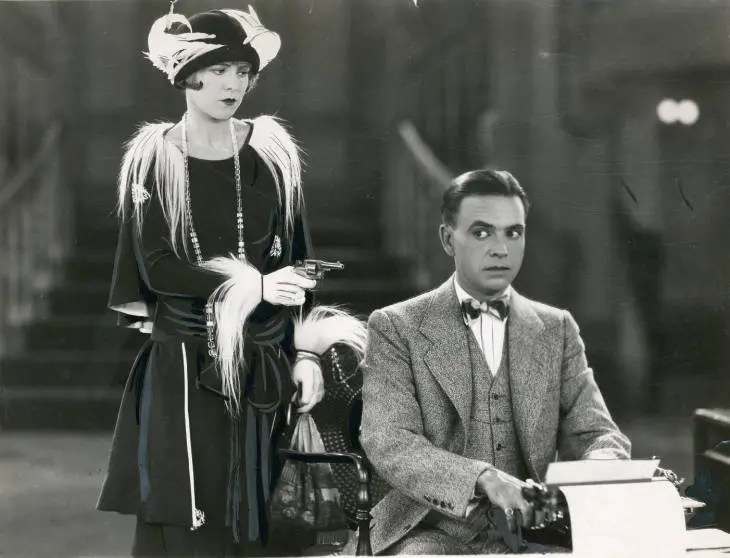
The legacy of Seven Keys to Baldpate extends beyond its initial release, having been adapted multiple times for both stage and screen. This 1925 rendition captures a particular charm and ingenuity, showcasing how silent cinema, even without spoken dialogue, could convey intricate plots and sophisticated thematic ideas. It’s a film that respects its audience’s intelligence, inviting them to participate in the narrative puzzle rather than simply observe it. The film’s ability to sustain suspense and humor, only to brilliantly recontextualize it all, is a testament to the masterful storytelling at its core. It's a delightful journey into the mind of a writer, proving that sometimes, the greatest adventures happen not in the world, but in the pages of a novel, or on the silver screen.
In an era often remembered for its grand spectacles and melodramatic narratives, Seven Keys to Baldpate stands out as a singularly intelligent and entertaining piece of cinema. It’s a film that plays with expectations, subverts tropes, and ultimately celebrates the boundless power of human imagination. For anyone seeking a silent film that offers more than just historical curiosity—one that genuinely engages the intellect and tickles the funny bone—this adaptation is an absolute must-see. Its intricate plot, stellar performances, and groundbreaking meta-narrative ensure its place as a truly unique and influential work in the annals of film history. It reminds us that even in the quietest moments, the most extraordinary stories can be born, and sometimes, the best adventures are the ones we create ourselves. The film’s final, tender moment, with Mary’s arrival and the promise of impending nuptials, perfectly caps off the whimsical journey, leaving the viewer with a sense of satisfaction and a renewed appreciation for the magic of storytelling.
IMDb 5.9
1930
Community
Log in to comment.