DbcultAccessing Vault...
6.2/10
Senior Film Conservator
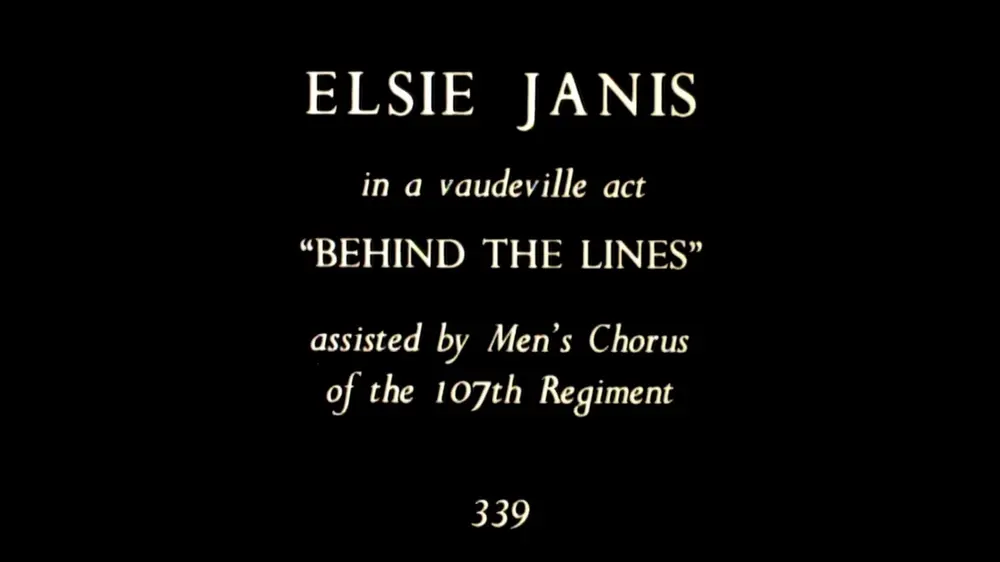
A definitive 6.2/10 rating for a film that redefined the boundaries of cult cinema. Behind the Lines remains a cornerstone of transgressive art.
Is Behind the Lines (1926) worth your time in the digital age? Short answer: yes, but only if you view it as a ghost from the past rather than a Friday night popcorn flick. This film is a vital artifact for anyone fascinated by the intersection of military history and the birth of talking pictures, but it will likely frustrate those looking for a traditional narrative arc.
This film is for the historian, the Vaudeville enthusiast, and the technician who wants to see the exact moment the silent era began to crumble. It is absolutely not for the casual viewer who finds black-and-white films 'slow,' as this short is static, grainy, and technically primitive by any modern standard.
1) This film works because Elsie Janis possesses a raw, unvarnished charisma that manages to punch through nearly a century of technical decay. 2) This film fails because its lack of cinematic language—relying entirely on a fixed camera—makes it feel more like a recorded stage play than a piece of cinema. 3) You should watch it if you want to witness one of the earliest successful attempts to synchronize sound and image using the Vitaphone system.
Behind the Lines is a sound film produced using the Vitaphone system. It features synchronized audio recorded on a wax disc, which was played in sync with the film projector. This allowed 1926 audiences to hear Elsie Janis sing and speak, a revolutionary experience at a time when most films, such as The Third Degree, were still entirely silent.
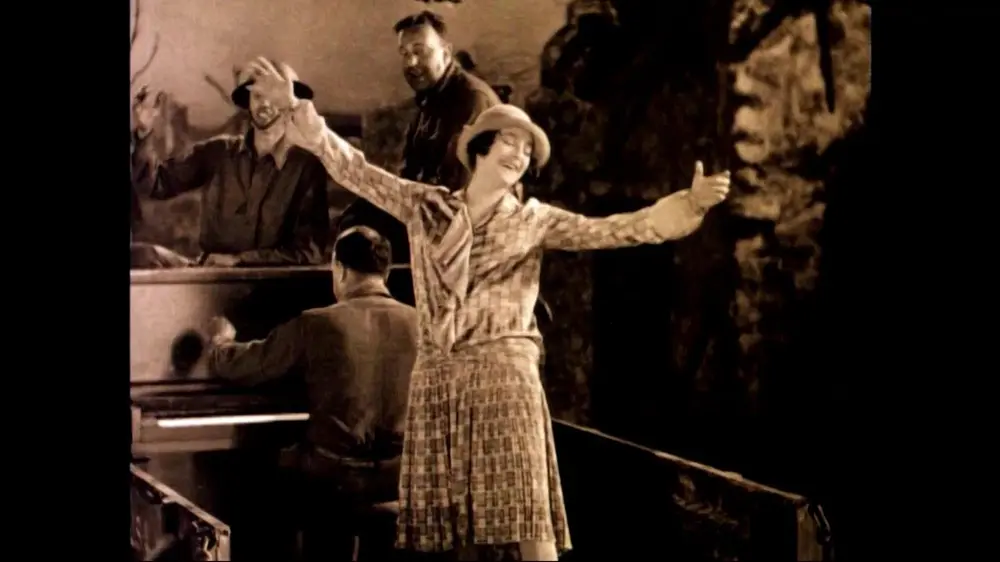
To understand Behind the Lines, one must understand the Vitaphone. In 1926, the industry was at a crossroads. While films like Blue Jeans relied on visual pantomime, Warner Bros. was betting the farm on sound-on-disc technology. This short was part of that gamble. The setup is deceptively simple: Elsie Janis stands on the back of a truck. This isn't just a random choice; it’s a recreation of how she actually performed for the troops in France during the Great War.
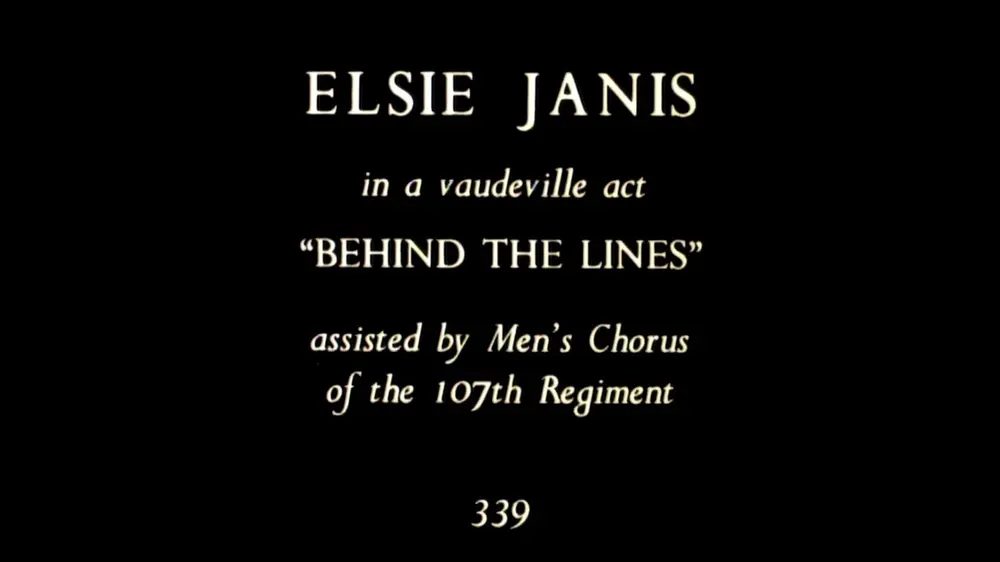
The camera is immobile, likely housed in a soundproof booth to keep the motor noise from ruining the audio. This creates a claustrophobic effect. Unlike the fluid cinematography found in The Snarl, the movement here is entirely contained within the frame. Janis is the only thing that moves. When she kicks her heels during the American song, you can almost feel the truck shake. It’s a visceral moment that reminds us that cinema wasn't always about editing; sometimes, it was just about capturing a force of nature.
Janis was known as the 'Sweetheart of the A.E.F.,' and this film proves why. She doesn't just sing; she commands. There is a specific moment when she calls the French soldier up to the stage. The interaction is stiff—the soldier clearly isn't an actor—but Janis handles it with the grace of a seasoned pro. She bridges the gap between the audience and the screen in a way that few silent stars could. While performers in Slaves of Pride had to rely on exaggerated facial expressions, Janis uses her voice as a tool of intimacy.
Her performance style is distinctively Vaudevillian. It’s loud, it’s broad, and it’s designed to reach the back of a theater—or in this case, the back of a muddy field in France. When she transitions into the dance routine, the film takes on a rhythmic quality that silent films like Castles for Two could only emulate through editing. Here, the rhythm is dictated by the sound of her feet hitting the wood of the truck. It’s raw. It’s real. It works. But it’s flawed.
The audio quality of Behind the Lines is, predictably, a bit of a wreck. There is a constant hiss, a reminder of the wax discs that once carried these voices. However, this adds to the haunting atmosphere of the piece. When the British soldier joins her for the finale, their voices blend in a way that feels like eavesdropping on history. It lacks the polish of later 1920s efforts like The Song of the Soul, but it possesses a documentary-like urgency.
One surprising observation is how the film handles the 'Allied' theme. By featuring French, British, and American elements, the film acts as a piece of post-war propaganda. It’s a celebration of unity that would have resonated deeply with 1926 audiences, many of whom were veterans themselves. This isn't just entertainment; it’s a victory lap. Compared to the heavy melodrama of The Woman God Sent, this short is refreshingly optimistic.
The biggest hurdle for a modern viewer is the pacing. Because the audio had to be recorded live in a single take, there are no cuts. If Janis had tripped, the whole take would have been ruined. This creates a tension that is absent in modern filmmaking. You are watching a high-wire act. In films like Fiskebyn, the director can hide a weak performance in the edit. Here, Janis has nowhere to hide. She is exposed, and she thrives under that pressure.
The lighting is flat, designed to ensure the camera could capture the action without needing to adjust the aperture mid-take. This gives the film a somewhat sterile look, which contrasts sharply with the gritty subject matter. It’s a strange juxtaposition: a clean, studio-lit version of a muddy, war-torn reality. This artifice is common in early talkies, even in more ambitious projects like Mad Love.
If you are looking for a masterpiece of storytelling, look elsewhere—perhaps toward Never Say Die or Plain Jane. However, if you want to see the DNA of the modern musical, Behind the Lines is essential. It represents the first awkward steps of a medium learning to speak. It’s clumsy, yes, but it’s also incredibly brave. To stand in front of a giant, buzzing machine and sing your heart out in 1926 required a specific kind of courage.
The film also serves as a reminder of Elsie Janis’s massive cultural footprint. While she isn't a household name today like the stars of Mr. Billings Spends His Dime, her influence on wartime entertainment persists to this day. This film is the only way we can truly experience her 'it' factor.
Pros:
- Authentic 1920s Vaudeville performance.
- Rare glimpse into early Vitaphone technology.
- Elsie Janis is genuinely charismatic.
- Historical significance as a WWI tribute.
Cons:
- No narrative plot to speak of.
- Poor audio quality by modern standards.
- Static cinematography feels incredibly dated.
- Short runtime leaves you wanting more context.
Behind the Lines is a fascinating, if slightly exhausting, relic. It is not 'good' cinema in the way we define it today, but it is 'important' cinema. It captures a moment of transition—both for the world and for the art form. It’s old. It’s loud. It’s important. While it lacks the narrative depth of The Kentuckians or the charm of My Pal, it offers something those films cannot: the actual sound of a bygone era. Watch it for the history, stay for the dancing, and forgive the crackle.
IMDb 2.7
1919
Community
Log in to comment.