DbcultAccessing Vault...
5.3/10
Senior Film Conservator
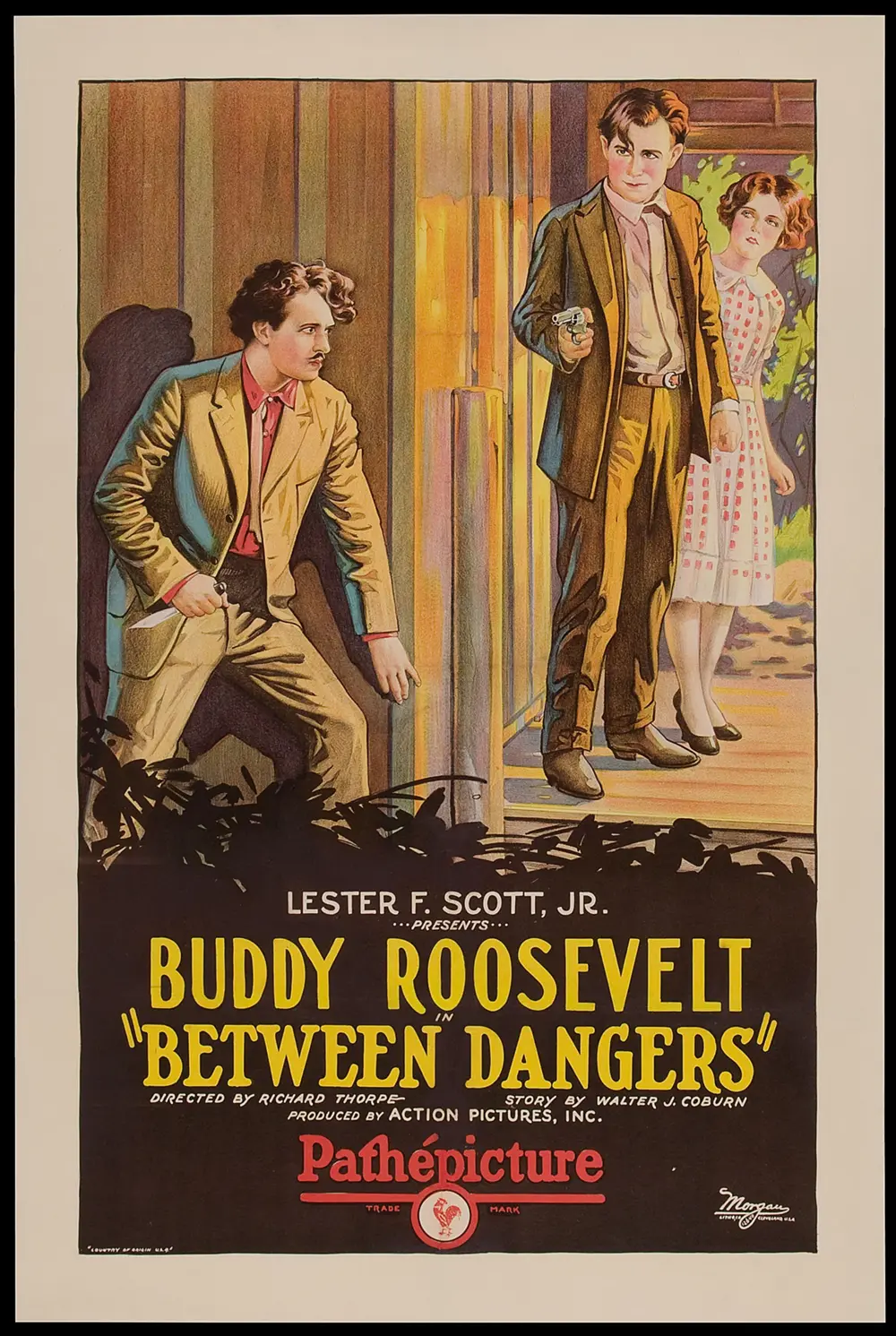
A definitive 5.3/10 rating for a film that redefined the boundaries of cult cinema. Between Dangers remains a cornerstone of transgressive art.
Is this 1927 relic worth your time today? Short answer: Yes, but only if you possess a genuine appetite for the unvarnished mechanics of Poverty Row silent cinema. This film is specifically for historians of the genre and fans of Buddy Roosevelt's physical performance style; it is decidedly not for those who require the breakneck pacing or polished aesthetics of the late 1930s Golden Age Westerns.
Between Dangers is a functional, efficient piece of 1920s entertainment that manages to transcend its low-budget origins through sheer earnestness. While it lacks the visionary scope of contemporary epics, it provides a fascinating look at the 'wronged man' trope before it became a Hollywood cliché. It works as a character study of resilience under the thumb of institutional corruption.
1) This film works because: Buddy Roosevelt brings a grounded, blue-collar charisma to Tom Rawlins that makes the bureaucratic nightmare of his situation feel genuinely frustrating rather than just a plot device.
2) This film fails because: The narrative reliance on 'missing papers' is handled with a heavy-handedness that slows the second act to a crawl, even by silent film standards.
3) You should watch it if: You want to see the early directorial fingerprints of Richard Thorpe, a man who would eventually become one of MGM's most reliable workhorses.
Buddy Roosevelt was never the household name that Tom Mix or William S. Hart became, but in Between Dangers, he demonstrates why he was a staple of the independent circuit. Unlike the flamboyant showmen of the era, Roosevelt’s Rawlins feels like a man who actually knows how to mend a fence. His physicality is evident in the jailbreak sequences, where his movements are sharp, economical, and devoid of the theatrical gesturing that often plagued silent performances.
When we compare this to other films of the period like The Desert's Toll, we see a shift in how the Western hero was framed. Rawlins isn't just fighting outlaws; he’s fighting a system. The lawyers in this film are portrayed with a slithering, urban malice that feels distinct from the usual cattle rustlers. They represent the 'New West'—a place of contracts and fine print that is far more dangerous to the traditional cowhand than a six-shooter.
Director Richard Thorpe is a name synonymous with efficiency. In Between Dangers, you can see the early stages of his 'one-take' philosophy. The framing is rarely experimental, but it is always clear. He uses the confined space of the jail cell to create a sense of mounting claustrophobia that contrasts sharply with the wide-open vistas of the contested ranch. This visual dichotomy reinforces the theme of a free man being boxed in by artificial legalities.
The pacing, while occasionally hampered by the limitations of the script, shows Thorpe's knack for keeping the story moving. There is a specific sequence where Rawlins attempts to prove his identity to the Sheriff that is edited with a tension that prefigures the suspense thrillers of the 1940s. It is a masterclass in using intertitles to heighten anxiety rather than just convey dialogue.
Alma Rayford’s portrayal of Sue Conway is perhaps the most interesting element of the supporting cast. In many silent Westerns, the female lead is a static prize to be won. Here, Sue acts as the narrative's moral fulcrum. Her decision to assist Rawlins isn't just born of romantic interest; it’s a quiet rebellion against her father’s rigid (and easily manipulated) adherence to the law.
Her scenes are played with a subtle intensity. When she discovers the hidden identification papers, the camera lingers on her face, capturing a moment of genuine ethical crisis. It’s a small, human beat in a film that could have easily been a cartoonish melodrama. This level of character agency is something we also see explored in The Night Cry, where the stakes are equally personal and grounded in domestic reality.
The cinematography in Between Dangers is surprisingly textural. The dust seems to hang in the air of the sheriff’s office, and the sunlight in the outdoor scenes has a harsh, bleaching quality that makes the landscape feel unforgiving. This isn't the romanticized, postcard West of the later John Ford era. This is a West that is dirty, hot, and litigious.
One particular shot stands out: the silhouette of Rawlins against the bars of his cell as the lawyers walk past in the background, bathed in light. It is a simple composition, but it perfectly encapsulates the film's central conflict. The villains own the light and the law, while the hero is relegated to the shadows of anonymity. It’s a visual metaphor that works. It’s effective. But it’s also brutally simple.
The film offers a unique 'legal thriller' spin on the traditional Western ranch dispute. The chemistry between Roosevelt and Rayford feels earned rather than forced. Additionally, the stunt work—performed largely by Roosevelt himself—is impressive and adds a layer of authenticity that modern CGI-heavy Westerns lack.
The villains are somewhat one-dimensional, lacking the psychological complexity found in films like Shame (1921). The resolution of the legal conflict feels a bit rushed, relying on a convenient discovery rather than a hard-fought legal battle, which slightly undermines the 'legal' stakes established early on.
Between Dangers is a fascinating artifact of its time. If you can look past the limitations of its budget and the era's technical constraints, you will find a story that is surprisingly modern in its distrust of authority. It’s a film about the fear of being erased by the stroke of a pen.
Ultimately, Between Dangers is a solid, middle-of-the-road silent Western that succeeds because it doesn't try to be an epic. It knows its limits. It tells a tight, personal story about a man trying to reclaim his name. It is a relic, yes, and a dusty one at that. But it breathes. It has a pulse that many of its more expensive contemporaries lacked. While it won't change your life, it provides a satisfying hour of vintage storytelling that reminds us why the Western remained the dominant American myth for so long. It’s not a masterpiece, but it is a sturdy piece of craftsmanship.
IMDb —
1928
Community
Log in to comment.