DbcultAccessing Vault...
6.2/10
Senior Film Conservator
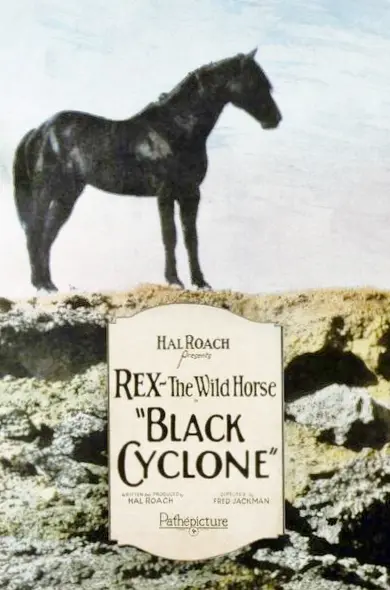
A definitive 6.2/10 rating for a film that redefined the boundaries of cult cinema. Black Cyclone remains a cornerstone of transgressive art.
In the pantheon of silent cinema, few figures loom as large—literally and figuratively—as the equine stars of the 1920s. While modern audiences might look back at the era and recall the slapstick gymnastics of Keaton or the expressive pathos of Chaplin, there existed a parallel track of rugged, outdoor epics that centered on the majesty of the horse. Black Cyclone, a 1925 production from the legendary Hal Roach studio, stands as a quintessential exemplar of this subgenre. It is a film that demands we reconsider the boundaries of performance, casting a stallion known as Rex the Wonder Horse as a lead actor with a range that frequently eclipses his human counterparts. Unlike the more whimsical tone of A Very Good Young Man, Black Cyclone plunges into the dirt and sweat of the frontier with a sincerity that is both jarring and deeply moving.
The casting of Rex was a stroke of genius by Hal Roach. Rex was not a trained 'trick' horse in the traditional sense; he was a 'Wonder Horse' because of his innate ferocity and screen presence. In Black Cyclone, the camera captures a level of animalistic intensity that feels dangerously unchoreographed. The narrative positions Rex as a sovereign of the plains, a creature whose autonomy is threatened by 'The Killer,' a rival stallion of unmatched cruelty. This animal-centric plotline is handled with a gravity usually reserved for Shakespearean tragedies. When we see Rex protecting Lady, the horse's mate, the emotional stakes are palpable. It is a stark contrast to the more theatrical artifice found in films like The Carpet from Bagdad, where the setting often feels like a stage. Here, the mountains and valleys are indifferent witnesses to a struggle for dominance that is as old as the earth itself.
While Rex carries the thematic weight of the wild, Guinn 'Big Boy' Williams provides the human anchor. Williams, with his massive frame and surprisingly gentle screen presence, portrays a cowboy who finds himself in a mirror image of Rex's predicament. He is a man of few words, but his physicality speaks volumes. His chemistry with Kathleen Collins is grounded in a silent-era earnestness that avoids the saccharine traps of contemporary romances. The brilliance of the screenplay by H.M. Walker and Malcolm Stuart Boylan lies in how it weaves these two lives together. The cowboy and the horse are not just companions; they are spiritual twins. Both are being hunted, both are being tested, and both must transcend their individual fears to protect what they love. This dual narrative structure provides a rhythmic pacing that keeps the viewer engaged, avoiding the static nature that sometimes plagues early westerns like American Maid.
Visually, Black Cyclone is a triumph of location scouting and cinematography. The wide shots of the stampeding herds are breathtaking, capturing a sense of scale that remains impressive even in the age of CGI. The directors utilize the natural lighting of the high desert to create a chiaroscuro effect that highlights the rippling muscles of the horses and the weathered faces of the men. There is a documentary-like grit to these sequences that reminds one of the archival intensity found in The Battle of Jutland, though applied here to the poetry of motion rather than the machinery of war. The editing is particularly sophisticated for 1925, using cross-cutting between Rex’s battles and Williams’ confrontations to heighten the tension, suggesting a cosmic synchronicity between the human and animal worlds.
Every great western requires a formidable antagonist, and Black Cyclone delivers on two fronts. Noah Young and Christian J. Frank provide the human menace, playing characters whose moral bankruptcy is a direct foil to Williams' integrity. They represent the encroaching rot of civilization—the greed and violence that seek to domesticate or destroy the wild spirit. On the animal side, 'The Killer' is a terrifying presence. The fight sequences between the horses are visceral, staged with a realism that would likely be impossible under modern animal welfare regulations. These battles are not merely spectacles; they are essential to the film's thesis on the necessity of strength in a world without law. This exploration of dark human impulses and primal instincts offers a much more complex viewing experience than the lighter fare of The Lucky Devil or the comedic stylings of An Amateur Devil.
To truly appreciate Black Cyclone, one must place it in the context of its contemporaries. While The Gypsy Trail explored the romanticism of the wanderer, and No Woman Knows delved into domestic melodrama, Black Cyclone carved out a niche for the 'action-naturalist' film. It shares a certain DNA with Tempest Cody Turns the Tables in its portrayal of a protagonist who must reclaim their agency through sheer force of will. However, Roach’s production values and the 'star power' of Rex elevate it to something more significant. Even compared to the high-concept intrigue of Sneakers (though from a vastly different era), the fundamental tension of being hunted remains a universal cinematic hook. The film also avoids the esoteric or overtly symbolic trappings of Pagan Passions, opting instead for a grounded, muscular storytelling style that feels surprisingly modern.
The influence of Rex and Black Cyclone cannot be overstated. This film helped solidify the 'horse as hero' trope that would persist through the era of Trigger and Silver, and even into modern tales like War Horse. It demonstrated that an animal could carry a narrative arc, express complex emotions like grief and vengeful fury, and command the screen with as much authority as any human star. The sequence where Rex must navigate a treacherous mountain pass to save Lady is a masterclass in suspense, utilizing close-ups of the horse’s eyes to convey a sense of desperate intelligence. It is this focus on the internal life of the animal that makes the film so enduring. It doesn't treat Rex as a prop or a tool, but as a sentient being with his own moral compass.
In the final analysis, Black Cyclone is a testament to the power of pure visual storytelling. It bypasses the need for elaborate title cards by allowing the actions of its characters—both two-legged and four—to dictate the emotional flow. It is a film of grit, dust, and unyielding spirit. For those who find the polished surfaces of modern cinema lacking in soul, this 1925 relic offers a refreshing return to the basics of conflict and resolution. It possesses a rugged beauty that is often missing from more 'sophisticated' productions like A Prince in a Pawnshop. Whether you are a student of film history or simply a lover of the western genre, Black Cyclone remains an essential watch. It is a reminder that at the heart of every great story is the struggle to protect one's home and one's kin, a theme that resonates as clearly today as it did on the flickering screens of a century ago. The film’s ability to evoke such a visceral response through the silent interaction of a man and his horse is nothing short of miraculous, cementing its place as a cornerstone of early American cinema.
Technical Note: For those interested in the behind-the-scenes mechanics of this era, a look at Bag Filmens Kulisser provides an excellent companion piece to understand the logistical hurdles faced by filmmakers like Hal Roach in the 1920s. While Black Cyclone is a finished work of art, understanding the 'scaffolding' of silent production only deepens one's appreciation for the final product.
IMDb 1.8
1919
Community
Log in to comment.