DbcultAccessing Vault...
4.4/10
Senior Film Conservator
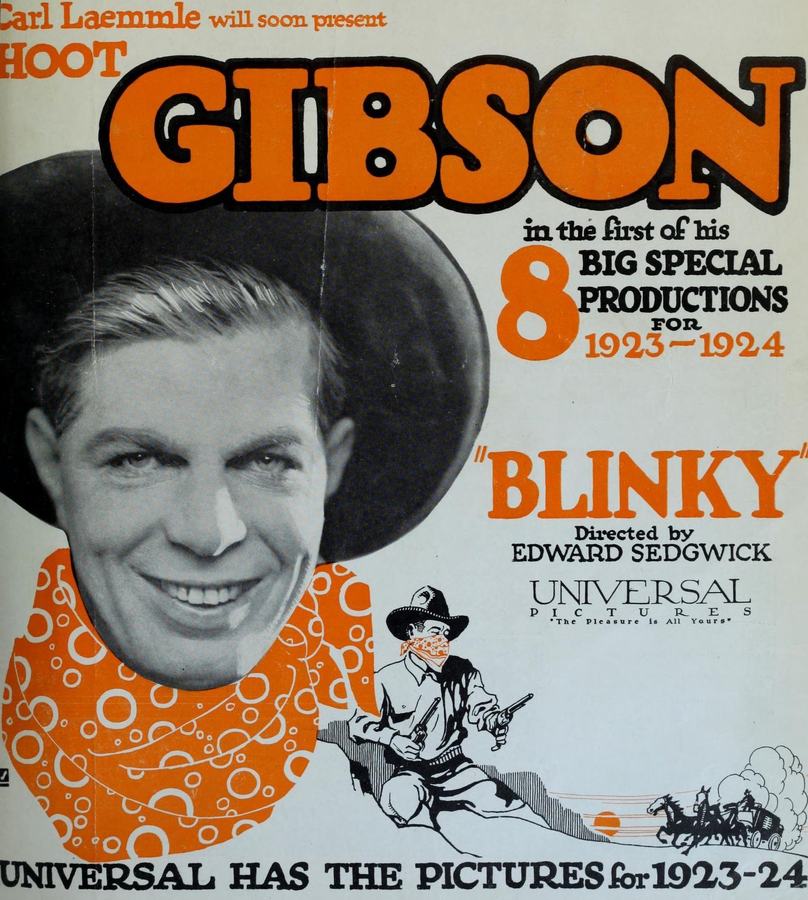
A definitive 4.4/10 rating for a film that redefined the boundaries of cult cinema. Blinky remains a cornerstone of transgressive art.
The year 1923 marked a peculiar juncture in the American cinematic consciousness, a period where the rugged individualism of the 19th-century frontier began to collide with the burgeoning structured societies of the 20th century. At the heart of this friction lies Blinky, a film that serves as both a vehicle for Hoot Gibson’s idiosyncratic stardom and a fascinating sociological document. Directed by Edward Sedgwick, the film dares to place a bespectacled, scout-trained intellectual into the hyper-masculine crucible of a cavalry unit stationed on the Mexican border. This isn't merely a fish-out-of-water comedy; it is a sophisticated interrogation of what constitutes 'manhood' in a post-frontier world.
Geoffrey Arbuthnot Islip, the protagonist, is burdened by a lineage of aggressive vitality. His father, Colonel 'Raw Meat' Islip, is a relic of a more violent era, a man whose very name suggests a rejection of the refined or the cooked—the civilizing forces of society. Geoffrey, conversely, is a product of those very forces. His reliance on his spectacles, which earns him the pejorative nickname 'Blinky,' serves as a visual metaphor for his mediated relationship with the world. Unlike the instinctive, atavistic soldiers surrounding him, Geoffrey views the world through a lens of methodology and observation. This thematic tension mirrors the tonal shifts found in When the Clouds Roll by, where the protagonist must navigate a world that seems fundamentally at odds with his internal state.
What distinguishes Blinky from contemporary Westerns like The Red, Red Heart is its elevation of the 'Boy Scout' ethos from a childish hobby to a legitimate technology of survival. In the 1920s, the Boy Scouts of America was a burgeoning movement aimed at preserving 'pioneer virtues' within an urbanizing population. By casting Gibson as a former scout, Sedgwick is not mocking the institution but rather testing its efficacy against the real-world dangers of the border. When Mary Lou Kileen (portrayed with a luminous yet grounded energy by Esther Ralston) is abducted, the cavalry’s traditional methods of pursuit prove insufficient. They are looking for a fight; Geoffrey is looking for signs.
The desert, in Sedgwick’s hands, becomes a canvas of subtle indicators—bent stalks of grass, the orientation of stones, the ephemeral traces of a passage that only a trained eye can decipher. It is a proto-procedural element that anticipates the forensic focus of modern thrillers.
Gibson’s performance is a masterclass in understated physical comedy and dramatic sincerity. Known for his 'easy-going' cowboy persona, Gibson here pivots toward a more vulnerable, yet intellectually defiant, characterization. He doesn't discard his glasses to reveal a hidden warrior; he uses his vision—both literal and metaphorical—to outthink his adversaries. This subversion of the 'Clark Kent' trope is handled with a deftness that avoids the saccharine pitfalls often found in silent-era moralizing, such as in The Cry of the Weak.
Edward Sedgwick, often overshadowed by the titans of silent comedy, demonstrates a keen eye for the topographical drama of the borderlands. The cinematography captures the oppressive heat and the vast, indifferent scale of the landscape, making Geoffrey’s small, precise movements feel all the more significant. The editing during the rescue sequence maintains a kinetic urgency that rivals the more high-budget spectacles of the time. There is a rhythmic quality to the chase that feels almost musical, reminiscent of the structured pacing in Sonho de Valsa, though applied here to the grit of a Western pursuit.
The supporting cast provides a sturdy framework for Gibson’s experimentation. Charles K. French as 'Raw Meat' Islip embodies the rigid, almost caricatured expectations of the Old West, providing a necessary foil to Geoffrey’s modernism. Esther Ralston, while cast in the traditional role of the damsel, imbues Mary Lou with a palpable sense of agency and terror that elevates the stakes. Their chemistry is not one of sweeping romantic gestures but of mutual recognition—a theme explored with different nuances in Each to His Kind or Broadway Love.
In the cinematic lexicon of the early 20th century, glasses were frequently a shorthand for physical inadequacy or a detached scholarly nature, as seen in various iterations of Alice in Wonderland or the social satires like A Fool and His Money. Blinky reclaims this accessory. Geoffrey’s spectacles are not a hindrance to be overcome but a tool of his specific trade. The film argues that the 'new' American hero is one who observes and interprets, rather than one who merely reacts. This transition from the 'brawn' of the frontier to the 'brain' of the new century is the film’s most enduring legacy.
Furthermore, the Mexican border setting adds a layer of geopolitical tension that the film navigates with a surprising lack of the overt xenophobia common to the era. While the kidnappers are the 'others,' the focus remains squarely on the internal dynamics of the American military and the generational divide. The border is less a political boundary and more a symbolic edge of the world where old myths go to die and new ones are forged through the application of scout-law and grit.
Comparing Blinky to the more melodramatic offerings of its day, such as Hearts and Flowers or At the Stage Door, reveals a production that was remarkably forward-thinking in its character construction. It eschews the grandiosity of the 'epic' Western for a more intimate, character-driven narrative. The resolution is not found in a massive shootout but in the quiet, triumphant validation of Geoffrey’s methods. When he finally earns the respect of his father and his peers, it is not because he became like them, but because he proved that his way—the way of the 'Blinky'—was ultimately more effective.
The film’s influence can be seen in the later 'intellectual' Westerns of the 1950s, but its roots are firmly planted in the silent era’s capacity for visual storytelling. The absence of dialogue forces the audience to engage with Geoffrey’s process—to see what he sees, to value the minute details of the trail. It is a participatory experience that modern cinema often struggles to replicate. Whether compared to the atmospheric The Shrine of Happiness or the urban dramas like Telefondamen, Blinky stands out as a work of surprising depth and enduring charm.
In the final analysis, Blinky is a testament to the versatility of Hoot Gibson and the creative ambition of Edward Sedgwick. It is a film that rewards the observant viewer, much as its hero rewards the observant scout. It challenges the viewer to look past the 'spectacles' of the genre and find the human heart beating beneath the scout manual. For those interested in the evolution of the Western or the history of masculine representation on screen, this film is an essential, if often overlooked, chapter. It is a reminder that sometimes, the most revolutionary thing a hero can do is simply see things as they truly are.
Related explorations: Romance and Rings, El caporal, and A Woman's Experience.
IMDb —
1934
Community
Log in to comment.