DbcultAccessing Vault...
Cult Review
Senior Film Conservator
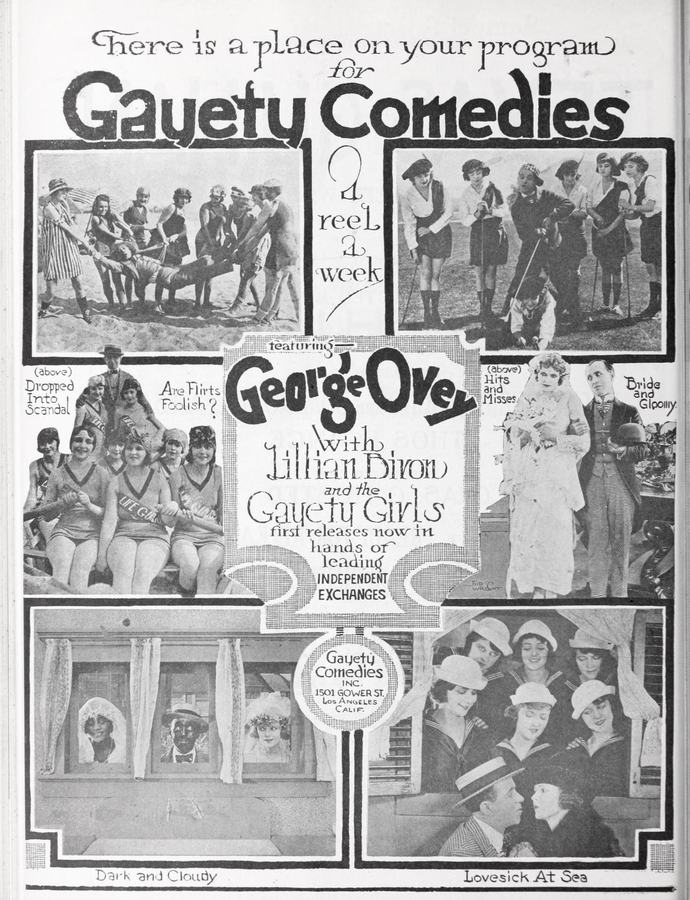
Ah, the silent era! A time when narratives were spun not through dialogue, but through the eloquent dance of gesture, the stark honesty of expression, and the rhythmic cadence of intertitles. It was an epoch of raw, unfiltered storytelling, and Frank Roland Conklin's 'Bride and Gloomy' stands as a captivating artifact from this fascinating period, a work that, upon deeper inspection, reveals layers of thematic complexity often overlooked by casual modern viewers. Released into a world teetering on the cusp of profound change, this film, with its seemingly straightforward title, actually delves into the intricate web of societal expectations, personal desires, and the often-comic, sometimes tragic, absurdity of human machinations.
The cinematic landscape of the 1910s was teeming with melodramas and comedies, often blurring the lines between the two, and 'Bride and Gloomy' certainly finds its footing in this fertile ground. Conklin, a writer whose pen seemingly possessed a keen understanding of both the human heart and the pitfalls of social convention, crafts a narrative that feels both universal and acutely specific to its time. The film introduces us to Ophelia, portrayed with a remarkable blend of vulnerability and nascent defiance by the luminous Lillian Biron. Biron, an actress whose expressive eyes could convey volumes without uttering a single word, embodies Ophelia as a character trapped within a gilded cage, a young woman whose destiny is being meticulously charted by forces far beyond her control. Her plight, that of an orphaned heiress whose inheritance is held hostage by a manipulative guardian, Aunt Agatha, immediately establishes a foundational conflict that resonates with timeless themes of oppression and the yearning for freedom. This isn't merely a damsel in distress; Biron infuses Ophelia with an inner fire, a flicker of resistance that promises to ignite, even if subtly, against the suffocating circumstances.
Lillian Biron's performance as Ophelia is, without hyperbole, a masterclass in silent film acting. Her every gesture, from the delicate tremor of a hand to the subtle shift in her gaze, contributes to a rich tapestry of emotion. We witness her initial resignation, a quiet despair that settles upon her like a heavy shroud, only to be punctuated by fleeting moments of hope when she encounters Alistair Finch, the struggling poet who has captured her heart. Biron's ability to convey this internal struggle — the conflict between duty and desire — is truly remarkable. She doesn't just act; she emotes directly into the viewer's soul, drawing us into Ophelia's predicament with an empathetic pull that few contemporary actors could achieve. Her character arc, from a passive victim to a woman capable of making profound choices, albeit under immense duress, is meticulously rendered. This nuanced portrayal elevates 'Bride and Gloomy' beyond a simple romantic comedy or melodrama, grounding it in a psychological realism that belies its silent form.
The contrast between Ophelia's true feelings and the façade she is forced to maintain is a central pillar of the film's dramatic tension. Biron expertly navigates these dualities, allowing us to glimpse the vibrant spirit beneath the melancholic exterior. When she is with Alistair, her face lights up with a genuine joy that is conspicuously absent during her interactions with Bartholomew. This stark visual difference underscores the tragedy of her situation, highlighting the profound sacrifice she is being asked to make. Her performance reminds us that true acting transcends dialogue, relying instead on the universal language of human emotion. In an era where many performances could devolve into exaggerated pantomime, Biron maintains a captivating authenticity that holds the narrative together, making Ophelia's struggle palpable and her eventual triumph, however it manifests, deeply satisfying.
Then there is George Ovey as Bartholomew Buttercup, Ophelia's intended groom. Ovey, often known for his comedic roles, brings a peculiar blend of earnestness and oblivious self-importance to the character. Bartholomew isn't a villain in the traditional sense; he is simply a man of means, utterly convinced of his own suitability and Ophelia's eventual happiness with him. His lack of malice makes him, in some ways, a more compelling figure than a straightforward antagonist. He represents the societal expectation, the 'good match' that everyone, except Ophelia, seems to endorse. Ovey’s physical comedy and exaggerated gestures, while occasionally bordering on caricature, serve to highlight the chasm between his boorish affections and Ophelia's refined sensibilities. His attempts at courtship are often unintentionally humorous, providing much-needed levity to the film's more somber moments. Yet, beneath the humor, there's a subtle undertone of pathos; Bartholomew is not intentionally cruel, but rather a product of his environment, completely unaware of the emotional turmoil he unwittingly inflicts.
The dynamic between Biron's nuanced Ophelia and Ovey's broader Bartholomew creates a fascinating tension. It's a clash of worlds: the poetic and the prosaic, the sensitive and the obtuse. Ovey's performance ensures that Bartholomew is never truly detestable, merely misguided and perhaps a little foolish. This prevents the film from becoming a simplistic good-versus-evil narrative, instead presenting a more complex picture of individuals caught in a web of circumstances. His character, though a barrier to Ophelia's happiness, also serves as a mirror reflecting the superficial values of the society that champions such unions. One might draw parallels to the social commentary in Dukes and Dollars, where wealth often dictates marital prospects, regardless of genuine affection. Ovey's portrayal is crucial in maintaining the film's delicate balance between drama and comedic relief, ensuring that 'Bride and Gloomy' remains an engaging and thought-provoking experience throughout its runtime.
Frank Roland Conklin's writing is the backbone of 'Bride and Gloomy.' He navigates the intricate dance of plot development with a precision that belies the apparent simplicity of silent film narratives. Conklin understands the power of visual storytelling, crafting scenes that are rich in symbolic meaning and emotional resonance. The forced wedding preparations, for instance, are depicted with an almost grotesque grandeur, emphasizing the hollow spectacle of a joyless union. The clandestine meetings between Ophelia and Alistair, by contrast, are intimate and bathed in a soft, ethereal light, underscoring the purity and authenticity of their forbidden love. Conklin masterfully builds suspense, particularly around the revelation of the hidden codicil to Ophelia's father's will. This plot device, while a common trope in melodramas of the era, is handled with a deftness that keeps the audience invested, eagerly anticipating the moment of truth. His ability to weave together moments of heartfelt drama with touches of light comedy is a testament to his versatility as a storyteller.
The narrative pacing is another strength. Conklin understands when to accelerate the plot and when to allow moments of quiet reflection. The tension steadily mounts towards the wedding day, a ticking clock that adds urgency to Ophelia's desperate situation. The dialogue, conveyed through intertitles, is concise and impactful, serving to advance the plot and reveal character motivations without unnecessary exposition. This economy of language is a hallmark of effective silent film writing, and Conklin executes it with finesse. The character of Aunt Agatha, while not given extensive screen time, is painted with broad strokes that clearly establish her as the primary antagonist, her avarice driving much of the conflict. Conklin's narrative structure allows for both the exploration of personal angst and the broader critique of societal pressures, making 'Bride and Gloomy' a surprisingly multi-layered film for its time. Compare this nuanced character development to the often more straightforward hero-villain dynamics seen in films like Vengeance of the Wilds, and Conklin's approach feels distinctly more sophisticated.
'Bride and Gloomy' is more than just a romantic drama; it's a subtle, yet potent, critique of the societal norms and economic imperatives that often dictated women's lives in the early 20th century. Ophelia's lack of agency, her future dictated by her guardian and the promise of a 'good match,' speaks volumes about the limited choices available to women, particularly those dependent on others for their financial well-being. The film implicitly questions the notion that wealth and social standing should supersede genuine affection and personal happiness in marital unions. It champions the idea of true love, even if it comes wrapped in poverty, over the empty promise of a gilded cage.
The theme of appearance versus reality is also prominently explored. The lavish wedding preparations, meant to signify joy and prosperity, are in stark contrast to Ophelia's internal anguish. The 'gloomy' aspect of the title isn't just a clever pun; it’s a direct commentary on the emotional state of the unwilling bride. This thematic depth allows the film to transcend its genre, offering insights into the human condition that remain relevant even today. The pressures Ophelia faces, while specific to her historical context, resonate with contemporary struggles against external expectations and the quest for authentic self-expression. One could draw parallels to the social commentary found in Prestuplenie i nakazanie, albeit in a dramatically different context, where societal pressures and moral choices weigh heavily on protagonists.
The visual language of 'Bride and Gloomy' is as compelling as its narrative. The cinematography, while perhaps not groundbreaking for its era, is highly effective in conveying mood and advancing the plot. The use of lighting, particularly, is noteworthy. Scenes of Ophelia's despair are often dimly lit, casting long shadows that mirror her internal state, while moments of hope with Alistair are bathed in a softer, more optimistic glow. The framing of shots is also deliberate, often isolating Ophelia within grand, impersonal settings, emphasizing her loneliness and vulnerability. Close-ups on Biron's face are used sparingly but powerfully, allowing her expressive features to communicate the nuanced emotions that drive the story.
The film also makes judicious use of intertitles, not merely as expositional tools, but as an integral part of the storytelling. They are often crafted with a poetic flair, echoing the romantic sensibilities of Alistair and amplifying Ophelia's inner turmoil. The set design, from the opulent, yet somewhat stifling, interiors of Aunt Agatha's mansion to the simpler, more intimate settings of Ophelia's secret rendezvous, contributes significantly to the film's atmosphere. The visual contrasts between these environments reinforce the thematic struggle between wealth and true happiness. The costumes, too, play a role, with Ophelia's increasingly elaborate (and uncomfortable-looking) wedding attire serving as a visual metaphor for the entrapment she feels. The effective use of these visual elements ensures that even without spoken dialogue, the story is told with clarity, emotional depth, and a keen aesthetic sense. This visual sophistication is reminiscent of the detailed world-building seen in films like The Grey Parasol, where every prop and setting contributes to the overall narrative.
Placing 'Bride and Gloomy' within its cinematic context illuminates its unique qualities. While it shares elements with other romantic dramas and comedies of the period, its particular blend of heartfelt emotion, subtle social critique, and comedic interludes sets it apart. Films like Not My Sister might explore familial conflict, but 'Bride and Gloomy' adds the layer of a forced marriage, a trope that, while common, is handled here with a refreshing degree of emotional honesty. The plight of a young woman caught between love and duty is a recurring motif in cinema, seen in various forms from the melodramatic to the adventurous. For instance, the theme of escape and pursuit, albeit in a more literal sense, can be found in films like Kidnapped, where characters are forced to flee circumstances beyond their control. Ophelia's internal escape, however, is just as compelling as any physical chase.
The film also touches upon the comedic elements of mismatched couples, a staple of early cinema. Think of the lighthearted romantic comedies such as His Sweetheart, where misunderstandings and personality clashes drive much of the humor. 'Bride and Gloomy' integrates this humor through Ovey's portrayal of Bartholomew, but it never overshadows the underlying drama of Ophelia's situation. This balance is crucial; the comedy serves to highlight the absurdity of the situation rather than trivializing Ophelia's suffering. The film's ability to seamlessly transition between moments of genuine pathos and gentle humor is one of its enduring strengths. It doesn't shy away from the emotional weight of its premise, yet it also understands the need for relief, creating a viewing experience that is both moving and entertaining. The struggle for a hidden inheritance, a common narrative device, also finds echoes in films like Sequel to the Diamond from the Sky, demonstrating Conklin's engagement with popular storytelling conventions while infusing them with his distinct voice.
For a film from the silent era, 'Bride and Gloomy' holds up remarkably well, a testament to its strong narrative, compelling performances, and thoughtful direction. It offers a window into the social mores and artistic sensibilities of its time, but its core themes of love, freedom, and the search for authenticity remain timeless. Rediscovering such films is not merely an act of historical preservation; it's an opportunity to appreciate the foundational artistry of cinema and to see how early filmmakers grappled with universal human experiences. The impact of such works, often overshadowed by more famous contemporaries, is significant in understanding the evolution of cinematic language.
The performances of Lillian Biron and George Ovey, under Conklin's guidance, create characters that are memorable and relatable, even across the vast expanse of a century. Biron's Ophelia, in particular, stands as a strong female character whose quiet defiance and emotional depth resonate powerfully. The film serves as a reminder that even in an era without synchronized sound, cinema was capable of telling deeply moving and complex stories. It’s a film that deserves to be seen, studied, and appreciated not just as a historical curiosity, but as a vibrant piece of storytelling that continues to speak to the human heart. Its enduring appeal lies in its ability to capture the universal struggle for happiness against the backdrop of an unforgiving world, a struggle as relevant today as it was when 'Bride and Gloomy' first flickered onto screens, offering a poignant, often humorous, reflection on the choices we make and the destinies we forge. Much like the profound journeys depicted in The Only Road, Ophelia's path is one of self-discovery and resilience, making 'Bride and Gloomy' a truly resonant cinematic experience.
IMDb —
1925
Community
Log in to comment.