DbcultAccessing Vault...
Cult Review
Senior Film Conservator
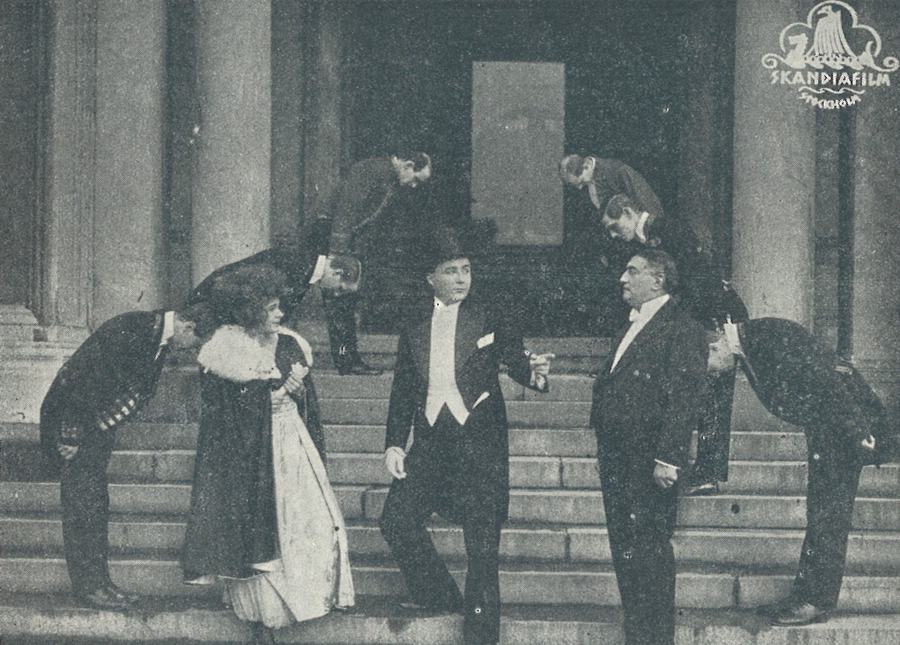
To witness Surrogatet (1919) is to step into a temporal rift, emerging in an era where the clatter of typewriters and the scent of fresh ink defined the vanguard of modernity. The Swedish silent era, often overshadowed by the monumental works of Sjöström and Stiller, contains hidden gems that offer a more granular look at social dynamics. This film, directed and written with a keen eye for the mundane yet significant shifts in human interaction by the Berg duo, stands as a testament to the sophistication of early Nordic storytelling. Unlike the pastoral romanticism found in Mayblossom, Surrogatet thrives on the urban friction of Stockholm, presenting a newsroom that feels surprisingly contemporary in its chaotic urgency.
The narrative begins not with a grand gesture, but with the rhythmic, almost mechanical process of a newspaper coming to life. At Stora Morgonbladet, the editorial office serves as the heart of the film, a place where truth is packaged and sold. Here, we meet Maggie Frisch, portrayed with an exquisite blend of vulnerability and steel by Karin Molander. Molander, a luminary of the era, avoids the histrionic tendencies of her contemporaries, opting instead for a performance rooted in internal monologue and subtle facial shifts. When she realizes her article has been pushed forward—a euphemism for being sidelined—the flicker of disappointment in her eyes conveys more than any title card could ever articulate.
In the landscape of 1919, the concept of the "New Woman" was beginning to permeate the cultural zeitgeist. Maggie Frisch is a manifestation of this evolution. She is not merely a romantic foil or a damsel in distress; she is a professional navigating a male-dominated milieu. Her struggle for space—both on the printed page and in the hierarchy of the office—mirrors the broader societal shifts occurring post-World War I. While films like Silks and Satins might focus on the opulent trappings of class, Surrogatet is more concerned with the psychological toll of professional ambition.
The chemistry between Molander and Einar Bruun provides a grounding emotional arc. Bruun, playing opposite her, brings a certain gravitas that balances Molander's kinetic energy. Their interactions are filmed with a propinquity that suggests a deep, albeit complicated, history. The film excels in these quiet moments, where the subtext of their dialogue—rendered through expressive gestures—speaks of unfulfilled desires and the compromises necessitated by their careers. It is this focus on the internal rather than the external spectacle that aligns Surrogatet with the burgeoning realist movement in European cinema.
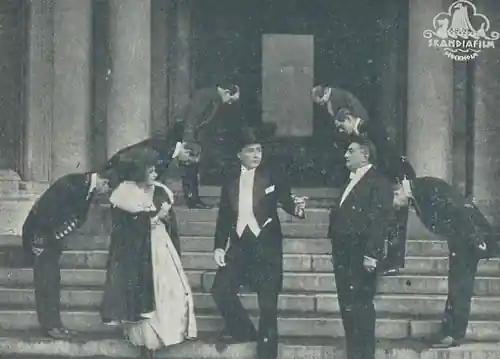
"Surrogatet is a haunting meditation on the displacement of the self in the machinery of progress, where every headline is a temporary surrogate for the truth we dare not speak."
Visually, the film utilizes the chiaroscuro lighting common in the Swedish Golden Age to dramatic effect. The shadows in the editorial office are long and oppressive, suggesting a labyrinthine environment where one can easily lose their way. This visual metaphor extends to Maggie’s apartment, which, while comfortable, feels increasingly claustrophobic as her professional life stutters. The cinematography avoids the static nature of many early silent films; instead, there is a fluidity to the camera movement that mirrors the restless energy of the protagonist.
When comparing the visual palette to something like The Trail of the Lonesome Pine, one notices a stark difference in intent. Where the latter seeks to capture the rugged majesty of the landscape, Surrogatet is an exercise in urban interiority. The set design of the newspaper office is cluttered with the artifacts of the trade—stacks of paper, inkwells, and heavy wooden desks—creating a sense of verisimilitude that anchors the drama. This attention to detail ensures that the office isn't just a backdrop, but a character in its own right, exerting its will over the humans who inhabit it.
The theme of the "surrogate" or the substitute is central to the film's philosophical inquiry. In many ways, the film explores how we all act as surrogates for the versions of ourselves we wish to be. This is a far more existential approach than the direct narrative conflict found in The Scarlet Trail. While that film relies on externalized pursuit, Surrogatet focuses on the internal chase—the pursuit of relevance in a world that is constantly moving on to the next big story.
Consider the role of Nils Aréhn, whose performance adds a layer of patriarchal complexity to the narrative. As the editor, he represents the gatekeeper, the one who decides whose voice is heard and whose is silenced. His decisions are not portrayed as overtly villainous, but rather as a byproduct of a system that prioritizes the "new" over the "substantial." This thematic resonance is also explored, albeit in a more fantastical manner, in Aladdin's Other Lamp, where the surrogate power of the lamp changes the protagonist's reality. In Surrogatet, there is no magic lamp; there is only the relentless grind of the printing press.
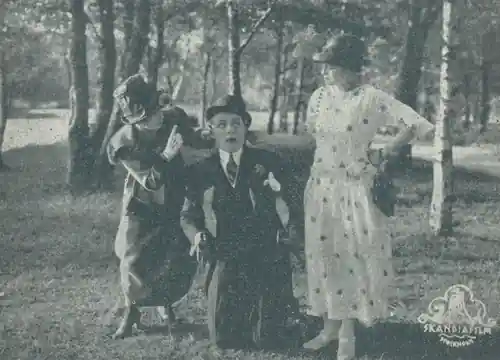
The writing by Wareus and Gustaf Berg demonstrates a sophisticated understanding of pacing. The film avoids the episodic nature of early serials like Beatrice Fairfax Episode 1, opting instead for a cohesive, slow-burn tension. The revelation that Maggie's article has been pushed forward is not the climax, but the inciting incident that peels back the layers of her social environment. The Bergs use this small professional slight to expose the fragility of Maggie's position, illustrating how easily a woman's contributions could be erased or delayed in the early 20th-century professional world.
This narrative precision is also evident in how the film handles its secondary characters. Violet Molitor provides a contrasting presence to Molander, representing perhaps a different path or a different set of compromises. The film doesn't judge these women; it merely observes them within the confines of their era. This observational quality gives the film a documentary-like feel at times, capturing the specific gestures, fashions, and social etiquettes of 1919 Stockholm. It shares a certain gravity with Gates of Brass, particularly in its depiction of the weight of social expectations.
One cannot discuss Surrogatet without acknowledging the profound silence that defines it. In the absence of spoken dialogue, the film relies on a visual symphony of movement and expression. The "surrogate" theme is echoed in the way the characters communicate—often through intermediaries, letters, or the newspaper itself. This lack of directness heightens the sense of isolation that Maggie feels. Even when surrounded by the noise of the office, she is essentially alone in her struggle for recognition.
This isolation is a recurring motif in silent cinema, often used to highlight the individual's battle against monolithic institutions. Whether it is the political landscape of A Vida do Barão do Rio Branco or the social hierarchies in The Vow, the silent protagonist is often a figure of profound interiority. Surrogatet elevates this by making the protagonist's profession—journalism—the very thing that both connects her to and isolates her from the world. She writes for the masses, yet her own voice is subject to the whims of an editor's red pen.
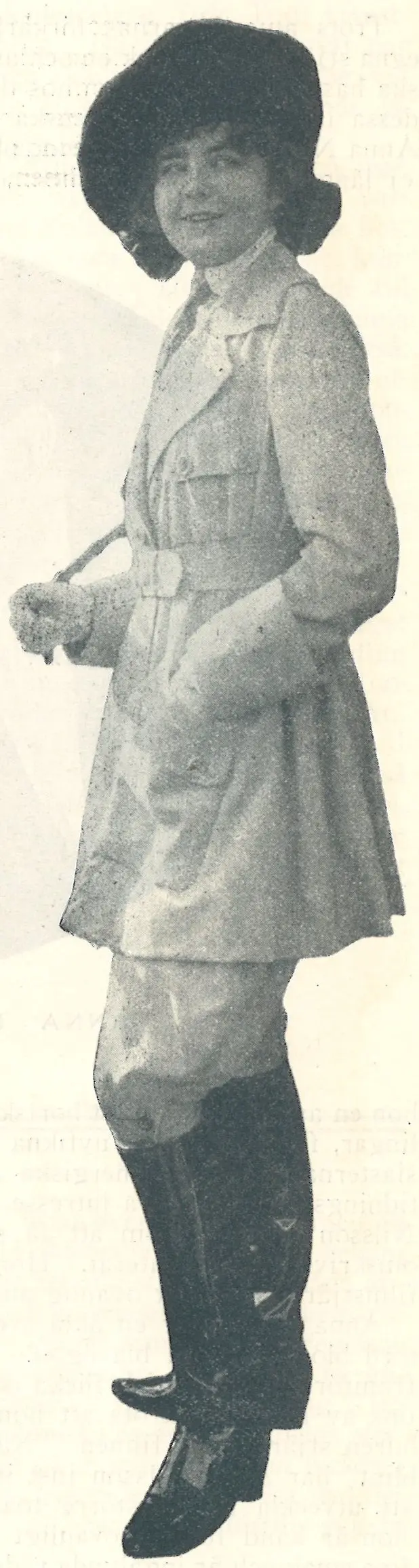
Technically, the film is a marvel of its time. The use of depth of field in the office scenes allows for multiple layers of action, creating a sense of a living, breathing environment. We see the foreground drama of Maggie's frustration while the background remains a hive of activity—printers moving, messengers running, editors conferring. This technique, while common now, was a sophisticated way to build atmosphere in 1919. It avoids the flat, stage-like presentation of earlier films, such as the more theatrical Maciste turista.
The editing also deserves mention. There is a rhythmic quality to the cuts between the office and Maggie's home. This cross-cutting emphasizes the intrusion of work into the personal sphere. When Maggie notes her article's displacement at home, the film cuts back to the office, as if the building itself is mocking her. This juxtaposition creates a psychological bridge between her two worlds, showing that for a woman like Maggie, there is no true separation between the professional and the personal. It is a far more nuanced take on the "working woman" than the satirical approach seen in The Man-Getter.
Ultimately, Surrogatet is a film about the endurance of the human spirit in the face of institutional indifference. It doesn't offer easy answers or a triumphant Hollywood ending. Instead, it provides a realistic slice of life that remains resonant over a century later. The struggles Maggie Frisch faces—the fight for a voice, the navigation of workplace politics, and the search for authentic connection—are universal. The film's title remains its most evocative element: a reminder that in the fast-paced world of news and social status, we are often just placeholders for the next story, the next headline, or the next surrogate.
While it may not have the surrealist flair of Mouchy or the slapstick energy of Salome vs. Shenandoah, Surrogatet possesses a quiet power that lingers. It is a film that demands attention, not through spectacle, but through the sheer honesty of its performances and the precision of its social observation. In the pantheon of Swedish cinema, it deserves a prominent place as a precursor to the psychological depth that would later define the works of Ingmar Bergman. It is a sophisticated, deeply human work that captures the essence of an era on the brink of total transformation.
As we look back at the cinematic landscape of 1919, Surrogatet stands out as a beacon of maturity. It avoids the easy tropes of the "lost princess" narratives found in The Lost Princess or the melodramatic excesses of Ruling Passions. Instead, it gives us Maggie Frisch—a woman who, despite being pushed forward, moved back, and sidelined, continues to walk into the office every morning, ready to write the next chapter of her own life. It is this resilience that makes Surrogatet not just a relic of the past, but a living, breathing piece of art.
IMDb —
1920
Community
Log in to comment.