DbcultAccessing Vault...
Cult Review
Senior Film Conservator
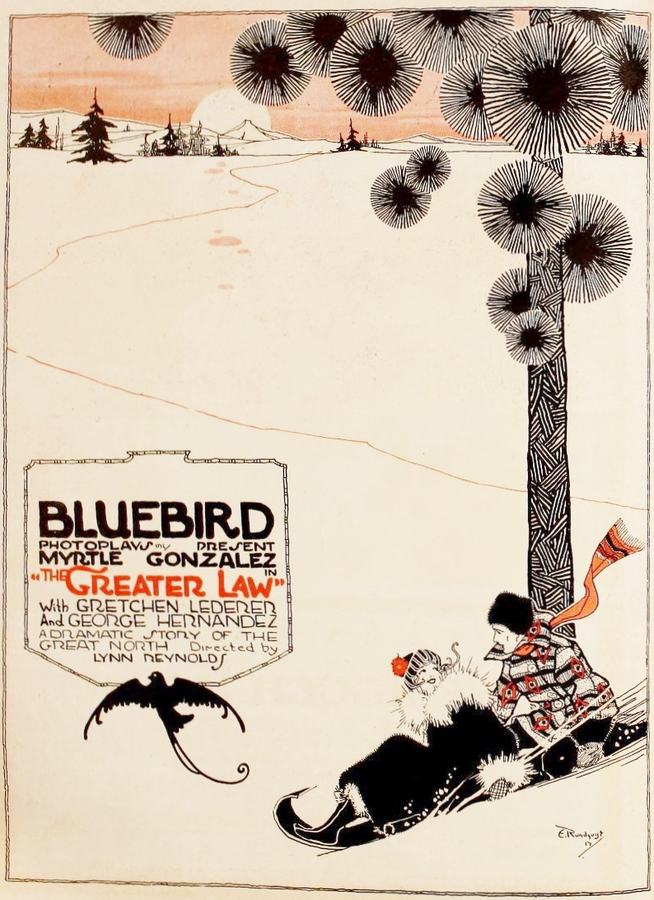
Picture the Yukon as a colossal darkroom: every breath of frost is developer fluid, every crunch of snow a fixing bath. Against this chemical dusk, The Greater Law exposes its negatives slowly, letting silhouettes bloom until a single lantern-flare reveals the inverted truth. The film’s very title taunts us—whose law, precisely? The statute books carted north by mounties who look bewildered to find themselves in a place where whiskey is currency and perjury a communal sport? Or the sub-zero moral code that equates survival with absolution?
Director Lynn Reynolds, never one to spoon-feed exposition, opens on a ferry belching coal smoke across an obsidian river. The frame quivers—ice particles, or the celluloid itself shivering? Barbara (Maude Emory) stands aboard, eyes the color of a storm that hasn’t decided whether to rain or snow. No title card announces her grief; instead, the intertitle shrinks to a haiku: “Jimmy, where?” Two words, but Emory’s shoulders fold inward like broken wings, translating the sentence into paragraphs of dread. Already the film’s grammar is established: subtext carries more tonnage than text.
Once ashore, Barbara’s quest is cross-cut with prospectors dredging slurry, their bodies bent in a choreography of perpetual penance. Reynolds uses a triple-exposure montage—Jimmy’s laughing face superimposed over swirling sluice water, then over the maw of a tavern door—so that memory, water, and danger fuse into a single omen. It’s the silent era’s answer to the modern sound-bridge, and it lands with hallucinatory chill.
Tully Winkle, essayed by George Hernandez with whiskers that seem to predate the landscape itself, offers Barbara shelter. His bargain—housekeeping for bed and board—looks charitable until you clock the way his eyes snag on her cameo brooch, a relic Jimmy once bragged about. Nothing in this frozen purgatory is altruistic; every kindness is a promissory note written in disappearing ink.
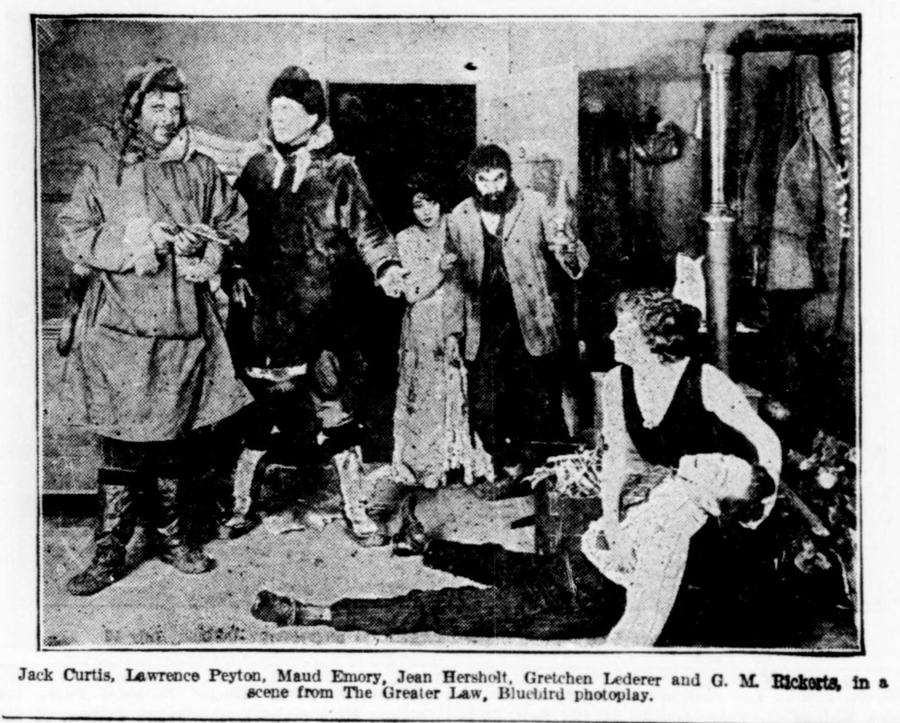
Enter Cort Dorian, Lawrence Peyton’s breakout role. Peyton plays him like a man who has misplaced the memory of warmth: shoulders stiff from hauling sled dogs, voice (via intertitles) terse as tapped Morse. The romance ignites not in candlelight but amid pans of gravel—Barbara teaching herself to spot fool’s gold, Cort wordlessly guiding her wrist so she can feel the gritty difference between pyrite and nugget. Desire here is geological: pressure, friction, time.
But narrative fault-lines quake. Laberge (Jean Hersholt, pre-Heidi saintliness) slinks into town wearing arrogance like a fur-lined coat. His version of the shoot-out is delivered in a single-take close-up: pupils dilated, breath fogging the lens, the camera inching forward until his lie becomes our vertigo. He claims Cort fired; Barbara’s heart, already cracked, splits clean.
The duel sequence—shot at 3 a.m. with magnesium flares substituting for sunrise—deserves anthology status. Reynolds alternates between full shots where frost hangs like tinsel and extreme close-ups of gloved fingers trembling over triggers. The ten-step count is delivered not via intertitle but by a clapper board wielded by a townsman; each crack echoes like a gavel sentencing winter itself. Cort fires skyward, a gesture that reads both as chivalry and as surrender to fate’s cinematograph. Barbara’s bullet finds meat; blood steams on impact, a geyser of raspberry against alabaster snow. The hue is so vivid one suspects hand-tinting, though surviving prints are bichrome. Emotional impact, however, is technicolor.
Then the kicker—Tully’s sleigh barrels in, Seattle Lou (Myrtle Gonzalez) swathed in bridal satin, Jimmy (Jack Curtis) doffing his bowler with bashful flourish. The living brother steps from a fog bank as though edited in from a different reel. The bullet, already dispatched, cannot be recalled; the wound, once fictional, now hemorrhages reality. Reynolds holds the moment: Barbara’s face collapsing inward, Cort’s knees buckling, snow drinking crimson. Cue iris-out, not on a kiss but on a scream swallowed by the cavernous landscape.
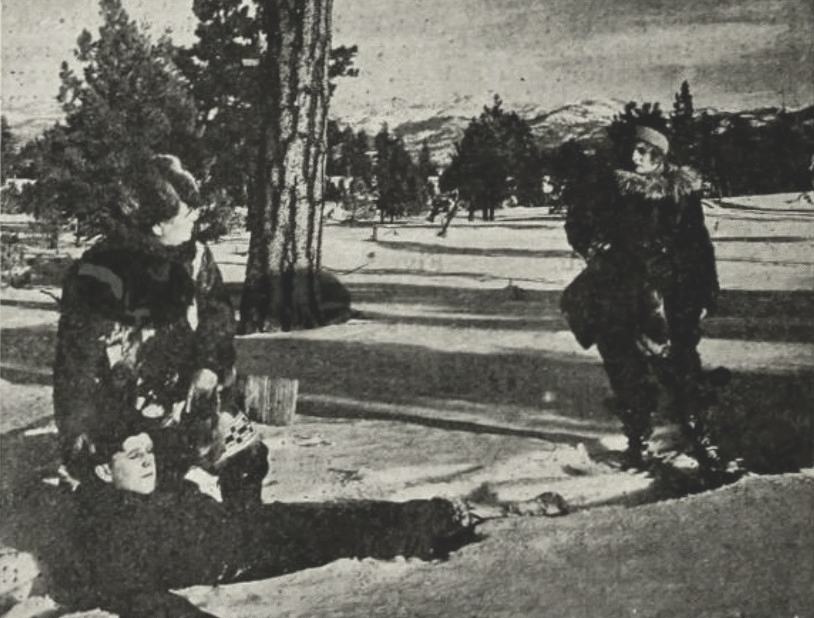
Viewed today, the finale feels eerily post-modern: truth destabilized, narrative authority guillotined. Scholars often cite Fate's Boomerang or The Edge of the Abyss as early experiments in unreliable storytelling, but The Greater Law beats them to the punch, embedding deceit inside the western’s ribcage.
Maude Emory, unjustly forgotten, carries the picture with the stoic magnetism later monopolized by Lillian Gish. Watch her hands: they start the film sheathed in kid gloves, end calloused and bare—an archaeology of transformation. Peyton’s minimalist approach can read as wooden to modern eyes, yet when he mouths “I’m sorry” to Barbara while clutching a bleeding shoulder, the understatement detonates.
Jean Hersholt’s Laberge predates his cuddly Dr. Christian persona by decades; here he’s a rattlesnake coiled in ermine. Note the way he licks snowflakes from his moustache—predatory, prehensile. In a just universe, this performance would anchor montage courses alongside The Alien’s seductive villainy.
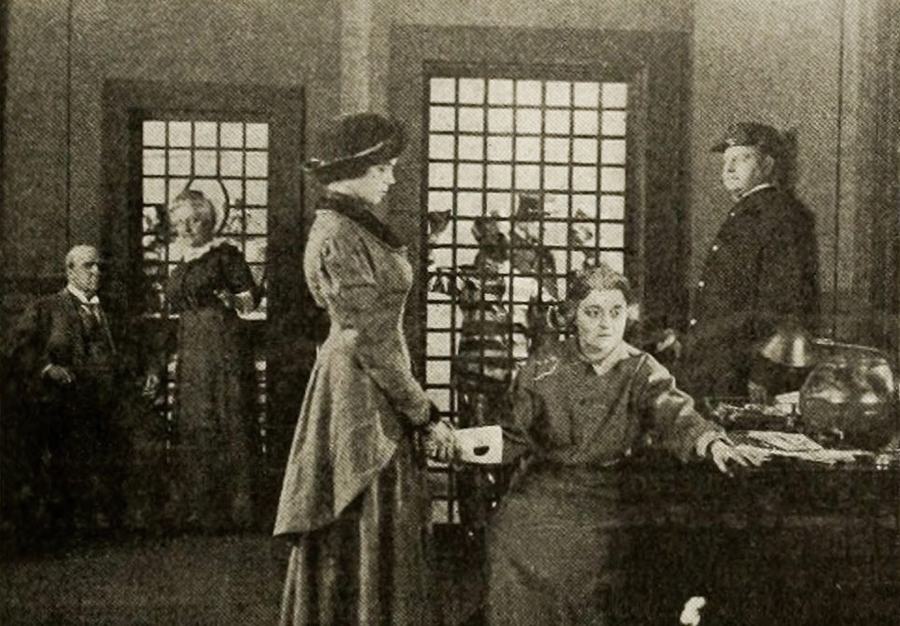
Art director G.M. Rickerts built the settlement on a frozen orchard outside Los Angeles; every structure was erected at half-scale to exaggerate depth, then dusted daily with salt and Epsom to mimic permafrost. The gambit works—the town feels cramped yet infinite, like a snow globe smashed open.
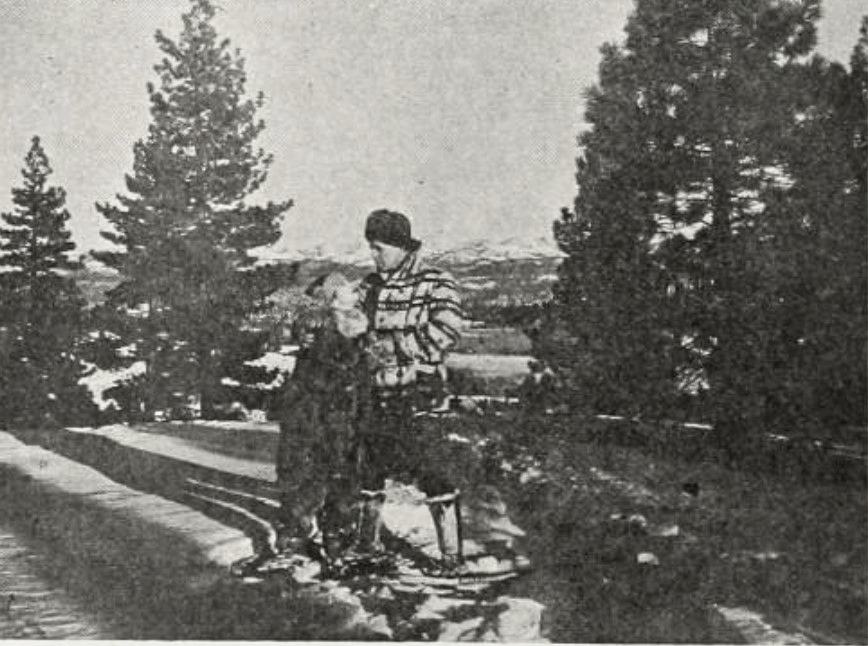
Cinematographer Charles J. Wilson employs under-cranking during the sleigh chase, but subtly—three frames per second rather than the standard eight—so motion acquires a spectral jerkiness without slipping into slapstick. Meanwhile, tinting oscillates between cobalt night sequences and amber interiors, the shift synced to musical cues in surviving cue sheets.
1917 audiences were startled by a woman issuing a challenge, pistol in hand. Contemporary critics compared Barbara to Persuasive Peggy’s spunky heiress, yet Peggy’s rebellion was comic; Barbara’s is tragic, almost Greek. She requisitions agency usually reserved for male protagonists, but the price is steep—her bullet maims the man she loves, and by film’s end she retreats into the snowscape, another silhouette swallowed by white nullity. Feminist? Cautionary? The ambiguity is the point.
Though silent, the film is sonically conscious. Intertitles contain onomatopoeia—WH-R-R-ACK! for the clapper count, THUD-THUD for Cort’s heartbeat. Projectionists were instructed to hammer a bass drum off-beat during the duel, creating arrhythmia in the viewer. It’s a precursor to the modern jump-scare stinger, albeit analog.
For decades, The Greater Law languished in the Library of Congress paper-print collection, viewable only in negative. A 2018 4K restoration by the San Francisco Silent Film Festival utilized liquid-gate scanning and AI dirt-mapping; the result unveils textures previously muddied—individual sequins on Seattle Lou’s gown, the rosiness of Hersholt’s nostrils as he lies. The new Blu-ray offers both speed-corrected 18 fps and historically projected 22 fps, letting viewers toggle between fluidity and Keystone-esque zip. Purchase includes an essay by Shelley Stamp that situates the picture within the 1910s “Northern” cycle alongside Alexandra’s snowbound melodrama.
The twist finale predates The Lady from Shanghai’s hall-of-mirrors shoot-out by three decades, while its moral vertigo anticipates noir’s post-war cynicism. You can trace a bloodline from Barbara’s duel to the wounded anti-heroes of The Pride of New York and even to modern neo-westerns like Wind River. More immediately, the film’s success green-lit Reynolds’ 1918 epic The Silent Call, another meditation on guilt in rugged climes.
Is the film flawless? A comic-relief drunk (Gretchen Lederer) slides too close to Keystone cliché, and the middle reel sags under expositive intertitles. Yet these are ice-flecks on an otherwise pristine expanse. For its formal daring, gender subversion, and a denouement that punches like river ice under bare skin, The Greater Law earns a hallowed berth in the pantheon of silent rarities. It reminds us that justice, like film stock, is susceptible to fogging—what develops may invert the image we thought we knew.
Stream it, savor it, then stew in its ethical quicksand. And if, while trudging home through winter slush, you hear the crack of a distant starting pistol, blame Barbara Henderson—her aim still echoes, her penance still melts in our palms.
IMDb —
1929
Community
Log in to comment.