DbcultAccessing Vault...
Cult Review
Senior Film Conservator
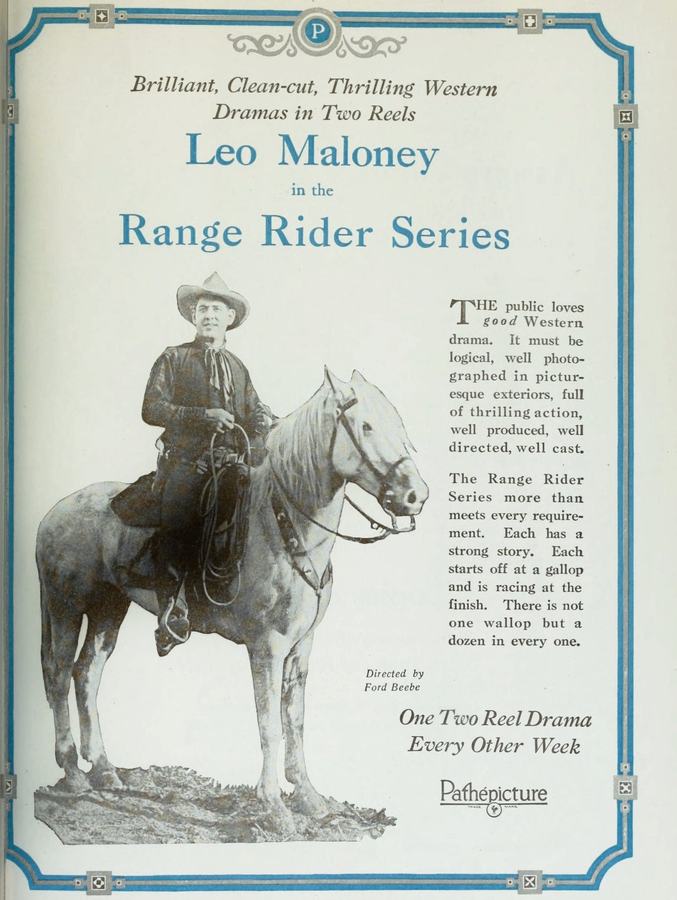
The early 1920s represented a fascinatingly volatile period for the Western genre. Before the arrival of the massive studio-backed epics of the late silent era, there existed a leaner, more muscular form of storytelling spearheaded by figures like Leo D. Maloney. In his 1922 effort, Deputized, we witness the crystallization of the 'B-Western' not as a secondary product, but as a primary site of artistic experimentation. This film, directed and written by Maloney alongside the versatile Ford Beebe, manages to circumvent the theatrical artifice of its contemporaries, offering a rugged, sweat-stained vision of the frontier that feels startlingly modern in its cynicism.
To understand the impact of Deputized, one must first acknowledge the creative shorthand shared by Leo D. Maloney and Ford Beebe. While many silent Westerns relied on simplistic 'white hat vs. black hat' tropes, Maloney and Beebe infused their scripts with a sense of environmental determinism. The characters in Deputized are products of their terrain—hardened, taciturn, and perpetually wary. Unlike the more whimsical tone found in West Is Worst, this film leans into the gravity of its stakes. There is a palpable weight to the decisions made here; when a character is deputized, it isn't a moment of heroic triumph, but rather a somber acceptance of a potentially lethal burden.
The dialogue—delivered via intertitles that are mercifully sparse—reveals a commitment to visual storytelling. Maloney understands that in the silent medium, a squint or the tightening of a saddle cinch conveys more than a paragraph of exposition ever could. This economy of expression is what elevates Deputized above the clutter of the era's assembly-line productions. It shares a certain thematic kinship with The Forfeit, specifically in how it treats the concepts of debt and duty as inescapable traps.
In the pantheon of silent Western leading ladies, Josephine Hill occupies a unique space. In Deputized, she isn't merely a trophy to be rescued or a source of domestic motivation. Her performance carries a weathered intelligence. There is a sequence halfway through the film where Hill’s character must navigate the fallout of a botched raid, and her facial expressions reflect a complex mixture of terror and pragmatism. It is a far cry from the more stylized distress seen in films like The Fire Cat. Hill’s chemistry with Maloney is built on mutual survival rather than saccharine romance, which lends the film an air of authenticity that was often lacking in early Hollywood's portrayal of pioneer life.
Visually, Deputized is a masterclass in using natural light to create atmosphere. The California locations are not treated as scenic backdrops but as active participants in the drama. The camera lingers on the swirling dust kicked up by galloping horses, creating a hazy, dreamlike quality that contrasts sharply with the violence of the plot. This use of texture reminds one of the visual depth found in Desert Love, yet Maloney pushes the realism further. There are moments where the glare of the sun seems almost to bleach the celluloid, mirroring the psychological exhaustion of the protagonist.
The editing, too, deserves recognition. The chase sequences are cut with a kinetic energy that must have been exhilarating for 1922 audiences. There is a rhythmic quality to the movement, a synchronization of man and beast that showcases Maloney’s prowess as a horseman. Unlike the more avant-garde editing techniques emerging in Europe at the time—such as those seen in På livets ödesvägar—the editing here is invisible, serving the momentum of the narrative rather than calling attention to itself.
What strikes me most about Deputized is its refusal to provide easy catharsis. The villainy depicted is not cartoonish; it is born of desperation and greed, making the eventual confrontation feel less like a victory and more like a grim necessity. This moral ambiguity places the film in conversation with darker dramas of the period, such as Dangerous Days or even the haunting Kreuzigt sie!. While those films operate in different genres, they share a preoccupation with the shattering of social contracts.
In comparison to the more urban-focused conflicts of Spot Cash or the domestic entanglements of Hairpins, Deputized uses the vastness of the West to amplify the internal isolation of its characters. When Maloney’s character stands alone against a horizon of sagebrush, the image encapsulates the existential dread of the frontier. He is a man caught between the lawless past and a future that has yet to arrive—a theme that would become a staple of the genre in the decades to follow.
As we look back at Deputized from a century’s distance, it is easy to dismiss it as a relic of a bygone era. However, to do so would be to ignore the foundational work it did for the Western. Maloney’s portrayal of the reluctant lawman paved the way for the Gary Coopers and James Stewarts of the 1950s. The film’s insistence on the physical and psychological toll of violence set it apart from the more escapist fare of its day, such as Wild Women or the lighthearted Felix in Love.
Even when compared to international efforts like the Portuguese O Crime de Paula Matos or the Italian La sagra dei martiri, Deputized stands out for its lack of pretension. It is a film that knows exactly what it is: a hard-boiled story about hard-boiled people. It doesn't strive for the operatic heights of The Slave Mart, nor does it wallow in the melodrama of Sündige Liebe. Instead, it maintains a steady, unrelenting focus on the mechanics of justice in a world that often feels abandoned by God and government alike.
The technical merits of the film are surprisingly robust. The stunt work—performed largely by Maloney himself—is executed with a reckless abandon that modern CGI cannot replicate. There is a sequence involving a fall from a moving wagon that remains bone-chilling in its execution. This commitment to physical realism was a hallmark of Maloney’s career and is perhaps the most enduring aspect of his filmography. It gives Deputized a sense of danger that permeates every frame.
Furthermore, the film’s pacing is impeccable. At a time when many features struggled to maintain narrative tension over multiple reels, Deputized moves with the precision of a Swiss watch. Beebe’s influence is clear here; his later success in the world of serials was clearly built on the foundations laid in these early Western collaborations. The film avoids the episodic feel that plagued many silent features, instead building toward a climax that feels both inevitable and earned.
Ultimately, Deputized is a testament to the power of independent vision within the early Hollywood system. Leo D. Maloney and Ford Beebe created a work that transcends its genre trappings, offering a poignant look at the human condition through the lens of the American West. It is a film of quiet moments and explosive action, of moral complexity and physical endurance. For those interested in the evolution of the Western or the history of silent cinema, it remains an essential viewing experience—a dusty, beautiful, and uncompromising piece of art that continues to resonate a hundred years after the cameras stopped rolling.
In the grand tapestry of film history, it may not have the name recognition of a Ford or a Griffith, but its influence is woven into the very fabric of the genre. To watch Deputized today is to witness the birth of the modern anti-hero, emerging from the shadows of the frontier with a badge in one hand and a gun in the other, forever searching for a peace that the landscape refuses to provide.
IMDb 4.3
1909
Community
Log in to comment.