DbcultAccessing Vault...
Cult Review
Senior Film Conservator
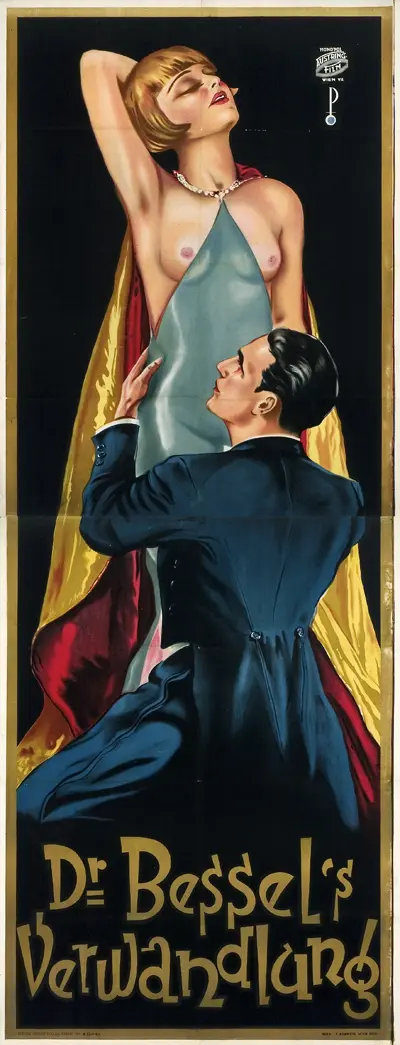
Should you devote your evening to Dr. Bessels Verwandlung? Short answer: yes, but only if you have the patience for a slow-burn psychological study of a man who finds freedom in a dead man's shoes.
This film is for the cinephile who craves moral ambiguity and the dark, expressionistic edges of late-silent German cinema; it is absolutely not for those seeking a traditional, heroic war epic or a fast-paced thriller.
1) This film works because it refuses to treat Alexander Bessel as a hero, instead presenting him as a desperate opportunist whose 'transformation' is fueled by cowardice rather than courage.
2) This film fails because the middle act leans too heavily into the conventions of drawing-room melodrama, momentarily losing the grim, existential tension of the battlefield opening.
3) You should watch it if you are fascinated by the way 1920s cinema explored the fractured psyche of the post-war world, specifically the desire to erase one's past entirely.
The premise of Dr. Bessels Verwandlung is deceptively simple, yet its execution by director Richard Oswald is anything but. Hans Stüwe delivers a performance that is both internalized and physically demanding. In the opening scenes, his portrayal of Bessel is one of slumped shoulders and averted eyes—a man defeated by his own domestic life. When his wife’s infidelity is revealed, Stüwe doesn't play it with explosive anger, but with a chilling, hollow silence. It is this silence that makes his later decision to steal a dead man's identity feel earned. He isn't seeking a new life; he is seeking the death of his old one. It works. But it’s flawed.
The cinematography by Reimar Kuntze (uncredited in some records but stylistically evident) uses the stark contrasts of the era to highlight the duality of Bessel’s existence. One particular scene stands out: the moment Bessel stands over the French soldier. The lighting is harsh, casting long, skeletal shadows across the trench. As he reaches for the identification tags, the camera lingers on his hands, which tremble not with guilt, but with a terrifying sort of hope. It is a moment of pure, cinematic opportunism that feels more honest than many contemporary war films like The Relief of Poland, which often leaned into more overt propaganda or sentimentality.
Is this film worth watching today?
Yes, it is. The central question of whether one can truly start over is more relevant in our digital age than ever before. While we change our handles and avatars, Bessel changes his very soul. The film suggests that identity is not a skin you wear, but a cage you inhabit. Even in his new life, Bessel is haunted by the mechanics of his deception. The tension doesn't come from the threat of being caught, but from the threat of being known.
The supporting cast is a who's-who of Weimar excellence. Jakob Tiedtke and the legendary Curt Bois provide a texture to the world that keeps the film grounded. Even in smaller roles, performers like Kurt Gerron bring a sense of gravity to the proceedings. Contrast this with the lighter, more whimsical approach seen in Cinderella's Twin; Oswald’s film is a reminder that the late 20s were a time of deep social anxiety. The pacing, while occasionally sluggish, mirrors the protagonist's own psychological stagnation. He is a man waiting for a judgment that may never come.
"Bessel is not a man who finds himself; he is a man who successfully loses himself, only to realize that the void he created is more terrifying than the life he fled."
Comparing this to other works of the period, such as The Show Down or Dangerous Waters, Dr. Bessels Verwandlung feels more modern in its cynicism. It doesn't offer easy redemption. The script, co-written by Ludwig Wolff and Georg C. Klaren, is sharpest when it examines the domestic rot that preceded the war. The scenes of Bessel’s marriage are agonizing. His wife’s betrayal is treated not as a shock, but as a predictable outcome of a life lived without passion. This makes his escape to the front lines feel like a relief, which is a disturbing but brilliant narrative choice.
The film’s direction by Richard Oswald is surprisingly restrained. Known for more sensationalist fare, Oswald here focuses on the internal. The use of close-ups is particularly effective. In the silent era, the face was the landscape, and Stüwe’s face is a map of exhaustion. There is a specific moment during the 'transformation' where he looks into a shard of a mirror. He doesn't recognize the man looking back, and for a second, neither do we. It is a masterclass in visual storytelling that bypasses the need for intertitles.
However, I must take a stance on the film's second half. Some critics argue the transition back to civilian life—albeit under a false name—is where the film finds its heart. I disagree. I find the domestic drama of the latter half to be far less compelling than the visceral, identity-shattering moments in the trenches. It feels as though the film is trying to fit a square peg of existential horror into the round hole of a traditional melodrama. It’s a common flaw in films of this era, like Trimmed in Scarlet, where the third act feels obligated to resolve things more neatly than the characters deserve.
Pros:
The film features an incredible ensemble cast that brings the social hierarchy of the 1920s to life. The trench sequences are atmospheric and genuinely unsettling without relying on excessive gore. The central theme of identity theft is handled with a sophistication that predates modern noir by decades.
Cons:
The pacing in the middle section can feel glacial for modern audiences. Some of the secondary plot lines involving the wife feel dated and overly theatrical compared to the grounded nature of Bessel’s journey. The ending, while poetic, feels slightly too convenient given the moral weight of the preceding hour.
If you are looking for a film that challenges your perception of self and history, then yes. Dr. Bessels Verwandlung is a vital piece of cinematic history that explores the trauma of the Great War through a very personal, very dark lens. It is a film about the relief of being someone else, and the eventual realization that you can never truly leave yourself behind. It lacks the polish of a Hollywood production like How Could You, Jean?, but it possesses a raw, emotional honesty that those films often lacked. Identity is a trap. And this film shows us exactly how it snaps shut.
Dr. Bessels Verwandlung is a stark, occasionally brilliant, but undeniably slow piece of cinema. It demands your full attention and rewards it with a haunting question: if you could become someone else tomorrow, would you? Hans Stüwe’s performance is the anchor that keeps the film from drifting into pure melodrama, and Oswald’s direction ensures that the shadows always feel just a little bit longer than they should. It is a flawed gem, but a gem nonetheless. It is a reminder that the greatest wars are often the ones we fight within ourselves, long after the cannons have gone silent. While it may not have the name recognition of other silent classics, it deserves a spot on the shelf of any serious collector of European cinema. Don't go in expecting a war movie; go in expecting a ghost story where the ghost is still alive.
IMDb 6.9
1935
Community
Log in to comment.