DbcultAccessing Vault...
Cult Review
Senior Film Conservator
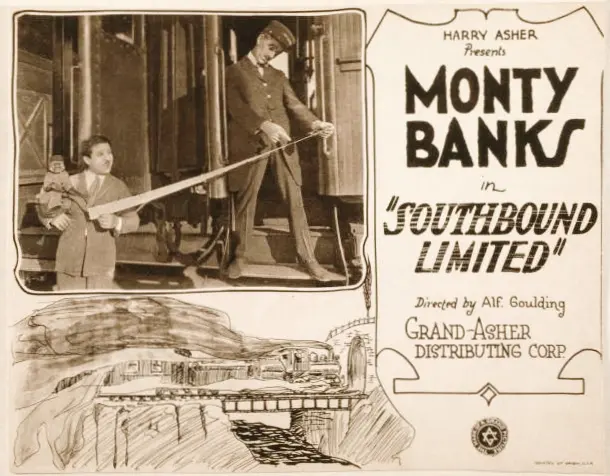
The mid-1920s represented a zenith for the kinetic potential of silent cinema, a period where the marriage of machinery and slapstick birthed some of the most enduring images of the twentieth century. The Southbound Limited (1926), while perhaps less canonized than the works of Keaton or Lloyd, offers a fascinating excavation of the 'grifter' archetype that permeated the post-war American consciousness. Monty Banks, an actor of remarkable physical elasticity and expressive nuance, occupies the screen with a frantic yet controlled energy that mirrors the rhythmic chugging of the very train he haunts. Unlike the pastoral innocence found in The Little Yank, this film leans into the urban grit and the opportunistic survivalism of the rails.
The opening sequences establish a masterclass in visual exposition. We witness Banks’ character—a man whose identity is as fluid as his geography—manipulating the social mores of the railway. There is a certain subversive joy in watching him bypass the conductor’s scrutiny. It is a dance of timing and misdirection that rivals the sophisticated social maneuvering seen in Husbands and Wives, albeit transposed from the parlor to the smoking car. The direction utilizes the linear geometry of the train to create a sense of inevitable forward momentum, a narrative velocity that refuses to slacken even when the plot thickens with the introduction of Lois Boyd’s character.
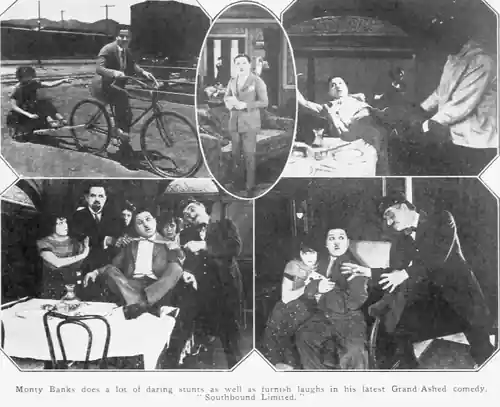
The introduction of the dog serves as the film’s central MacGuffin, a living, breathing anchor that threatens to sink our protagonist’s buoyant anonymity. In silent comedy, animals often serve as agents of chaos, and here, the canine becomes a surrogate for the domestic responsibilities the protagonist has spent his life evading. This shift from the 'lone wolf' grifter to the 'harried caretaker' provides the emotional core of the film. While films like The Island of Regeneration deal with isolation in a literal sense, The Southbound Limited explores the isolation of the social outcast who is suddenly, and hilariously, integrated into the service of another.
Lois Boyd plays the 'pretty young woman' with a mix of aristocratic obliviousness and genuine charm. Her interaction with Banks creates a friction that is both romantic and transactional. She sees a gentleman where the audience sees a vagabond, a classic trope of mistaken identity that Banks exploits with a tragicomic desperation. The chemistry here is lighter than the heavy moralism found in The Warfare of the Flesh, opting instead for a whimsicality that feels remarkably modern in its irony.
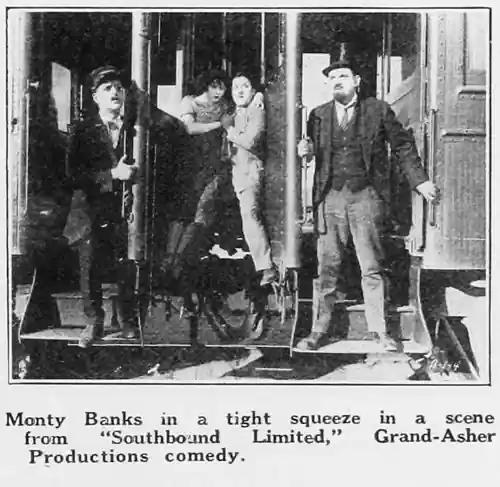
Technically, the film is a triumph of location shooting and studio ingenuity. The interior shots of the train cars are lit with a flickering chiaroscuro that suggests the passing landscape, a technique that provides a sense of immersion far beyond the static sets of earlier efforts like Jánosík. The editing is particularly sharp; the cross-cutting between the protagonist’s attempts to hide the dog and the conductor’s encroaching presence creates a tension that is almost Hitchcockian. It lacks the surrealist flourishes of In Slumberland, but it replaces them with a grounded, visceral realism that makes the comedy land with more impact.
Consider the scene where Banks must navigate the narrow corridor while concealing a large, rambunctious dog beneath his oversized coat. The physical comedy here is peerless. His body becomes a vessel of suppressed energy, his limbs twitching in response to the animal’s movements while his face maintains a mask of serene composure. It is a performance of dualities, much like the film itself—a story about a man who is both moving toward a destination and running away from his past. This thematic depth elevates the film above mere slapstick, placing it in conversation with more dramatic works like The Lure.
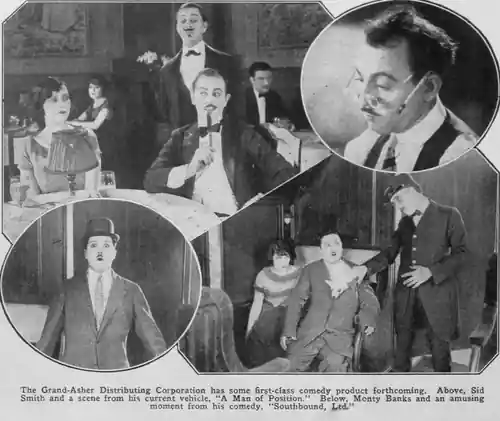
When we look at the broader landscape of 1926 cinema, The Southbound Limited occupies a unique niche. It doesn't possess the sweeping historical scale of Mexico, nor the ethereal beauty of Balettprimadonnan. Instead, it thrives in the mundane and the mechanical. It is a 'blue-collar' comedy that finds humor in the struggle for survival. The pacing is relentless, much like the sixty-minute sprint of One Hour, ensuring that the audience never has a moment to question the logic of the increasingly absurd situations.
The supporting cast, including the formidable Madame Sul-Te-Wan, adds layers of texture to the train’s ecosystem. Each passenger represents a facet of the American mosaic—the weary traveler, the suspicious official, the wealthy socialite. This microcosm allows the film to comment on class dynamics without ever becoming didactic. It shares this observational quality with Sunshine and Shadows, though it trades that film’s sentimentality for a sharper, more cynical edge. The 'Southbound' direction of the train is itself symbolic, suggesting a descent into the unknown or a return to a more primal state of existence, a theme explored in a different medium in The Submarine Eye.
As the film reaches its crescendo, the stakes transition from personal embarrassment to genuine peril. The locomotive, once a mere setting, becomes a character in its own right—a thundering beast that must be tamed. The resolution of the plot, involving the inevitable confrontation between the protagonist’s lies and the reality of his situation, is handled with a grace that avoids the cloying tropes of many silent romances. It feels earned, much like the emotional payoff in Welcome Home.
Is The Southbound Limited a masterpiece? Perhaps not in the way we define the 'High Art' of the era. However, it is an essential piece of the cinematic puzzle. It captures a specific moment in time when the world was shrinking due to the speed of travel, and the individual was forced to adapt to a new, faster reality. It lacks the moral ambiguity of Udenfor loven or the gritty street-level realism of The Ragamuffin, but it possesses a lightness of spirit that is infectious. Monty Banks proves himself to be a formidable talent, a performer who understood that the secret to comedy is not just the fall, but the dignity one tries to maintain while falling.
In the final analysis, this film serves as a vibrant reminder of the power of visual storytelling. Without a single word of spoken dialogue, we understand the protagonist’s hunger, his fear, his desire, and his eventual redemption. It is a testament to a time when cinema was a universal language, capable of bridging the gap between the grifter and the girl, the stowaway and the socialite. For those looking to understand the evolution of the American comedy, The Southbound Limited is a necessary stop on the journey. It is a film that moves with purpose, laughs with heart, and lingers in the mind long after the final frame has flickered out into the darkness of the theater.
IMDb —
1926
Community
Log in to comment.