DbcultAccessing Vault...
Cult Review
Senior Film Conservator
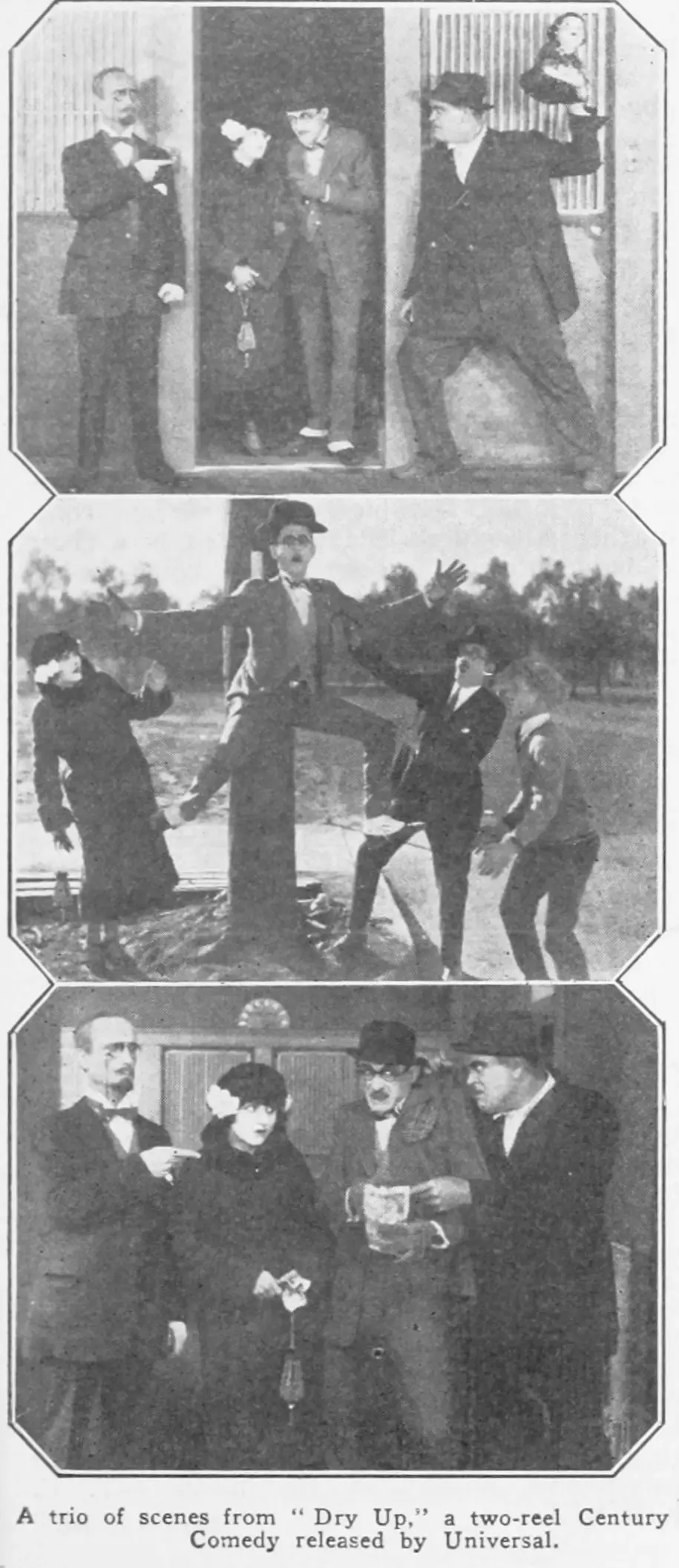
Is Albert Herman's 1921 silent short, 'Dry Up,' worth your time in 2024? Short answer: yes, but with a significant asterisk. This relic from the golden age of slapstick offers a fascinating glimpse into early comedic filmmaking, though its appeal is highly specialized. It's a film for those who appreciate the historical context of cinema and the foundational elements of screen comedy, rather than seeking a polished, modern viewing experience.
This film is unequivocally for silent film enthusiasts, film historians, and anyone with a deep curiosity about how cinematic storytelling evolved. It's a prime example of the kind of rapid-fire, low-budget comedy that filled vaudeville houses and early picture palaces. Conversely, 'Dry Up' is emphatically not for casual viewers expecting contemporary pacing, sophisticated humor, or high production values. If you struggle with the conventions of silent cinema – the exaggerated acting, the title cards, the often simplistic plots – this film will likely test your patience rather than entertain.
This film works because it provides an unvarnished look at the comedic sensibilities of its era, showcasing a rapid-fire succession of gags and physical comedy that laid the groundwork for future generations of comedians. Its historical value is undeniable.
This film fails because its narrative, while charmingly simple, lacks the depth or character development that even some of its contemporaries managed to weave into their shorts. The ending, while ironically amusing, feels abrupt and underdeveloped, leaving the audience wanting a more satisfying resolution for our beleaguered protagonist.
You should watch it if you are a student of film history, a silent film aficionado, or someone interested in the evolution of physical comedy. It’s a foundational piece, not a peak experience.
'Dry Up' is a quintessential example of the early 20th-century comedic short. It doesn't aim for profundity or emotional resonance; its sole purpose is to elicit laughter through a series of escalating predicaments. The film's protagonist, Jack, portrayed by Jack Singleton, is a figure instantly recognizable from the era: the down-on-his-luck everyman, perpetually one step behind, yet persistently striving.
The plot, penned by Albert Herman, is a straightforward vehicle for gags. Jack's initial struggle to secure food and lodging sets the stage for a series of small, relatable triumphs and failures. We see him outsmarting landlords and finding creative ways to fill his stomach, moments that resonate with the universal struggle for survival, albeit presented through a comedic lens. The film's early sequences, though simple, establish a rhythm of escalating desperation met with inventive solutions.
The pivot to the divorce summons subplot is where the film finds its primary comedic engine. It’s a classic setup: a seemingly simple task complicated by absurd circumstances. The chase, the mistaken identity, the eventual, hard-won success – these are all staples of the period, executed with a certain unpolished charm. It's a testament to the enduring appeal of physical comedy that even without sound, the visual storytelling conveys the humor effectively.
Jack Singleton, as the eponymous Jack, embodies the energetic, slightly frantic persona common in silent comedies. His performance relies heavily on exaggerated facial expressions and broad physical movements, a necessity in an era without dialogue. When Jack faces eviction, his wide-eyed panic and subsequent cunning maneuvers are clearly communicated through his body language, a silent ballet of desperation and ingenuity.
Singleton's portrayal of Jack as an 'unauthorized attorney' is particularly effective. He conveys a sense of earnestness mixed with a touch of roguish charm, making him a sympathetic figure despite his dubious professional standing. The audience roots for him, not because he's a moral paragon, but because he's the underdog, constantly battling against circumstances. His reaction to the repentant wife at the film's close, a silent mix of disbelief and resignation, is a highlight of his understated comedic timing.
Albert Herman's direction, while not groundbreaking, is competent and serves the comedic intent well. The pacing is brisk, moving quickly from one gag to the next, which is crucial for a short film designed to hold attention without spoken words. Herman understands the rhythm of slapstick, allowing moments of physical comedy to play out without lingering too long, keeping the narrative momentum flowing.
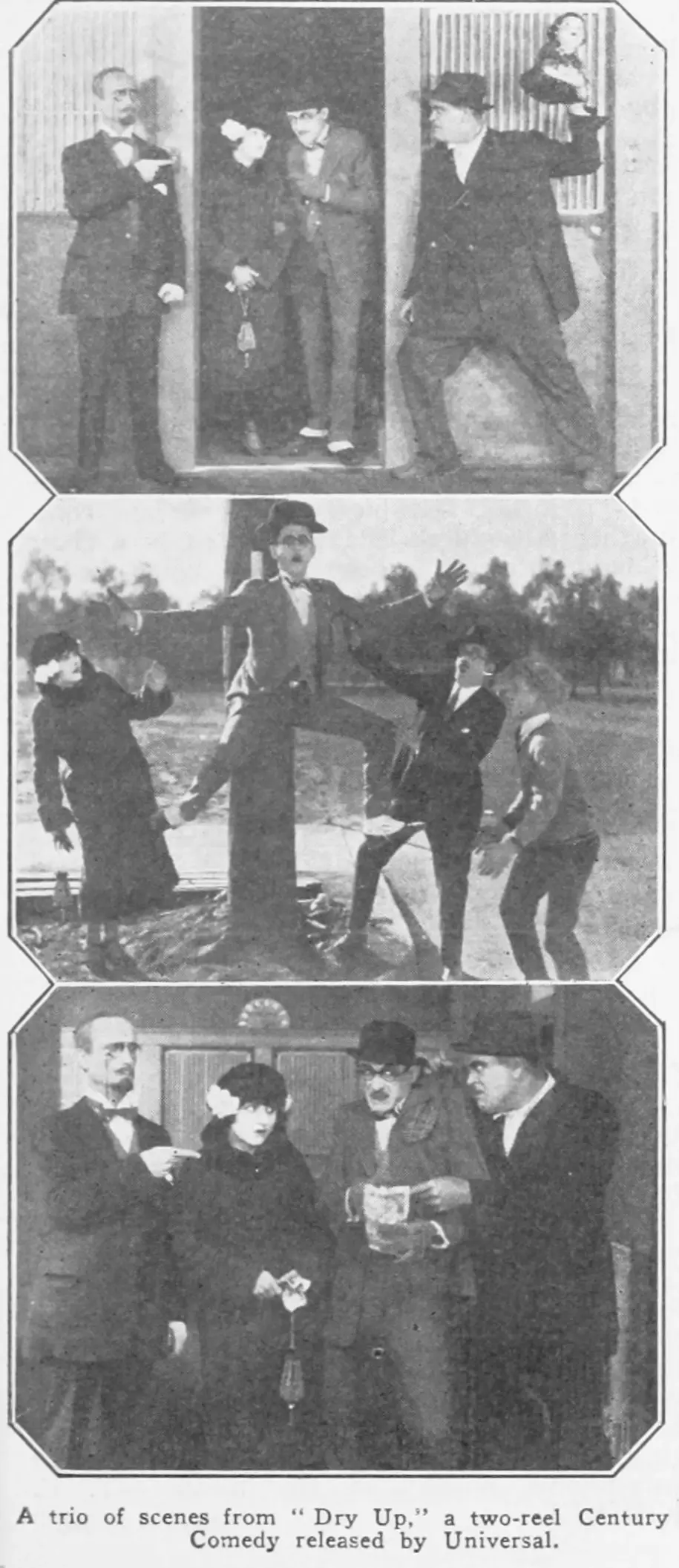
Consider the sequence where Jack attempts to serve the summons. Herman orchestrates a classic mistaken identity chase, deploying simple but effective camera work to follow the action. While it lacks the intricate choreography of a Keaton or Chaplin, it possesses a raw energy that is characteristic of independent productions of the time. The focus is squarely on the action and the character's reactions, ensuring the audience grasps the comedic situation without needing complex visual metaphors.
The cinematography of 'Dry Up' is, as expected for a short film of its time, functional rather than artistic. Shots are generally straightforward, designed to capture the action clearly. There are no elaborate tracking shots or complex lighting schemes; the emphasis is on clarity and visibility, allowing the physical comedy to shine through. The exterior shots, likely filmed on city streets, ground the film in a recognizable, if generalized, urban setting.
Production design is similarly pragmatic. The lodgings, the street scenes, the interiors where the summons is eventually served – all are minimally dressed, serving as backdrops for the comedic action. This isn't a film that relies on lavish sets or intricate costumes, but rather on the ingenuity of its gags and the expressive performances of its cast. This practical approach is a hallmark of many early comedies, where speed and efficiency in production were paramount.
The film's ending is perhaps its most striking and unconventional element. After Jack’s arduous journey to serve the divorce summons, the repentant wife's sudden change of heart and subsequent rejection of his efforts is a brutal, yet undeniably funny, twist. It’s a punchline that pulls the rug out from under the protagonist, and by extension, the audience's expectation of a tidy resolution.
This isn't the heartwarming triumph often seen in mainstream comedies. Instead, it offers a dash of cynical realism, a reminder that life doesn't always reward effort, especially for the perpetually unlucky. While some might find it unsatisfying, I argue that this abrupt, almost cruel, twist elevates 'Dry Up' beyond mere slapstick. It injects a surprising layer of dark humor, making the film more memorable than if Jack had simply received his due.
It works. But it’s flawed.
The pacing of the film, as mentioned, is generally well-suited to its comedic aims. It moves quickly, preventing any single gag from overstaying its welcome. However, the rapid conclusion, while effective for the final twist, does leave the audience wanting a bit more breathing room, a moment to fully process Jack's ultimate defeat. A slightly longer beat for his reaction, perhaps a more prolonged, desperate plea, could have enhanced the comedic tragedy.
'Dry Up' exists within a rich tapestry of silent-era comedies. It shares DNA with countless shorts featuring down-on-their-luck protagonists navigating the absurdities of daily life. Films like Some Cave Man or Puppy Love (also from 1921) similarly relied on situational humor and character-driven gags, often without deep narrative complexity.
However, 'Dry Up' distinguishes itself through its specific brand of ironic defeat. While many silent comedies aimed for a happy, or at least hopeful, ending, Herman and Singleton opt for a more cynical, yet humorous, conclusion. This choice sets it apart from the more overtly sentimental or purely escapist fare, offering a slightly sharper edge to its humor. It reminds me of the more audacious moments in early Fatty Arbuckle shorts, where the humor could occasionally veer into the unexpectedly biting.
It’s certainly not a peer to the narrative sophistication of a Chaplin feature like The Prodigal Son or the visual poetry of a Murnau, but it holds its own as a representative example of a specific comedic niche. Its value lies not in its groundbreaking artistry, but in its honest portrayal of a comedic style that resonated deeply with audiences a century ago.
'Dry Up' is not a film that will rewrite cinematic history, nor will it likely convert skeptics of silent cinema. What it is, however, is a charming, if minor, piece of film history. It provides a valuable snapshot of a particular moment in cinematic comedy, showcasing the talents of its lead, Jack Singleton, and the efficient direction of Albert Herman. Its greatest strength lies in its unpretentious commitment to slapstick and its surprisingly dark, yet humorous, conclusion. For those willing to engage with its historical context and embrace the conventions of its era, 'Dry Up' offers a genuinely enjoyable, albeit brief, journey into the roots of screen comedy. It's a testament to the enduring power of simple storytelling and the universal appeal of a good, honest laugh, even when tinged with a dash of irony. Don't expect a masterpiece; expect a fascinating artifact that still delivers some solid chuckles.

IMDb 5.6
1932
Community
Log in to comment.