DbcultAccessing Vault...
Cult Review
Senior Film Conservator
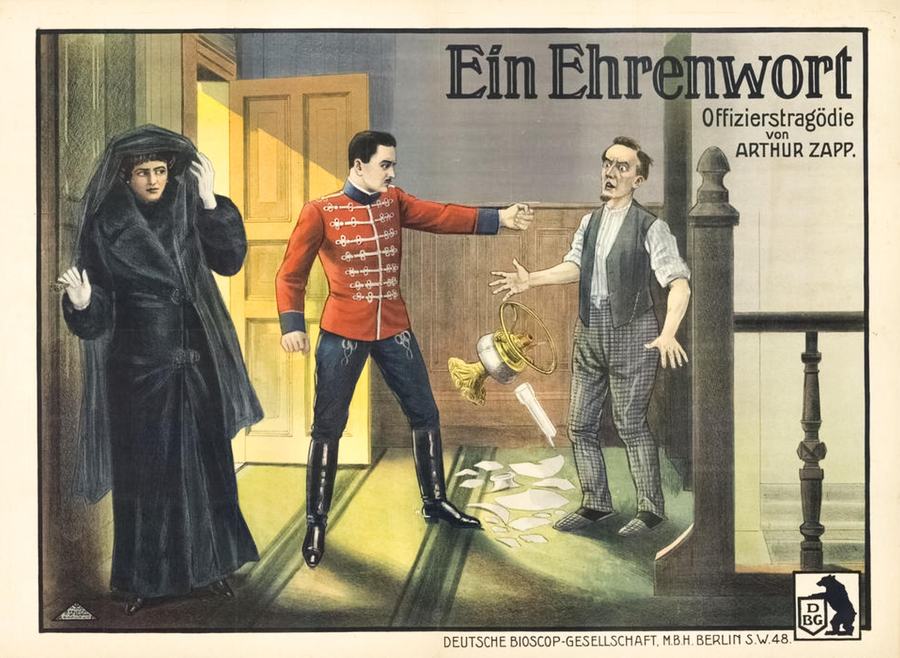
In the nascent years of German cinema, a period often overshadowed by later artistic movements, emerged a film that, even in its fragmented memory, speaks volumes about the era's dramatic sensibilities and the magnetic power of its stars. Ein Ehrenwort, a title steeped in the very essence of its narrative, stands as a testament to the profound emotional depth achievable within the silent medium. At its heart lies the luminous Henny Porten, an actress whose expressive capabilities transcended the spoken word, conveying entire internal landscapes with a mere glance or a subtle shift in posture. Her presence alone elevates this film from a mere historical artifact to a compelling piece of dramatic artistry, one that meticulously explores the weighty implications of an oath and the often-brutal consequences of unwavering loyalty.
The film plunges us into a world where personal integrity and familial devotion clash with the unforgiving machinery of justice and public perception. Porten's character, Elsa, is depicted as an embodiment of purity and selflessness, qualities that are soon put to the ultimate test. When her younger brother, Karl, a character perhaps too prone to youthful impetuousness, becomes entangled in a tragic incident – a street brawl culminating in an accidental death – the fabric of their lives is irrevocably torn. The narrative, with a keen understanding of human frailty and the bonds of kinship, presents Elsa with an impossible choice. To protect Karl, to shield him from the potentially ruinous grip of the law, she utters her 'Ehrenwort' – a word of honor – a solemn promise to bear the burden of his transgression. This pivotal moment, though silent, resonates with an almost operatic intensity, setting in motion a chain of events that will test the very limits of her endurance.
The genius of Ein Ehrenwort, and indeed of much early silent drama, lies in its ability to externalize internal conflict. Elsa's sacrifice is not a fleeting act but a sustained agony, meticulously rendered through Porten's nuanced performance. We witness her deliberate obfuscation of the truth, her carefully constructed ambiguities designed to deflect suspicion. This act of dissembling, born of love, ironically casts her into a shadow of public opprobrium. The film then becomes a poignant study of ostracization, as Elsa, once respected, finds herself increasingly isolated, her reputation sullied by the whispers and judgments of a society quick to condemn. This social commentary, though subtle, provides a powerful undercurrent to the personal drama, echoing themes found in other silent era films that grappled with societal hypocrisy and the plight of the individual against an unfeeling world, perhaps even drawing parallels to the moral quagmires explored in Les misérables, albeit on a more intimate scale.
The very core of Ein Ehrenwort rests squarely upon the shoulders of Henny Porten. A titan of early German cinema, Porten possessed a unique ability to command the screen without uttering a single syllable. Her acting style, characterized by its naturalism and profound emotional honesty, allowed her to embody Elsa's evolving torment with breathtaking clarity. From the initial, desperate vow to the prolonged anguish of public scorn and the internal battle against her brother's guilt-ridden attempts at confession, Porten's performance is a masterclass in silent expression. Her eyes, often pools of sorrow or fierce determination, communicate more than any dialogue could. The subtle quiver of her lip, the slight slump of her shoulders, or the defiant lift of her chin – each gesture is imbued with meaning, painting a vivid portrait of a woman caught between an unbreakable promise and the crushing weight of injustice.
In an era where many performers relied on broader, more theatrical gestures, Porten's restraint was revolutionary. She understood the power of understatement, allowing the audience to project their own emotions onto her relatable struggles. This approach distinguishes her from some of her contemporaries who might have leaned into melodrama. Her performance in Ein Ehrenwort is a poignant reminder of why she was, and remains, such a revered figure. It's a portrayal that holds its own against other iconic silent performances, perhaps in its quiet dignity recalling the solemnity found in films like The Eternal Law, which similarly grappled with moral fortitude in the face of adversity. Her ability to convey both immense strength and profound vulnerability simultaneously is nothing short of captivating.
Beyond Porten's central performance, Ein Ehrenwort employs the burgeoning cinematic language of its time with considerable skill. The cinematography, though perhaps rudimentary by modern standards, effectively uses framing and shot composition to amplify the emotional stakes. Close-ups on Porten's face are utilized to great effect, allowing the audience to intimately connect with her inner turmoil. The pacing, characteristic of early narrative features, builds tension through extended scenes, allowing the drama to unfold organically rather than relying on rapid cuts. This deliberate rhythm immerses the viewer in Elsa's protracted ordeal, making her suffering palpable.
The thematic depth of Ein Ehrenwort is perhaps its most enduring quality. It delves into universal questions: the nature of truth, the boundaries of familial love, the weight of a promise, and the often-unjust nature of public judgment. Elsa's fiancé, a lawyer, serves as a crucial character in this exploration, representing the societal expectation of justice and truth, which stands in stark contrast to Elsa's personal, emotionally driven 'Ehrenwort.' His internal conflict mirrors the audience's own struggle to reconcile love with legal and moral imperatives. This intricate ethical dilemma positions the film within a rich tradition of dramatic storytelling, echoing the moral quandaries found in works like Der Eid des Stephan Huller, which also explored the complexities of oaths and their consequences in a legal framework.
The narrative arc of Ein Ehrenwort builds inexorably towards a powerful climax. The relentless pursuit of the truth by the cynical police inspector, coupled with the manipulative efforts of a rival suitor who seeks to exploit Elsa's predicament, tightens the dramatic screws. The pressure on Karl, consumed by guilt and witnessing his sister's protracted agony, becomes unbearable. His eventual decision to break his silence, to finally reveal the truth and relieve Elsa of her self-imposed burden, is depicted not as a moment of simple triumph but as a wrenching, cathartic release. This scene, whether set in a courtroom or a public forum, would have been a tour de force for the silent screen, relying heavily on Porten's reaction and the raw emotion of her on-screen brother.
While Elsa is ultimately vindicated, the film astutely avoids a facile 'happy ever after.' The scars of her ordeal, the loss of her innocence, the enduring memory of societal condemnation, and the profound emotional toll of upholding her 'Ehrenwort' are implicitly acknowledged. This bittersweet resolution is a hallmark of sophisticated early cinema, which often sought to explore the complexities of human experience rather than provide simplistic escapism. It leaves the viewer with a lingering sense of reflection on the true cost of loyalty and the indelible marks left by profound acts of self-sacrifice. The ending, in its refusal to offer easy answers, elevates Ein Ehrenwort beyond mere melodrama, cementing its place as a thoughtful exploration of moral fortitude and the human condition.
In the grand tapestry of film history, Ein Ehrenwort, though perhaps not as widely known as some of its more accessible contemporaries, represents a crucial piece of early German cinematic output. It showcases the burgeoning talent of its star, Henny Porten, and demonstrates the artistic ambition present in an era often dismissed as primitive. The film's meticulous character development, its nuanced exploration of moral dilemmas, and its evocative visual storytelling contribute to its enduring appeal for those willing to look beyond the absence of sound and color. It's a reminder that compelling drama and profound emotional resonance are not exclusive to modern filmmaking techniques.
For enthusiasts of silent cinema, particularly those interested in the foundational works of German expressionism and naturalism, Ein Ehrenwort offers a fascinating glimpse into the artistic currents of the early 20th century. It is a film that demands engagement, rewarding the attentive viewer with a deeply moving story and a stellar performance that transcends time. Its themes of honor, sacrifice, and the search for truth remain as relevant today as they were over a century ago, proving that the power of a well-told story, even without spoken dialogue, can resonate across generations. This makes it a valuable companion piece to other early dramas that focused on the individual's moral journey, such as Pilgrim's Progress, albeit with a secular and more grounded dramatic framework.
The diligent reconstruction and preservation of such works are vital, allowing contemporary audiences to appreciate the foundational artistry upon which all subsequent cinematic achievements have been built. Ein Ehrenwort is more than just a historical curiosity; it is a powerful piece of dramatic cinema that speaks to the timeless struggles of the human spirit, anchored by a performance from Henny Porten that solidifies her legacy as one of the silent screen's most compelling figures. It challenges us to consider the true meaning of an 'Ehrenwort' and the profound sacrifices it sometimes demands. Its narrative complexity and emotional depth stand as a testament to the sophisticated storytelling capabilities of early German filmmakers, offering a rich viewing experience that continues to provoke thought and stir the soul, much like the grand historical narratives of its time, such as Cleopatra, captured the imagination with their sweeping scope, but with a focus here on the intensely personal rather than the epic.
IMDb 6.8
1920
Community
Log in to comment.