DbcultAccessing Vault...
Cult Review
Senior Film Conservator
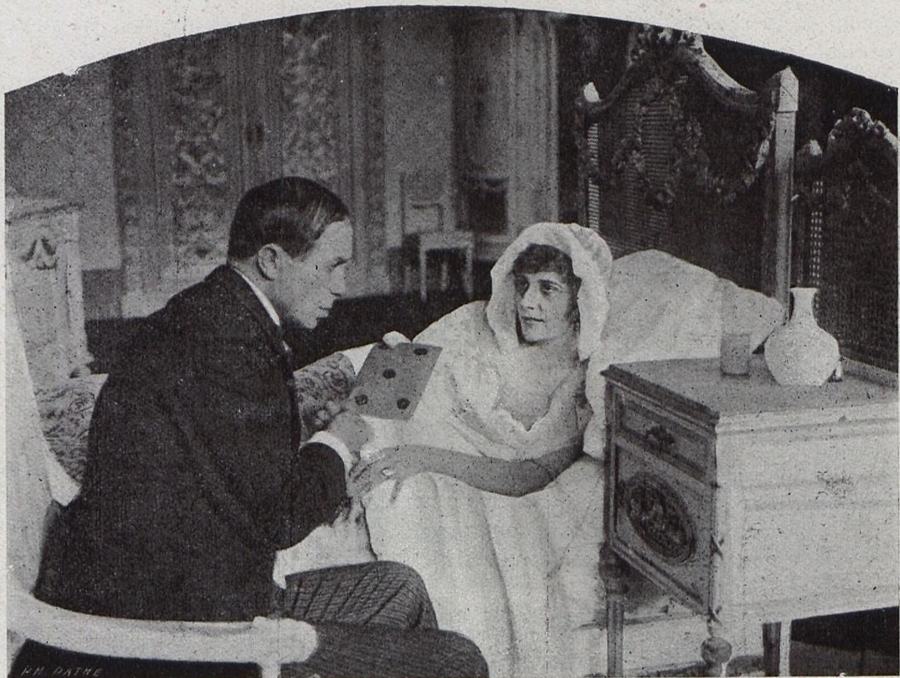
A century-old nitrate fever dream, Fiamma simbolica flickers like a sulphur match struck inside the viewer’s ribcage—its glow both revelation and brand.
Imagine, if you dare, a film that refuses the complacent safety of narrative teleology. Instead it offers a recursive loop: every gesture toward enlightenment births fresh umbra. The titular flame—never merely literal—becomes a parasitic halo, fastening onto each character’s yearning until the celluloid itself seems to sweat kerosene.
Director-photographer unknown but evidently possessed of a pyrotechnic muse, the movie’s surviving print—hand-coloured in cyan, carmine, and bile green—leaks colour like corroded cathedral glass. Note how night scenes are steeped in cobalt so thick it drips, while daytime interiors flare with amber that feels aspirational yet faintly carcinogenic. The aesthetic debt to Die Insel der Seligen is unmistakable, yet here the island is psychological, untranslatable, moated by guilt.
Raimondo Van Riel, face a topographical map of regret, underplays heroism until it implodes into self-cremation. His lantern-bearer walks like a marionette whose strings are on fire; each footstep leaves a scorched silhouette that subsequent frames never revisit—an anti-Faustian breadcrumb trail. Contrast with Berta Nelson’s seamstress, all jerky Pre-Raphaelite intensity: she embroiders not linen but air itself, looping invisible sigils that later appear branded into planks—an occult domestic labour worthy of comparison to the anarchic embroiderer in The Bride of Hate.
Editing patterns eschew continuity rules; shots combust into one another through match-cuts on sparks, smoke plumes, or the diagonal slash of a falling lamp-post. Expect no intertitles offering moral handrails—silence reignns, punctuated only by a percussive piano score (modern restorations add avant-chamber dissonance). The effect resembles inhaling lungfuls of coal dust while reciting psalms: sacred, suffocating, paradoxically invigorating.
Here fire is neither Prometheus-gift nor brimstone curse; it is the very substrate of being. Characters who court illumination are literally combusting their essence—watch Ugo Gracci’s printer thrust a freshly inked pamphlet toward a torch only to have the page flare, leaving his manifesto a flutter of black butterflies. The scene rhymes with the money-burning climax of The Spendthrift, yet where that film satirizes capital, Fiamma symbolica indicts cognition itself: to know is to carbonize.
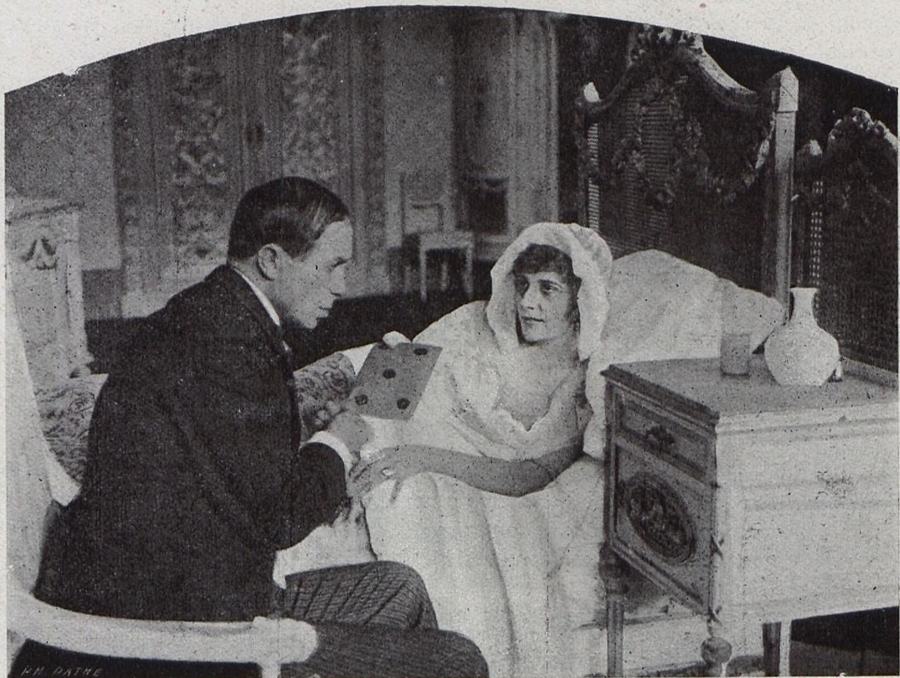
Rina Maggi’s consumptive dancer haunts liminal rooftops, her ballet slippers smoldering as though dipped in phosphorus. The camera fetishizes her waif torso, yet her cough—captured in uncomfortable close-up—renders the gaze self-indicting. She embodies the film’s thesis: desire and devastation share a circulatory system. Observe how her final pirouette coincides with the lantern’s brightest flare, an audio-visual synapse that feels like birth and autopsy spliced into one frame.
Cinephiles will detect kinship with Through Fire to Fortune’s redemptive blaze, though Fiamma rejects that film’s capitalist upward mobility. Likewise, the moral certitude animating The Victory of Conscience is here doused in kerosene and derisively ignited. Even the adventure serial momentum of The Adventures of Peg o' the Ring dissolves under this film’s nihilistic heat-haze.
For decades, Fiamma simbolica survived only through brittle stills in Turin’s cinematheque. A 2019 4K restoration fused two decomposing negatives with digital fire-suppression techniques—ironic, given the subject. The tinting palette required custom dyes derived from saffron and cochineal, invoking the very pigments that, centuries earlier, fueled Renaissance heretical pamphlets. Scratches remain, and rightly; each scar is a scarification ritual, testament to cinema’s own flirtation with auto-da-fé.
Modern audiences conditioned by talkie exposition may squirm at the refusal of explanatory crutches. Yet this silence is not absence but a resonant cavity into which the viewer’s private conflagrations rush. When the projector clacks like a metronome of distant artillery, you’ll recall that 1917 Italy was hemorrhaging youth in alpine trenches; the film’s atemporal village becomes a purgatorial waystation where history’s casualties rehearse their unspoken epitaphs.
At its core, Fiamma simbolica dramatizes a Nietzschean aphorism: when you gaze long into the flame, the flame also gazes into you—and then proceeds to eat your retinas. There is no redemption, only incandescent knowledge that leaves marrow radioactive. Compare this to the wholesome denouement of Sunshine Alley; the divergence is savage.
Is the film a masterpiece? That term feels too institutional, too velvet-roped. Fiamma simbolica is a conflagration caught on celluloid—an unstable compound of theology, anarchism, and dermatological horror. It does not ask to be loved; it demands to be survived. Approach it as one would a magnesium flare: with awe, protective eyewear, and the humility to admit that some illuminations scorch the very retina that beholds them.
Verdict: 9.5/10—A molten relic that makes most "dark" modern cinema feel like a birthday candle.
IMDb —
1919
Community
Log in to comment.