DbcultAccessing Vault...
6.4/10
Senior Film Conservator
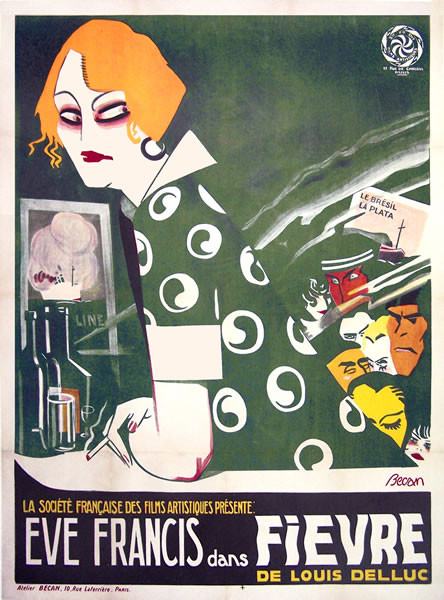
A definitive 6.4/10 rating for a film that redefined the boundaries of cult cinema. Fièvre remains a cornerstone of transgressive art.
To watch Louis Delluc’s 1921 masterwork, Fièvre, is to be subsumed by a sensory experience that predates the talkies yet speaks with a visual eloquence that few modern blockbusters can emulate. This isn't merely a film; it is a humid, claustrophobic descent into the psyche of the Marseille waterfront. As an expert who has spent decades dissecting the evolution of the moving image, I find myself continually returning to this specific piece of celluloid. It represents the birth of French Impressionism, a movement that sought to elevate cinema from mere theatrical recording to a high art form capable of expressing internal emotional states through external visual rhythms.
The setting—a cramped, smoke-filled bar in the Vieux Port of Marseille—is as much a character as the human actors. Topinelli (Edmond Van Daële) and Sarah (Ève Francis) exist in a state of gritty domesticity. Their bar is a crossroads for the world’s flotsam and jetsam, a place where the air is heavy with the scent of cheap wine and the salt spray of the Mediterranean. Unlike the pastoral or clean-cut settings found in contemporary American works like Blue Grass, Delluc’s world is caked in grime and sweat. There is a palpable sense of stasis here, a feeling that these people are trapped in their own social and economic strata, waiting for a catalyst that they both desire and dread.
The cinematography, handled with a pioneering eye for light and shadow, utilizes the concept of photogénie. This was Delluc’s own term, referring to the inherent poetic quality of things when captured on film. In Fièvre, a simple bottle of liquor, a discarded flower, or the way a shadow falls across Sarah’s face becomes a vessel for profound narrative weight. The film doesn't need intertitles to explain the history between Sarah and the sailor who suddenly appears; the camera captures it in the lingering gaze, the hesitation of a hand, and the sudden, sharp shift in the room's temperature.
While many films of the era, such as The Fly Ball, were preoccupied with the kinetic energy of sports or the episodic structure of serials like Beatrice Fairfax Episode 7: A Name for a Baby, Fièvre is a study in tension and release. It is a slow burn that gradually accelerates into a frantic, hallucinatory climax. The arrival of the sailor, Militis, acts as the spark in a powder keg. When he dances with Sarah, the scene is edited with a rhythmic intensity that mirrors the heartbeat of a lover reunited with a ghost. This isn't the sanitized romance of Rouge and Riches; it is something far more primal and dangerous.
The conflict between Topinelli and the sailor isn't just a lover's quarrel; it’s an explosion of the 'fever' mentioned in the title—a delirium born of heat, alcohol, and the crushing weight of the past. The way Delluc stages the brawl is revolutionary. He uses close-ups of faces, hands, and objects to create a montage that feels chaotic yet perfectly controlled. It’s a technique that would later influence the noir aesthetic seen in much later works like On Dangerous Ground, though Fièvre possesses a raw, unpolished energy that noir often lacks.
Ève Francis delivers a performance that should be studied in every acting conservatory. As Sarah, she conveys a lifetime of disappointment and a flick of hope with nothing more than the tilt of her head. In an era where many actors were still relying on the exaggerated gestures of the stage—much like the broad performances in The Mad Lover—Francis is remarkably modern. She understands that the camera can see into the eyes, and she uses that to her advantage. Her Sarah is a woman who has been hardened by the harbor life, yet remains vulnerable to the siren song of her youth.
Edmond Van Daële’s Topinelli is equally compelling. He isn't a cartoonish villain, but a man driven by a very human sense of possession and insecurity. The way he watches his wife and the sailor is agonizing to behold. He represents the immovable object against which the sailor’s irresistible force must eventually crash. This triangle of desire is far more nuanced than the typical moralistic tales of the time, such as Where Is My Father? or the melodramatic stakes of The Destroyers.
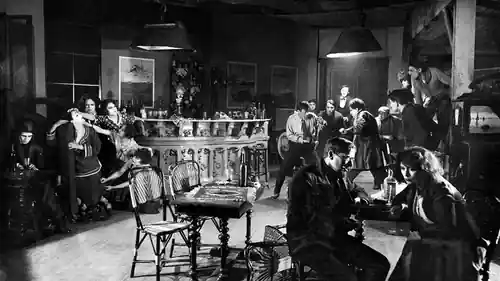
What sets Fièvre apart from its peers is its refusal to look away from the ugly. There is a scene involving a group of diverse patrons in the bar that feels incredibly progressive for 1921. Delluc captures the multicultural nature of a port city without the patronizing lens often found in films like The Explorer. Here, the 'others' are simply part of the fabric of the night, contributing to the general sense of unease and exoticism that permeates the bar.
The film’s use of 'found objects'—the flowers that Sarah receives, which eventually end up crushed on the floor—serves as a metaphor for the fragility of beauty in such a harsh environment. This symbolic layering is reminiscent of the thematic depth found in Shadows from the Past, yet Delluc executes it with a visual fluidity that feels more organic. The editing doesn't just tell us what happened; it tells us how it felt. The 'fever' isn't just a plot point; it's the very texture of the film stock.
Louis Delluc died young, but his impact on cinema is immeasurable. In Fièvre, he experimented with depth of field and lighting in ways that were years ahead of their time. Consider the way he uses the background of the bar—the blurred figures of the drinkers, the steam rising from a kettle—to create a sense of three-dimensional space. This wasn't the flat, stagey filming of Oil's Well That Ends Well or the somewhat static compositions of Der Knute entflohen. Delluc understood that the frame was a window into a world, not just a box for actors.
The film’s pacing is also a masterclass in tension. It begins with a deceptive calm, establishing the routine of the bar with a documentary-like precision. We see the cleaning of the glasses, the serving of the customers, the mundane interactions that define a life. But as the sailor enters, the camera becomes more restless. The cuts become shorter. The close-ups become tighter. By the time the final confrontation occurs, the audience is as breathless as the characters on screen. It is a far cry from the more predictable narrative arcs of westerns like The Canyon Hold-Up.
In the final analysis, Fièvre is a testament to the power of pure cinema. It doesn't rely on complex dialogue or elaborate sets. It finds its power in the human face, the play of light on water, and the universal experience of longing. It is a film that feels remarkably contemporary, avoiding the pitfalls of 'quaintness' that plague many silent films like Teddy Birds or the somewhat dated social commentary of Fejedelmi nap.
Delluc’s Marseille is a place of ghosts and heat, where the past is never truly buried and the future is always uncertain. For any serious student of film history, or anyone who simply appreciates the art of visual storytelling, Fièvre is an essential watch. It is the moment when cinema realized it could be more than just a novelty; it could be a fever dream that stays with you long after the lights come up. The film reminds us that while technology changes—moving from the grainy black and white of 1921 to the high-definition spectacles of today—the core of human emotion remains as volatile and beautiful as it ever was. This is cinema at its most visceral, a salt-stained masterpiece that continues to burn with a quiet, intense flame.
If you are looking for a film that captures the soul of the early 20th-century avant-garde, look no further. Fièvre is not just a historical curiosity; it is a living, breathing piece of art that demands your attention.
IMDb —
1916
Community
Log in to comment.