DbcultAccessing Vault...
Cult Review
Senior Film Conservator
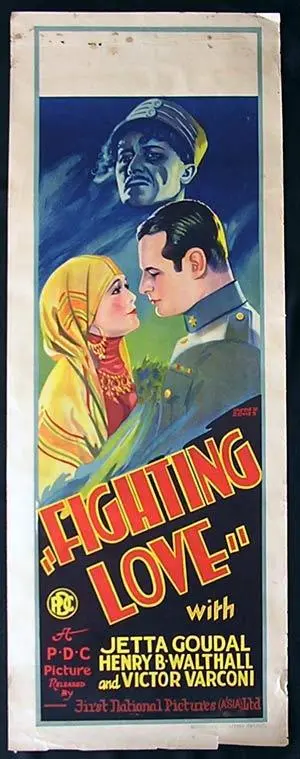
Is Fighting Love worth watching today? Short answer: yes, but with significant caveats that demand a particular kind of cinematic appreciation. This silent era drama offers a fascinating, if sometimes frustrating, glimpse into early Hollywood's ambition and storytelling prowess, particularly for those with an interest in historical melodramas and the evolution of cinematic narrative.
This film is absolutely for viewers who appreciate the dramatic conventions of the 1920s, enjoy complex moral dilemmas, and are patient enough to engage with a story told without spoken dialogue. It is emphatically NOT for audiences seeking fast-paced action, modern character psychology, or those who struggle with the expressive, often exaggerated, acting styles prevalent in silent cinema.
This film works because of its audacious plot, which, for its time, pushed boundaries with its exploration of bigamy and the consequences of wartime misinformation. It works through the sheer magnetic presence of Jetta Goudal, whose ability to convey deep emotion without a single spoken word is genuinely compelling. Lastly, it works as a historical artifact, a window into the cultural anxieties and romantic ideals of an era long past.
This film fails because its pacing can feel glacial by contemporary standards, making some sequences drag unnecessarily. It also stumbles in its character development outside of the central protagonist, leaving supporting roles feeling somewhat two-dimensional. Furthermore, the reliance on intertitles, while necessary, occasionally breaks the immersive flow, especially during exposition-heavy moments.
You should watch it if you are a film student, a silent film enthusiast, or someone intrigued by the moral ambiguities of classic melodrama. It’s a compelling case study in how early cinema grappled with complex human relationships against sweeping backdrops.
At its heart, Fighting Love, penned by Beulah Marie Dix and Rosita Forbes, presents a narrative that, while rooted in melodramatic conventions, possesses a surprising bite. The story follows a young Italian woman, desperate to avoid a stifling arranged marriage. Her solution is a pragmatic union with an older, well-connected military officer, a family friend. This premise alone sets a fascinating stage, immediately establishing a protagonist who, though constrained by societal expectations, actively seeks agency.
The subsequent relocation to North Africa, as her husband’s unit embarks on a mission to subdue 'unruly tribes,' adds an exotic, almost orientalist, backdrop that was common in films of the era. This shift in setting isn't just cosmetic; it isolates our protagonist, stripping away her familiar world and thrusting her into an environment that mirrors the internal turmoil brewing within her. The desert becomes both a prison and a canvas for her burgeoning emotional landscape.
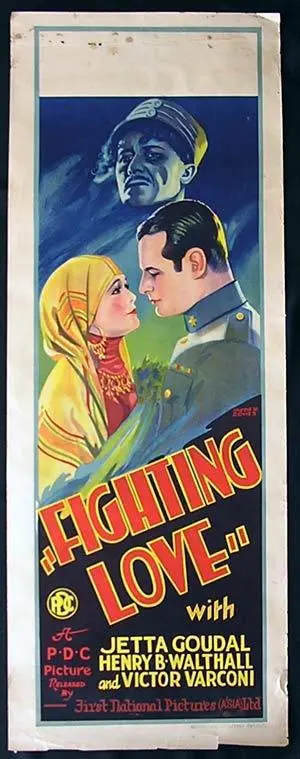
The pivotal turn—her husband’s presumed death, followed by her genuine romance with a younger soldier, only for the first husband to return alive—is a narrative device that could easily devolve into farce. Yet, Fighting Love largely handles it with a seriousness that elevates it beyond mere sensationalism. It forces a profound question: what does love truly mean when circumstances dictate its terms, and what are the boundaries of duty versus desire?
This film, much like Anna Karenina (1920), explores the societal pressures on women and the destructive power of unconventional passion. However, Fighting Love adds the unique dimension of wartime uncertainty, making the moral quandary even more acute. It's a story that asks us to empathize with a woman caught in an impossible bind, a situation that feels genuinely tragic rather than merely dramatic.
The success of Fighting Love hinges almost entirely on the shoulders of Jetta Goudal. Her performance is the film's undeniable anchor. Goudal, known for her exotic allure and dramatic flair, embodies the conflicted Italian wife with a captivating intensity. She doesn't just act; she feels on screen, transmitting complex emotions through subtle shifts in her gaze, the tremor of her hands, or the nuanced tilt of her head.
Consider the scene where she receives news of her husband's death. It's not a histrionic outburst, but a slow, dawning realization of loss mixed with an almost imperceptible hint of relief – relief from the constraints of a loveless marriage. This moment, delivered with Goudal's signature restraint and depth, speaks volumes. It's a testament to her skill that she can convey such a morally ambiguous cocktail of emotions without a single spoken word.
Her chemistry with Victor Varconi, playing the younger soldier, is palpable, a stark contrast to the dutiful, almost formal interactions with Henry B. Walthall as the older husband. Goudal makes you believe in the passion, making her subsequent predicament all the more agonizing. While some silent era acting can feel theatrical and over-the-top to modern eyes, Goudal's performance here is surprisingly internal, a precursor to more naturalistic styles.
I would argue that Goudal is one of the most underrated actresses of the silent era, often overshadowed by her more flamboyant contemporaries. Her ability to convey interiority, especially in a medium prone to outward expression, is a surprising observation that deserves more critical attention. She elevates what could have been a standard melodrama into something far more emotionally resonant.
The direction in Fighting Love, while not revolutionary, is competent and effectively uses the visual language of silent cinema to enhance the narrative. The director understands the power of framing, particularly in establishing the vastness and isolation of the North African desert. Wide shots of military units trekking across endless dunes effectively convey the scale of their mission and the vulnerability of the characters.
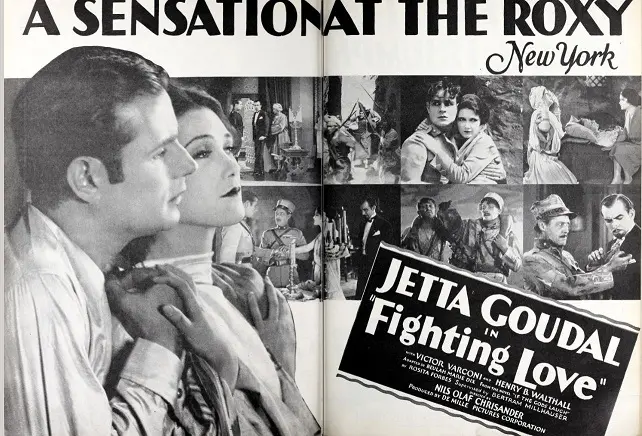
There are moments of genuine visual poetry, particularly in scenes depicting the burgeoning romance between Goudal's character and Varconi's soldier. Soft lighting, intimate close-ups, and thoughtful composition create a sense of burgeoning passion and tenderness, contrasting sharply with the harsh realities of the desert and war.
The use of shadows and light is particularly effective in conveying mood. In darker, more introspective scenes, characters are often partially obscured, hinting at their internal conflicts and the moral murkiness of their situation. This is not the groundbreaking artistry of a Murnau or a Griffith, but it is solid, purposeful filmmaking that serves the story well. The film's visual style, though dated, still holds a certain charm, reminiscent of other period adventures like North of 36.
This is where Fighting Love might test the patience of modern viewers. The pacing, typical of many silent films, is deliberate, sometimes to a fault. Sequences that would be briskly handled in contemporary cinema unfold with a stately, almost languid rhythm. This isn't necessarily a flaw, but a characteristic of the era. Silent films often relied on sustained visual storytelling and dramatic pauses to convey emotion and allow audiences to absorb the narrative through intertitles and expression.
The tone is consistently serious, maintaining a strong melodramatic bent throughout. There's little levity, which, while fitting for the weighty subject matter, can make the nearly two-hour runtime feel longer. The emotional stakes are high, and the film never shies away from the dramatic implications of its plot twists. This unwavering commitment to its dramatic core is both a strength and a potential weakness, depending on the viewer's taste.
The transition from a character believing themselves widowed to finding a new love, only to have the past return, is handled with a gravity that prevents it from feeling cheap. The film resists easy answers, allowing the complex emotions of the characters to dictate the narrative flow, even if that flow is slower than we might be accustomed to today. It works. But it’s flawed. The reliance on intertitles, while necessary, can sometimes interrupt the visual immersion, a common challenge for silent cinema that Fighting Love doesn't entirely overcome.
Yes, Fighting Love holds significant value for specific audiences today. It is a compelling example of early Hollywood's ability to tackle complex moral dilemmas within a grand, exotic setting. For silent film aficionados, it's a must-see, particularly for Jetta Goudal's nuanced performance.
It's also a valuable historical document, offering insight into popular entertainment and gender roles of the 1920s. However, casual viewers accustomed to modern pacing and dialogue might find it challenging. Approach it with an open mind and appreciation for the medium's historical context.
The film asks timeless questions about love, duty, and the choices we make under duress. These themes remain relevant, even if the cinematic language has evolved. It’s a film that encourages reflection, not just passive consumption.
Fighting Love is a compelling, if sometimes demanding, artifact from the silent era. Its strength lies in its surprisingly progressive themes and the magnetic performance of Jetta Goudal, who elevates the material beyond simple melodrama. While its pacing and silent film conventions will not appeal to everyone, for those willing to engage with its particular cinematic language, it offers a rich, emotionally complex story that resonates even today. It's a testament to the enduring power of human drama, regardless of the technological era in which it was created. This film is more than just a historical curiosity; it's a worthwhile, albeit challenging, journey into the heart of a woman caught between duty, love, and the cruel hand of fate.
IMDb —
1919
Community
Log in to comment.