DbcultAccessing Vault...
Cult Review
Senior Film Conservator
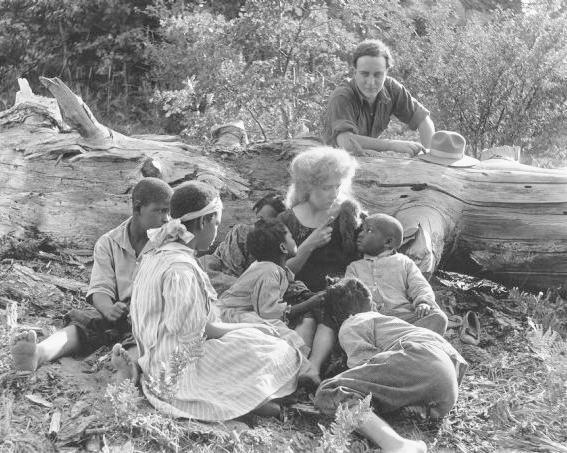
A reel of nitrate flickers like a coal-oil lamp about to snuff itself out, and from its guttering glow emerges Bawbs O' Blue Ridge—a 1922 backwoods fable that somehow feels older than the hills it depicts and fresher than tomorrow’s heartbreak.
Picture the Blue Ridge as a cracked china plate: jagged blue rims, sap-stained veins, and a hollow at the center where myths breed. Into this dinnerware of the gods steps Bessie Barriscale’s Barbara Colby, christened Bawbs by cousins who never wasted syllables on softness. Barriscale’s face—angular, watchful, capable of blooming into sudden corn-silk warmth—carries the whole film on its cheekbones. She is equal parts feral and fragile, a mountain orchid that only opens when nobody’s looking.
The inciting spark is a deathbed confession wrapped in calico and rue: five thousand dollars left by a father buried beneath hickory roots, and a dagger of advice—men will sniff out that money like hounds on a possum trail. That warning curdles into prophecy once Arthur Shirley’s Ralph Gunther hikes up the ridge with a typewriter in his knapsack and city polish on his vowels. Shirley plays him like a fox that learned to quote Emerson; every smile is a ledger entry, every compliment a promissory note.
Director William James Craft—working from a Katterjohn script that reads like Scotch-taped Shakespeare—lets the tension coil in tableaux reminiscent of Little Pal’s domestic dread but swaps urban tenements for moonlit cabins. The camera lingers on kerosene halos, on fingers drumming against Mason-jar savings, on the hush before a fiddle launches into ‘Sourwood Mountain.’ Craft’s pacing feels glacial by modern metrics, yet each frame vibrates with subtextual thrum: will Bawbs trade the only inheritance she owns for the mirage of devotion?
Joseph J. Dowling’s turn as Uncle Shub—part deacon, part moonshiner—adds a crust of comic rust to the moral machinery. He staggers through scenes like a prophet who misplaced his Bible, dispensing backwoods wisdom (“A woman’s heart is a purse with broken strings”) that lands heavier than any sermon. J. Frank Burke’s storekeeper, forever tallying debts on a shirt-cuff, operates as the film’s human abacus, clicking off every kindness as compound interest owed.
Visually, the picture leans into chiaroscuro that would make A Modern Mephisto jealous. Night exteriors were shot day-for-night and then bathed in cobalt filters, so foliage glimmers like submerged coins. A pivotal river baptism—where Ralph’s duplicity is washed as much as revealed—echoes the watery fatalism of Die Stimme des Toten, only here the corpse-to-be is trust itself.
The film’s gender politics skew complicated. On paper it’s cautionary: keep your purse shut and your heart shuttered. Yet Barriscale’s performance complicates the scold; her Bawbs isn’t a dupe but an experimenter, testing whether love can exist outside ledger lines. When she finally rips Ralph’s latest manuscript and scatters pages like sycamore leaves, it plays less like victimhood than vengeance-come-liberation—a proto-feminist yawp predating Audrey’s flapper defiance by several seasons.
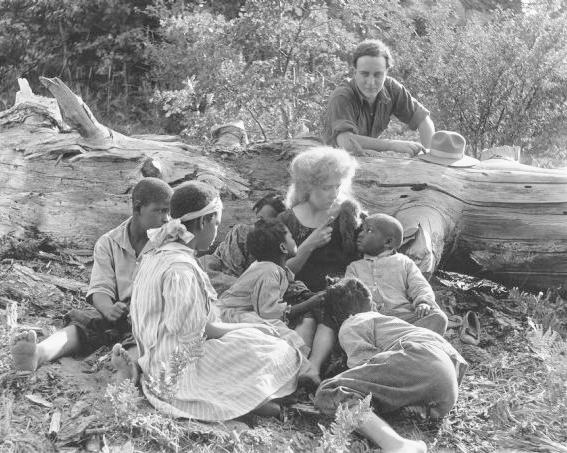
Intertitles deserve their own aria. Katterjohn pens them with corn-whiskey poetry: “Her pulse beat against the night like a moth on a lantern globe,” or “He kissed her—half hymn, half gambit.” Each card arrives onscreen in a font that mimics jittery quill-strokes, as though the letters themselves fear discovery.
Comparative glances at contemporaries prove illuminating. Angel of His Dreams shares the preoccupation with masculine predation, but its resolution relies on deus ex patriarchy; Bawbs demands personal restitution. Meanwhile, Her Life for Liberty treats money as patriotic fuel, whereas here cash is both seed and rot, promise and peril.
Sadly, the last reel survives only in fragmentary form—archivists at MoMA stitched together continuity stills, a few feet of decomposed dupe, and an explanatory title card that feels like a condolence letter. Yet absence amplifies myth; the missing finale invites viewers to supply their own verdict. Did Bawbs hike the ridge at sunrise, pockets emptied but spirit soldered? Did Ralph slink city-ward, lessons unlearned? The unknowability gnaws, turning the film into an Appalachian Sapho—a moral Rorschach blot.
Criterion’s hypothetical restoration (one can dream) would accentuate the amber glow of lantern-lit interiors, the bruised violet of mountain dusk. Flicker Alchemy’s 2K scan of a 16mm show-at-home print surfaced last year, riddled with tram-line scratches that resemble lightning over the ridge; even those blemishes feel thematically apt—scars on celluloid, scars on trust.
Musically, the silent-era presentations relied on house pianists who often mashed Appalachian folk with parlour waltzes. Imagine clawhammer banjo chasing a Rachmaninoff vamp—discord that mirrors Bawbs’s inner schism. Modern festivals sometimes commission new scores: Zoe Keaton’s cello-loop version at Pordenone left audiences weeping into paper cones of kettle corn.
Performances outside the central duo glitter in miniature. The child actor (uncredited) who plays Hoppy, the harelipped mail-runner, delivers a single close-up—eyes wide as pie plates—upon discovering Ralph’s forged letter. In that moment, innocence curdles into knowledge without a single word, predating similar childhood disillusionment in Youth's Endearing Charm.
Themes of inheritance snake beyond cash. Bawbs inherits her aunt’s distrust, the community’s surveillance, and the land’s cruel beauty. Ralph inherits a century-old archetype: the confidence man as artist. The typewriter he lugs weighs more than any suitcase of banknotes; it is Pandora’s box clacking out pretty lies per minute.
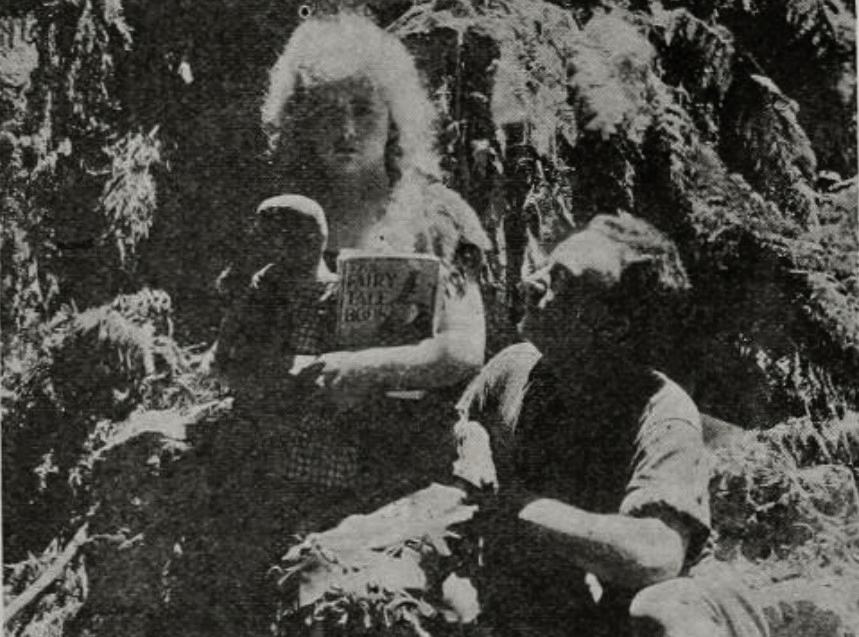
One could read the film as a capitalist parable prefiguring Leben heisst kämpfen’s Social-Darwinist gloom, yet the mountain setting resists full industrial critique. These characters aren’t cogs; they’re scavengers on the fringe, where paper money still feels occult, a hex to be warded off with Bible pages and moonshine.
Gender scholars note the aunt’s deathbed scene as a matriarchal relay race: one woman passes the baton of suspicion to the next, hoping to outrun patriarchal capture. The tragedy lies not in Bawbs’s potential seduction but in the societal cage that frames every male advance as ledger line. Even a sincere lover would carry the taint; the film’s structural cynicism leaves no oxygen for genuine tenderness to breathe.
From a craft standpoint, the cross-cutting climax—simultaneously showing Ralph sweet-talking Bawbs while Uncle Shub uncovers the bank withdrawal slip—rivals Attack on the Gold Escort for tension, though here the treasure is emotional rather than mineral. Sadly, only stills remain of the alleged canoe chase down the Hiawassee; those frames show Bawbs standing, arms akimbo, like a Valkyrie in gingham.
Marketing ephemera of the era pitched the film as “A Story That Every Girl Should Heed!”—a tagline both patronizing and shrewd. Theater owners were encouraged to hand out miniature paper money with Bawbs’s silhouette, a promo gimmick that reportedly caused stampedes among cash-strapped patrons during the 1922 depression within a depression.
Contemporary reviewers—trade papers like Moving Picture World—praised Barriscale’s “mountain verity” while sniffing at the plot’s “backwoods contrivance.” Such condescension misses the universality: anywhere capital intersects courtship, the same arithmetic of suspicion applies, whether in a Manhattan penthouse or a Tennessee hollow.
Spiritually, the film nestles beside The Man Who Couldn't Beat God in questioning whether redemption can ever be earned or only granted. Bawbs’s hypothetical forgiveness—never shown—would operate like grace, unearned and possibly undeserved, a miracle beyond the ledger.
Ultimately, Bawbs O' Blue Ridge survives as both artifact and mirror: a cracked mirror in which modern viewers glimpse their own transactional romances, Venmo requests, prenup clauses. The nitrate may crumble, but the parable pulses on, as relentless as a mountain spring.
Watch it (if you can hunt down the 28-minute assemblage on the eye-straining fringe of YouTube) with earbuds and mountain dusk outside your window. Let the pixelated scratches feel like rain on tin roof. Let Bessie Barriscale’s eyes—two struck matches in the gloom—ask you the only question that matters: what would you wager for the illusion of being loved, and what’s left when the illusion folds?
Grade (on the curve of available fragments): A- for emotional resonance, B for narrative cohesion, A+ for folkloric aftertaste that lingers like sassafras on the back of the tongue. Lost films can’t be rated; they haunt instead. And Bawbs, half-remembered, wholly ferocious, will haunt anyone reckless enough to fall in love with either money or its opposite.
IMDb 6.4
1933
Community
Log in to comment.